
One person’s “absolutely not” is another person’s treasured family recipe. Food disgust is shaped by culture, childhood, smell, texture, and the inconvenient habit our brains have of judging dinner before dinner gets a chance to explain itself.
This list of the top 10 disgusting foods ranks dishes by the shock they may deliver to an unfamiliar American diner. It is not a declaration that the foodsor the people who enjoy themare objectively disgusting. In fact, the Disgusting Food Museum in Sweden includes American root beer because many European visitors associate its flavor with toothpaste. Apparently, even a harmless soda can become an international culinary incident.
From fermented fish with room-clearing aromas to cheese occupied by enthusiastic larvae, these bizarre foods demonstrate that flavor is only one part of eating. Appearance, movement, ingredients, cultural expectations, and imagination can all influence whether a bite feels exciting or horrifying.
What Makes a Food Seem Disgusting?
Humans naturally avoid smells and appearances associated with decay because that instinct can protect us from spoiled food. However, controlled fermentation deliberately uses microorganisms, time, salt, temperature, or alkaline conditions to transform ingredients. Yogurt, sourdough, salami, kimchi, and blue cheese are all products of carefully managed biological activity. We simply call those foods delicious because we are familiar with them.
The extreme foods below push one or more psychological panic buttons: visible insects, intense odors, unfamiliar organs, developing embryos, unusual colors, slippery textures, or pieces that continue moving on the plate. Keep an open mind, hold your nose when necessary, and remember that insulting someone’s traditional dish is much worse table manners than quietly ordering fries.
10. Century Eggs
An Egg Wearing Its Gothic Outfit
A century egg does not spend 100 years waiting in a pantry for someone brave enough to open the door. Also called a preserved egg or pidan, it is generally made by curing duck, chicken, or quail eggs in an alkaline mixture for weeks or months. Traditional methods may use ingredients such as salt, ash, clay, lime, or rice hulls.
The transformation is dramatic. The egg white becomes a translucent brown or nearly black jelly, while the yolk changes into a creamy center colored gray, green, or deep charcoal. Its aroma may contain sulfur and ammonia notes, which is not exactly the perfume most people request at a department-store counter.
Properly produced century eggs are a familiar delicacy in Chinese cuisine rather than ancient spoiled eggs. They may be served with congee, tofu, ginger, or rice. The flavor is rich, savory, mineral, and more complex than its swamp-creature appearance suggests. Modern shortcuts using unsafe industrial chemicals have caused past food-safety enforcement actions, so these preserved eggs should come from a reputable producer.
9. Fried Tarantulas
The Snack That Makes Arachnophobes Leave the Building
Fried tarantulas are associated with Cambodia, particularly markets and restaurants that serve the spiders as crunchy snacks. They may be seasoned with garlic, salt, sugar, or savory flavor enhancers before being fried until the legs become crisp.
The appearance provides most of the challenge. Unlike a burger, which politely avoids looking like a cow, a fried tarantula arrives with eight recognizable legs and enough personality to ruin a spider-hater’s afternoon. The legs are typically crisp, while the body may contain softer white meat and a richer interior.
Accounts differ on exactly when the practice became widespread. Fried spiders have been linked to periods of severe food scarcity, but they have also developed into an established Cambodian snack and tourist curiosity. National Geographic has described diners comparing their popularity to the way Western consumers casually eat potato chips. That is a bold comparison, especially because potato chips rarely appear capable of crawling out of the bowl.
8. Stinky Tofu
Aroma First, Explanation Later
Stinky tofu is a fermented tofu specialty found in several parts of East Asia and strongly associated with night-market culture in Taiwan. The tofu is soaked in a fermented brine whose ingredients vary by producer. Traditional brines may contain fermented milk, vegetables, herbs, bamboo shoots, mustard greens, dried seafood, or other closely guarded additions.
The brine can ferment for months, developing an aroma that has inspired comparisons to old socks, sewage, barnyards, and forgotten gym bags. Fortunately, the taste is usually less aggressive than the smell. Once fried, the tofu can have a crisp exterior and a soft, almost custard-like center. Pickled vegetables, chile sauce, garlic, and soy-based condiments provide acidity and heat.
For newcomers, the experience can feel like following a terrible smell through a crowded market and discovering that everyone near its source is happily eating. That social evidence matters. When dozens of locals are lining up, your nose may be outvoted.
7. Shirako
The Seafood Ingredient Nobody Identifies Before the First Bite
Shirako is the milt, or sperm-producing reproductive tissue, of male fish. Cod is commonly used, although shirako can also come from species such as pufferfish, anglerfish, or salmon. The Japanese name is often translated as “white children,” which sounds poetic until somebody explains the anatomy.
Its pale, folded appearance is frequently compared to miniature brains. Depending on the preparation, shirako may be served raw, steamed, grilled, fried in tempura batter, placed in hot pot, or dressed with citrusy ponzu sauce. The texture is delicate, creamy, and custard-like, while the flavor is mild, rich, and briny.
Shirako demonstrates the importance of labeling. Tell an adventurous seafood lover that a dish is a seasonal delicacy with a silky texture, and the diner may eagerly take a bite. Announce that it contains fish sperm sacs, and suddenly everyone needs five minutes to check an imaginary text message. In Japan, however, it is a legitimate winter specialty rather than a prank invented by mischievous sushi chefs.
6. Balut
The Egg With a Visual Plot Twist
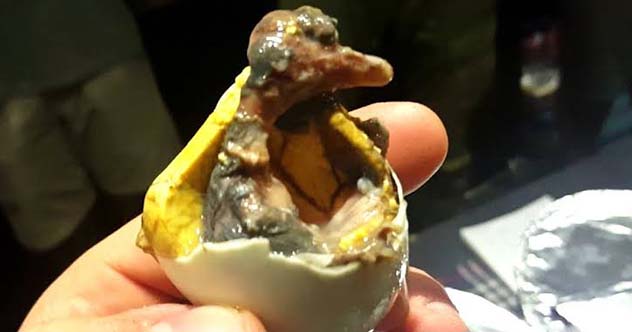
Balut is a fertilized duck egg containing a developing embryo that is boiled or steamed and eaten from the shell. It is especially associated with the Philippines, where it is a popular street food, although related preparations are eaten elsewhere in Southeast Asia.
The diner usually cracks the top of the shell, drinks the warm broth, adds salt or vinegar, and eats the contents. Depending on the incubation stage, the egg may contain a visible beak, bones, feathers, or other recognizable features. That appearance creates the main psychological barrier for people accustomed to eggs that carefully conceal their future poultry plans.
Balut is often described as savory and intensely chicken-like, combining broth, yolk, and tender meat in one compact package. It may be valued as a hearty snack and is deeply connected to local street-food culture. A scholarly review of the Philippine balut industry notes that eggs are commonly incubated for about 18 days, although preparation preferences can vary.
5. Sannakji
Dinner That Refuses to Stop Moving
Sannakji is a Korean raw-octopus dish usually made by cutting a small octopus into pieces and immediately seasoning it with sesame oil and sesame seeds. The animal is generally killed during preparation, but nerve activity in the separated arms causes the pieces to continue twisting and wriggling on the plate.
The flavor is mild and fresh, so the movement and texture create most of the drama. The pieces are chewy, slippery, and equipped with suction cups that may grip the plate, chopsticks, mouth, or throat. It is possibly the only meal that can challenge you to a wrestling match after being chopped into pieces.
Sannakji carries a genuine choking risk. Fatal incidents have occurred when octopus became lodged in a diner’s airway, and medical literature has documented accidental choking involving small octopus species. Pieces must be small and thoroughly chewed, and this is not a dish to treat as an internet stunt or eat while intoxicated.
4. Hongeo
Fermented Skate With an Ammonia Uppercut
Hongeo, or hongeo-hoe, is fermented skate associated with Korea’s Jeolla region. Skate physiology contributes to the dish’s notorious aroma. Compounds in the flesh change during fermentation and produce an intense ammonia smell that can travel through the nose with all the delicacy of a pressure washer.
The texture is firm, chewy, and sometimes slightly crunchy because of the cartilage. The flavor is salty and marine, but the ammonia sensation is what many first-time diners remember. It can rise into the sinuses and produce a sharp tingling effect that makes ordinary hot mustard seem emotionally supportive.
Hongeo may be eaten as part of samhap, a combination of fermented skate, boiled pork, and aged kimchi. The pork adds richness, while the kimchi provides acidity and spice. Together, the three ingredients create a respected regional specialty rather than a punishment meal. South Korea’s official tourism site lists restaurants specializing in hongeo and describes the combination as stimulating and unique.
3. Hákarl
Iceland’s Fermented Shark Challenge
Hákarl is an Icelandic specialty made from Greenland shark or related sleeper shark species. Fresh Greenland shark flesh contains high concentrations of compounds that make it unsuitable to eat without extensive processing. Traditional curing and drying methods transform the meat into something ediblealthough “welcoming” may still be too generous a word.
The shark is cured and then hung to dry for months. Finished hákarl is commonly cut into small cubes and served in modest portions, which is Iceland’s polite way of saying that nobody needs a cereal bowl full of it. Its smell is strongly associated with ammonia, while the flavor can be fishy, salty, cheesy, and sharply fermented.
Hákarl is often served during Icelandic midwinter celebrations and may be accompanied by brennivín, a local spirit. The first bite can be difficult, especially when the aroma reaches the nose before the food reaches the mouth. Still, the dish reflects historical preservation knowledge developed in a challenging environment where wasting available food was not an attractive option.
2. Surströmming
The Fermented Herring That Should Be Opened Outdoors
Surströmming is Swedish Baltic herring fermented with enough microbial enthusiasm to make its can bulge. It has become famous online because opening the container releases an extraordinarily strong odor. Videos often show inexperienced tasters opening a can indoors and immediately reconsidering every decision that brought them to that room.
Swedes who enjoy surströmming generally do not eat it straight from the can while standing over a kitchen sink. The fish is traditionally combined with thin flatbread, boiled potatoes, butter, red onion, and sometimes sour cream or chives. These accompaniments balance its saltiness and acidity.
Many experienced eaters open the can outdoors, sometimes while it is submerged in water to reduce spraying and contain the aroma. Once properly served, the taste may be milder and more nuanced than the smell suggests. The dish is communal, seasonal, and culturally meaningfulnot merely a weaponized fish used to generate dramatic reaction videos.
1. Casu Marzu
Sardinia’s Infamous Cheese With Live Larvae
Casu marzu earns the top position because it combines nearly every element likely to alarm an unfamiliar diner: a powerful smell, an extremely soft texture, advanced fermentation, legal controversy, and visible creatures moving through the food.
This traditional Sardinian sheep’s-milk cheese develops when cheese flies lay eggs in pecorino. The larvae hatch and digest fats in the cheese, producing a soft, intensely flavored interior. Liquid may seep from the wheel as the texture breaks down. Casu marzu is commonly translated as “rotten cheese,” a name that does not appear to have been developed by a marketing agency.
Enthusiasts describe the flavor as sharp, spicy, pungent, and comparable to an exceptionally ripe blue cheese. Some diners remove the larvae, while others consume them with the cheese. Its commercial sale has long faced restrictions because the production method conflicts with standard food-hygiene rules, though it remains part of Sardinian culinary heritage and continues to be produced in local settings.
The larvae can also jump several inches when disturbed, so cautious diners may protect their eyes while eating. When your cheese requires defensive eyewear, it has earned first place on a list of the world’s most disgusting foods.
Are These Foods Actually Gross?
Not necessarily. The word gross often means “unfamiliar and associated with something I was taught not to eat.” Americans may happily consume mold-ripened cheese, raw oysters, animal intestines, fermented cabbage, gelatin made from connective tissue, and hot dogs whose exact biography is best left unread. Familiarity turns alarming ingredients into comfort food.
Several dishes on this list began as practical solutions. Fermentation extended shelf life. Preserving eggs made them last longer. Communities learned to make difficult ingredients safe or desirable. Other foods are valued for seasonal abundance, texture, nutrition, identity, celebration, or the pleasure of sharing something generations have eaten together.
The respectful approach is to distinguish between personal preference and cultural judgment. You are allowed to dislike fermented shark. You are even allowed to run from it at a dignified speed. You are not required to describe the people who enjoy it as strange or uncivilized.
A Composite Extreme-Food Tasting Experience
The following sensory narrative combines commonly reported reactions and typical serving practices. It is not presented as a claim that the writer personally consumed every dish.
The Smell Arrives Before the Food
An extreme-food tasting often begins before the first bite. Someone opens a container, and the room changes personality. Conversations stop. People look toward the source with the concern normally reserved for electrical fires. With stinky tofu, fermented skate, hákarl, or surströmming, aroma creates expectations so powerful that the tongue barely gets a vote.
The first useful lesson is that smelling and tasting are connected but not identical. A food can possess an aggressive odor while delivering a comparatively balanced flavor. The nose screams, “abandon ship,” while the mouth quietly reports, “salty, tangy, and not terrible.”
The Eyes Become the Second Opponent
After the smell comes the visual negotiation. A century egg looks like polished volcanic glass. Balut may reveal recognizable anatomical details. Shirako resembles pale folds of soft tissue. A fried tarantula looks exactly like a fried tarantula, which is inconsiderate of it.
At this stage, experienced tasters often stop staring. Examining each leg, suction cup, feather, or larva does not make the next step easier. The food is portioned, paired with its traditional accompaniments, and tasted in a small amount. A full mouthful chosen for bravery can become a full mouthful chosen for regret.
Texture Creates the Strongest Reactions
Flavor is not always the main challenge. A diner may tolerate briny fish but struggle with rubbery cartilage, a creamy organ, gelatinous egg white, or moving octopus. Texture feels immediate and physical. It cannot be hidden behind an elegant menu description.
Traditional pairings help. Crisp bread supports soft fermented fish. Pickles cut through fried tofu. Kimchi and pork balance hongeo. Ponzu brightens shirako. Potatoes and flatbread soften the salty force of surströmming. These accompaniments are not decorative. They are part of the dish’s logic, developed by people who understand the ingredient better than an online challenger holding a camera in one hand and a bucket in the other.
The Flavor Is Often Surprisingly Familiar
Once the initial shock fades, familiar notes may appear. Casu marzu can recall powerful blue cheese. Hákarl may suggest aged cheese and strongly cured fish. Fried tarantula legs can deliver the uncomplicated crunch of a salty snack. Stinky tofu offers the contrast of a crisp crust and creamy center.
Not every bite becomes enjoyable. Some aromas remain overwhelming, and certain textures may trigger an immediate refusal. However, the experience frequently replaces vague horror with specific observations. “That is disgusting” becomes “I dislike the ammonia aroma but understand the savory flavor.” That may not sound heroic, but it is a meaningful improvement in culinary diplomacy.
The Best Part Is Usually the Story
People remember extreme-food tastings because the dishes create conversation. Diners compare reactions, laugh at nervous expressions, learn how the food developed, and discover why local communities value it. A dish that initially appears designed to frighten tourists becomes connected to geography, survival, agriculture, preservation, celebration, or identity.
The lasting experience is not simply, “I ate something gross.” It is the realization that taste is learned. A flavor rejected today may become acceptable after several encounters, while a childhood favorite can bewilder someone raised elsewhere. The boldest achievement is not swallowing the most shocking ingredient. It is approaching the table with curiosity, humility, and enough common sense not to open surströmming inside a rental car.
Conclusion
The world’s most disgusting foods are also some of its most fascinating. Casu marzu, surströmming, hákarl, hongeo, sannakji, balut, shirako, stinky tofu, fried tarantulas, and century eggs challenge familiar ideas about freshness, texture, aroma, and acceptable ingredients.
You may never crave a moving octopus tentacle or a spoonful of larvae-filled cheeseand your local pizza shop is probably relieved to hear that. Still, learning about unusual delicacies reveals how creativity and necessity shape cuisine. Every culture has foods outsiders struggle to understand, and every diner has at least one ingredient capable of turning courage into a polite “No, thank you.”
The next time somebody calls another culture’s dinner disgusting, ask what unfamiliar visitors might say about blue cheese, oysters, scrapple, pickled pigs’ feet, or a neon-orange convenience-store snack with enough seasoning dust to leave fingerprints at a crime scene.
SEO Metadata