
Note: This HTML contains only the <body> portion, is written in standard American English, and has been cleaned for web publishing.
Potting a ball in snooker looks simple right up until the cue ball rolls two feet off line and your confidence files a formal complaint. That is the beauty of the game: it rewards precision, patience, and the kind of self-control usually associated with monks and people who can fold fitted sheets. If you want to pot more balls consistently, you do not need mystical powers. You need solid fundamentals, a repeatable routine, and enough honesty to admit when your “brilliant attacking shot” was actually a rushed poke with delusions of grandeur.
This guide breaks the process into 10 practical steps that help beginners improve and remind experienced players what really matters. The focus is simple: see the line clearly, deliver the cue straight, control speed, and avoid adding accidental drama with unwanted side spin. Do those things well and the pockets suddenly stop behaving like they are personally offended by your presence.
Why Potting Matters in Snooker
In snooker, potting is not just about making the current ball. It is about building breaks, keeping control of the table, and putting pressure on your opponent. A clean pot usually comes from several small decisions done well: how you stand, where you place your bridge hand, how lightly you grip the cue, how still your head remains, and how smoothly you follow through. Miss any one of those details and the whole shot can wobble like a shopping cart with one rebellious wheel.
The good news is that good potting is a trainable skill. Players improve fastest when they stop chasing miracle fixes and start repeating sound mechanics. In other words, snooker loves boring excellence. Learn to enjoy that, and your results will improve.
How to Pot the Ball in Snooker: 10 Steps
Step 1: Get Behind the Shot and Find the True Line
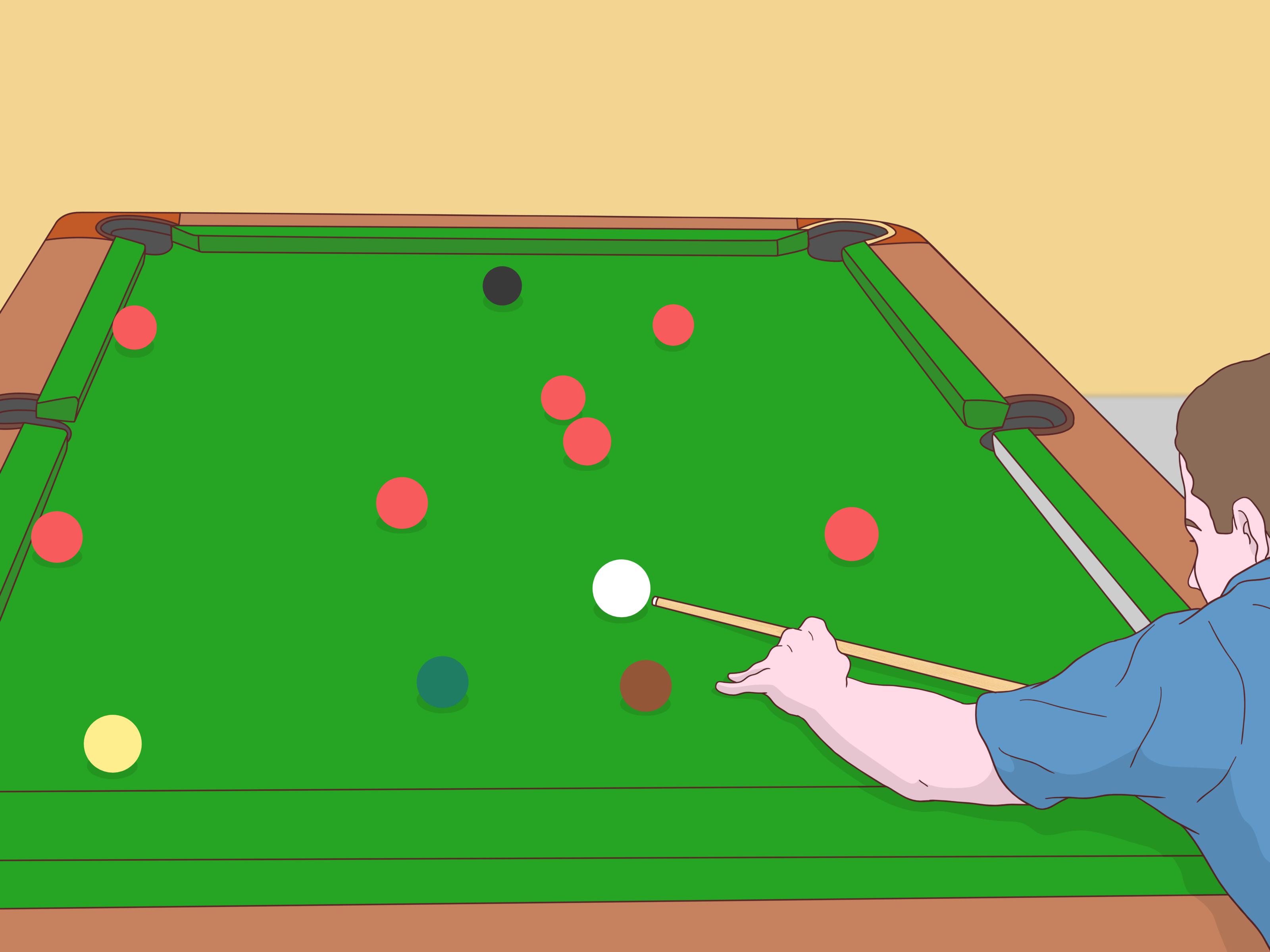
Before you bend down, stand behind the cue ball and object ball so you can see the shot line clearly. Your job here is not to look busy. Your job is to decide exactly where the object ball needs to go and what contact point sends it there. Many misses happen before the player even gets into the stance, because the line was guessed instead of chosen.
Pick the pocket first. Then picture the path of the object ball into that pocket. From there, work backward to the contact point on the object ball. This is where potting starts: not with the stroke, but with clear visual commitment. If you are still negotiating with yourself after you get down on the shot, you are already in trouble.
Step 2: Put Your Body on the Line, Not Across It
Once you know the line, step into it. Your stance should feel balanced, stable, and comfortable enough that you are not fighting your own body during the shot. The main idea is simple: your cue must swing straight, and your body should help that happen instead of acting like a badly parked chair.
Your front foot generally goes near the line of aim, while your back foot gives balance and support. Do not copy another player’s stance like you are cloning a superhero. What matters is that your head, cue, stroking arm, and shot line work together consistently. If the stance lets you see the line well and cue straight without strain, it is doing its job.
Step 3: Build a Stable Bridge Hand
Your bridge hand is the launch pad for the cue. If it moves, wiggles, collapses, or decides to reinvent itself halfway through the stroke, accuracy goes out the window. Place the bridge hand firmly on the cloth and keep it quiet. Whether you use an open bridge or a closed bridge, the cue should travel smoothly through it without rubbing, bouncing, or feeling trapped.
Bridge length matters too. A bridge that is too short can make the stroke jabby. A bridge that is too long can make the cue feel loose and hard to control. For most standard potting shots, use a natural distance that gives you room for smooth cue action. Think steady, not fancy. The bridge is not there to impress anyone. It is there to stop your cue from wandering off like a shopping cart with a broken wheel.
Step 4: Hold the Cue Lightly and Let the Arm Swing
One of the fastest ways to miss an easy ball is to strangle the cue like it owes you money. A tight grip creates tension in the wrist, forearm, and shoulder, which makes the cue veer off line. Good potters keep the grip relaxed enough that the cue can move freely while still feeling controlled.
Your stroking arm should act more like a pendulum than a catapult. The cue goes back smoothly, pauses naturally, and comes through in a straight line. The shot should feel like a guided swing, not a punch. If your grip pressure changes wildly during the stroke, expect the cue ball to file a complaint and head somewhere uninvited.
Step 5: Feather the Cue and Settle Your Eyes
Feathering is not decorative theater. Those small practice movements help you feel the line, settle the cue, and prepare for the final stroke. As you feather, keep your eyes moving calmly between the object ball contact point and the cue ball. Different players favor slightly different eye patterns, but the key is consistency.
Do not rush this part. Let the feathers confirm that the cue is traveling straight through the bridge. Let your breathing settle. Let your head become still. Potting improves when the final stroke feels like the natural end of a calm setup, not a desperate launch sequence. The smoother your pre-shot rhythm, the more reliable your cue delivery becomes.
Step 6: Keep Your Head Still Through Contact
If your head lifts early, the shot often goes wrong even when everything else was decent. In snooker, head movement is a classic accuracy thief. The moment you peek up to see whether the ball is dropping, you risk pulling the cue off line before impact. That is the cue-sports version of checking your test score before finishing the last answer.
Stay down on the shot. Let the cue ball strike, let the object ball travel, and only then come up. This helps preserve alignment and prevents unnecessary steering. Many players think they missed because they aimed badly, when in fact they simply moved too soon. A still head is one of the least glamorous habits in snooker and one of the most powerful.
Step 7: Hit the Cue Ball Cleanly, Usually Near Center
If your goal is simply to pot the ball, make life easy on yourself. For many standard shots, striking the cue ball near center is the smartest choice. Center-ball hits reduce the complications that come with extra spin and make aiming more straightforward. In plain English: fewer moving parts, fewer opportunities for nonsense.
Beginners often reach for side spin far too early because it looks advanced. In reality, unnecessary side spin can change the path, alter the throw, and punish even small aiming errors. Learn to pot balls cleanly with plain ball first. Once your cueing is reliable, then add spin with purpose. Potting is hard enough already. There is no need to invite chaos over for dinner.
Step 8: Match the Speed to the Shot
Not every pot should be fired in like you are trying to win an argument with the pocket. Speed affects accuracy. A soft, controlled shot often gives the object ball a better chance to fall cleanly, especially on touch shots. At the same time, a shot played too slowly can wobble, die, or be affected more by tiny imperfections.
The best rule is to use pocket-friendly pace: firm enough to stay true, soft enough to hold the line. On long pots, many players benefit from a smooth medium pace rather than a timid roll or a wild thump. On thinner cuts, good speed matters even more. Learn how different speeds change the shot, and your potting will become far more dependable.
Step 9: Finish the Stroke With a True Follow-Through
Follow-through does not mean lunging forward like you are spearing a fish. It means letting the cue continue naturally along the intended line after striking the cue ball. A clean follow-through is usually a sign that the stroke accelerated smoothly and stayed straight through contact.
When players jab, quit on the shot, or snatch the cue back, potting accuracy suffers. Think of the cue as traveling through the cue ball rather than merely poking at it. The finish should look quiet and balanced. If your elbow flies around, your shoulder rises, or your cue finishes somewhere that would confuse a mapmaker, something in the stroke probably needs work.
Step 10: Practice the Right Shots the Right Way
Potting skill is built through smart repetition, not random ball-bashing. Practice straight pots, slight angles, thin cuts, and long reds from familiar positions. Repeat them until your routine starts feeling automatic. Then change angles and distances gradually. A good drill does not just make you sweat a little; it teaches you what a correct shot feels like.
Keep score during practice if you want sharper focus. For example, attempt the same long pot 10 times and track not only makes and misses but also the reason for each miss. Was the line wrong? Did you move your head? Did you overhit it? Improvement gets faster when practice becomes diagnostic instead of emotional. The table is not judging you. It is simply reporting the truth.
Common Potting Mistakes That Ruin Good Chances
- Rushing down into the stance before the line is clear.
- Gripping the cue too tightly on pressure shots.
- Trying to use side spin when plain ball would do the job.
- Lifting the head to watch the result too early.
- Changing pace at the last second.
- Practicing only favorite shots and avoiding uncomfortable angles.
If you recognize yourself in that list, congratulations: you are a normal snooker player. The fix is not panic. The fix is awareness plus repetition.
A Simple Potting Routine You Can Use Right Away
Here is a practical routine that works well for many players:
- Stand behind the shot and choose the exact potting line.
- Step into the stance with your body aligned to that line.
- Set the bridge hand and relax the grip.
- Feather the cue while checking the contact point.
- Pause, stay still, and deliver one smooth final stroke.
- Remain down after the shot.
That routine is not flashy, but it is effective. Snooker does not award style points for interpretive cue dancing.
Experience on the Table: What Potting in Snooker Really Feels Like
Potting in snooker is a funny experience because progress rarely arrives with fireworks. It usually shows up in quieter ways. One day, the long red that used to look like a terrifying expedition suddenly looks makeable. The thin cut that once felt like guesswork starts feeling familiar. The black off the spot no longer seems like a dare from the universe. That is how improvement works in this game. It sneaks up on you wearing soft shoes.
Most players go through the same emotional roller coaster. At first, every miss feels personal. You think the table is mocking you. You blame the cue, the cloth, the lighting, your shoes, and possibly the moon. Then, after enough honest practice, you start noticing patterns. The miss to the thick side often comes from steering. The miss to the thin side often comes from lifting the head or overcutting under pressure. The more you play, the less mysterious your misses become, and that is a huge turning point.
There is also a very specific feeling that comes with a well-potted snooker ball. The cue goes through cleanly, the object ball holds its line, and the pocket accepts it without complaint. It feels tidy. Efficient. Almost suspiciously easy. Great potters are not performing magic tricks every shot; they are repeating motions that have become deeply familiar. That is why they look calm. Their confidence is not built on hope. It is built on repetition.
Practice sessions teach another important lesson: potting is deeply connected to emotion. When players become impatient, the stroke gets quicker. When they become nervous, the grip tightens. When they want the result too badly, they stop trusting the routine. In that sense, snooker is part sport and part truth serum. The table reveals whether you are composed or chaotic. It does not care what your intentions were. It only responds to what the cue actually did.
Another common experience is discovering that easy shots are not always easy. In fact, some of the ugliest misses happen on routine balls because the mind gets lazy. Players see a simple pot, switch off mentally, and deliver a sloppy stroke. Meanwhile, a much tougher shot receives full attention and drops beautifully. That contrast teaches respect. In snooker, every ball deserves a little ceremony. Not a Broadway musical, but at least a proper introduction.
Eventually, the most satisfying experience is not a single spectacular pot. It is the feeling of control. You start to trust your setup. You know what your feathers should feel like. You know when a bridge is solid. You know when the cue has gone through straight. That awareness makes the game more enjoyable because improvement stops feeling random. You are no longer just hoping balls fall. You are building them. And that is when snooker becomes truly addictive in the best possible way: one clean pot makes you want to stay for another hour, another frame, and probably another cup of coffee while telling yourself, once again, “Just one more practice drill.”
Final Thoughts
If you want to pot the ball in snooker more often, focus less on miracle aiming secrets and more on repeatable basics. Stand on the line. Build a steady bridge. Keep the grip relaxed. Feather calmly. Stay still. Strike cleanly. Control the pace. Follow through. Practice with purpose. That formula is not glamorous, but it works.
Snooker rewards players who can make simple things look easy. That usually takes time, humility, and a willingness to miss a lot of balls before potting them beautifully. Stick with the process. The pockets will eventually stop acting like tiny judgmental doorways and start feeling a lot more welcoming.
SEO Tags