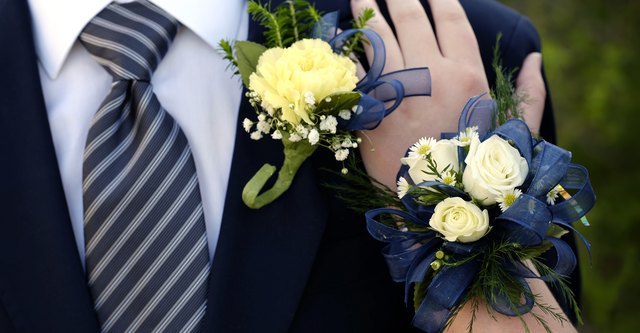

So, on what wrist do you wear a corsage? Traditionally, a wrist corsage is worn on the left wrist. That is the classic answer, the etiquette-book answer, and the one that keeps grandmothers, photographers, and florists peacefully nodding in the same room. But modern corsage etiquette has become much more flexible. Today, the best wrist for a corsage is usually the wrist that feels comfortable, looks balanced in photos, and does not interfere with eating, dancing, hugging, texting, or trying to open a tiny purse in a dimly lit ballroom.
In other words: left wrist is traditional, non-dominant wrist is practical, and personal preference is perfectly acceptable. Welcome to modern formalwear, where flowers have opinions, but thankfully, no legal department.
The Traditional Rule: Wear the Corsage on the Left Wrist
In American prom, wedding, and formal-event etiquette, the corsage is most often worn on the left side of the body. For a wrist corsage, that usually means the left wrist. For a pin-on corsage, it usually means the left side of the dress, jacket, or blouse, often near the shoulder or chest area.
Why the left side? One reason is symbolism. Flowers worn on the left side sit closer to the heart, which fits the romantic and honorary meaning of corsages. Another reason is simple tradition. Boutonnieres are commonly worn on the left lapel of a suit jacket, so corsages followed a similar left-side placement rule. Formalwear loves symmetry almost as much as it loves making people ask, “Wait, which side again?” five minutes before photos.
So if you are standing there before prom, homecoming, a wedding, a gala, or a formal dinner and need the safest etiquette answer, choose the left wrist. It is classic, familiar, and widely accepted.
The Modern Rule: Wear It on Your Non-Dominant Hand
While the left wrist is the traditional choice, many modern florists and event stylists recommend wearing a wrist corsage on the non-dominant hand. That means if you are right-handed, the left wrist still wins. If you are left-handed, the right wrist may be more comfortable.
This practical rule makes sense because a corsage is not just a pretty bracelet. It is a tiny floral arrangement attached to your arm, and it has to survive a busy evening. You may be holding a clutch, signing a guest book, shaking hands, taking selfies, eating dinner, dancing, or trying not to drop your phone while someone yells, “One more picture!” A corsage on your dominant hand can bump into plates, sleeves, and people’s elbows. On your non-dominant wrist, it is less likely to get crushed or become the evening’s most dramatic floral casualty.
For most people, the traditional answer and the practical answer are the same: left wrist. But if you are left-handed, wearing the corsage on the right wrist is not a breach of etiquette. It is common sense wearing flowers.
Does the Corsage Have to Match the Boutonniere?
A corsage does not have to match a boutonniere perfectly, but it should coordinate. Think of the corsage and boutonniere as cousins at the same family reunion. They do not need to wear identical outfits, but they should look like they came from the same event and not from two unrelated garden centers.
For prom, it is common for the corsage to coordinate with the dress, suit, tie, pocket square, or overall color palette. Popular flowers include roses, orchids, carnations, spray roses, ranunculus, baby’s breath, greenery, and small accent blooms. Ribbons, pearls, rhinestones, metallic cuffs, and velvet bands can also be used to make the corsage feel more personal.
For weddings, corsages often coordinate with the bridal bouquet and wedding flowers. Mothers, grandmothers, stepmothers, officiants, readers, ushers, and other honored guests may wear them. In this case, the corsage is less about dating etiquette and more about recognition. It says, “This person matters,” but in flower language, which is much prettier than a name tag.
Wrist Corsage vs. Pin-On Corsage: Which Is Better?
The right type of corsage depends on the outfit, comfort level, and event style.
Wrist Corsage
A wrist corsage is worn like a bracelet and is usually attached to an elastic band, ribbon, pearl bracelet, metal cuff, or decorative wristlet. It is especially popular for prom because many modern dresses are strapless, sleeveless, delicate, sheer, or heavily embellished. Nobody wants to stab a pin through expensive fabric while everyone holds their breath like it is a surgical procedure.
Wrist corsages are also easy to wear, easy to photograph, and less risky for delicate clothing. They work well with gowns, jumpsuits, cocktail dresses, and even formal suits.
Pin-On Corsage
A pin-on corsage is attached to clothing, usually on the left side. This style has a more traditional look and may be preferred for weddings, church ceremonies, anniversary parties, and formal daytime events. It can look elegant on jackets, structured dresses, and sturdy fabrics.
However, pin-on corsages are not ideal for every outfit. Lightweight fabric can sag, delicate lace can snag, and beaded dresses can make pinning nearly impossible. If the outfit looks like it would sue you for poking it with a pin, choose a wrist corsage instead.
How to Wear a Wrist Corsage Correctly
Once you know which wrist to use, placement matters. A wrist corsage should sit slightly above the wrist bone, not halfway down the hand. The band should feel secure but not tight. You should be able to move comfortably without the flowers sliding around like they are trying to escape.
The flowers should face outward so they show in photos. If the corsage has a focal flower, that bloom should be visible from the front when your arm is relaxed. If the flowers are turned inward, they may look hidden, and if they face too far sideways, they may bump into things all night.
Here is a simple checklist:
- Wear the corsage on the left wrist for traditional etiquette.
- Wear it on the non-dominant wrist for comfort.
- Place it just above the wrist bone.
- Keep the flowers facing outward.
- Make sure the band is snug, not tight.
- Put it on shortly before the event to keep it fresh.
When Should You Put On a Corsage?
Put on the corsage shortly before leaving for the event or before formal photos. Fresh flowers are beautiful, but they are not superheroes. Heat, humidity, rough handling, and long hours can make blooms wilt faster.
If you pick up a corsage early, keep it cool and protected. Most corsages come in a small box. Leave it in the box, keep it away from direct sunlight, and place it in a cool spot. If using a refrigerator, avoid freezing zones, fruit drawers with ethylene-producing fruit, and areas where the flowers could be crushed. A corsage should not have to fight leftover pizza for survival.
Who Buys the Corsage?
For prom and homecoming, the traditional custom is that one date buys the corsage and the other buys the boutonniere. In many cases, the corsage is given before the event, often during photos with family. However, modern etiquette is flexible. Friends can buy flowers for each other, couples can shop together, and anyone can wear a corsage if it fits the event and personal style.
For weddings, the couple or wedding hosts usually arrange corsages for honored guests. These may include mothers of the bride and groom, grandmothers, stepmothers, godmothers, aunts, readers, officiants, or close family members. The goal is to honor people who have a special role in the celebration.
Can Men Wear Corsages?
Yes. While tradition often associates corsages with women and boutonnieres with men, modern event style is much more inclusive. A person can wear whichever floral accessory feels right for their outfit, identity, comfort, and role at the event. Some people prefer a boutonniere, some prefer a wrist corsage, and some choose floral cuffs, pocket flowers, hair flowers, or no flowers at all.
The best etiquette is to ask. If you are ordering flowers for someone else, ask whether they prefer a wrist corsage, pin-on corsage, boutonniere, or another floral accessory. It is a small question that prevents awkward moments later, such as discovering the recipient hates wristbands or is wearing a fabric that cannot be pinned.
Common Corsage Mistakes to Avoid
Choosing Flowers That Are Too Large
A corsage should complement the outfit, not become a botanical satellite dish. Oversized flowers can look dramatic in photos, but they may also feel heavy and uncomfortable. Smaller, sturdy blooms usually work better for wrist corsages.
Ignoring the Outfit Color
The corsage does not need to match the dress exactly, but it should not clash wildly unless that is the point. White, cream, blush, lavender, burgundy, navy accents, greenery, and soft metallics are popular because they coordinate easily with many formal looks.
Putting It on Too Early
Fresh flowers need care. If you put on a corsage hours before the event, it may look tired by the time the important photos happen. Put it on close to departure or photo time.
Wearing It Too Tight
A tight corsage band can become annoying fast. If your hand starts to feel squeezed, the romance has officially left the building. Adjust the band or ask the florist for a more comfortable wristlet.
Best Flowers for a Wrist Corsage
The best corsage flowers are attractive, sturdy, and able to hold up for several hours. Roses are classic and romantic. Orchids are elegant and long-lasting. Carnations are durable, affordable, and available in many colors. Spray roses offer a softer, smaller look. Baby’s breath adds texture and airiness. Greenery, waxflower, ranunculus, and small seasonal blooms can make a corsage feel modern and custom.
If the event is outdoors or during warm weather, ask the florist for flowers that tolerate heat. Some delicate blooms look gorgeous at pickup and then behave like drama queens under ballroom lights. A professional florist can suggest varieties that stay fresh longer.
So, What Wrist Should You Choose?
If you want the traditional answer, wear your corsage on the left wrist. If you want the practical answer, wear it on your non-dominant wrist. If you want the modern answer, wear it wherever it feels comfortable and looks good with your outfit.
For most right-handed people, all three answers point to the left wrist. For left-handed people, the right wrist may be better. For anyone wearing a watch, bracelet, sleeve detail, glove, or special accessory, choose the wrist that keeps the whole look balanced.
Real-Life Experiences: What Actually Happens When People Wear Corsages
In real life, corsage etiquette is less dramatic than people fear. Most people are not walking around prom or a wedding with a clipboard checking wrists. They are too busy taking photos, finding their table, complimenting outfits, and wondering whether the appetizers are coming back around.
One common experience is the pre-event photo moment. Someone opens the florist box, everyone leans in, and suddenly the room becomes a tiny committee on floral placement. “Left wrist, right?” someone says. Another person replies, “I think so.” Then a parent takes twelve pictures before the corsage is even fully on. The safest move in that moment is to place it on the left wrist, angle the flowers outward, and smile like you have been training for this since kindergarten.
At prom, comfort quickly becomes more important than tradition. A corsage may look perfect at the beginning of the night, but once dancing starts, the wearer notices whether it slides, catches on fabric, or bumps into things. This is why the non-dominant wrist rule is so helpful. A right-handed person wearing a corsage on the left wrist can usually eat, write, hold a phone, and open doors more easily. A left-handed person may prefer the right wrist for the same reason. Etiquette is lovely, but so is not dipping your roses into ranch dressing.
At weddings, corsage experiences are often emotional. Mothers and grandmothers may see the corsage as a sign of honor. It tells guests they are part of the inner circle, not just nicely dressed people who know where the gift table is. Many older relatives appreciate a pin-on corsage because it feels traditional, while others prefer a wrist corsage because it is easier to wear and does not damage clothing. Asking ahead of time can make the gesture feel even more thoughtful.
Another real-world lesson: photos matter. A corsage should be placed so the flowers show naturally when the wearer stands with relaxed arms. If the corsage faces inward, it may disappear in pictures. If it is too loose, it may twist around between every photo. A quick adjustment before formal portraits can make a big difference.
People also learn that corsages are surprisingly personal. A simple white rose corsage feels classic. An orchid corsage feels elegant. A colorful ribbon can make it playful. A metal cuff can make it fashion-forward. A small charm, pearl, or meaningful accent can turn it into a keepsake. The wrist may be the etiquette question, but the design is what makes the corsage memorable.
The best experience comes from balancing tradition with comfort. Start with the left wrist, consider the non-dominant hand, check the outfit, and make sure the wearer feels good. A corsage should not feel like a rule strapped to your arm. It should feel like a small celebration you get to wear.
Conclusion
The traditional wrist for a corsage is the left wrist, especially for prom, homecoming, weddings, and formal events in the United States. However, modern etiquette allows plenty of flexibility. If the wearer is left-handed, has a watch or bracelet on the left wrist, or simply feels more comfortable wearing the corsage on the right, that is perfectly acceptable.
The smartest rule is this: wear the corsage where it looks beautiful, feels secure, and does not get in the way. Flowers are there to add charm, not create a wrist-based etiquette emergency. When in doubt, choose the left wrist, keep the flowers facing outward, and enjoy the event. The corsage has done its job if it looks lovely, photographs well, and survives the night without becoming a salad garnish.
Note: Corsage etiquette can vary by region, event type, outfit, and personal preference, but comfort and confidence should always come first.