
Editorial note: The social media examples below are paraphrased and recreated from recurring themes in a viral discussion about British insults. They are not presented as verbatim quotations from individual users.
Some insults arrive wearing combat boots. British insults often arrive wearing a cardigan, carrying tea, and apologizing for the inconvenience.
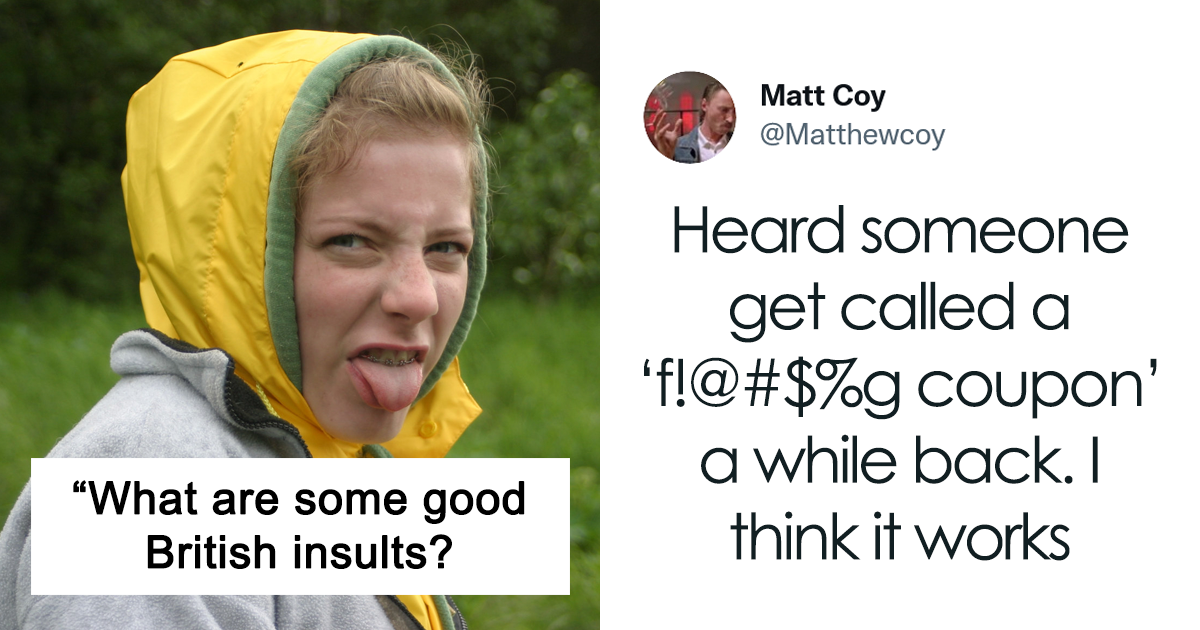
That contrast helped make a 2021 social media discussion about British put-downs so entertaining. After comedian and actor Rob Delaney asked people to share expressions that made them laugh, thousands of users contributed examples involving ordinary objects, absurd comparisons, regional slang, and the magical ability of the word “absolute” to turn almost any noun into a personal attack. The resulting collections demonstrated that a person does not always need profanity to cause emotional damage. Sometimes “You complete lampshade” will do nicely.
The jokes also reveal something deeper about British humor. The funniest lines are rarely blunt declarations that someone is stupid, annoying, or useless. Instead, they invite the target to solve a tiny linguistic puzzle. By the time the meaning becomes clear, everyone else is already laughing and the speaker has wandered off looking innocent.
Why British Insults Can Sound Almost Polite
British communication is often described as relatively indirect, particularly when criticism, disagreement, or social discomfort is involved. Instead of stating an unpleasant opinion plainly, a speaker may soften it with hesitation, understatement, humor, or exaggerated courtesy.
This does not mean every British person speaks in riddles or that direct criticism never occurs. Regional background, age, personality, social class, and the relationship between speakers all matter. Still, indirectness is common enough to confuse outsiders who interpret every sentence literally. A polite “That’s certainly one approach” may not be an endorsement. It may be the conversational equivalent of quietly lowering a lifeboat.
Understatement Keeps the Knife Hidden
An understatement deliberately represents something as less serious, intense, or important than it really is. Sarcasm commonly goes one step further by using language that conflicts with the speaker’s intended meaning, often to criticize, mock, or express irritation. British humor frequently blends the two.
Someone who has caused a complete administrative catastrophe might therefore be told, “That could have gone a little better.” A spectacularly foolish suggestion may receive a calm “Interesting.” The vocabulary stays mild while the context supplies the explosion.
Ordinary Nouns Become Precision Weapons
One of the funniest patterns highlighted in the viral thread is the use of random nouns as insults. Words such as “spoon,” “plank,” “muppet,” “flannel,” and “weapon” may become criticisms when delivered with the correct tone.
The formula is wonderfully economical:
Intensifier + harmless object = insult
Add “absolute,” “complete,” “total,” or “utter” before an everyday noun, and an innocent household item suddenly sounds like a diagnosis. Nobody can define exactly why “You absolute parcel” is insulting. That uncertainty is part of its power.
Tone Does Half the Work
British sarcasm can be difficult to recognize in writing because facial expression, rhythm, and tone often carry the intended meaning. A straight face may be the punch line. A slightly extended pause can transform praise into condemnation. Even the word “brilliant” may mean genuine approval, mild disappointment, or “You have destroyed my entire afternoon.”
This ambiguity makes sarcastic humor useful for bonding but risky when speakers do not share the same expectations. Humor can strengthen relationships and signal familiarity, yet aggressive sarcasm can also criticize, exclude, or establish status. Text-only communication removes many of the clues people normally use to distinguish affectionate teasing from hostility.
30 Tweet-Inspired British Insults and What Makes Them Funny
The following lines represent the styles, structures, and comic logic found throughout the original discussion. Consider them a field guide for recognizing a verbal attack disguised as miscellaneous inventory.
-
“You Absolute Spoon”
A spoon is useful, dependable, and innocent. None of that matters once “absolute” is placed in front of it. The target has apparently become cutlery without a clear assignment.
-
“What a Complete Muppet”
“Muppet” is a classic choice for someone behaving foolishly. It sounds more affectionate than a severe insult, making it ideal when a friend has locked the keys inside the car.
-
“You Utter Weapon”
Depending on context, “weapon” can be complimentary. In insulting form, however, it suggests a person who causes unnecessary damage simply by participating.
-
“He’s a Bit of a Plank”
A plank is straight, wooden, and not known for complex thought. The comparison completes itself while the speaker remains technically polite.
-
“You Total Turnip”
Calling someone a vegetable is rarely flattering, but “turnip” adds an oddly rural innocence. It condemns the behavior without making the room uncomfortable.
-
“Don’t Be Such a Wet Wipe”
This is particularly effective for someone being weak, tedious, or unnecessarily miserable. The insult creates a vivid object nobody wants to pick up.
-
“He Has the Energy of a Damp Receipt”
A damp receipt is fragile, inconvenient, and no longer capable of completing its one job. As personality assessments go, it is devastatingly specific.
-
“You Absolute Traffic Cone”
A traffic cone stands in the way while contributing very little to the conversation. That may not be its official purpose, but the metaphor has already won.
-
“She’s Not the Brightest Bulb in the Box”
This familiar form avoids saying someone lacks intelligence. It merely reports an unfortunate ranking within a package of lighting equipment.
-
“He Could Start an Argument in an Empty Room”
The target is not merely argumentative. He is so naturally combative that the absence of another person would present only a minor logistical challenge.
-
“You’re About as Useful as a Chocolate Teapot”
A chocolate teapot sounds charming until hot water becomes involved. The comparison is funny because the object fails precisely when asked to perform its main function.
-
“She Has All the Warmth of a Parking Ticket”
This describes an unfriendly person without using the word “unfriendly.” Instead, the audience receives the emotional experience of discovering an official fine beneath a windshield wiper.
-
“He’s a Few Biscuits Short of a Tin”
Food-based intelligence measurements are a rich comic tradition. The missing biscuits imply that something essential should be present but clearly is not.
-
“You Absolute Deck Chair”
There is no established reason a deck chair should be insulting. That is exactly why it works. The listener must now spend the day wondering what personal quality resembles folding patio furniture.
-
“I’d Explain It, but I Left My Crayons at Home”
The speaker implies that the explanation would need to be simplified beyond normal language. It is rude, certainly, but at least arts and crafts are involved.
-
“That Was Brave”
In certain situations, “brave” does not mean courageous. It means the decision was so questionable that ordinary vocabulary cannot safely approach it.
-
“You’ve Certainly Made a Choice”
This is perfect for evaluating an alarming haircut, disastrous outfit, or presentation designed entirely in fluorescent yellow. No direct criticism appears, yet hope quietly leaves the building.
-
“Well, That’s One Way to Do It”
The sentence acknowledges that an action occurred while carefully avoiding any suggestion that it should ever occur again.
-
“I Admire Your Confidence”
Genuine admiration is possible. More often, the speaker is amazed that so little preparation could produce so much certainty.
-
“You’re Very Enthusiastic”
In the right tone, this means loud, exhausting, intrusive, or dangerously close to volunteering everyone for weekend work.
-
“He Means Well”
Few phrases contain such a large emergency exit. Whatever follows has probably gone badly, but the person responsible may at least possess acceptable intentions.
-
“She’s Quite a Character”
This can describe charm and individuality. It can also warn that the woman in question has already complained to the manager, rearranged the furniture, and started a neighborhood committee.
-
“Not Bad, Considering”
The unfinished “considering” does extraordinary work. Considering what? The budget? The talent? The circumstances? The target is left to generate a personalized insult.
-
“You’ve Done Your Best”
A supportive sentence becomes lethal when the result is terrible. It gently suggests that no additional effort could have overcome the available limitations.
-
“Bless Him”
Although this phrase can express sincere affection, context may turn it into a tiny verbal blanket placed over someone who has embarrassed himself.
-
“That’s an Interesting Look”
The outfit has been observed. The observer has questions. None of those questions will be asked because society must continue functioning.
-
“You Absolute Wheelie Bin”
Large, inconvenient, and occasionally making unexplained noises in the street: the metaphor offers several possible interpretations, all unfavorable.
-
“He’s Got the Personality of Unbuttered Toast”
Toast is perfectly acceptable, but without butter it becomes an obligation. This insult specializes in describing someone technically present but emotionally unseasoned.
-
“She Could Make a Cup of Tea Awkward”
Tea is supposed to rescue uncomfortable British situations. Anyone capable of making tea itself uncomfortable has achieved an advanced level of social disruption.
-
“You Magnificent Disaster”
This final form mixes admiration and criticism. It may be affectionate, exasperated, or botha perfect example of an insult that also leaves open the possibility of another invitation.
Why These Subtle Insults Work So Well
They Make the Listener Participate
A blunt insult supplies its full meaning immediately. An indirect insult requires interpretation. The listener must connect the harmless object, exaggerated praise, or mild understatement with the speaker’s actual opinion.
That brief mental calculation creates much of the humor. Calling someone an idiot is ordinary. Calling that person “an aggressively unnecessary lampshade” forces everyone to imagine both the lampshade and the chain of events that justified the comparison.
They Preserve Plausible Deniability
Subtle insults allow speakers to retreat into innocence. Was “That’s ambitious” criticism or praise? Was “You absolute walnut” affectionate banter or genuine annoyance? The answer depends on tone, relationship, and context.
This uncertainty can reduce open confrontation. It can also create confusion, especially across cultures. Research comparing British and American English suggests that even apparently simple intensifiers may be interpreted differently because listeners balance literal meaning, politeness expectations, and conversational efficiency in different ways.
They Turn Conflict Into Entertainment
A creative insult can transform irritation into a performance. Instead of escalating an argument, the speaker reframes the moment as comedy. Friends may treat the line as banter, reply with another joke, and move on without anyone delivering a formal speech about feelings.
That does not make every insult harmless. Relationship and power matter. Teasing between close friends is different from a manager humiliating an employee or a group mocking an outsider. Successful banter depends on mutual trust and the ability of everyone involved to participate.
How to Decode a British Insult Without Starting an International Incident
First, listen for praise that does not fit the situation. If you have reversed a vehicle into a hedge and someone calls the maneuver “elegant,” you are probably not receiving a compliment.
Second, notice intensifiers attached to unrelated nouns. “Absolute legend” is usually positive. “Absolute doorknob” probably is not. “Absolute weapon” may depend on region and context, so observe whether people are laughing with you or preparing an incident report.
Third, pay attention to understatement. “A slight issue” may involve smoke, flooding, or a missing section of roof. “Not ideal” can cover circumstances ranging from a delayed train to the collapse of civilization before lunch.
Finally, do not assume every dry remark is hostile. British humor often includes self-deprecation and affectionate teasing. A friend who calls you a muppet may simply be acknowledging that you put salt in the coffee. A stranger using the same word while pointing at the exit may have a different objective.
Experiences and Lessons From the World of British Banter
Consider a typical cross-cultural workplace experience. An American employee presents a proposal to a British colleague, who responds, “That’s quite interesting. We might want to revisit one or two details.” The American hears cautious approval and makes only minor edits. The British colleague believes the proposal has been gently returned to the drawing board, where it should remain until it develops a completely different personality.
Nobody intended to mislead anyone. The speakers simply used different systems for measuring criticism. One treated clarity as respectful; the other treated softening as respectful. The confusion became visible only when the unchanged proposal appeared at the next meeting, alive and apparently seeking funding.
Social situations create similar surprises. Imagine a visitor arriving at a crowded gathering and hearing, “You found us, then.” Literally, the phrase confirms successful navigation. Depending on the delivery, however, it could mean genuine welcome, amused surprise, or recognition that the guest is ninety minutes late and carrying neither food nor an explanation.
Another common experience involves self-deprecating humor. A British acquaintance may describe his own cooking as “a threat to public safety.” An outsider who enthusiastically agrees may discover that the joke was an invitation to laugh, not a request for an independent culinary investigation. The safe response is usually to offer a mild joke about yourself rather than produce supporting evidence against the speaker.
Then there is the pub, an environment where affectionate insults can function almost like membership cards. Close friends may call one another muppets, tools, disasters, or objects normally stored in a kitchen drawer. A newcomer could wrongly conclude that the group is seconds away from fighting. In reality, the harshest-sounding remarks may be directed toward the most trusted friends, while unfamiliar people receive formal politeness.
The reverse mistake is more dangerous. Copying the vocabulary without understanding the relationship can sound aggressive. Banter is not simply a collection of funny words. It is a social agreement. Participants know the boundaries, recognize the tone, and trust that nobody intends real harm. Walking into a new office and calling the finance director an absolute wheelbarrow is therefore an advanced strategy best left untested.
Email produces its own lessons. A message beginning with “Just a gentle reminder” may carry more urgency than the adjective “gentle” suggests. “As mentioned previously” often indicates that the requested information has already been provided, possibly several times, and the sender is now maintaining professionalism through controlled breathing.
Similarly, “Happy to discuss” may be a sincere invitation, but it can also mean the writer hopes the matter will disappear without requiring a meeting. A useful response is to clarify the next action instead of trying to decode the emotional temperature of every sentence. Asking, “Would you like me to revise this by Friday?” is often safer than assuming “interesting” means approved.
Travel offers lighter examples. A visitor complaining loudly about rain may receive the observation, “You’ll enjoy August, then.” That sentence is not a meteorological forecast. It is a compact joke about optimism, weather, and the visitor’s failure to understand what country he has entered.
These experiences teach one central lesson: indirect humor depends on shared context. The words provide only part of the message. Tone, timing, facial expression, social hierarchy, and familiarity supply the rest. Once those elements become recognizable, British insults stop sounding confusing and begin to resemble what they often aresmall comic performances designed to release irritation without setting fire to the furniture.
Conclusion: An Insult Served With Excellent Manners
The viral tweet collection succeeded because it captured a recognizable feature of British humor: the ability to criticize someone without disturbing the surface of the conversation. A ridiculous noun, a calm understatement, or a suspiciously polite compliment can communicate more than a paragraph of direct abuse.
The best examples are funny because they are imaginative rather than merely cruel. They turn ordinary objects into character assessments and make listeners decode the punch line for themselves. A spoon is no longer just a spoon. In the correct sentence, it is a detailed performance review.
British subtle insults also remind us that language cannot be separated from context. “Brilliant” may mean brilliant. “Interesting” may mean interesting. Alternatively, both words may indicate that someone has made a decision so extraordinary that the speaker needs tea before discussing it.
So the next time a British person calls you an absolute lampshade, do not panic. Study the tone, consider the situation, and prepare a suitable response. Something understated would be best. Perhaps, “That’s rather rich coming from a decorative cushion.”