
Hollywood is often described as a dream factory, but factories also produce half-finished machinery, mysterious spare parts, and expensive objects that someone eventually hides in a warehouse. For every science-fiction or fantasy blockbuster that reaches theaters, dozens of ambitious projects disappear into a fog of budget problems, creative disagreements, studio politics, expired rights, and executives suddenly discovering the terrifying power of basic arithmetic.
Some unmade movies never progressed beyond a conversation. The projects on this list went much further. They inspired completed scripts, costume tests, concept paintings, casting decisions, constructed props, production offices, or years of preparation. Several came so close to filming that their cancellation felt less like rejecting an idea and more like demolishing a nearly finished spaceship.
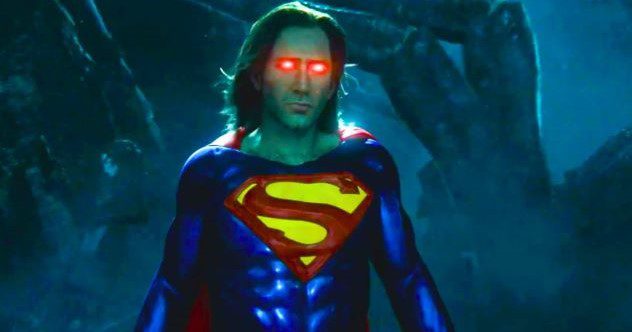
From Nicolas Cage’s long-haired Superman to an alien horror film that eventually split into E.T. and Poltergeist, these lost sci-fi and fantasy movies offer a fascinating tour through Hollywood’s most elaborate alternate timelines.
1. Alejandro Jodorowsky’s Dune
Before David Lynch and Denis Villeneuve traveled to Arrakis, Chilean-French filmmaker Alejandro Jodorowsky attempted an adaptation of Frank Herbert’s Dune that sounded less like a movie and more like a controlled explosion inside an art museum.
Development began in the mid-1970s. Jodorowsky assembled an astonishing creative team that included comic artist Jean “Moebius” Giraud, designer H.R. Giger, illustrator Chris Foss, and effects specialist Dan O’Bannon. Pink Floyd was approached to provide music. The proposed cast included Orson Welles, Mick Jagger, David Carradine, Salvador Dalí, and Jodorowsky’s son Brontis as Paul Atreides.
The director envisioned an enormous spiritual epic rather than a faithful, conventional adaptation. Detailed storyboards and designs were created, but potential financiers viewed the scale, cost, and unpredictable running time as enormous risks. The production never received the money needed to begin shooting.
Its failure still produced an extraordinary legacy. Members of its creative team later contributed to films such as Alien, while the surviving artwork became legendary among filmmakers and science-fiction fans. Jodorowsky did not make Dune, but he may have assembled the most influential imaginary film crew in cinema history.
2. Tim Burton’s Superman Lives
Imagine Superman with long black hair, a glowing biological suit, and the emotionally restless energy of Nicolas Cage. That sentence either sounds magnificent or causes your living-room furniture to move away from you. Tim Burton’s Superman Lives nearly made it real.
Warner Bros. developed the project during the 1990s as a new interpretation of the Man of Steel. Kevin Smith wrote an early screenplay involving Brainiac, Doomsday, Superman’s death, and his eventual resurrection. Later writers revised the material after Burton joined the production. Cage was cast as Superman, costume tests were filmed, sets entered development, and various versions of the hero’s suit were constructed.
Burton and Cage were especially interested in Superman’s alien identity. Their Clark Kent would not simply be a confident hero wearing glasses; he would be an outsider struggling to understand where he belonged. It was a potentially strange, melancholy superhero movie years before lonely, conflicted comic-book characters became fashionable.
Unfortunately, the budget continued growing while the screenplay remained unsettled. Warner Bros. had also suffered costly disappointments from other major releases and became nervous about financing another unconventional spectacle. The film was canceled shortly before shooting was expected to begin.
Cage eventually appeared as a version of Superman in The Flash, but the full Burton movie remains trapped in the Phantom Zone of development history.
3. Guillermo del Toro’s At the Mountains of Madness
Guillermo del Toro and H.P. Lovecraft appear to be a perfect creative match. Both are fascinated by ancient creatures, forbidden knowledge, and the possibility that opening one innocent-looking door will reveal a tentacle large enough to require its own ZIP code.
Del Toro spent years developing At the Mountains of Madness, Lovecraft’s story about an Antarctic expedition that discovers the remains of an ancient nonhuman civilization. James Cameron became involved as a producer, and Tom Cruise was discussed for a leading role. Creature concepts, environments, and extensive preproduction materials were developed.
The problem was commercial risk. Del Toro wanted a large-scale horror adventure with a budget reportedly around $150 million. He also resisted reshaping the material into a safer PG-13 attraction. Universal faced the prospect of financing an expensive, bleak, potentially R-rated movie with no romance, no traditional villain, and monsters that might cause merchandising executives to quietly lock their office doors.
The studio declined to approve production in 2011. Del Toro has periodically discussed reviving the film in a smaller or stop-motion form, particularly after establishing a relationship with Netflix, but his definitive Lovecraft adaptation remains unmade.
Considering del Toro’s talent for tragic monsters and richly textured worlds, this cancellation continues to hurt like stepping barefoot on a frozen Elder God.
4. Peter Jackson and Neill Blomkamp’s Halo
A major Halo movie once had Peter Jackson producing, Neill Blomkamp directing, Alex Garland writing, and Weta Workshop constructing armor, weapons, vehicles, and alien technology. Master Chief was practically standing beside the camera, patiently waiting for someone to call “action.”
Microsoft approached Hollywood aggressively after the enormous success of the first two games. Garland was paid to write a screenplay, while Universal and 20th Century Fox eventually agreed to share distribution responsibilities. Jackson and Fran Walsh joined as producers, and the relatively unknown Blomkamp was selected to direct.
Blomkamp wanted a gritty military science-fiction aesthetic. Weta produced physical props, including Spartan equipment and a working Warthog vehicle. However, the deal involved several powerful parties demanding creative control and substantial profit participation. As the projected budget climbed, the financial arrangement became increasingly unattractive to the studios.
Universal and Fox withdrew in 2006 after attempts to renegotiate compensation failed. The project was postponed indefinitely and never recovered.
There was at least one spectacular consolation prize. Jackson and Blomkamp redirected their partnership toward District 9, while some Halo production work contributed to the promotional shorts known as Halo: Landfall. Master Chief lost his movie, but science fiction gained a modern classic about stranded aliens, bureaucracy, and the dangers of touching suspicious black fluid.
5. George Miller’s Justice League: Mortal
Years before the DC Extended Universe, Mad Max director George Miller prepared to unite Batman, Superman, Wonder Woman, Aquaman, Green Lantern, the Flash, and Martian Manhunter in Justice League: Mortal.
Warner Bros. moved quickly during 2007, partly because the Writers Guild of America was approaching a strike. Armie Hammer was cast as Batman, D.J. Cotrona as Superman, Megan Gale as Wonder Woman, Adam Brody as Barry Allen, Common as Green Lantern, and Jay Baruchel as Maxwell Lord. Costumes were designed, actors trained, sets were planned, and production was scheduled for Australia.
Then the timetable collapsed. The writers’ strike prevented necessary screenplay revisions. At the same time, uncertainty surrounding a major Australian production rebate damaged the film’s financial structure. Moving such a giant project elsewhere would have created additional delays and expenses.
By the time those problems could be addressed, Warner Bros.’ strategy had changed. Christopher Nolan’s Batman series was thriving, and the studio became less enthusiastic about launching a separate Batman inside another expensive continuity.
Miller later demonstrated with Mad Max: Fury Road that he could turn vehicles, fire, dust, and human panic into visual poetry. The thought of him applying that energy to the Justice League remains tantalizing. His Batman probably would not have needed shark repellent, but he might have needed excellent automobile insurance.
6. Neill Blomkamp’s Alien 5
After directing Sigourney Weaver in Chappie, Neill Blomkamp began developing a new Alien film that would reconnect audiences with Ellen Ripley and the world of James Cameron’s Aliens.
Blomkamp shared concept art depicting an older Ripley, a scarred Corporal Hicks, xenomorph imagery, and industrial locations. 20th Century Fox officially moved forward with the project in 2015, and Weaver expressed enthusiasm about giving Ripley’s journey a stronger conclusion.
The proposed film appeared ready to revisit characters and ideas that had been abruptly discarded by Alien 3. Michael Biehn was connected with a return as Hicks, and the artwork suggested the combination of practical machinery, military science fiction, and biological horror that had defined the franchise’s earliest installments.
Momentum faded when Ridley Scott’s prequel series became the studio’s immediate priority. Blomkamp’s film was placed on hold while Alien: Covenant advanced. It was never revived, and the director eventually moved on.
Weaver later described Blomkamp’s screenplay as excellent and lamented that the project had disappeared. Other Alien productions have since moved forward, but this particular continuation is effectively dead. In the Alien universe, nobody can hear an abandoned screenplay scream.
7. Colin Trevorrow’s Star Wars: Duel of the Fates
Before The Rise of Skywalker, Lucasfilm planned to conclude its sequel trilogy with Colin Trevorrow directing Episode IX. Trevorrow and Derek Connolly developed a screenplay eventually titled Duel of the Fates.
The story differed dramatically from the movie audiences received. Rather than resurrecting Emperor Palpatine, it focused more directly on the conflict between Rey and Kylo Ren. Finn and Rose would have helped inspire a citizen and stormtrooper uprising on Coruscant, giving Finn’s history as a former stormtrooper a central role in the final battle.
The script also explored Rey’s struggle to reconcile different sides of the Force instead of simply repeating the Jedi doctrines of earlier generations. Kylo’s journey became darker, while General Hux received an expanded and unusually grim subplot.
Trevorrow left the film in 2017 after creative differences. Lucasfilm rehired J.J. Abrams, who developed a new screenplay with Chris Terrio. Elements of Duel of the Fates later became public through leaked drafts and concept art, turning the abandoned version into one of the most debated unmade franchise films.
Would it have satisfied every Star Wars fan? Of course not. Achieving that would require supernatural powers unavailable to either the Jedi or the Sith.
8. Darren Aronofsky’s Batman: Year One
After Batman & Robin, Warner Bros. needed a new direction for Batman. The studio approached Darren Aronofsky, the filmmaker behind Pi and Requiem for a Dream, to develop a reboot inspired by Frank Miller’s Batman: Year One.
Aronofsky and Miller collaborated on a screenplay, but their Bruce Wayne departed radically from established mythology. The character would be separated from his fortune and raised in a harsher, working-class environment. His equipment was improvised rather than supplied by a polished corporate research department, and his Batmobile resembled a modified street vehicle instead of a military prototype.
The approach emphasized psychological damage, urban decay, street violence, and an intensely physical vigilante. Aronofsky considered Joaquin Phoenix for Bruce Wayne, although the studio reportedly preferred a more conventional star. Miller later joked that his own version of Batman seemed gentle compared with Aronofsky’s interpretation.
The studio ultimately decided that the screenplay was too extreme and difficult to market as a mainstream franchise movie. Christopher Nolan later rebooted the character with Batman Begins, using some similar broad ideasrealistic equipment, fear as a weapon, and a corrupt Gothamwhile remaining much closer to familiar Batman mythology.
Aronofsky’s version might have been brilliant, disastrous, or both before breakfast. That uncertainty is precisely why it remains fascinating.
9. Steven Spielberg’s Night Skies
Following Close Encounters of the Third Kind, Columbia Pictures wanted another alien movie. Steven Spielberg developed a darker project initially known as Watch the Skies and later titled Night Skies.
Instead of friendly visitors communicating through music, the story followed a rural family terrorized by hostile extraterrestrials. Screenwriter John Sayles prepared a script, while makeup-effects artist Rick Baker began designing multiple alien creatures with distinct appearances and personalities.
During the production of Raiders of the Lost Ark, Spielberg reconsidered the idea. After making several intense films, he no longer wanted to direct or produce such a cruel alien-invasion story. He became more interested in a gentler concept about a lonely child befriending an extraterrestrial accidentally left on Earth.
That idea evolved into E.T. the Extra-Terrestrial. Meanwhile, the premise of a suburban family under siege by supernatural forces helped shape Poltergeist. Elements associated with a more frightening alien encounter also resurfaced in later genre movies.
Most abandoned productions leave behind unused paperwork. Night Skies effectively broke apart and became two major films released during the same summer. That is less a cancellation than cinematic mitosis.
10. The Beatles’ The Lord of the Rings
During the late 1960s, the Beatles considered starring in a film adaptation of J.R.R. Tolkien’s The Lord of the Rings. Their proposed casting was wonderfully chaotic: Paul McCartney as Frodo, Ringo Starr as Sam, George Harrison as Gandalf, and John Lennon as Gollum.
Stanley Kubrick was approached to direct. Fresh from creating 2001: A Space Odyssey, he certainly possessed the visual ambition required for Middle-earth. However, Kubrick reportedly considered Tolkien’s enormous narrative too difficult to compress into a workable movie.
The project faced an even larger obstacle: Tolkien did not approve of the Beatles taking control of his story. The necessary rights and permissions never aligned, and the proposal disappeared.
Decades later, Peter Jackson delivered a monumental live-action trilogy and then directed the Beatles documentary Get Back, accidentally connecting the two pieces of this historical puzzle. He also discussed the abandoned adaptation with Paul McCartney, helping confirm that it had been more than an internet rumor.
It is difficult to picture Lennon crawling through Mordor whispering about “the precious” while Harrison arrives as a mystical wizard. It is equally difficult to stop picturing it once the image enters your brain.
Why Unmade Science-Fiction and Fantasy Movies Matter
These projects reveal how fragile movies remain even after famous directors, major stars, completed scripts, and millions of dollars become involved. A production can survive years of creative development and still collapse because one financial agreement changes, one executive loses confidence, or one release elsewhere performs badly.
Unmade films also demonstrate that ideas rarely disappear completely. Night Skies became creative fuel for two classics. The failed Halo partnership helped lead to District 9. Concepts from canceled superhero movies anticipated the darker, more psychologically complicated adaptations that later dominated theaters.
Perhaps these movies remain so appealing because they can never disappoint us in ordinary ways. There are no weak visual effects, awkward performances, or questionable studio cuts in an imaginary film. Its greatest scenes exist at perfect resolution inside the viewer’s mind, where the budget is unlimited and nobody from marketing asks whether the cosmic horror creature could be made cuter.
The Fan Experience of Exploring Movies That Never Existed
Researching an unmade movie feels different from reading the history of a completed production. With a released film, the finished work sits at the center of the investigation. Viewers can compare early drafts with the final edit and see exactly which ideas survived. An abandoned film offers no such anchor. Fans must assemble the experience from scripts, costume tests, storyboards, interviews, concept paintings, casting reports, and occasionally contradictory memories.
Start With the Surviving Creative Material
The most rewarding approach is to begin with primary material whenever it is available. Reading a screenplay reveals more than a plot summary because it exposes tone, pacing, dialogue, and visual intention. Concept art can show whether a project was aiming for realism, surrealism, horror, comedy, or a combination that would have caused a studio executive to request immediate medical attention.
Costume tests are especially revealing. Nicolas Cage’s Superman Lives footage looks unusual when viewed as an isolated clip, but it also demonstrates how lighting, movement, postproduction, and context are missing from most leaked tests. Judging an unfinished costume as though it were a final cinematic image is like reviewing a cake after seeing only the flour.
Compare the Lost Version With What Replaced It
Another valuable experience comes from comparing an abandoned project with the film eventually produced. Duel of the Fates becomes more interesting when placed beside The Rise of Skywalker. Aronofsky’s Batman: Year One can be examined alongside Batman Begins and The Batman. The exercise reveals which creative problems remained important even when directors and screenplays changed.
This does not mean the unmade version was automatically superior. Lost movies benefit from mystery. Their strongest ideas circulate widely, while their weaker scenes are often ignored. A leaked outline may sound magnificent because nobody has watched its two-hour execution. Actual filmmaking introduces performances, editing, effects, studio notes, test screenings, and that one producer who suddenly believes every fantasy epic needs a sarcastic talking animal.
Treat Production Stories as Human Stories
The best unmade-movie histories are not merely catalogs of canceled entertainment. They are stories about artists investing years in work that may never reach an audience. Designers build worlds, actors train for roles, writers complete multiple drafts, and technicians manufacture objects that ultimately appear only in storage rooms or documentaries.
That perspective makes the surviving material feel valuable rather than incomplete. A canceled film can influence later productions, introduce collaborators, inspire technological experiments, or push a filmmaker toward a more personal project. Failure in Hollywood is rarely clean. Creative debris travels everywhere.
Enjoy the Alternate Timeline Responsibly
Imagining these movies is part of the fun. Jodorowsky’s Dune, Miller’s Justice League, and the Beatles’ Middle-earth adventure invite endless speculation. The healthiest conclusion, however, is not that our timeline received the wrong movies. It is that cinema contains countless unrealized possibilities behind every finished frame.
Exploring those possibilities makes familiar film history feel wonderfully unstable. One financing decision could have given the world Nicolas Cage as Superman, John Lennon as Gollum, or Tom Cruise fleeing an Antarctic tentacle. Somewhere in the multiverse, all three movies are playing as a triple featureand the concession stand is doing excellent business.