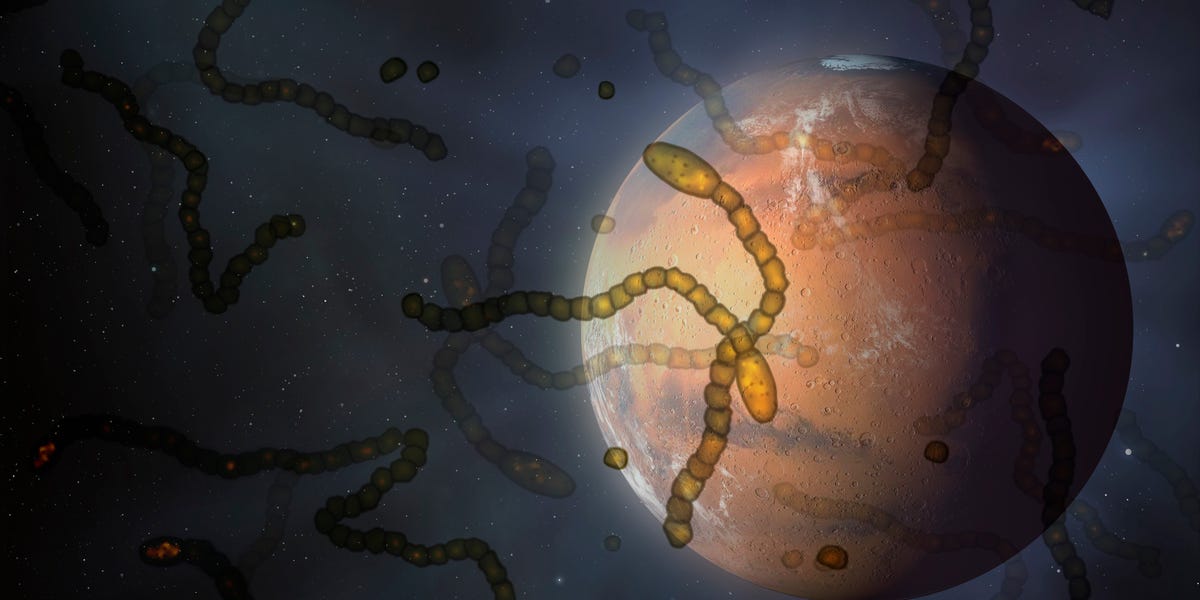

Life on Earth may have started in a warm little pond, beside a hydrothermal vent, inside a mineral-rich tide poolor aboard a rock that fell out of the sky. That final possibility is knowns more accurately describe it as a hypothesis.
Panspermia proposes that life, primitive microorganisms, or the chemical ingredients needed to build living systems traveled through space and reached Earth. Asteroids, comets, meteorites, and interplanetary dust may have acted as cosmic delivery vehicles. Imagine a bacterium taking the longest, coldest, least comfortable rideshare trip in history.
The idea sounds like science fiction, but parts of it are scientifically testable. Rocks really do move between planets. Organic molecules exist throughout the solar system. Some microorganisms can survive vacuum, radiation, extreme temperatures, and tremendous physical shocksat least under certain conditions.
None of this proves that Earth was seeded from space. It does, however, explain why panspermia remains part of serious astrobiology rather than being tossed into the same drawer as moon cheese and Martian canal cruises.
Research grounding: NASA defines astrobiology as the study of life’s origin, evolution, and distribution, while scientific reviews distinguish panspermia from a complete explanation of life’s ultimate origin.
What Does the Panspermia Theory Actually Say?
The word panspermia comes from Greek roots meaning “seeds everywhere.” Its central idea is that the seeds of life may be distributed across space instead of originating independently on every inhabited planet.
That does not necessarily mean fully developed aliens landed on prehistoric Earth and started planting bacteria in the oceans. Panspermia includes several versions, ranging from the scientifically plausible to the highly speculative.
Lithopanspermia
Lithopanspermia is the transfer of life inside rocks. A major asteroid impact could blast pieces of a life-bearing planet into space. Microbes buried inside those fragments might be shielded from ultraviolet light and some cosmic radiation. After thousands or millions of years, a fragment could collide with another habitable world.
This is one of the most studied forms of panspermia because its transportation system already exists. Scientists have identified meteorites on Earth that came from Mars and the Moon, demonstrating that planetary material can cross interplanetary space.
Radiopanspermia
Radiopanspermia suggests that tiny spores or microorganisms could be pushed through space by radiation pressure from stars. The Swedish chemist Svante Arrhenius popularized this version in the early 20th century.
The major problem is exposure. An unprotected organism drifting through space would face intense ultraviolet radiation, charged particles, dehydration, and dramatic temperature changes. Space is beautiful from a telescope, but it has a terrible hospitality rating.
Cometary Panspermia
Cometary panspermia proposes that comets could transport microbes or prebiotic organic compounds. Comets contain ice, carbon-rich material, and molecules relevant to prebiotic chemistry. They repeatedly entered the inner solar system during its early history and may have delivered water and organic matter to young planets.
Directed Panspermia
Directed panspermia is the idea that an intelligent civilization intentionally spread life. Scientists Francis Crick and Leslie Orgel discussed this possibility in the 1970s, not because they had evidence of alien gardeners, but because it created questions that could theoretically be investigated.
Directed panspermia remains much more speculative than natural rock-based transfer. It introduces an extraterrestrial civilization without explaining how that civilization originated, so it moves the mystery rather than solving it.
Research grounding: NASA and peer-reviewed reviews describe lithopanspermia, comet-based transfer, radiation-driven transport, and directed panspermia as distinct versions of the broader hypothesis.
Why Panspermia Is Scientifically Possible
A hypothesis does not become credible merely because nobody can prove it impossible. It needs mechanisms compatible with physics, chemistry, geology, and biology. Panspermia has several pieces of supporting evidence, although those pieces have not yet formed a complete picture.
Planets Really Do Exchange Rocks
Large impacts can accelerate surface material beyond a planet’s escape velocity. Some of that material enters stable orbits, wanders through the solar system, and eventually reaches another world.
Martian meteorites found on Earth provide direct evidence of this process. They were launched from Mars by ancient impacts, traveled through space, entered Earth’s atmosphere, and survived long enough to land on the surface. The planetary postal service is slow, violent, and unlikely to offer tracking information, but it works.
Material probably moved in both directions more frequently during the early solar system, when collisions were more common. Earth, Mars, Venus, asteroids, and perhaps icy moons may have exchanged significant quantities of debris.
Research grounding: NASA reports that meteorites from Mars reach Earth and that most meteorites originate from shattered asteroids, with smaller numbers coming from Mars or the Moon. s Ingredients Exist Beyond Earth
Carbon-rich meteorites contain amino acids, nitrogen-bearing compounds, and other organic molecules. These substances are not living, but they demonstrate that complex prebiotic chemistry is not limited to Earth.
Samples collected directly from asteroid Bennu by NASA’s OSIRIS-REx spacecraft provided especially valuable evidence because scientists could study relatively pristine material with much less risk of terrestrial contamination. Analyses revealed numerous amino acids, all five nucleobases used by terrestrial DNA and RNA, ammonia, and thousands of nitrogen-containing chemical species.
Later research also identified biologically important sugars, including ribose, in Bennu material. Ribose is part of RNA, although finding it does not mean RNA or life existed on the asteroid. A box containing flour, sugar, and eggs is not automatically a birthday cakeand it certainly does not prove that somebody blew out candles on Bennu.
These discoveries support a less dramatic but highly plausible idea called molecular panspermia: asteroids and comets may have delivered prebiotic ingredients that helped Earth produce life locally.
Research grounding: NASA’s Bennu analyses reported amino acids, canonical nucleobases, ammonia, nitrogen-rich organics, and later several sugars, while emphasizing that these compounds are ingredients rather than evidence of organisms. Microorganisms Are Extremely Tough
Earth is home to extremophiles that tolerate radiation, freezing, salt, pressure, acidity, dryness, or heat that would ruin an ordinary organism’s afternoon. Bacterial spores can enter dormant states, and organisms living inside rock may receive additional protection.
Experiments outside spacecraft and on the International Space Station have exposed microorganisms to space conditions. Unshielded ultraviolet radiation is often devastating, but cells protected by layers of other cells, minerals, or artificial material can survive much longer.
In one experiment, thick aggregates of Deinococcus bacteria retained surviving cells after three years of exposure outside the International Space Station. DNA damage occurred, and survival depended partly on shielding and repair mechanisms. The experiment did not recreate a million-year journey inside a meteorite, but it showed that “microbes die instantly in space” is too simple an objection.
Research grounding: Space-exposure studies identify solar ultraviolet radiation as a major hazard but show that aggregates, minerals, and rock-like shielding can improve survival.
The Three Obstacles Every Space Microbe Must Survive
Lithopanspermia requires success in three difficult stages: launch, transit, and arrival. Failing any one of them turns the hypothetical space traveler into extremely tiny organic debris.
Stage 1: Surviving Launch
An impact powerful enough to eject a rock from a planet creates tremendous pressure and heat. It seems reasonable to assume that everything inside would be sterilized, but impact conditions are not uniform.
Some fragments can be accelerated without being completely melted. Laboratory shock experiments indicate that certain spores and rock-dwelling microorganisms can survive brief, intense pressure. Microbes buried deeper inside a rock would have a better chance than organisms sitting on the surface wearing metaphorical sunglasses.
Stage 2: Surviving the Journey
Interplanetary space exposes material to vacuum, ultraviolet light, solar particles, and cosmic rays. Travel time is crucial. A journey from Mars to Earth could take thousands to millions of years, although a fraction of rocks may arrive much sooner.
A thick rock can block ultraviolet radiation, but high-energy cosmic rays penetrate more deeply. Over time, radiation breaks chemical bonds and damages genetic material. Dormancy slows metabolism but does not magically make DNA immortal.
Local panspermia between neighboring planets is therefore considered more plausible than transport between distant star systems. Crossing a few tens of millions of miles is challenging. Crossing light-years while remaining biologically viable is another league entirely.
Stage 3: Surviving Arrival
A meteor entering an atmosphere develops an intensely heated outer layer. The inside, however, may remain comparatively cool because entry heating is brief and much of the hot surface material burns away.
An experiment using an artificial meteorite attached to a returning spacecraft found that a spore-forming bacterium enclosed inside the material survived atmospheric entry. This did not prove that natural panspermia has occurred, but it demonstrated that entry is not automatically fatal to every protected organism.
After landing, the survivor would still need liquid water, useful chemistry, tolerable temperatures, and an energy source. Reaching Earth is not enough. The destination must be ready for a very demanding microscopic houseguest.
Research grounding: Reviews divide lithopanspermia into ejection, interplanetary transit, and atmospheric entry; experiments have tested microbial shock resistance and reported survival inside artificial meteorite material during reentry.
Could Life on Earth Have Started on Mars?
Mars is one of the most interesting possible starting points for local panspermia. Early Mars had rivers, lakes, groundwater, volcanic activity, and environments that may once have been habitable. It may also have cooled into a stable, life-friendly state earlier than Earth.
If primitive life emerged on ancient Mars, impacts could have sent microbe-bearing rocks toward Earth. Because Martian meteorites demonstrably reach our planet, the delivery route is real even though the passenger list remains unknown.
This scenario creates an extraordinary possibility: Earth life could be descended from ancient Martian microorganisms. In that case, humans would technically be Martians after alljust with better oceans and significantly more coffee shops.
However, scientists have not confirmed past or present life on Mars. Organic compounds are not sufficient evidence because nonliving geochemical reactions can also produce them. The famous Martian meteorite ALH84001 once generated excitement over microscopic features interpreted as possible fossils, but most researchers now favor nonbiological explanations for those features.
Finding ancient Martian life would not automatically prove panspermia. Scientists would need to determine whether Martian and terrestrial organisms shared a common biochemical ancestry or represented independent origins.
Research grounding: NASA describes ancient Mars as potentially habitable and confirms that Martian rocks reach Earth, while noting that the reported biological features in ALH84001 are generally considered more likely nonbiological.
Panspermia Versus Abiogenesis
Abiogenesis is the scientific study of how life could emerge from nonliving chemistry. Researchers investigate scenarios involving hydrothermal vents, shallow pools, mineral surfaces, atmospheric chemistry, lipid membranes, metabolism-first systems, and an early RNA world.
Panspermia and abiogenesis are not necessarily competitors. Life could have originated through abiogenesis on Mars, an asteroid-sized world, or another planet before being transferred to Earth. Alternatively, prebiotic molecules could have formed in space and helped abiogenesis occur here.
The famous Miller-Urey experiments showed that amino acids could form when simple gases were exposed to electrical energy under simulated early-Earth conditions. Modern origin-of-life research has moved far beyond that original setup, but the core lesson remains important: natural chemistry can produce biologically relevant molecules without existing organisms.
Panspermia does not answer the deepest question of how life first arose. It changes the address. Saying that life came from another world still leaves scientists asking what happened on that world to transform chemistry into biology.
For that reason, the most productive research does not treat cosmic delivery and Earth-based chemistry as an either-or contest. Early Earth probably received extraterrestrial organic material while also operating its own enormous chemical laboratory.
Research grounding: Origin-of-life research includes prebiotic synthesis and RNA-world models; scientific reviews emphasize that panspermia relocates rather than resolves life’s ultimate origin.
What Evidence Would Prove Panspermia?
A convincing case would require more than finding carbon, amino acids, or suspicious microscopic shapes. Those features can be produced by nonbiological chemistry or introduced through contamination.
Strong evidence might include a preserved extraterrestrial organism in a carefully collected, uncontaminated sample. Researchers would examine its cell structure, chemistry, isotopes, informational molecules, and relationshipif anyto Earth life.
If an organism from Mars used DNA, the same genetic code, matching protein-building machinery, and closely related genes, shared ancestry would become a serious possibility. Scientists would then need to establish the direction of transfer. Earth could have seeded Mars instead of Mars seeding Earth.
An organism with a completely independent biochemistry would be equally remarkable but would not support shared panspermia. It would suggest that life arose more than once, possibly indicating that biology appears readily when conditions are favorable.
Researchers must also control contamination with almost comical strictness. Earth microbes travel on spacecraft, laboratory tools, clothing, air currents, and human skin. A bacterium discovered in a space sample is not impressive if it turns out to be Gary from the cleanroom floor.
Pristine samples returned directly from asteroids, Mars, or icy moons offer the best opportunities. Multiple independent laboratories would need to reproduce the findings before anyone responsibly announced proof of extraterrestrial life.
Why Many Scientists Remain Skeptical
The biggest objection is the absence of direct evidence. Scientists have demonstrated individual steps that could permit panspermia, but no complete natural journey involving confirmed extraterrestrial life has been observed.
Radiation remains a severe obstacle during long trips. Laboratory experiments lasting months or years cannot fully reproduce exposure over hundreds of thousands or millions of years. DNA and other complex biological molecules gradually break down, even in dormant cells.
Successful delivery may also be statistically rare. A suitable organism must be buried in the right rock, survive launch without excessive heating, avoid lethal radiation, reach a habitable planet, survive entry, land in a favorable environment, and begin reproducing. That is less like winning one lottery and more like winning several lotteries while trapped inside a boulder.
Claims of microbes in meteorites have repeatedly encountered problems involving contamination, ambiguous structures, and nonbiological mineral processes. Extraordinary claims require evidence that survives extraordinary levels of checking.
Most importantly, possibility is not probability. The laws of nature may allow lithopanspermia without panspermia being responsible for the origin of life on Earth.
Research grounding: Critical reviews identify radiation damage, transit duration, contamination, ambiguous biosignatures, and lack of direct evidence as major unresolved weaknesses.
Is the Panspermia Theory Possible?
Yessome forms of panspermia are physically possible based on current evidence. Rocks move between planets. Organic molecules form in space. Protected microorganisms can survive several space-related stresses. Atmospheric entry does not always sterilize a meteorite’s interior.
That conclusion must be paired with an equally important statement: panspermia has not been proven to explain the origin of life on Earth.
The strongest version of the hypothesis is probably local lithopanspermia, particularly between early Earth and Mars. The weaker but still persuasive idea is that asteroids, meteorites, and comets supplied young Earth with water and prebiotic ingredients. Interstellar transport of living organisms remains considerably more difficult because of distance, radiation, and time.
Panspermia matters even if Earth life began entirely on Earth. It forces scientists to think of biology as a planetary and potentially cosmic phenomenon. If microbes can move naturally between worlds, planets may not be isolated biological experiments. A single origin event could produce related biospheres across an entire planetary system.
Experiences That Make the Panspermia Question Feel Real
Panspermia can seem abstract when reduced to terms such as “impact ejecta” and “prebiotic organics.” A few real-world experiences can transform it from a textbook hypothesis into a question that feels surprisingly close to home.
Watch a Meteor Shower Without Checking Your Phone
Begin with a meteor shower. Find a dark location, allow your eyes to adjust, and watch small particles enter the atmosphere. Most visible meteors are tiny and burn away, but the experience makes one fact unavoidable: Earth is not sealed off from space.
Material arrives continuously. Dust, grains, and occasional rocks cross the atmosphere while humans sleep, work, argue about television endings, and forget passwords. Watching those bright streaks makes cosmic delivery feel less like a rare plot device and more like an ongoing planetary process.
The next mental step is easy: if ordinary minerals can arrive, what else might travel inside sufficiently large, protected fragments?
Stand Beside a Real Meteorite
Visit a natural history museum, university collection, or science center with meteorites on display. Some institutions allow visitors to touch an iron meteorite. Its surface may look like an unusually stubborn rock, but its age and history change the experience.
You are looking at material that formed before Earth became a finished planet. Some meteorites contain compounds produced in asteroids, in the early solar nebula, or from material inherited from interstellar space. They are physical archives from an era when the ingredients of planets were still being mixed.
Holding or standing beside such an object shrinks the psychological distance between Earth and space. The universe is no longer “up there.” Part of it is sitting in a display case six feet away, probably beside a gift shop selling astronaut ice cream.
Research grounding: Carbonaceous meteorites preserve diverse extraterrestrial organic matter formed or modified in interstellar, protoplanetary, and asteroid environments. re an Extreme Environment on Earth
A hot spring, salt flat, polar exhibit, cave, acidic lake, or deep-ocean documentary can provide another useful perspective. These environments show how thoroughly life occupies Earth’s difficult corners.
Microbes live inside rocks, beneath seafloors, in highly acidic water, and in environments with little available energy. Extremophiles do not prove panspermia, because organisms evolved their adaptations on Earth. They do demonstrate that life’s survival limits are wider than everyday experience suggests.
After learning about organisms that tolerate conditions once considered uninhabitable, the idea of a dormant cell protected inside a meteorite sounds less absurdalthough it remains a formidable survival challenge.
Follow a Sample-Return Mission
Following missions such as OSIRIS-REx offers a front-row seat to modern origin-of-life research. The spacecraft traveled to Bennu, collected material from its surface, and returned the sample to Earth. Scientists then opened and analyzed it under carefully controlled conditions.
The excitement was not based on finding alien bacteria. It came from seeing pristine asteroid chemistry in extraordinary detail. Each amino acid, mineral, salt, and sugar helped reconstruct the environments that existed near the beginning of the solar system.
This is how science usually advancesnot through one dramatic announcement, but through thousands of measurements, arguments, calibration checks, and researchers asking whether a signal came from an asteroid or somebody’s glove.
Perform a Panspermia Thought Experiment
Imagine two early planets. Planet A develops microorganisms first. An impact launches billions of rocks, but only a tiny fraction contain microbes. Most fragments fall back, enter the star, or wander indefinitely. A few reach Planet B. Nearly all passengers die, but one protected population lands in shallow water and reproduces.
This thought experiment reveals both the appeal and weakness of panspermia. Given enough rocks and enough time, an extremely unlikely transfer may occur. Yet showing that an event could happen is different from showing that it did.
That tension is what makes the subject so compelling. Panspermia sits between established planetary mechanics and an unanswered biological mystery. It invites imagination while demanding evidencea combination that keeps science honest and makes the universe wonderfully difficult to ignore.
Conclusion: Our Family Tree May Have Cosmic Roots
The origin of life remains one of science’s greatest unsolved problems. Panspermia offers a possible chapter in that story, but not necessarily its opening page. Life or its ingredients may have traveled to Earth inside asteroids, meteorites, comets, or dust. Earth may even have exchanged primitive organisms with Mars during the solar system’s turbulent youth.
Current evidence establishes possibility, not historical proof. Space contains organic molecules. Planetary rocks cross enormous distances. Some protected microbes survive portions of the journey. What scientists have not found is an uncontaminated extraterrestrial organism that can be connected to the ancestry of life on Earth.
Until such evidence appears, panspermia should be treated as a fascinating, testable hypothesis rather than a confirmed answer. Whether our earliest ancestor formed in an Earthly pool or arrived inside a Martian rock, every atom in its body was already cosmic. In that broader sense, life has always been made of stardusteven if the first cell never needed a spaceship.