
Some design collections arrive with velvet ropes, dramatic lighting, and chairs that look terrified of being sat on. The KIOSK collection from Greece took a more democratic route. Its stars included a rolling pin, an aluminum coffee pot, a hand broom, animal bells, paper clips, a cheese-storage box, and an olive-harvesting tool. None was created to win an award. All were made to do a job.
That was precisely the attraction for KIOSK founders Alisa Grifo and Marco ter Haar Romeny. Instead of hunting for luxury souvenirs or objects already approved by the international design circuit, the New York-based duo searched Greek hardware stores, kitchen suppliers, agricultural shops, and neighborhood businesses. They wanted products shaped by local habits, available materials, economic realities, and generations of practical knowledge.
The resulting Greek KIOSK collection presented ordinary tools as what they had quietly been all along: examples of vernacular design with personality, history, and purpose. Call them humble heroesthe household objects that save dinner, tidy the floor, measure the wine, or locate a wandering goat without demanding applause afterward.
What Was KIOSK?
Founded in New York City in 2005, KIOSK occupied an unusual space between a store, gallery, museum, travel journal, and ongoing art project. Its operating method sounded simple: research a place, travel there, meet people, collect locally significant objects, and present those finds in an exhibition-like setting. Sales helped fund the next investigation.
Grifo and Romeny were interested in items that residents considered normal but visitors might find revelatory. Their collections drew attention to products that rarely appeared in glossy design magazines: brushes, graters, notebooks, toys, cleaning tools, food packages, hooks, and other hardworking members of the domestic supporting cast.
This approach challenged a familiar assumptionthat good design must come from a celebrated designer or prestigious manufacturer. KIOSK suggested that a well-proportioned strainer purchased from a kitchen supplier could reveal as much about a culture as an expensive showroom piece. It simply required someone to stop, look, and ask why it was made that way.
A Shop That Behaved Like an Exhibition
KIOSK’s original SoHo location at 95 Spring Street became known for transforming inexpensive goods into objects of attention without making them feel artificially precious. Visitors could inspect, discuss, touch, and purchase the displays. It was cultural research with a cash register, though describing it merely as retail would be like describing a Greek taverna as a room containing chairs.
Over the years, the project expanded beyond its storefront through installations and collaborations with institutions including MoMA PS1, the Hammer Museum, and London’s Institute of Contemporary Arts. Its archive eventually documented roughly 1,400 objects collected during visits to more than 20 countries.
Why Greeceand Why at That Moment?
Grifo and Romeny traveled to Greece in October 2013, when the country was still struggling with a severe economic crisis. Their research had an element of urgency. Small businesses were closing, manufacturers were disappearing, and some familiar products were becoming difficult to trace. A shop might still carry an item even though the workshop that made it no longer answered its telephone.
The collection therefore became more than a roundup of attractive Greek household goods. It documented a vulnerable layer of material culture: inexpensive objects produced and sold outside the luxury market, often by independent companies with limited international visibility.
The timing also echoed KIOSK’s own circumstances. After eight years in SoHo, the project was losing its physical space amid changes in downtown Manhattan real estate. The Greek collection arrived while both its subject and its presenter were confronting versions of the same problem: distinctive local businesses being squeezed by economic forces much larger than a kitchen box or neighborhood storefront.
KIOSK Versus the Greek Periptero
The name KIOSK can create a little confusion. The project was not a collection of Greek street kiosks, but it shared something important with the country’s famous periptera. A Greek periptero is a compact sidewalk shop that may sell newspapers, drinks, snacks, phone cards, cigarettes, tissues, and an astonishing number of emergency purchases from a space barely large enough to accommodate one deep breath.
Historically, these kiosks became important neighborhood meeting points as well as sources of livelihood. Operators knew customers’ routines, stocked requested products, and often remained open late. Like KIOSK’s curatorial project, the periptero turned a small footprint into a dense portrait of everyday life. Both proved that a culture can reveal itself through the things people reach for on an ordinary Tuesday.
The Standout Objects in the Greek KIOSK Collection
The appeal of the collection came from accumulation. No single object claimed to explain Greece. Together, however, the tools connected cooking, agriculture, domestic work, hospitality, religion, and rural life.
The Greek Sifter
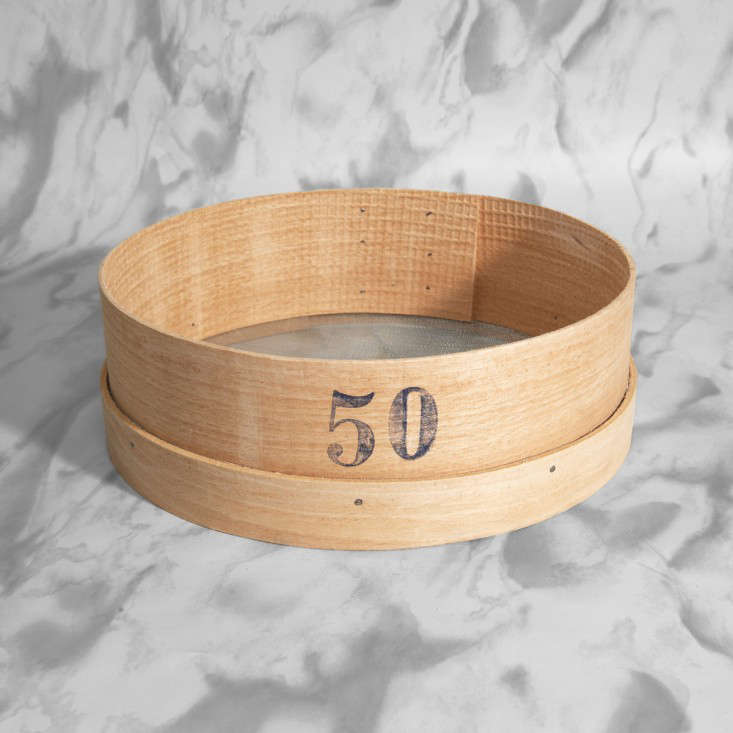
Made from wood and metal, the Greek sifter looked sturdy enough for flour, soil, or any material needing to become less lumpy. Grifo noted how often sifters appeared in Greece and playfully connected their prevalence with the country’s countless archaeological sites. After all, a land full of buried history should probably keep a decent sieve nearby.
Its form was direct: a circular frame, mesh center, and no decorative gymnastics. Yet wear, texture, and the mysterious number painted on one example gave it an identity that a perfectly standardized replacement might lack.
The Long Rolling Pin
The collection’s slim Greek rolling pin measured approximately 25 inches long and 1.5 inches in diameter. This narrow shape is useful for rolling delicate pastry and thin sheets of dough, allowing the cook to wrap dough around the pin and work across a wide surface.
It is a fine example of design evolving through technique. Someone accustomed to a thick, handled rolling pin might initially wonder whether a broom lost its job. In practiced hands, however, the simple wooden cylinder becomes precise, efficient, and remarkably versatile.
The Briki Coffee Pot
The small aluminum coffee pot, commonly called a briki, reflected the daily ritual of Greek coffee. Finely ground coffee, water, and sugar are heated together, with the pot removed as foam rises toward the rim. Traditionally, similar pots could also be warmed in hot sand or ash for gentle, even heating.
Its narrow neck helps manage the foam, while its long handle keeps fingers away from the heat. The pot is modest, specialized, and socially powerful: it produces only a few small servings, encouraging coffee to be made slowly and shared rather than transported in a bucket-sized paper cup.
The Aluminum Strainer
A two-tone aluminum strainer in the collection won admirers because it was light, balanced, and appropriately sized. That may sound like faint praise until one has wrestled with an enormous colander that occupies half a cabinet and still allows berries to escape through the holes.
The strainer demonstrated a central lesson of vernacular design. Comfort and usefulness often come from unremarkable decisionsdiameter, weight, hole size, handle placementrefined through repeated manufacture and use.
Mountain Tea and Beeswax Candles
Not every selection was a hard tool. Greek mountain tea, made from plants in the Sideritis genus, brought aroma, landscape, and hospitality into the collection. The herb is traditionally gathered in mountainous regions and brewed into a pale, fragrant infusion with earthy, floral notes.
Greek beeswax candles added another sensory connection. Their warm color and subtle honey-like scent came from the material itself. Long associated with religious and domestic use, these tapers did not need artificial perfume or elaborate packaging to announce their presence. They simply glowed and smelled faintly of the place from which they camean impressive résumé for wax.
The Screened Steel Kitchen Box
One of the most visually distinctive objects was a steel kitchen box with screened sides. Traditionally used to protect or age foods while allowing ventilation, it offered storage without hiding its contents behind an opaque door.
KIOSK proposed adapting several boxes as wall-mounted cabinets for plates, glasses, and dried goods. This was reuse through imagination rather than renovation for renovation’s sake. The original object remained legible, but its function could travel from a rural food-storage tradition into a compact urban kitchen.
Animal Bells and the Zevla
The collection also entered pastoral territory with sheep and goat bells. Their differing shapes and tones were not arbitrary decoration. Distinct sounds helped shepherds identify and locate animals across uneven terrain. The bell was simultaneously hardware, communication device, and rural soundtrack.
A zevla, or wooden goat collar, carried burned decorative markings and could become flexible after soaking. Displayed away from its working context, the curved form resembled a piece of folk sculpture. Yet treating it only as sculpture would miss half the story. Its beauty emerged from construction, use, and the intelligence of a tool designed around an animal’s body.
The Hand Broom, Stove, and Olive Harvester
A compact hand broom demonstrated that not every broom requires a full-length handle and a ceremonial closet of its own. For quick cleaning and small homes, the short format saves space and offers direct control.
The brown-speckled, enameled three-burner stove was equally practical but more ambitious. Versions of this portable gas appliance could support serious outdoor cooking, including restaurant work. Its durable surface and straightforward controls made it look both nostalgic and ready for lunch service.
At the other end of the complexity scale, a small plastic olive harvester resembled a wide-toothed comb. Drawn through olive branches, it helped separate fruit from foliage. Its low price and uncomplicated shape disguised generations of agricultural knowledge. Sometimes innovation is not an app. Sometimes it is a plastic comb that has met an olive tree.
Oinometra Cups and Greek Paper Clips
Colored aluminum measuring cups, or oinometra, were associated with taverna service. Different finishes could distinguish vessels intended for water, wine, or olive oil. The colors made identification immediate while bringing a cheerful rhythm to the table.
Even Greek paper clips earned a place in the collection, partly because of their classic packaging. This may be KIOSK’s philosophy in its purest form: nothing is too small or ordinary to carry graphic, industrial, and cultural information. A paper clip can hold documents together while its box quietly documents typography, manufacturing, and office life. It has range.
Why These Humble Objects Matter
Mass retail has made household products widely accessible, but it has also encouraged visual and functional sameness. The same storage bin, brush, or kitchen gadget can appear in cities thousands of miles apart, separated only by a different barcode sticker.
The Greek KIOSK collection resisted that flattening effect. Its objects expressed local responses to specific conditions: thin pastry dough, mountain herbs, olive cultivation, compact kitchens, outdoor cooking, livestock management, and the rituals of coffee and taverna service.
This does not mean every old product is automatically brilliant. Nostalgia is not quality control. Some traditional tools are awkward, unsafe, or obsolete. KIOSK’s contribution was more thoughtful: it asked viewers to judge familiar objects again, paying attention to proportion, material, repairability, humor, and cultural context.
The collection also offered an alternative to souvenir shopping. Instead of buying an object printed with a landmark, a traveler could choose something residents genuinely used. A rolling pin or coffee pot may not shout “Greece” from a refrigerator door, but it can carry a deeper memory because it participates in daily life.
Lessons for Designers, Collectors, and Curious Travelers
Look Where Design Is Not Announcing Itself
Hardware stores, agricultural suppliers, stationery shops, and neighborhood markets can reveal more about local design than trend-driven boutiques. Products in these places survive because they work, remain affordable, or satisfy habits that outsiders may not immediately understand.
Ask How an Object Is Used
Context can transform an odd-looking utensil into an elegant solution. Learn who uses it, what problem it solves, how it is maintained, and whether its form has changed. The explanation may be more valuable than the object itself.
Respect Origins Without Freezing Them
A cheese-storage box can become a cabinet, and an animal collar can be appreciated as sculpture. Adaptation is part of an object’s life. The important thing is to preserve its story rather than stripping away the people and practices that gave it meaning.
A 500-Word Experience: Seeing Greece Through Everyday Things
Imagine beginning a day in Athens without a checklist of monuments. The assignment is simpler: notice the tools. At a neighborhood periptero, newspapers hang overhead while drinks, candy, batteries, and tiny necessities surround the operator like an expertly managed landslide. The kiosk is not styled to appear authentic. It is authentic because people are using it.
A few streets away, a hardware store displays brushes, sieves, rope, and enamelware. The round paintbrush resembles the one selected by KIOSKlarge, dense, and clearly prepared for a serious encounter with a whitewashed wall. Pick it up and its design begins making sense. The thick bristles hold material; the round body spreads pressure; a pole can extend its reach. What looked oversized now seems perfectly reasonable. The brush has not changed. Your understanding has.
At a kitchen shop, aluminum strainers hang above stacks of pots. They are light rather than luxurious, their surfaces likely to collect scratches and small dents. That future wear is not a defect. It is the beginning of a record. A tool used every week acquires evidence of meals, seasons, and the person who always puts it away in the wrong cabinet.
Later, Greek coffee arrives in a small cup with grounds settled at the bottom. Nearby sits the briki that made it. The pot’s scale alters the pace of the experience. There is no giant serving designed to accompany three errands and a conference call. The coffee asks you to stay put for a moment. This may be the most advanced feature any beverage container has ever achieved.
Outside the city, the collection’s agricultural objects become easier to read. Animal bells are no longer decorative metal forms but audible markers moving through the landscape. An olive-harvesting comb is not a curious piece of plastic but an extension of the hand. Mountain tea connects a dry bundle of stems to elevation, climate, gathering, and hospitality.
Back indoors, a wooden rolling pin turns a ball of dough into a thin sheet suitable for pastry. The tool contains no patented mechanism. Its intelligence is distributed between material, proportion, and human technique. Watching someone use it reveals what a product photograph cannot: good design sometimes lives in a practiced gesture.
This way of traveling changes what deserves attention. Instead of asking only, “What should I photograph?” you begin asking, “What do people depend on?” The answers may include a broom without a long handle, a ventilated steel box, or a package of paper clips with unexpectedly excellent typography.
That is the lasting experience offered by Humble Heroes and the KIOSK collection from Greece. It encourages slow looking without insisting that everything become precious. These objects were meant to strain, sweep, measure, brew, carry, and ring. Their beauty is inseparable from those verbs.
The collection ultimately makes a persuasive case for curiosity at household scale. Greece appears not as a postcard composed exclusively of blue water, white walls, and ancient columns, but as a living network of kitchens, farms, workshops, tavernas, and street-corner businesses. Its humble objects do not pose as national symbols. They become meaningful because they have served people welland because two unusually attentive collectors noticed.