
Note: This article is based on current, real information synthesized from reputable U.S. space and science sources, including NASA, FAA, Space Foundation, SpaceX, Blue Origin, The Planetary Society, and the Smithsonian National Air and Space Museum.
The Apollo program was magnificent. It gave humanity a sentence so famous that even people who cannot remember where they put their car keys can quote it: “That’s one small step for man, one giant leap for mankind.” Apollo put astronauts on the Moon, proved that engineering could out-muscle fear, and made the night sky feel a little less unreachable. It was brave, brilliant, and occasionally held together by slide rules, coffee, and the quiet panic of thousands of engineers wearing short-sleeved white shirts.
So how could today’s space race possibly be better than Apollo? Isn’t that like saying a modern microwave is better than a grandmother’s cast-iron skillet? Technically, maybe. Emotionally, people will argue.
But here is the case: today’s space race is better not because it is more dramatic, but because it is more durable. Apollo was a sprint. Today’s space race is a construction project, a business ecosystem, a science campaign, an international partnership, and a long-term attempt to make space useful for life on Earth. The modern era of space exploration includes NASA’s Artemis program, reusable rockets, commercial crew transportation, private lunar landers, international partners, satellite networks, robotic scouts, and a growing space economy. It is messier than Apollo, less poetic at times, and frequently delayed because apparently rockets still dislike schedules. Yet it is also more practical, more inclusive, and more likely to build something that lasts.
Here are three reasons why today’s space race is better than Apollo, even while Apollo remains one of humanity’s greatest achievements.
Reason 1: Today’s Space Race Is Built for Staying, Not Just Visiting
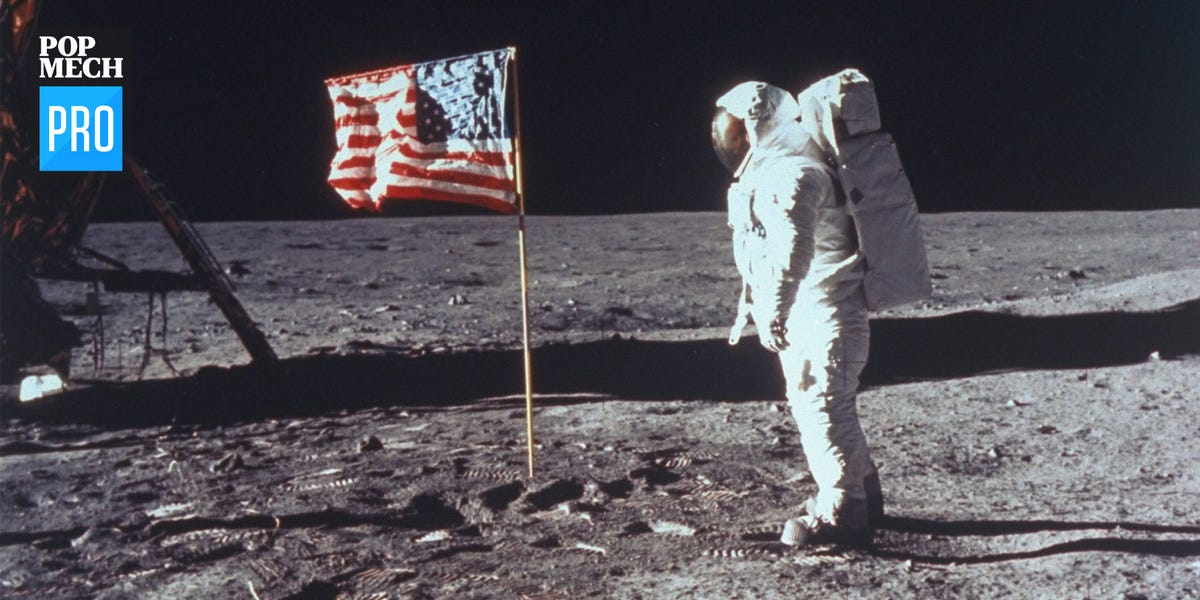
Apollo’s achievement was breathtaking, but its structure was temporary. The United States had a clear Cold War goal: beat the Soviet Union to the Moon. NASA did that in 1969 with Apollo 11, and five more Apollo missions landed astronauts on the lunar surface between 1969 and 1972. Then the footprints stopped.
That is not a criticism of Apollo’s astronauts, engineers, or mission planners. They did exactly what they were asked to do, and they did it with technology that now looks charmingly ancient. The Apollo Guidance Computer had less computing power than a modern smart toaster, and somehow it helped guide human beings across deep space. If your toaster ever starts calculating lunar trajectories, unplug it and call someone.
The limitation was not courage. It was design. Apollo was created to win a race, not to build a permanent transportation network. It was a government-led, mission-by-mission effort with enormous national funding, extraordinary urgency, and a finish line everyone understood. Plant the flag. Collect rocks. Return safely. Win.
Today’s space race has a different goal: make returning to the Moon repeatable. NASA’s Artemis campaign is not simply about recreating Apollo in high definition. It is about using the Moon as a testbed for future Mars missions, long-duration exploration, lunar science, surface mobility, power systems, habitats, spacewalk technologies, and resource scouting. The modern plan focuses heavily on the lunar south pole because scientists believe some permanently shadowed regions may contain water ice. That matters because water can support astronauts, produce oxygen, and potentially be converted into rocket propellant. In plain English: if explorers can learn to use what is already there, they do not have to pack the universe’s most expensive suitcase every time they leave Earth.
NASA’s Commercial Lunar Payload Services program, known as CLPS, shows how different the modern strategy is. Instead of NASA building every lunar delivery system itself, the agency buys delivery services from American companies. These robotic missions can send science instruments and technology demonstrations to the Moon before astronauts arrive. That means the Moon can be studied, tested, mapped, and poked by robots before humans show up and start asking where the coffee machine is.
From “Flags and Footprints” to Infrastructure
The phrase “flags and footprints” is often used to describe short-term lunar exploration. Apollo was much more than that scientifically, but the phrase captures a real issue: after Apollo, there was no permanent lunar base, no routine cargo delivery system, no recurring human landing architecture, and no lunar economy. Today’s space race is trying to avoid that dead end.
Modern exploration includes human landing systems, lunar cargo landers, next-generation spacesuits, pressurized and unpressurized rovers, communications systems, and concepts for sustained surface operations. NASA has selected commercial partners for major pieces of this architecture, including SpaceX’s Starship-based Human Landing System and Blue Origin’s Blue Moon lander family. These vehicles are not just symbolic machines. They are intended to move crews and cargo in ways that can support repeated missions.
That is the big upgrade. Apollo answered the question, “Can humans reach the Moon?” Today’s space race asks, “Can humans keep going back, do useful work, and prepare for Mars?” The second question is harder, less cinematic, and much more important.
Reason 2: Reusable Rockets and Commercial Competition Changed the Game
The Apollo era gave us the Saturn V, still one of the most iconic machines ever built. It was enormous, powerful, and capable of shaking the ground like Earth had received an angry phone call. But it was also expendable. Like most rockets of its era, it was used once and thrown away. Imagine buying a jumbo jet, flying it from New York to Los Angeles, then dropping it in the ocean because “that’s just how travel works.” That was the basic economic problem of traditional rocketry.
Today’s space race is better because reusability has moved from science fiction into operational reality. SpaceX’s Falcon 9 changed expectations by regularly landing and re-flying first-stage boosters. The practical effect is huge: the most expensive parts of the rocket no longer have to be discarded after every launch. Reuse does not magically make space cheap in the way airline tickets sometimes pretend to be cheap before fees, but it does change the economics of access to orbit.
Reusable launch vehicles have also changed the rhythm of spaceflight. Apollo missions were rare, massive national events. Modern launches happen so often that many people now need calendar alerts to keep track. The FAA has licensed and overseen a rapidly growing number of commercial space operations, and the commercial launch industry has become a major part of America’s space leadership. This higher cadence matters because space capability improves when hardware flies often. Engineers learn from data, companies improve procedures, and customers gain more options.
Commercial competition has made the modern space race more dynamic. NASA still leads many exploration goals, but it is no longer the only builder in the room. SpaceX, Blue Origin, Boeing, Lockheed Martin, Northrop Grumman, Axiom Space, Intuitive Machines, Astrobotic, Firefly Aerospace, and many other companies are part of a larger ecosystem. Some build rockets. Some build spacecraft. Some develop spacesuits, landers, lunar payload services, space stations, robotics, sensors, propulsion systems, or communications networks.
NASA Is Now a Customer, Partner, and Standard-Setter
One of the smartest shifts in modern space policy is that NASA increasingly acts as a customer and partner rather than the sole owner of every system. The Commercial Crew Program is a prime example. After the Space Shuttle retired, NASA needed reliable American transportation to the International Space Station. Instead of designing and operating every piece itself, NASA worked with private companies to develop crew transportation services. SpaceX’s Crew Dragon restored regular astronaut launches from American soil, while Boeing’s Starliner has faced technical setbacks but remains part of the broader commercial crew effort.
This model is not perfect. Commercial programs still run into delays, cost growth, engineering surprises, and moments when a valve decides to become the main character. But the model spreads innovation across multiple organizations. It also gives NASA more than one path to success. When one provider struggles, another may advance. When one technology matures, others can learn from it.
The Apollo model concentrated effort at heroic scale. Today’s model distributes effort across an ecosystem. That ecosystem can be chaotic, but it is also resilient. The modern space race is not one giant ladder to the Moon. It is more like a growing transportation network, with government missions, commercial launches, robotic scouts, cargo deliveries, crew vehicles, and future private space stations all connected.
The commercial space economy is also much larger than many people realize. Space Foundation reporting has placed the global space economy in the hundreds of billions of dollars, with commercial activity making up the majority of that value. Satellites support weather forecasting, GPS navigation, disaster response, agriculture, banking, shipping, climate monitoring, television, broadband, national security, and the sacred modern ritual of checking maps while pretending we are not lost.
Apollo inspired the world. Today’s space race is being woven into the world’s daily infrastructure.
Reason 3: The New Space Race Is More Global, More Diverse, and More Useful to Earth
Apollo was born in geopolitical rivalry. The United States and the Soviet Union were locked in a Cold War competition that made space a dramatic arena for national prestige. The competition produced extraordinary achievements, but it was also tied to military tension and ideological conflict. The Moon became a finish line in a contest between superpowers.
Today’s space race still includes competition. The United States, China, Europe, India, Japan, Russia, and private companies all have ambitions in orbit and beyond. Competition can accelerate progress, and there is nothing wrong with wanting national leadership in space. But the modern era is also more cooperative than Apollo’s early years.
The Artemis Accords, led by the United States with NASA and the Department of State, have brought many nations into a shared framework for responsible space exploration. The accords focus on principles such as transparency, peaceful exploration, interoperability, emergency assistance, release of scientific data, protection of heritage sites, and safe coordination of activities. That matters because the Moon of the future may have multiple countries, companies, robots, experiments, and landing zones operating at once. Space needs traffic rules before everyone arrives and starts double-parking landers near the same crater.
International cooperation is also built into Artemis hardware and planning. Gateway, the planned lunar-orbiting outpost, has involved contributions from international partners. Canada, Europe, Japan, and other partners have roles across the broader exploration architecture. This is a major difference from Apollo. Apollo was primarily a national triumph. Artemis is designed as a coalition.
More People Can See Themselves in Space
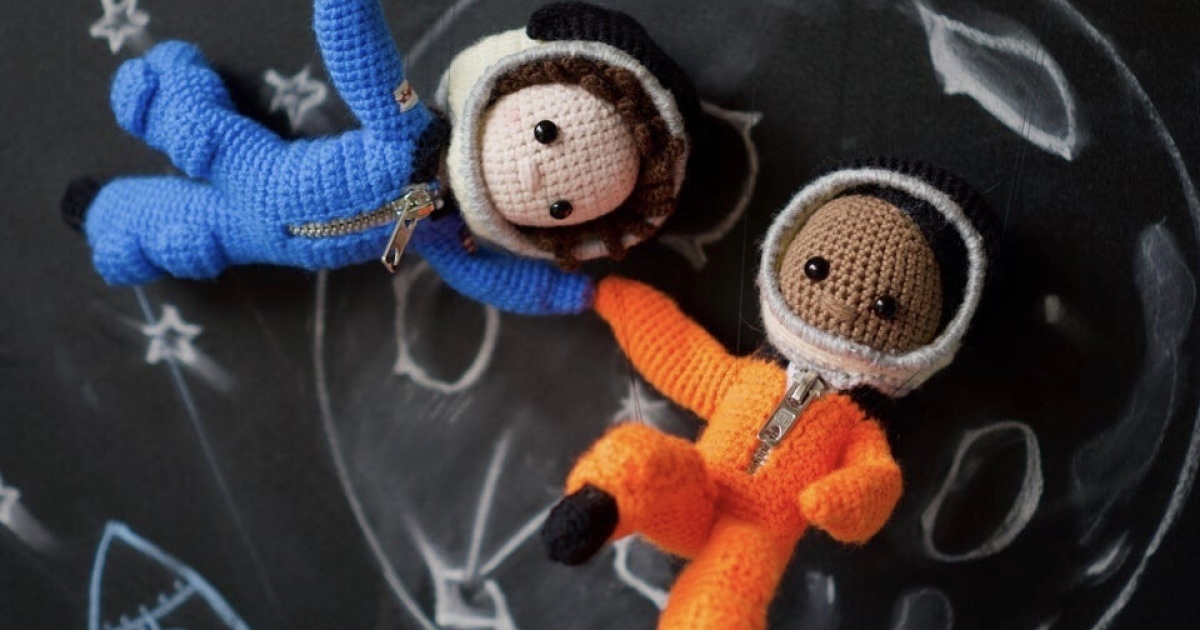
Today’s space race is also better because the astronaut corps and space workforce are more diverse. Apollo’s astronauts were brave and skilled, but they came from a narrow slice of America. They were all men, and the early Moonwalkers were not representative of the full talent pool of the country. Today, NASA’s astronaut corps includes women and people of color in prominent exploration roles, and Artemis has emphasized the goal of landing the first woman and the first person of color on the Moon.
This is not just symbolic. Representation affects who imagines themselves becoming an engineer, pilot, geologist, coder, technician, machinist, mission controller, physician, designer, or scientist. A larger talent pool makes the space program stronger. The next great lunar engineer might be a kid watching a launch on a cracked tablet screen, eating cereal, and realizing that space is not reserved for someone else.
The modern space race is also more useful to people on Earth. Apollo produced valuable spinoffs and scientific knowledge, but today’s space systems are directly integrated into daily life. Earth observation satellites track hurricanes, wildfires, drought, sea level rise, crop health, and pollution. Communications satellites connect remote communities. Navigation satellites guide aircraft, ships, cars, tractors, emergency crews, and delivery drivers who somehow still leave packages behind the wrong plant. Climate science, disaster response, and global communications all benefit from modern space infrastructure.
That is a crucial point for SEO readers searching “why today’s space race is better than Apollo”: the answer is not only Moon missions. The new space race includes the Moon, Mars, low-Earth orbit, satellites, commercial space stations, planetary defense, deep-space science, and Earth-focused services. It is not just about where humans can go. It is about what space can do.
Apollo Was Faster, But Today’s Space Race Is Smarter About the Future
To be fair, Apollo had advantages that today’s space race does not. It had a clear deadline, intense political support, and a national sense of urgency that is difficult to recreate. Apollo also had a simplicity of purpose that modern programs often lack. When President John F. Kennedy set the goal of landing a man on the Moon and returning him safely to Earth before the decade was out, everyone knew the scoreboard.
Today’s space race is more complicated. NASA must balance science, safety, budgets, politics, industry partnerships, international commitments, workforce needs, and long-term exploration goals. Private companies move quickly but sometimes fail publicly. Government programs move carefully but sometimes slowly. New rockets, landers, spacesuits, and life-support systems are difficult because space remains deeply rude to human plans.
Yet that complexity is also a sign of maturity. Apollo proved a nation could reach the Moon. Today’s space race is trying to prove that humanity can build a lasting presence beyond Earth without treating every mission like a one-time miracle.
That is why the modern era may ultimately matter more. A sustainable lunar program can help scientists study the early solar system, test technologies for Mars, develop new industries, improve life on Earth, and inspire generations over decades rather than a few spectacular years. If Apollo was the first breathtaking chapter, today’s space race is the attempt to write the whole book.
Experience Section: What Today’s Space Race Feels Like from the Ground
Following today’s space race feels very different from reading about Apollo in a history book. Apollo arrives in our imagination as a clean highlight reel: the countdown, the flame, the Moon, the boot print, the flag, the splashdown. The modern space race feels more like watching a live workshop where the garage door is open and everyone can see the tools, the sparks, the mistakes, and the occasional “well, that exploded more enthusiastically than expected.”
That visibility is part of what makes it exciting. Rocket tests are streamed online. Spacecraft updates appear in real time. Amateur astronomers track missions. Engineers explain designs on podcasts. Students can watch booster landings, lunar lander attempts, Mars rover updates, and astronaut training footage from their phones. Apollo was televised, but today’s space race is networked. It lives on NASA TV, YouTube, social media, livestream chats, public data portals, museum exhibits, classroom screens, and space forums where someone will absolutely correct your terminology within 14 seconds.
There is also a different emotional texture. Apollo felt like watching heroes travel into the unknown on behalf of a nation. Today feels like watching the early stages of an industry being born. Some launches carry astronauts. Others carry broadband satellites, weather instruments, lunar payloads, national security spacecraft, university experiments, or technology demonstrations with names that sound like rejected Star Wars droids. Not every mission is glamorous, but together they create momentum.
The best personal experience of the modern space race may be the feeling that space is becoming less distant. A reusable booster landing on a drone ship looks impossible the first time you see it. By the tenth time, you still know it is amazing, but your brain starts to accept it as a normal part of launch operations. That shift is powerful. Normalization is how frontiers become infrastructure.
For students, writers, engineers, and ordinary space fans, today’s race offers more entry points than Apollo did. You do not have to become an astronaut to participate. You can work in aerospace manufacturing, software, robotics, materials science, medicine, communications, environmental monitoring, policy, education, design, journalism, or data analysis. Space is no longer just a destination; it is a job market, a research field, and a storytelling engine.
There is humor in it, too. Modern spaceflight includes billionaires, government acronyms, rockets named like science-fiction props, mission patches, livestream countdown holds, and comment sections full of people asking whether a launch delay means the Moon has been canceled. The seriousness of the work coexists with the absurdity of trying to gently place metal towers full of fuel onto other worlds. Space exploration is noble, yes, but it is also a species of controlled madness. We are tiny mammals on a blue planet building fire tubes to visit rocks in the sky. Respectfully, that is hilarious.
The deeper experience, though, is optimism. Not shallow optimism, and not the kind that ignores risk. Rockets fail. Budgets shift. Schedules slip. Hardware breaks. Politics intrudes. But the direction is unmistakable: more launches, more partners, more capable spacecraft, more commercial activity, more international coordination, and more reasons for people to care. Apollo asked the world to look up in awe. Today’s space race asks us to look up and imagine a working future.
That is why today’s space race is better than Apollo. Not louder. Not purer. Not more legendary. Better because it has more doors. Better because it is not only about getting there, but about learning how to stay, how to share, how to build, and how to bring the benefits home.
Conclusion: The Best Space Race Is the One That Builds a Future
Apollo will always deserve its place in history. It was the thunderclap that proved human beings could leave Earth, cross deep space, walk on another world, and return safely. No modern program needs to diminish Apollo to make its own case.
But today’s space race is better suited to the future. It is powered by reusable rockets, commercial competition, international partnerships, robotic scouting, lunar resource research, and a broader understanding of how space supports life on Earth. Apollo was a magnificent sprint to the Moon. Today’s space race is the beginning of a highway system.
If the Apollo era gave humanity its first footprints on another world, the modern era may give us roads, habitats, laboratories, supply chains, and a practical path to Mars. That may not fit as neatly on a commemorative poster, but it is exactly the kind of progress that lasts.