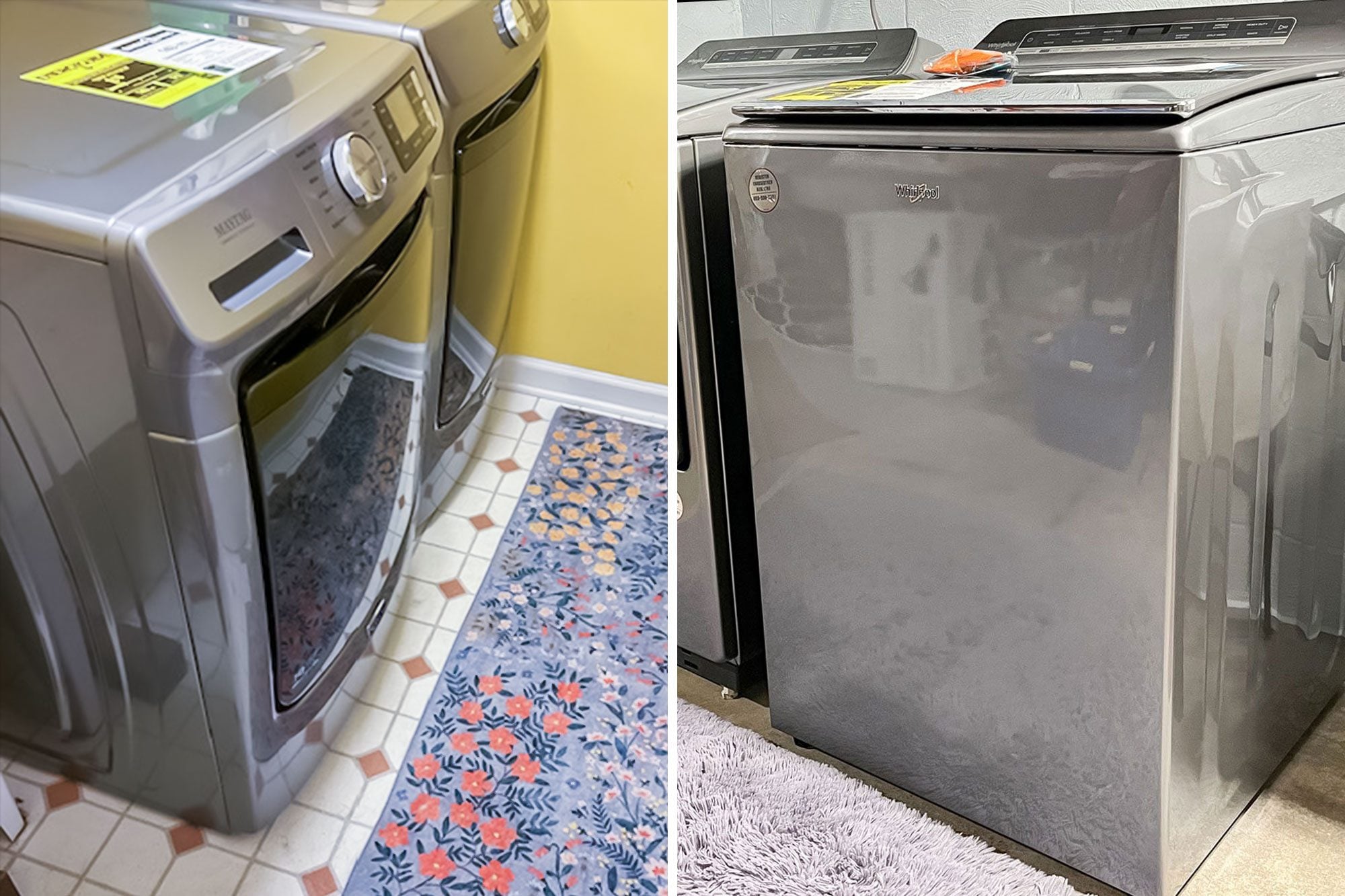

Maytag versus Whirlpool sounds like a classic appliance grudge match: two familiar American names, two laundry rooms, one very large pile of dirty towels waiting for a winner. There is one plot twist, though. Whirlpool Corporation has owned Maytag since 2006, so these brands are less like sworn enemies and more like siblings who borrow some of the same engineering notes but insist they have completely different personalities.
That does not make them identical. Far from it. Maytag generally markets itself as the tougher, heavy-duty option, emphasizing stain fighting, commercial-inspired components, pet-hair removal, and unusually long limited coverage on certain major parts. Whirlpool tends to focus more heavily on practical flexibility, approachable prices, family-friendly controls, removable agitators, automatic detergent dispensing, and features designed to make everyday chores less annoying.
For this comparison, we put the brands through a practical scorecard using current specifications, warranty terms, published hands-on appliance tests, customer-satisfaction research, service data, and real-world ownership observations. In other words, no imaginary laboratory coats were harmed in the making of this review.
Maytag vs. Whirlpool at a Glance
| Category | Maytag | Whirlpool | Winner |
|---|---|---|---|
| Heavy-duty washing | Excellent | Very good | Maytag |
| Pet-hair removal | Excellent on Pet Pro models | Good | Maytag |
| Flexible washer design | Good | Excellent | Whirlpool |
| Warranty | Strong 10-year limited parts coverage on key components | Typically one-year limited coverage | Maytag |
| Budget-friendly choices | Good | Excellent | Whirlpool |
| Smart convenience | Very good | Very good to excellent | Whirlpool |
| Simple models | Good | Excellent selection | Whirlpool |
| Overall value | Very good | Excellent | Whirlpool |
Overall winner: Whirlpool, by a narrow margin. For most households, Whirlpool’s combination of price, flexibility, capacities, straightforward choices, and useful convenience features makes it easier to recommend. However, Maytag is arguably the better buy for shoppers prioritizing heavy-duty cleaning, pet hair, or long-term component warranty coverage.
Maytag and Whirlpool: Are They Really Different?
Whirlpool Corporation completed its acquisition of Maytag Corporation in 2006. Because of that shared ownership, shoppers sometimes assume a Maytag is simply a Whirlpool wearing a more serious-looking control panel.
There is some shared manufacturing knowledge and corporate infrastructure, but choosing solely based on the parent company misses the point. Features, warranties, model positioning, controls, capacities, and prices still vary significantly.
Maytag’s personality: the workhorse
Maytag leans heavily into durability and cleaning power. Its laundry lineup prominently features Extra Power, which extends and intensifies stain treatment, while selected models include commercial-inspired components. The Pet Pro system is another important differentiator, using dedicated filtration and wash actions to remove pet hair.
If your laundry basket regularly contains muddy uniforms, shop clothes, dog blankets, grass-stained jeans, and mysterious substances your children refuse to explain, Maytag is speaking your language.
Whirlpool’s personality: the practical multitasker
Whirlpool is typically more focused on flexible everyday use. Its 2-in-1 removable agitator washers are a perfect example: leave the agitator installed when you want more mechanical washing action, then remove it to create more room for comforters and bulky loads.
Higher-feature Whirlpool models add conveniences such as Load & Go detergent dispensers, built-in pretreat faucets, smartphone controls, and multiple water-level options. These are not glamorous features, but neither is washing spaghetti sauce out of a school uniform at 10 p.m.
Maytag vs. Whirlpool Washing Machines
Laundry is where the comparison becomes especially interesting because both brands offer a substantial variety of top-load and front-load machines.
Cleaning performance: Maytag wins
Maytag has an advantage when difficult stains are the main concern. Its Extra Power system combines additional washing time with stronger wash action, while Pet Pro models add specialized pet-hair filtration.
Independent hands-on testing has been particularly positive about the Pet Pro platform. Published testers have reported impressive stain removal and noticeable collection of pet hair that might otherwise remain stuck to clothes and blankets.
The feature is specialized, of course. If your only pet is a goldfish, paying extra for Pet Pro makes about as much sense as buying snow tires in Miami. But households with shedding cats and dogs may genuinely appreciate it.
Flexibility: Whirlpool wins
Whirlpool counters with one of the most practical top-load designs available: the removable agitator.
With the agitator installed, you have additional mechanical action suited to ordinary mixed loads and stubborn dirt. Remove it, and the central column disappears, leaving more usable basket space for bedding and bulky items.
Models such as the WTW8127 family also offer automatic detergent dispensing, a built-in faucet and pretreating tools, generous capacity, and smart controls. Several independent appliance testers have singled out Whirlpool top-loaders for precisely this blend of versatility and usability.
Front-load washers: almost a tie
Maytag and Whirlpool are both credible choices in front-loading laundry. J.D. Power’s 2026 U.S. Appliance Satisfaction Study ranked Maytag first in customer satisfaction among front-load washers, with Whirlpool extremely close behind in third place.
Whirlpool’s newer FreshFlow system is particularly useful for addressing one traditional front-loader complaint: trapped moisture. Selected machines incorporate a fan-powered drying system and antimicrobial protection intended to keep the washer interior fresher between loads.
Maytag counters with options such as Fresh Hold, Extra Power, large capacities, Sanitize cycles, and Pet Pro filtration on selected machines.
Washer verdict: Choose Maytag for serious stain fighting and pet-heavy households. Choose Whirlpool if adaptable capacity and convenience are more important.
Reliability: Which Brand Breaks Less?
This is the question everyone wants answered with a beautiful, permanent number. Unfortunately, appliance reliability does not work that way.
Results differ by model, production year, appliance category, installation quality, usage habits, and even your local repair network.
J.D. Power’s 2025 Appliance Reliability & Service Study provides useful context. Among top-load washers, Maytag ranked second with 70 reported problems per 100 appliances, while Whirlpool followed extremely closely at 71. Among front-load washers, Whirlpool ranked third with 88 problems per 100 appliances.
In practical terms, that does not support declaring one brand dramatically tougher than the other.
Yale Appliance’s 2026 service analysis offers another useful warning: brand reputation alone should not determine your purchase. Its service-call data emphasizes that installation and access to competent local service can matter enormously.
Do not buy the logo; buy the model
A fantastic brand can manufacture a mediocre model. A middle-of-the-pack brand can produce an excellent one.
Before buying either Maytag or Whirlpool, check:
- Reviews for the exact model number rather than the brand average.
- Whether authorized repair service is available in your ZIP code.
- Whether commonly serviced components are reasonably accessible.
- The exact warranty document for that specific model.
- Whether the features you are paying for actually solve a problem you have.
The last point is underrated. Wi-Fi on your washing machine is wonderful if you use remote alerts. If you never download the app, you essentially purchased a very expensive antenna.
Warranty: Maytag Wins Clearly
This is one of the easiest categories to score.
Whirlpool appliances generally carry a one-year limited manufacturer’s warranty covering qualifying factory-specified parts and repair labor for defects in materials or workmanship, although coverage varies by product.
Maytag also provides first-year parts-and-labor coverage on applicable products, but many major kitchen and laundry appliances manufactured after 2017 receive a 10-year limited parts warranty on specified major components.
For washers and dryers, covered components can include the drive motor, wash basket, or dryer drum. Refrigerators may receive long-term limited coverage on the compressor, while other appliance categories have their own covered components.
There is an important asterisk large enough to deserve its own laundry basket: a 10-year limited parts warranty is not the same thing as 10 years of complete parts-and-labor coverage. After the initial comprehensive period, labor and unrelated components may not be included.
Still, Maytag provides materially stronger long-term factory backing on important components.
Warranty winner: Maytag.
Dryers: Whirlpool Wins on Value, Maytag on Specialty Features
Dryers are mechanically simpler than washers, so spending dramatically more does not always deliver dramatically better drying.
Whirlpool remains appealing in this category because it sells plenty of straightforward dryers with moisture sensing and uncomplicated controls. Independent roundups continue to recognize Whirlpool dryers as good budget and practical choices.
Maytag adds more specialized features. Pet Pro dryers are designed to capture additional pet hair, while Extra Power and advanced moisture sensing target thicker fabrics and stubbornly damp loads.
If you simply need towels to become dry towels again, a basic Whirlpool may deliver better value. For pet owners or households frequently drying bulky fabrics, Maytag’s feature set becomes more compelling.
Dishwashers: A Surprisingly Close Fight
Neither brand should be purchased merely because your refrigerator shares the same badge.
Whirlpool’s current dishwasher lineup offers practical options such as third racks, Sensor cycles, sanitizing modes, multiple drying systems, and a broad selection of price points.
Maytag emphasizes aggressive cleaning, with models featuring PowerBlast-style heavy cleaning and durable stainless-steel interiors. Some Maytag dishwashers also benefit from the brand’s extended limited coverage on selected major components.
For dried oatmeal, baked cheese, casserole residue, and other substances that apparently develop structural integrity overnight, Maytag’s heavy-cleaning philosophy is attractive.
For most everyday kitchens, Whirlpool usually provides more configurations and an easier path to balancing price against features.
Refrigerators and Cooking Appliances
The Maytag-versus-Whirlpool question matters a little less here because individual configurations become more important than brand philosophy.
For refrigerators, prioritize compressor design, interior organization, ice-maker complexity, shelving, dimensions, and service availability. Maytag’s extended limited compressor coverage may add peace of mind, but it should not outweigh whether the refrigerator actually fits your kitchen.
Whirlpool has a broad selection of French-door, side-by-side, top-freezer, and bottom-freezer refrigerators, which can make it easier to match a particular space and budget.
Cooking appliances follow a similar pattern. Whirlpool often excels at mainstream value and user-friendly configurations, while Maytag frequently emphasizes sturdy construction and powerful cooking features.
Energy Efficiency: Model Matters More Than Brand
There is no sensible way to declare every Whirlpool more efficient than every Maytag, or vice versa. Compare the yellow EnergyGuide label and ENERGY STAR certification of the exact products you are considering.
ENERGY STAR notes that certified clothes washers can substantially reduce household energy and water use compared with conventional models. Front-load washers are generally especially efficient because they clean using less water while spinning clothes at higher speeds, reducing moisture left for the dryer.
If utility bills matter, compare annual energy consumption, water use, washer capacity, and cycle habits rather than shopping by badge.
Price and Value: Whirlpool Wins
Whirlpool’s strongest argument may simply be that it makes appliance shopping easier at a broad range of budgets.
Its lineup contains numerous relatively simple machines alongside feature-packed models. That means shoppers who do not care about apps, steam, pet filtration, or enough wash settings to clean every costume from a Broadway production can avoid paying for them.
Maytag is hardly a luxury brand, but comparable machines sometimes carry a premium tied to its stronger warranty positioning and heavy-duty features.
If those features solve a real problem, that premium can be worthwhile. If they do not, Whirlpool is often the smarter value.
Who Should Buy Maytag?
Maytag is the stronger choice if:
- You frequently wash heavily soiled clothes.
- You own shedding dogs or cats.
- You want Extra Power or Pet Pro features.
- Long-term limited parts coverage matters to you.
- You prefer a heavy-duty design philosophy.
- You routinely wash work clothes, sports gear, towels, or bulky household fabrics.
Who Should Buy Whirlpool?
Whirlpool makes more sense if:
- You prioritize value for money.
- You want a removable agitator.
- You like automatic detergent dispensing.
- You want many capacities and price points to choose from.
- You prefer straightforward controls and practical features.
- Your laundry needs vary widely from delicate clothing to bulky bedding.
Our Final Verdict: Maytag vs. Whirlpool
If we had to recommend just one brand to the average household, Whirlpool wins.
The victory is hardly a demolition. Think 52–48 rather than a fourth-quarter blowout.
Whirlpool offers an excellent combination of accessible pricing, simple models, high-capacity machines, removable-agitator flexibility, detergent automation, smart functionality, and widespread product availability. For the typical family doing ordinary laundry and buying mainstream kitchen appliances, it represents the more versatile choice.
Maytag wins several important individual battles. Its warranty is the most obvious advantage. Extra Power is compelling for genuinely dirty laundry, and Pet Pro is one of the more useful specialized features available to households constantly fighting fur.
The smartest decision, therefore, is not simply “Maytag good, Whirlpool bad” or the reverse. Decide what jobs the appliance must perform, compare the exact models, verify local service, and read the warranty before paying.
Your washing machine does not know which logo won an online comparison. It only knows someone put a tissue in a pants pocket again.
Real-World Experience: What Living With Maytag and Whirlpool Feels Like
Specifications are helpful, but appliances become much easier to judge when you imagine them surviving an ordinary week at home. Published hands-on testing of Maytag and Whirlpool machines reveals noticeably different ownership experiences.
The Maytag experience: built around messy loads
Imagine a household with two children, a Labrador, weekend soccer games, and a blanket that somehow collects enough dog hair every three days to construct a second Labrador.
This is where Maytag Pet Pro models make sense.
Hands-on reviewers who have used Pet Pro machines with pets and busy families have reported that the dedicated filtration system collects visible hair rather than simply redistributing it among clothes. That sounds like a small improvement until you have spent ten minutes attacking black pants with a lint roller five minutes before leaving for work.
The Extra Power function also changes the way you approach stains. Instead of automatically pretreating every suspicious mark at the sink, you can add more intensive washing action to the selected cycle. You still need reasonable stain-care habitsno washer possesses supernatural authority over dried paintbut the machine feels designed for users who regularly push laundry equipment harder than average.
Maytag’s controls also tend to communicate that workhorse philosophy. The experience is less about endlessly experimenting with novelty settings and more about selecting the amount of cleaning aggression your load deserves.
Its limitation is equally obvious. If your laundry consists mostly of lightly worn office clothing, towels, and sheets, you may not benefit from the features that justify choosing Maytag. Buying Pet Pro without pets is like purchasing a pickup truck exclusively to transport one houseplant.
The Whirlpool experience: flexibility wins the boring moments
Whirlpool’s best features become useful in a different way. Instead of concentrating primarily on difficult dirt, many models reduce the tiny annoyances surrounding laundry.
The removable agitator is the clearest example. On Monday, leave it installed for jeans, shirts, socks, and children’s clothes. On Saturday, pull it out and gain extra room for a comforter. You do not have to decide forever whether you are an “agitator person” or an “impeller person.” Apparently modern adulthood already requires enough permanent decisions.
Load & Go detergent dispensing offers a similar experience. Fill the reservoir, and compatible machines automatically dispense detergent across multiple loads. It is not revolutionary technology, but after using automatic dispensing for weeks, repeatedly lifting a giant detergent bottle begins to feel surprisingly primitive.
Independent testers have also praised Whirlpool’s built-in faucets and pretreat tools. In a compact laundry room without a utility sink, being able to rinse or scrub a stain directly over the washer is genuinely convenient.
One practical lesson from testing is that large top-loaders still need sensible loading. Bulky blankets can become unbalanced if stuffed into the drum carelessly. A 5-cubic-foot washer is spacious, but it has not repealed the laws of physics.
What both brands teach you after the honeymoon period
Whichever badge you choose, the ownership experience ultimately depends less on spectacular showroom demonstrations and more on mundane details: Is the lint filter easy to reach? Can you understand the controls half-awake? Does the machine fit through the laundry-room doorway? Can someone nearby repair it? Will you actually clean the washer periodically?
Those questions become much more important in year five than whether the appliance offered 12 cycles or 36 on the day you bought it.
For a busy pet-owning family, we would lean toward Maytag. For a household wanting adaptable capacity, convenience, and strong value, Whirlpool gets our vote.
That is why Whirlpool takes the overall trophybut Maytag remains the brand most likely to steal it back the moment a muddy dog enters the room.
Conclusion
The Maytag vs. Whirlpool debate does not produce one winner for every household. Whirlpool is our best overall choice because it combines competitive prices with flexible designs, broad model selection, removable agitators, smart features, and practical convenience. It is the easier brand to recommend to the average buyer.
Maytag, however, deserves serious consideration when cleaning power and warranty protection outrank price. Its Extra Power technology, Pet Pro system, heavy-duty positioning, and 10-year limited parts coverage on specified components provide meaningful benefits rather than empty marketing decoration.
Compare individual models, not just logos. Check dimensions, capacity, ENERGY STAR information, local repair options, and model-specific warranty terms before buying. Do that, and either brand can be a solid addition to your homealthough neither has yet invented the feature humanity truly needs: a washer that automatically checks every pocket for crayons.