
Human beings have always had a complicated relationship with time. We build monuments, write books, save photos, freeze leftovers we absolutely swear we will eat later, and sometimesacross cultures and centurieswe preserve human bodies. Not always for the same reason, of course. Some preservation methods were spiritual, some scientific, some accidental, and some so modern they sound like a sci-fi movie got lost in a medical conference.
The story of human body preservation is really the story of what people valued: memory, identity, anatomy, religion, research, status, mystery, and occasionally plain old curiosity. From ancient Egyptian mummification to modern plastination, from bog bodies to cryonics, preserved human remains have helped historians, archaeologists, doctors, and museum visitors understand how people lived, what they believed, and how the human body changes after death.
This guide explores the top 10 ways we’ve preserved human bodies, with real examples, historical context, and a little humorbecause when the topic is this serious, a light touch helps keep things human.
1. Egyptian Mummification: The Gold Standard of Ancient Preservation
When most people hear “preserved human bodies,” their brains immediately unwrap a mummy. Ancient Egyptian mummification is the celebrity of body preservation, complete with linen, tombs, rituals, and an afterlife plan more organized than most modern vacation itineraries.
Egyptian mummification was designed to preserve the body for the afterlife. The process involved drying the body with natron, a naturally occurring salt mixture, and wrapping it carefully in linen. The goal was not merely to stop decay but to maintain the person’s identity for spiritual continuation. In ancient Egyptian belief, the body had to remain recognizable so the soul could reunite with it.
What makes Egyptian mummies so important today is not just their survival, but the information they carry. Modern imaging tools allow researchers to study health, diet, injuries, dental conditions, and burial customs without disturbing the remains. A mummy is not just a preserved body; it is a time capsule with a very dramatic wardrobe.
2. Natural Desert Drying: When the Climate Does the Work
Long before advanced embalming, nature had its own preservation department. Dry desert environments can naturally mummify bodies by removing moisture quickly. Since bacteria need moisture to thrive, extremely dry conditions slow decomposition and can preserve skin, hair, clothing, and personal objects for centuries or even millennia.
Natural desert mummies have been found in places such as Egypt, Peru, Chile, and parts of Central Asia. The famous Chinchorro mummies of South America are especially notable because they show that complex body preservation existed outside Egypt and, in some cases, earlier than the best-known Egyptian examples.
Desert preservation reminds us that mummification was not always a royal production. Sometimes the environment itself created preservation, especially when heat, dryness, sand, and burial conditions worked together. Basically, the desert was the original low-tech dehydratorjust much less welcome at dinner.
3. Ice Mummies: Frozen Time Capsules
Cold can preserve human bodies with astonishing detail. Freezing temperatures slow biological breakdown, and ice can protect remains from scavengers, oxygen, and weathering. One of the most famous examples is Ötzi the Iceman, discovered in the Alps in 1991. His naturally preserved body, clothing, tools, and equipment gave researchers an extraordinary look at life more than 5,000 years ago.
Ice mummies are valuable because they often preserve more than bone. Clothing fibers, tattoos, stomach contents, tools, and even traces of disease can survive. That means scientists can study diet, migration, technology, and health in ways that skeletons alone cannot reveal.
The challenge is that ice preservation is fragile. Once ancient remains are exposed to warmer air, they can deteriorate quickly. Museums and research centers must carefully control humidity, temperature, and handling. In other words, the freezer burn jokes write themselves, but the conservation work is incredibly serious.
4. Bog Bodies: Nature’s Tanning Salon, But Much Stranger
Peat bogs have produced some of the most hauntingly well-preserved human remains in Europe. The chemistry of certain bogslow oxygen, acidity, cold temperatures, and natural compounds from mosscan preserve skin and hair while softening or dissolving bone over time. The result can be bodies that look startlingly lifelike even after thousands of years.
Famous bog bodies such as Tollund Man and Lindow Man have helped archaeologists study ancient clothing, diet, social practices, and ritual behavior. These bodies are often associated with Iron Age Europe and have raised many questions about law, belief, conflict, and sacrifice.
Bog preservation is not “intentional” in the same way embalming is, but it is one of the most remarkable natural preservation methods known. The bog acts like a chemical archive. It is quiet, dark, and extremely good at keeping secretsuntil archaeologists arrive with scanners and questions.
5. Smoke-Drying and Fire Mummification
Some cultures preserved bodies using smoke, heat, and careful drying. Fire mummification is associated with groups such as the Ibaloi people of the Philippines, whose Kabayan fire mummies are considered important ancestral and cultural treasures. In Papua New Guinea, smoke-dried mummies have also been documented among Indigenous communities.
Smoke-drying works by reducing moisture and creating conditions less favorable to decay. The process may also involve positioning, surface treatment, and placement in protected caves or rock shelters. These mummies are not simply archaeological objects; they are connected to living communities, ancestry, identity, and cultural memory.
Modern conservation of fire mummies often focuses on protecting them from humidity shifts, insects, handling damage, and environmental change. Preservation here is not only about keeping a body intact. It is about respecting the people and communities connected to that body.
6. Modern Embalming: The Funeral Home Method
Modern embalming is one of the most familiar forms of body preservation in the United States. It is usually temporary, designed to sanitize and preserve the body long enough for viewing, transportation, or funeral services. Formaldehyde-based fluids have historically played a major role because they slow decomposition and help stabilize tissues.
Unlike ancient mummification, modern embalming is not usually meant to preserve a body forever. Its purpose is practical and ceremonial. It gives families time to gather, say goodbye, and hold services according to personal or religious traditions.
Modern embalming also has a scientific side. Anatomy programs have used embalmed cadavers for medical education, allowing students to learn human structure directly. However, concerns about chemical exposure have encouraged research into alternative preservation methods, including lower-formaldehyde techniques, soft-fix embalming, and improved ventilation.
7. Anatomical Wet Specimens: Preserved in Fluid
If you have ever visited a medical museum and seen specimens preserved in jars, you have encountered wet preservation. Human tissues and anatomical specimens have long been preserved in fluids such as alcohol solutions or formalin. This method allows soft tissues to remain available for teaching, research, and medical history.
Wet specimens became especially important in anatomy and pathology collections. They helped doctors compare normal and abnormal anatomy, study disease, and teach students before digital imaging existed. Museums such as the Mütter Museum in Philadelphia continue to wrestle with the educational value and ethical responsibilities of displaying human remains.
Fluid preservation requires constant care. Containers must be sealed, fluid levels monitored, labels maintained, and ethical documentation reviewed. The jar may look still, but behind the scenes, conservation staff are doing the museum equivalent of babysitting a very old science project.
8. Plastination: Turning Bodies Into Durable Teaching Tools
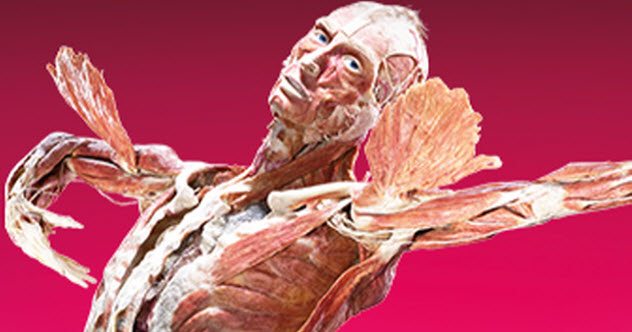
Plastination is a modern preservation technique developed by Dr. Gunther von Hagens in the late 20th century. In simple terms, water and fat in tissues are replaced with curable polymers, producing dry, durable specimens that can be displayed or used for education. Plastinated bodies do not require jars of liquid, and they can reveal anatomy in striking detail.
This method became widely known through Body Worlds exhibitions, which presented real human bodies posed to show muscles, organs, nerves, and body systems. Plastination has been praised for making anatomy accessible and criticized for raising questions about consent, display, and the line between education and spectacle.
At its best, plastination helps people understand the body with a clarity textbooks cannot match. At its most controversial, it forces us to ask how human remains should be treated in public spaces. That tension is part of why plastination remains one of the most discussed forms of human body preservation today.
9. Cryonics: Preservation for a Future That Hasn’t Arrived
Cryonics is the attempt to preserve legally deceased people at extremely low temperatures, with the hope that future technology may one day repair damage and restore life. Organizations that offer cryonics often describe the process as vitrification, where cryoprotective solutions help reduce ice formation before long-term storage in liquid nitrogen.
Cryonics is controversial. Supporters see it as an experimental extension of emergency medicine and long-term preservation. Critics argue that no current technology can revive a cryopreserved human being, making the promise speculative. Either way, cryonics has become one of the most futuristic and debated methods of preserving human bodies.
Unlike ancient preservation methods focused on memory, ritual, or anatomy, cryonics is built around possibility. It is less “remember me” and more “wake me when the technology catches up.” Whether that future arrives is unknown, but the idea has clearly captured the modern imagination.
10. Museum Conservation and Ethical Re-Preservation
One of the most important modern ways we preserve human bodies is not a single technique but an ongoing practice: conservation. Museums, universities, and research institutions care for human remains that may already be mummified, skeletonized, embalmed, plastinated, or preserved in fluid. Their job is to slow deterioration while also addressing provenance, consent, cultural sensitivity, and repatriation.
This is a major shift from older collecting practices, when human remains were sometimes acquired without proper consent or context. Today, ethical preservation asks not only “How do we keep this body intact?” but also “Should we display it, study it, return it, or reinterpret it?”
Modern conservation may involve climate-controlled cases, noninvasive scanning, digital records, respectful labeling, and collaboration with descendant communities. It recognizes that preserved bodies are not curiosities. They were people. That may be the most important preservation lesson of all.
Why Human Body Preservation Still Matters
Preserved human bodies help us learn about history in ways artifacts alone cannot. A pot can tell us what people made. A weapon can tell us how they fought. A preserved body can tell us what they ate, how they worked, what illnesses they faced, what they believed, and sometimes how they died. Used carefully and respectfully, preserved remains can connect science with empathy.
They also show how cultures define dignity. For some, preservation was a sacred duty. For others, it became a tool for education. In modern times, the conversation has expanded to include consent, cultural ownership, museum ethics, and the rights of communities connected to the dead.
The top 10 ways we’ve preserved human bodies are not just strange chapters in medical or archaeological history. They are mirrors. They show what humans fear, hope for, remember, and refuse to let disappear.
Experiences Related to Human Body Preservation
Anyone who has walked through a museum gallery containing mummies, anatomical specimens, or reconstructed ancient burials knows the experience is different from seeing ordinary artifacts. A clay bowl invites curiosity. A preserved human body invites silence first. Even in a crowded exhibit, people often lower their voices. The mood changes because visitors understand, almost instantly, that they are not just looking at history. They are looking at a person.
That experience can be educational, emotional, and slightly uncomfortable all at once. A well-designed exhibit helps visitors move beyond shock. Instead of presenting preserved bodies as spooky attractions, it gives names when known, explains cultural context, and shows what researchers can learn without turning the person into an object. The best exhibits remind us that preservation is not only about skin, bones, linen, chemicals, or cold storage. It is about memory.
For students, preserved bodies can make anatomy real in a way diagrams never fully can. A textbook illustration is clean, colorful, and polite. Real anatomy is more complex. Medical students often describe cadaver study as one of their first serious lessons in humility. The donor becomes a teacher, even without speaking. That experience can shape how future doctors think about the body, illness, and patient care.
For travelers, preserved bodies can also reveal how differently cultures approach death. Egyptian mummies reflect a spiritual system built around the afterlife. Bog bodies raise questions about ancient communities and rituals. Fire mummies connect to ancestry and living Indigenous identity. Modern cryonics reflects a technological culture that wonders whether death might someday become a problem to solve rather than a boundary to accept.
There is also an ethical lesson in the experience. Not every preserved body was collected or displayed with consent. Some museum collections are now being reexamined because older practices failed to respect individuals, families, or communities. That does not make preservation worthless; it makes responsibility essential. The more we learn from preserved human bodies, the more carefully we must ask who benefits, who decides, and how the person should be honored.
The most powerful experience related to human body preservation is the realization that the past was lived by real people with aches, meals, beliefs, families, fears, and ordinary bad days. Preserved bodies collapse the distance between “ancient history” and “human life.” They remind us that history was not made by statues or dates. It was made by bodies that walked, worked, healed, aged, and mattered.
Conclusion
Human body preservation is one of the strangest and most revealing subjects in history. It combines science, belief, chemistry, climate, medicine, ethics, and mystery into one unforgettable story. From Egyptian mummies and frozen ice bodies to plastination and cryonics, each method shows a different way humans have tried to hold on to identity after death.
The big takeaway is simple: preserved human bodies are not just fascinating because they survived. They matter because they teach. They help us understand ancient diets, diseases, rituals, technologies, and values. They also challenge modern researchers and museums to balance curiosity with respect.
So, the next time you see a mummy, a medical specimen, or a documentary about cryonics, remember this: preservation is never only about stopping time. It is about asking what deserves to be rememberedand how carefully we should remember it.