
Floor mirrors have officially escaped the closet. Once treated as purely practical objects for checking whether two shades of black actually match, these oversized mirrors are now being used as architectural accents, light boosters, and statement-making pieces of art.
A well-positioned floor mirror can brighten a dim corner, make a narrow room feel more open, and introduce height without requiring construction. It can also reflect the most attractive part of a room, whether that is a leafy window view, a sculptural pendant light, or a carefully styled bookcase. In other words, a floor mirror is one of the rare decorating tools that works hard while appearing to do absolutely nothing.
Research supporting the use of mirrors to increase perceived light and space:
Why Floor Mirrors Are Having a Major Design Moment
Today’s most popular floor mirrors are larger, warmer, and more expressive than the thin plastic rectangles many people remember from dorm rooms. Arched tops, free-form silhouettes, natural wood frames, colorful finishes, and vintage-inspired metalwork are bringing personality back into reflective surfaces.
Curves are particularly popular because they soften rooms filled with rectangular doors, windows, cabinets, and furniture. At the same time, antique and vintage-style mirrors are being mixed with modern furnishings to create interiors that feel collected rather than purchased in one hurried afternoon.
Current mirror and interior trends include curved silhouettes, natural materials, bold frames, and vintage pieces:
10 Trendy Ways to Decorate With Floor Mirrors
1. Use an Oversized Arched Mirror to Anchor the Living Room
An oversized arched floor mirror can give a living room the visual importance of a doorway or architectural window. Place one against a broad wall beside a sofa, console, or pair of accent chairs. The rounded top breaks up straight furniture lines while the large reflective surface adds depth.
For a modern look, choose a thin black, bronze, or brushed-brass frame. A medium-toned wood frame feels warmer and works beautifully with linen upholstery, woven rugs, and neutral walls. Leave some breathing room around the mirror rather than squeezing it between bulky pieces. Large mirrors are dramatic enough without being forced to fight a bookcase for elbow room.
2. Brighten a Dark Corner Near a Window
A floor mirror does not need to sit directly opposite a window to improve a room’s brightness. Positioning it beside a window or at an angle can redirect daylight into a shadowy corner while preventing harsh glare.
Turn that corner into a small destination by adding a comfortable chair, a floor lamp, and one substantial plant. The reflected greenery creates the impression of a fuller indoor garden, while the lamp provides layered illumination after sunset. Just check the reflection before committing. A mirror that showcases treetops is delightful; one that proudly displays a laundry basket is less poetic.
Design guidance recommends positioning mirrors to reflect light, attractive views, and decor rather than clutter:
3. Add Drama at the End of a Hallway
Hallways are commonly treated as transportation routes rather than rooms, which is why a tall mirror can make such a difference. A large-scale floor mirror placed at the end of a hallway creates a strong focal point and visually extends the passage.
For maximum impact, repeat a material already used nearby. A black-framed mirror can echo black door hardware, while a carved wood frame can connect with hardwood flooring. If the hallway is narrow, select a relatively slim mirror and secure it close to the wall so it does not interfere with foot traffic.
4. Create a Dedicated Bedroom Dressing Zone
Instead of casually dropping a mirror into any available corner, create a purposeful dressing area. Place a full-length mirror near a dresser, wardrobe, or closet, then add a small bench or upholstered stool. A tray for jewelry and a wall hook for tomorrow’s outfit can make the arrangement genuinely useful.
An arched or softly rounded mirror brings calm to a bedroom, while a dark rectangular frame creates a sharper, tailored look. For accurate outfit checks, make sure the reflection includes your entire body without requiring you to stand at the other end of the house like someone examining a suspicious painting.
5. Layer a Floor Mirror Behind a Console Table
Layering furniture in front of a mirror creates depth and makes the arrangement feel styled rather than accidental. Lean a tall mirror behind a slim console table, allowing the upper portion to remain visible. Add a lamp, vase, small sculpture, or stack of books to the console.
Keep the accessories asymmetrical but balanced. For example, place a tall lamp on one side and a shorter bowl with branches on the other. The mirror will repeat these objects, so use fewer pieces than you normally would. Reflections are generous that waythey give every accessory an unpaid assistant.
Layering art, plants, vases, and furniture in front of mirrors is recommended for creating visual depth:
6. Position a Mirror Beside the Fireplace
A floor mirror beside a fireplace can balance built-in shelving, a media cabinet, or an empty wall on the opposite side. It also reflects the glow of the fire and nearby lamps, giving the room a warmer appearance in the evening.
Choose a frame that complements the fireplace material without matching it too precisely. A simple metal frame creates contrast against traditional brick, while an ornate gold mirror can enliven a restrained stone surround. Keep the mirror far enough from active flames, sparks, and heat-producing equipment, and avoid blocking fireplace tools or walkways.
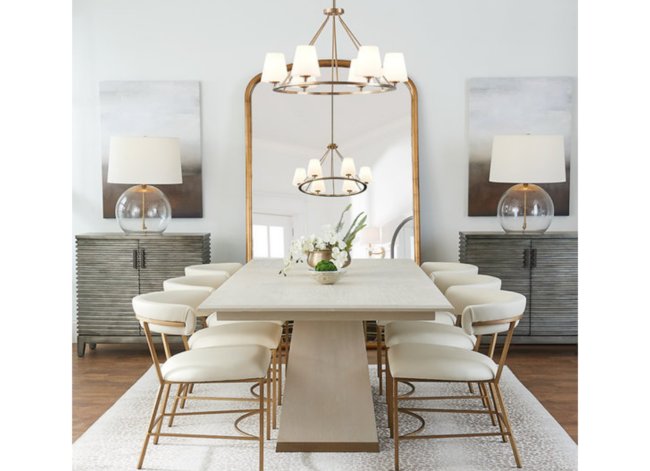
7. Reflect a Dining Room Chandelier
Dining rooms are ideal locations for decorative mirrors because they often contain one standout light fixture. Angle or position a floor mirror so it reflects the chandelier, pendant, or wall sconces rather than the kitchen sink or hallway coat rack.
A mirror with an antiqued finish can add softness and atmosphere, especially in a traditional dining room. For contemporary spaces, try a frameless mirror or one with a narrow metal border. The reflected light adds sparkle during dinner without requiring additional fixtures or a dramatic conversation about rewiring the ceiling.
8. Use a Windowpane Mirror to Suggest Another Window
A windowpane-style floor mirror can imitate an architectural opening, making it useful in window-limited rooms, basements, and interior apartments. Designs with arched tops and divided metal grids are especially convincing when placed across from real windows.
Keep the surrounding decor relatively simple so the illusion remains believable. A potted tree, narrow bench, or pair of sconces can help frame the mirror. Avoid placing too many windowpane mirrors in one room unless the goal is to make guests wonder whether they have accidentally entered a very elegant greenhouse.
Large arched and window-inspired floor mirrors can reflect light and suggest additional architectural openings:
9. Treat an Organic or Wavy Mirror Like Artwork
Organic mirrors have irregular edges, flowing curves, or sculpted frames that turn the mirror itself into artwork. These designs work particularly well in minimalist rooms where a conventional rectangular mirror might look too predictable.
Place a free-form floor mirror against a simple wall and allow its silhouette to be the main attraction. Repeat one or two curved shapes elsewhere with a round side table, globe lamp, or rounded chair. This creates continuity without turning the room into a festival of squiggles.
10. Mix a Vintage Gilded Mirror With Modern Furniture
An ornate vintage-style mirror can bring character to a room filled with clean-lined contemporary furniture. The contrast prevents both styles from feeling flat: The modern pieces keep the mirror from becoming overly formal, while the mirror keeps the modern room from resembling a furniture showroom.
Try a carved gold or antiqued-brass floor mirror behind a streamlined chair, beside a low-profile sofa, or near a minimalist dresser. Limit other ornate accents so the mirror remains special. One grand flourish feels intentional; seven grand flourishes may suggest that a minor royal has moved in.
How to Choose the Right Floor Mirror
Consider the Mirror’s Scale
Begin by measuring the available wall width, ceiling height, nearby furniture, and walking clearance. Many useful full-length mirrors are approximately 4 to 6 feet tall, although taller users or large rooms may benefit from something more substantial. A living room mirror should usually have enough width to feel decorative, while a bedroom mirror may prioritize a clear head-to-toe view.
Match the Frame to the Room’s Materials
Thin metal frames complement contemporary and industrial interiors. Natural wood adds warmth to transitional, Scandinavian, coastal, and organic-modern rooms. Ornate frames suit vintage, traditional, and eclectic spaces, while frameless mirrors create a quiet architectural effect.
Inspect What the Mirror Will Reflect
Stand where the mirror will be placed and look backward. That view is about to become part of the room. Aim the mirror toward natural light, artwork, plants, attractive furniture, or an open view. Avoid reflecting clutter, a television screen, an unfinished doorway, or a bright bulb that will shine directly into people’s eyes.
Practical Experience: What Realistic Room Styling Teaches About Floor Mirrors
The following observations are based on practical room-layout analysis, product-testing reports, and common decorating outcomes rather than a claim of personal homeownership experience. Floor mirrors are wonderfully forgiving, but their size makes small mistakes unusually visible.
The Reflection Matters More Than the Empty Wall
A common first instinct is to choose the blankest wall. That is not always the best location. During layout testing, a mirror placed on a large empty wall may technically fit while reflecting a door, television, or pile of cables. Moving the same mirror only a few feet can allow it to reflect a window, plant, or piece of art instead. The mirror has not changed, but the room suddenly looks more intentional.
Leaning Angle Can Distort the View
A dramatically leaned mirror may look relaxed in photographs, but too much angle can create an inaccurate full-body reflection. This is not necessarily a problem when the mirror is primarily decorative. In a dressing area, however, a straighter position usually produces a more useful image. Test the angle from several standing distances before securing the mirror.
Oversized Mirrors Need Visual Breathing Room
Large mirrors are often recommended for small rooms, but bigger is not automatically better. A mirror that nearly touches the ceiling, blocks an outlet, crowds a doorway, and overlaps the curtains may make the room feel busier rather than larger. The most successful layouts leave enough negative space for the mirror’s outline to remain visible.
Floor Protection Is Easy to Forget
Heavy frames can scratch hardwood, dent soft flooring, or slide on polished tile. Felt pads, rubber grips, or a thin protective strip beneath the frame can prevent damage and improve stability. These small additions are rarely glamorous enough to appear in decorating photographs, yet they are often what keeps the glamorous mirror from slowly migrating across the room.
One Mirror Can Reduce the Need for Extra Decor
In many layouts, adding a floor mirror makes several smaller accessories unnecessary. Its height fills vertical space, its frame introduces material and color, and its reflection repeats existing decor. Removing a nearby gallery wall, extra plant stand, or crowded cluster of objects can make the final arrangement feel more polished.
Lighting Should Be Tested During the Day and at Night
A location that looks perfect in daylight can become uncomfortable after dark if the mirror reflects a bare lamp or overhead fixture. Before final installation, turn on every nearby light and sit in the main seating positions. Adjust the mirror slightly if a bulb creates glare. A tiny shift in angle can preserve the room’s glow without making dinner guests feel as though they are being questioned under studio lighting.
Anchoring Improves Both Safety and Appearance
A secured mirror tends to stay level, maintain its chosen angle, and resist accidental movement during cleaning. Anchoring also makes it easier to place a mirror near a console or chair without worrying that normal activity will shift it. Safety hardware may be hidden, but its effect is visible in a room that feels settled rather than precarious.
Conclusion
Decorating with floor mirrors is less about filling an empty wall and more about controlling light, reflection, scale, and visual movement. An arched mirror can soften a living room, a windowpane design can create architectural depth, and an ornate vintage frame can give a modern room much-needed personality.
Choose a mirror that suits the room’s proportions, position it to reflect something worth seeing, and secure it properly. With those details handled, a floor mirror can deliver a surprisingly large transformation without paint, demolition, or a contractor mysteriously disappearing halfway through the project.
SEO Tags