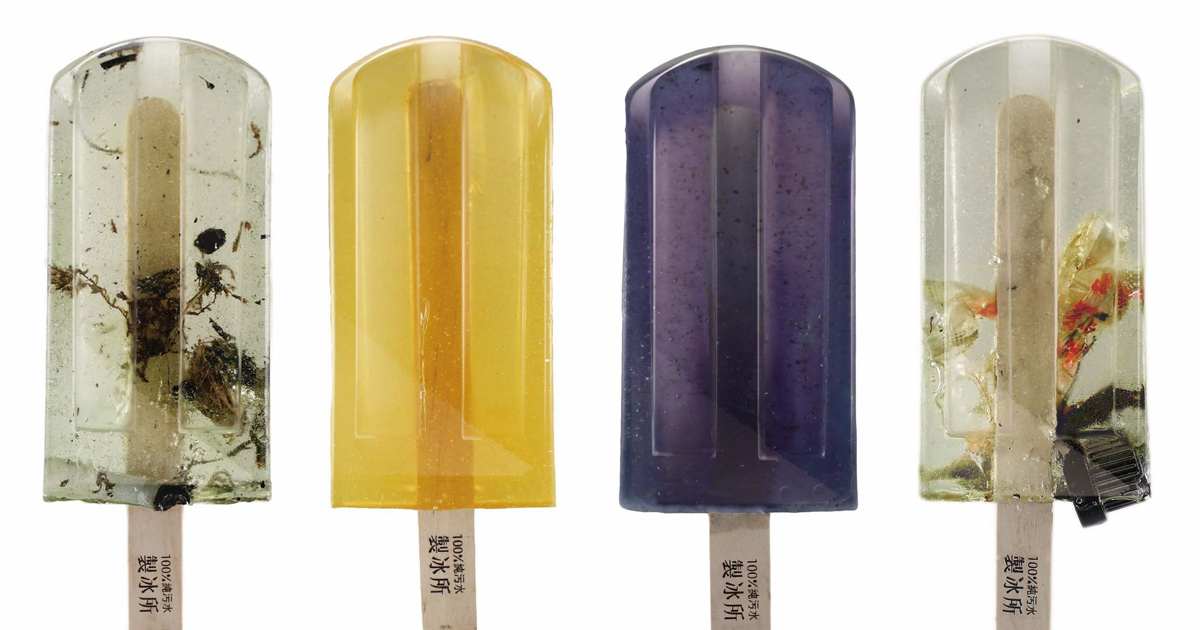

At first glance, they look like the kind of popsicles you would buy from a trendy summer pop-up: colorful, glossy, even oddly photogenic. Then your eyes adjust. That cloudy yellow swirl is not mango. That floating black speck is not vanilla bean. And that suspicious little shard? Definitely not artisanal garnish. These “treats” were made from polluted water collected from 100 different sites, and they became a global talking point because they pulled off something rare in environmental storytelling: they made a huge problem instantly visible.
The project, created by three design students in Taiwan, did not rely on charts, lectures, or a 47-slide presentation that ends with everyone pretending to be inspired. Instead, it used an object almost everyone understands: a popsicle. The result was clever, unsettling, and unforgettable. It showed that water pollution is not some vague issue hiding in scientific papers or government reports. It is concrete. It is ugly. And sometimes, disturbingly, it can look almost beautiful until you realize what you are really seeing.
That is a big reason Polluted Water Popsicles grabbed the world’s attention. It took a messy environmental crisis and packaged it in a form built for instant emotional impact. The project traveled across design blogs, environmental features, and social media because it made people stop scrolling and stare. More important, it forced a deeper question: if contaminated water can be made to look this visually interesting, how often do we miss pollution in real life simply because it does not announce itself with flashing warning signs?
What Exactly Were These Polluted Water Popsicles?
The installation was built from water collected at 100 polluted locations across Taiwan, including rivers, parks, fishing ports, canals, and other public waterways. The artists froze each sample into a popsicle shape, then preserved the look of the original samples in resin so the pieces could survive exhibition and transport. Some pieces contained visible trash. Others looked murky, oily, or strangely tinted. A few appeared almost pretty at first glance, which, frankly, was part of the trap.
That visual contradiction is what made the work so effective. Popsicles are supposed to signal refreshment, childhood, and relief on a hot day. Pollution signals the opposite. Smash those ideas together, and the brain does a double take. The object becomes memorable before the argument even begins. In an internet age where people scroll past headlines at Olympic speed, that matters.
A Smart Design Move, Not Just a Shock Tactic
This was not just “gross for the sake of gross.” The project used thoughtful packaging and careful presentation to mimic the language of modern consumer culture. Some of the popsicles were paired with attractive wrappers and clean display styling, which made the contamination inside feel even more jarring. The artists understood something advertisers have known forever: people notice surfaces first. By borrowing the polished look of product design, they exposed how easily serious problems can be hidden behind a pleasing exterior.
That is also why the work resonated beyond art circles. It was environmental activism dressed in familiar commercial language. It looked shareable, almost snackable, until the viewer realized the “product” was actually a warning. That twist helped turn the installation into a conversation starter across different audiences, including people who might never read a long report about stormwater runoff, aquatic trash, or plastic waste.
Why the World Could Not Look Away
The title alone practically wrote its own passport to virality. Popsicles. Polluted water. One hundred sources. World attention. That is a headline with built-in tension. But the real reason the project spread is that it translated environmental damage into something ordinary people could immediately understand. Water pollution is often discussed in abstract terms: contamination pathways, chemical loads, wastewater discharge, runoff management. Necessary language, sure. Memorable at a dinner party? Not so much.
This project changed the scale of the issue from abstract to intimate. A river can feel distant. A popsicle does not. You can imagine holding it. You can imagine almost tasting it. And that tiny leap of imagination is exactly what gives the artwork its power. The viewer goes from “pollution is bad” to “oh wow, this is what we are letting into the environment.”
There is also a broader cultural reason it landed so hard. People are increasingly suspicious of surfaces that look perfect. We live in a polished age: filtered photos, glossy branding, “clean” packaging, and products marketed with language that sounds healthier than it probably is. The popsicles played with that discomfort. They asked a simple but sharp question: how much contamination do we ignore because it arrives in a visually acceptable form?
Beauty Was the Bait
Some of the popsicles looked like modern art pieces. Others looked like failed science experiments from a very chaotic freezer. Together, they made a larger point: pollution is not always dramatic. Sometimes it is gradual, normalized, and hidden in places people pass every day. A canal, a stream, a ditch, a harbor edge. Not cinematic enough to make national headlines, but polluted enough to matter.
That mix of beauty and disgust is hard to shake off. It triggers curiosity first, then discomfort, then reflection. In communication terms, that is gold. In human terms, it is the moment when concern stops being theoretical.
What These Popsicles Reveal About Water Pollution
The project was rooted in Taiwan, but the message is global. Water pollution does not need a passport. Trash, plastics, oils, chemicals, sewage-related waste, and contaminated runoff move through rivers, streams, storm drains, lakes, and coastal systems with depressing efficiency. Environmental agencies in the United States have long warned that mismanaged trash affects water quality, harms wildlife, and degrades the places people rely on for recreation and local economies. Plastic is especially troubling because it persists in the environment and keeps breaking into smaller pieces instead of politely disappearing like a guilty conscience.
That matters because polluted water is not only about what looks dirty to the naked eye. Some contamination is visible, like wrappers, bottle caps, cigarette butts, and oily films. Other forms are microscopic. Research and government reporting in the United States have highlighted how microplastics reach waterways through wastewater, stormwater runoff, sewage overflow, and even the atmosphere. So while the popsicles are visually dramatic, they also hint at the hidden part of the problem: a lot of what threatens water quality is far too small to become an Instagram villain.
Stormwater is a major piece of the story. In urban areas, rainwater rushes over roads, parking lots, and pavement, collecting oil, trash, chemicals, and other pollutants before carrying them into rivers and streams. In plain English: the street mess does not stay on the street. It travels. One rainy afternoon can become a transportation service for pollution, no tracking number required.
Pollution Is a Health Issue Too
Projects like this also resonate because contaminated water is not just an environmental issue; it is a human health issue. Public health agencies in the U.S. note that water contaminated with germs, chemicals, or toxins can contribute to waterborne illness through drinking, exposure, or contact with eyes, ears, and skin. In other words, dirty water is not merely ugly scenery. It can make people sick.
That connection adds another layer to the artwork. The popsicle shape suggests something consumed. That symbolism is not subtle, and it should not be. Around the world, communities continue to live with polluted water in ways that are far more serious than an uncomfortable gallery moment. The project works because it turns a passive visual experience into a question about what people ingest, what ecosystems absorb, and what society treats as normal.
Why This Story Resonated With American Readers
Part of the reason American audiences paid attention is simple: the message does not feel foreign. The U.S. has its own long-running struggles with polluted runoff, plastic waste, sewage overflows, industrial contamination, beach pollution, and drinking water concerns. Environmental groups, public health agencies, and river advocates have spent years explaining that water pollution can come from many sources, including stormwater, waste mismanagement, and chemicals that move from land into waterways.
So when people in the U.S. saw polluted-water popsicles from Taiwan, they were not just reacting to someone else’s problem. They were recognizing a visual metaphor that applied at home too. That is one reason the project traveled so well across American outlets. It translated local samples into a global warning without needing a giant paragraph of explanation.
It also connected with a broader American interest in activist art and design with a social purpose. Smithsonian reporting on environmental art has shown how artists often make mass consumption and pollution feel visceral rather than abstract. That is exactly what these popsicles do. They do not ask the audience to admire technique alone. They ask viewers to sit with discomfort and then connect that discomfort to everyday habitsespecially the use-and-toss culture surrounding single-use plastics and disposable packaging.
The Deeper Genius of the Project
The most impressive thing about Polluted Water Popsicles is not the gross-out factor. It is the communication strategy. The artists took a familiar item, loaded it with environmental truth, and made it impossible to ignore. That is effective because most people do not change their behavior after reading one depressing statistic. They change when an issue becomes emotionally legible.
The popsicles made pollution emotionally legible.
They also exposed the strange way humans process risk. We often react faster to objects than to systems. A plastic-stuffed popsicle is shocking. A long explanation of watershed pollution pathways, while crucial, rarely generates the same instant response. The art bridged that gap. It transformed systems thinking into a visible object without oversimplifying the seriousness of the issue.
And yes, there is a lesson here for journalists, educators, brands, and activists: if you want people to care about environmental damage, do not only tell them it exists. Show them in a form they cannot unsee.
So What Should People Take Away From It?
First, water pollution is not only caused by dramatic disasters. It is often driven by small, repeated behaviors: littering, overuse of disposable plastics, polluted runoff, poor waste handling, neglected infrastructure, and the steady leakage of contaminants into waterways. Second, “out of sight, out of mind” is one of pollution’s greatest allies. If trash leaves your hand, it does not leave the planet. It just changes scenery.
Third, design can be a powerful tool for environmental awareness. The best awareness campaigns do not just inform; they reframe. These popsicles reframed dirty water as something viewers could not mentally file away under “later.” The project was funny for about half a second, disturbing for much longer, and useful because it converted attention into reflection.
Finally, the story reminds readers that solutions are both systemic and personal. Better stormwater management, improved waste systems, stronger pollution controls, and smarter public policy matter enormously. But so do individual habits: using less single-use plastic, disposing of cigarette butts and trash properly, supporting cleanup efforts, paying attention to local water issues, and not treating waterways like nature’s junk drawer.
Experiences Related to “Popsicles Made From 100 Different Polluted Water Sources Grab World’s Attention”
One of the strangest things about this project is the emotional journey it creates in just a few seconds. Imagine walking into a gallery or seeing the images online for the first time. Your brain does what brains do: it categorizes fast. Popsicles. Colorful. Summer. Maybe even nostalgic. Then the details arrive like an uninvited guest. Bits of plastic. Brown water. Murky sediment. Oily streaks. Suddenly the cheerful shape feels almost rude. That experiencemoving from delight to disgust to concernis the entire point, and it is probably why so many people remembered the work long after the first headline faded.
For many viewers, the experience is not just visual; it is deeply personal. A popsicle is a childhood object. It belongs to hot sidewalks, sticky fingers, backyard laughter, and convenience-store freezers humming in July. By using that form, the artists pulled pollution into a place of personal memory. It no longer felt like a distant environmental issue happening somewhere over there, near some anonymous river with an unpronounceable industrial report. It felt intimate. Familiar. Almost invasive. That is a rare effect in environmental communication.
There is also a kind of embarrassment built into the reaction. The pieces are attractive enough that people are drawn in before realizing what they are admiring. That split second can make viewers feel fooled, and that discomfort becomes part of the experience. Why did something contaminated look appealing? Why did I respond to the wrapper before the contents? Why do humans keep trusting surfaces? Those are not small questions. They reach beyond water pollution and into consumer culture itself.
Another powerful experience connected to this topic is recognition. Plenty of people have seen polluted creeks, trash-lined canals, storm drains stuffed with litter, or beaches marked by cigarette butts and plastic fragments. The popsicles can trigger memories of those places. A viewer may think of a river near home that smells wrong after rain, or a shoreline where the tide brings in more packaging than shells. In that moment, the art stops being about Taiwan alone and starts feeling universal. The display becomes a mirror.
For some people, the strongest response is not disgust but sadness. The idea that water from public spaces can hold this much visible contamination is a reminder of how casually societies damage shared resources. Water should suggest life, relief, movement, and renewal. Seeing it suspended in resin with trash trapped inside creates a feeling of loss. It turns pollution from an abstract “issue” into evidence. Not a theory. Not a slogan. Evidence.
And then there is the final experience: motivation. Good activist art does not end with shock. It leaves a residue in the mind. You think differently the next time you see runoff rushing into a storm drain, or a plastic bottle floating in a canal, or a cigarette butt flicked onto the sidewalk like it has magically signed a lease somewhere else. The polluted-water popsicles linger because they retrain attention. After seeing them, it becomes harder to ignore the ordinary pathways of waste. That may be the project’s greatest success. It does not just ask people to feel something for a moment. It teaches them to notice.
Conclusion
Popsicles Made From 100 Different Polluted Water Sources Grab World’s Attention because the idea is brilliantly simple and brutally effective. Three artists transformed contaminated water into an object people instantly recognize, then forced viewers to confront what pollution really looks like when it is no longer hidden behind distance, statistics, or polite language. The project became memorable not because it was weird, but because it was true in a form people could not ignore.
That is why the work still matters. It reminds us that polluted water is not only a scientific problem or a policy debate. It is a visual, emotional, public, and human problem. And sometimes, the fastest way to make the world pay attention is to hand it something that looks like dessert and let the horror arrive a second later.