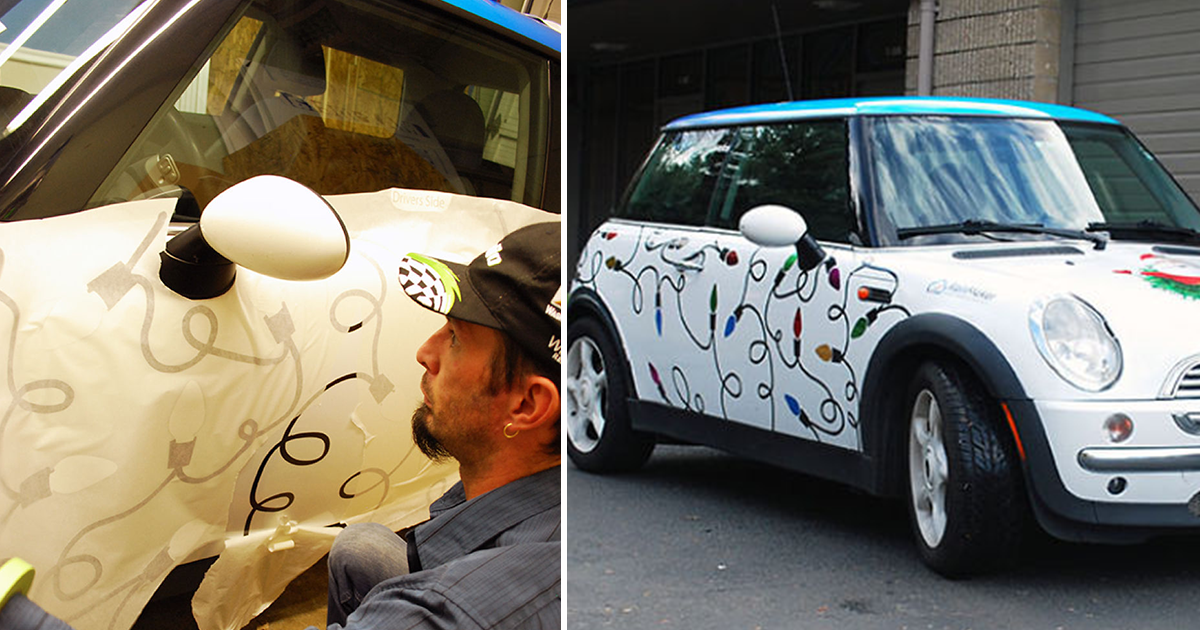
My Mini Cooper Became A Rolling Holiday Greeting After I Wrapped It In Christmas Paper

Some people decorate their homes for Christmas. Others wear light-up sweaters, bake cookies shaped like reindeer, or position an inflatable Santa on the lawn where it spends most of December face-down after losing an argument with the wind. I decided to take a different route: I turned my Mini Cooper into an oversized holiday present.
The idea sounded simple. Buy Christmas wrapping paper, cover the car, add a bow, and enjoy the reactions. What could possibly go wrong?
As it turned out, wrapping a curvy little car is much harder than wrapping a rectangular box. A Mini Cooper has mirrors, door handles, headlights, wheel arches, seams, sensors, and approximately 4,000 rounded surfaces designed to make wrapping paper question its career choices.
Still, the finished result was impossible to ignore. For a brief, glittery moment, my Mini became a rolling holiday greetinga cheerful red-and-green package that made strangers smile before they had time to wonder whether I had completely lost my mind.
Why a Mini Cooper Was Perfect for the Christmas Makeover
A Mini Cooper already has the personality of a car that might voluntarily attend an ugly-sweater party. Its round headlights, compact proportions, contrasting roof, and playful design make it look more expressive than the average commuter vehicle.
MINI has long emphasized personalization through contrasting roofs, mirror caps, exterior colors, stripes, and distinctive design details. That customizable character helped make the car a natural candidate for an extravagant seasonal transformation.
A full-size SUV wrapped like a present might resemble a department-store shipping container. A Mini Cooper, however, looks like something an ambitious elf could actually park beneath a gigantic Christmas tree.
Its small body also made the project appear manageable. I looked at the car, looked at several rolls of paper, and confidently estimated that the entire job would take two hours. This estimate was based on enthusiasm, optimism, and absolutely no understanding of automotive bodywork.
Christmas Paper Is Not the Same as Automotive Vinyl
Before describing the process, one distinction matters: ordinary Christmas wrapping paper is not designed to function as a road-going vehicle wrap.
A professional car wrap uses purpose-made vinyl film applied over prepared exterior panels. Automotive wrapping products are engineered to conform around curves, release trapped air, tolerate outdoor conditions, and remain removable when properly installed. Wrapping paper is engineered to hide a coffee mug until someone tears it open.
Edmunds describes a conventional vehicle wrap as a collection of vinyl decals installed over body panels to alter the car’s appearance. Manufacturers such as 3M and Avery Dennison provide films, installation systems, maintenance instructions, and products specifically designed for automotive surfaces.
What happens when gift wrap meets a car?
Paper does not stretch neatly around compound curves. It creases. It wrinkles. It tears near panel edges and becomes soft when exposed to moisture. Tape may also leave residue, lift unexpectedly, or interact poorly with paint, trim, rubber seals, and existing protective coatings.
For those reasons, my Christmas-paper treatment was created primarily as a temporary, stationary display and photography project. Any portion used while the vehicle was moving had to be secured, inspected, and kept far away from glass, lights, license plates, exhaust components, moving parts, air intakes, cameras, and sensors.
Anyone seeking a longer-lasting rolling Christmas design should use removable automotive vinyl installed by an experienced professional. Proper surface preparation and installation quality play major roles in how well a wrap performs and how long it lasts.
Planning the Giant Holiday Present
I began by choosing a classic pattern: red paper covered with white snowflakes, plus green ribbon wide enough to be visible from across a parking lot. I briefly considered paper featuring cartoon reindeer, but their faces became alarmingly distorted whenever the sheets curved around the hood.
Materials used for the temporary display
- Several rolls of medium-weight Christmas wrapping paper
- Wide decorative ribbon
- A large weather-resistant gift bow
- Low-tack, surface-safe automotive masking tape
- Scissors and a plastic trimming tool
- Microfiber towels
- A mild automotive cleaning solution
- Small removable magnets for selected metal panels
- A patient friend willing to hold paper in place
I avoided household duct tape, packing tape, glue, staples, and anything else likely to convert holiday cheer into a paint-repair appointment. Before attaching any material, I tested the tape on a small, inconspicuous area and removed it carefully.
The car was washed and dried first. Dirt trapped beneath paper or tape can scratch the clear coat as the material moves. Consumer Reports also advises using products intended for automotive finishes rather than household detergents that may strip protective wax.
How I Wrapped the Mini Cooper
Step 1: I started with the easy panels
The roof looked like the simplest place to begin because it was relatively flat. This confidence lasted until the first breeze lifted the paper and turned it into a festive sail.
We moved the project into a clean garage, cut the paper into manageable sections, and loosely positioned each piece before securing anything. Working indoors prevented wind, dust, and unexpected moisture from joining the decorating committee.
Step 2: I treated each body panel separately
Rather than attempting to cover an entire side with one enormous sheet, I worked panel by panel. The hood, front fenders, doors, rear quarter panels, hatch, and roof each received separate pieces.
The gaps between panels were left functional. Paper was not stretched across doors, the hood opening, or the hatch seam. Otherwise, entering the car would have required tearing it open like an impatient child on Christmas morning.
Step 3: I worked around the Mini’s curves
The wheel arches were the project’s final boss. Paper refused to follow their shape without folding, so I made small relief cuts and overlapped the edges. The result was less like professional upholstery and more like gift wrapping performed during mild turbulence, but the pattern disguised many imperfections.
I left generous clearance around the tires and suspension. Nothing was allowed to hang beneath the body or extend into a wheel well, where loose material could become entangled.
Step 4: I kept safety equipment uncovered
The windshield, front side windows, mirrors, headlights, taillights, turn signals, reflectors, license plates, backup camera, parking sensors, door handles, fuel door, grille, and exhaust outlet remained fully exposed.
Federal vehicle standards regulate glazing and required lighting equipment, while operating rules and decoration restrictions can vary by state. NHTSA materials emphasize visibility through required glazing, and state guidance commonly prohibits signs or objects that obstruct a driver’s view. California’s driver handbook, for example, restricts objects placed on windshields and certain windows.
The lesson is simple: no holiday decoration is worth reducing visibility or hiding equipment that helps other road users understand where your car is going.
Step 5: I added the ribbon and bow
Two broad strips of green ribbon crossed over the roof and continued down the sides, creating the appearance of a traditionally wrapped gift. The oversized bow sat on the roof only while the car was parked.
A roof-mounted bow may look charming in photographs, but a poorly secured decoration can detach, obstruct vision, or create a hazard. For any moving display, low-profile automotive vinyl graphics are far safer than bulky three-dimensional accessories.
The Moment My Mini Became a Holiday Celebrity
Once the project was finished, I rolled the Mini out of the garage and parked it in the driveway. The transformation was ridiculous in the best possible way.
Neighbors stopped to take pictures. A delivery driver laughed so hard that he briefly forgot which package he was carrying. One child asked whether Santa had upgraded from a sleigh because parking had become difficult at the mall.
The wrapping paper exaggerated every familiar Mini feature. Its round headlights looked like two surprised eyes peeking through a holiday disguise. The contrasting roof became the top of the package, while the short body made the entire car resemble a gift that had escaped from beneath the tree.
When I took it to a controlled holiday gathering, people gathered around before I had fully parked. Several wanted photographs beside it. Others examined the seams as though judging a competitive gift-wrapping championship.
The funniest reactions came from people who initially saw the car from behind. They would slow down, stare, notice the ribbon, and then walk around to the front with the serious concentration of investigators arriving at an extremely festive crime scene.
Could You Legally Drive a Christmas-Wrapped Car?
There is no single nationwide answer covering every possible decoration. Vehicle-operation laws differ among states, counties, and municipalities, and the legality may depend on the material, placement, lighting colors, flashing patterns, visibility, and whether the vehicle is participating in a permitted parade.
Decorative Christmas lights deserve particular caution. AAA notes that colored or flashing lights can conflict with laws governing emergency-vehicle colors and required automotive lighting. Some areas may allow exceptions for organized parades, but that does not make the same setup legal during ordinary street driving.
Required headlights, taillights, turn signals, reflectors, windows, mirrors, and license plates must remain visible. Decorations should not imitate police or emergency vehicles, distract other motorists, interfere with cameras or driver-assistance sensors, or create loose debris.
Drivers should also consider insurance. Progressive advises that appearance or performance modifications may require additional coverage or disclosure, depending on their value and the insurer’s rules. A temporary sheet of paper may not count as a meaningful modification, but an expensive custom vinyl installation, lighting system, or permanently altered exterior could.
Before taking a decorated vehicle onto public roads, check state and local rules, consult the insurer when appropriate, and remove anything that could detach or obscure essential equipment.
What Worked, What Failed, and What I Would Change
What worked surprisingly well
The overall visual concept was a success. Bold paper with a repeating pattern concealed minor wrinkles, and the Mini’s small dimensions meant the transformation was immediately understandable. Viewers did not see “car with paper attached.” They saw “giant Christmas present with headlights.”
Working in separate sections also made repairs easy. When one corner tore, I replaced that panel rather than rebuilding an entire side.
What failed almost immediately
The first enemy was wind. Even a small gap allowed air beneath the paper, causing it to flap and loosen. The second enemy was moisture. Morning condensation softened several edges, proving that wrapping paper and outdoor storage have the compatibility of a snowman and a heated garage.
The third problem was tape. Too little tape allowed the paper to lift; too much increased the risk of residue and made removal slower. Automotive vinyl avoids many of these problems because it is specifically formulated for exterior application.
What I would do next time
I would commission a printed removable vinyl wrap that recreated the appearance of Christmas paper. It could include digitally printed folds, ribbon, gift tags, and snowflakes without using actual paper.
Professional vinyl would also be easier to maintain. Wrap manufacturers generally recommend gentle hand washing, mild cleaners, and avoiding harsh brush washes that can scratch film or lift edges. 3M advises waiting at least 72 hours after installation before washing a newly wrapped vehicle, while Avery Dennison recommends regular, careful cleaning with suitable products.
Safer Ways to Create a Christmas Car
Fortunately, you do not need to attach wrapping paper to your paint to create a memorable holiday vehicle.
- Printed automotive vinyl: Ask a professional shop to reproduce a wrapping-paper pattern with removable wrap film.
- Magnetic decorations: Use lightweight automotive magnets on compatible steel panels, removing them before high-speed travel or severe weather.
- Window-safe graphics: Place approved static-cling designs only where they do not interfere with visibility or violate local rules.
- Removable mirror-cap accents: Add small festive colors without covering the mirror glass or turn-signal elements.
- Parade-only accessories: Install larger bows or three-dimensional props only for controlled, low-speed events, following organizer and local safety requirements.
- Interior decorations: Add restrained dashboard or seat accents, keeping airbags, pedals, controls, windows, and the driver’s field of view clear.
State Farm’s seasonal guidance emphasizes using safe, properly tested holiday products and paying extra attention in crowded parking areas. Those principles matter even more when decorations are being adapted for a vehicle.
More Experiences From Living With a Rolling Holiday Greeting
Creating the Mini was only half the experience. The other half was discovering how differently people behave around a car that looks like a Christmas present.
At an ordinary gas station, strangers usually avoid eye contact and focus on the pump screen as though it contains confidential government information. With the wrapped Mini, that social barrier disappeared. People asked how long the project took, whether the paper was waterproof, and whether I planned to place the car beneath a tree. One man inspected the ribbon for several minutes before announcing that my corners needed improvement. He was correct, but I had not requested judging.
Parking also became unexpectedly entertaining. I chose spaces far from other vehicles because the paper edges were delicate. When I returned, I often found people standing nearby with their phones out. Most were respectful, although one person gently touched the paper to confirm that it was real. The expression on his face suggested that he had expected either vinyl or magic.
Children responded with complete sincerity. Adults laughed because the project was absurd; children accepted it as a perfectly reasonable transportation choice. One girl asked where I had hidden the gift tag. Another wanted to know who the car was for. When I said it was for everyone who needed a smile, she nodded as if this were an established category of automotive ownership.
The Mini also turned routine errands into miniature public events. Picking up groceries took longer because conversations followed me across the parking lot. A store employee asked whether I could park near the entrance for the evening holiday promotion. For twenty minutes, the car became an unofficial photo booth while I stood nearby guarding the paper from shopping carts and enthusiastic toddlers.
The project taught me how strongly people react to harmless surprises. Most cars are designed to communicate seriousness, speed, luxury, toughness, or practicality. A car wrapped as a Christmas gift communicates none of those things. It simply says, “Today can be more fun than expected.”
There were less glamorous moments. A light drizzle forced an emergency retreat into the garage. A ribbon loosened and had to be removed. One section near a door handle tore after being touched repeatedly. Every trip required an inspection, and I carried extra paper, tape, scissors, microfiber towels, and the nervous energy of someone transporting a wedding cake over railroad tracks.
Removing the display was surprisingly emotional. The paper had lasted only briefly, yet the car had accumulated stories, photographs, and conversations that would never have happened otherwise. Peeling away the final snowflake-covered panel felt like taking down the Christmas tree in January: necessary, slightly sad, and accompanied by the discovery of tape in places where tape should not exist.
I removed each section slowly, checking for adhesive residue and cleaning the exterior with products suitable for automotive paint. The original finish emerged unharmed, which was the only acceptable ending. A decorative project can be funny, imaginative, and temporary; paint damage is a punch line nobody enjoys.
The next version will use professionally installed vinyl printed to look like premium gift wrap. It will retain the visual joke while handling curves, weather, and normal driving far more effectively. Professional wraps can provide a temporary appearance change, although they still require correct installation and care and should not be confused with thicker paint-protection film.
I may even add a printed gift tag reading, “To: Everyone stuck in holiday traffic. From: Someone who takes Christmas decorating too far.”
Conclusion: The Best Present Was the Reaction
Wrapping my Mini Cooper in Christmas paper was impractical, fragile, time-consuming, and completely worth doing as a controlled temporary display.
The finished car turned ordinary streets and parking lots into places where strangers laughed together. It reminded me that creativity does not always need to be sophisticated. Sometimes it can be a small car, several rolls of snowflake paper, an enormous green ribbon, and a bow that has no business being near a roof.
The project also revealed the limits of ordinary gift wrap. Paper is suitable for parked photographs and sheltered displays, not dependable everyday driving. A genuine automotive vinyl wrap is the safer, cleaner, and more durable choice for anyone who wants a Christmas car that can survive weather and road use.
Whatever method you choose, keep the windows, mirrors, lights, plates, cameras, sensors, vents, tires, and moving components clear. Check local laws, inspect every attachment, and prioritize visibility over decoration. Holiday cheer is wonderful; holiday cheer flying off the roof at 55 mph is considerably less charming.
My Mini eventually returned to its normal appearance, but for one memorable holiday adventure, it was more than transportation. It was a rolling greeting card, an oversized present, and proof that the smallest car in the parking lot can create the biggest smile.
Note: This first-person feature is an original narrative synthesis informed by automotive-wrap manufacturers, road-safety agencies, insurers, automotive publications, and state driving guidance. Ordinary gift wrap should be limited to controlled temporary displays; road-going decorations must comply with local laws and preserve full vehicle visibility and function.