
“Weird Al” Yankovic has built a career on doing the one thing most musicians secretly fear and secretly want: turning their serious hit song into a joke so good that the joke becomes part of the hit’s afterlife. A pop anthem becomes a food complaint. A rock video becomes a hair-metal fever dream. A solemn ballad suddenly has Jedi robes. Somehow, instead of ruining songs, Weird Al often makes them more legendary.
That is why one of the funniest corners of music history is not simply the existence of Weird Al parodies, but the rare moments when the original artists joined the gag. Sometimes they performed on the record. Sometimes they brought the parody into their own concerts. Sometimes they nearly sang the parody by accident because their children played it too much at home. That last one may be the most human sentence ever written about classic rock.
Below are four memorable times when artists connected to the original songs performed, echoed, or became tangled up with their Weird Al versions. These stories reveal why parody music works: it is not just mockery. At its best, it is a strange handshake between pop culture, musicianship, permission, timing, and a man with an accordion who somehow understands everybody’s hooks better than most radio programmers.
Why Weird Al Parodies Hit Differently
Before we get to the four examples, it helps to understand the unusual rules of the Weird Al universe. Yankovic is famous for asking permission from original songwriters even when parody can be legally protected. That habit matters. It turns a potential conflict into a collaboration, or at least into a friendly nod across the music industry cafeteria.
Many artists see a Weird Al parody as a strange badge of honor. If your song gets parodied by Weird Al, it usually means it has become culturally unavoidable. Your hook is recognizable. Your video is iconic. Your chorus has lodged itself so deep in the public brain that it can survive being dressed up in a fake mustache and sent to comedy school.
The best Weird Al parody songs also show deep respect for the originals. The joke may be silly, but the musical execution is rarely sloppy. Yankovic and his band are known for recreating arrangements with absurd precision. That accuracy is why original artists can play along without feeling like their work has been spray-painted by a raccoon.
1. Crash Test Dummies Joined “Headline News”
The Crash Test Dummies gave Weird Al one of his most perfect parody targets with “Mmm Mmm Mmm Mmm,” their moody 1990s hit built around deadpan storytelling, ominous acoustic textures, and Brad Roberts’ unforgettable low voice. It was dramatic, weird, and instantly recognizable. Naturally, Weird Al heard it and thought, “Yes, but what if tabloid news?”
His parody, “Headline News,” swapped the original song’s strange character sketches for sensational real-world stories that dominated early-1990s media. Instead of turning the song into a random gag, Yankovic matched the structure of the original: each verse presents a bizarre tale, the chorus hums like a mysterious foghorn, and the mood stays oddly serious while the details become ridiculous.
The truly delightful twist came when members of Crash Test Dummies performed the parody with Weird Al. In the mid-1990s, they joined him for a live television performance in Canada, making this one of the clearest examples of an original artist stepping directly into the Weird Al funhouse. It was not merely “approval from a distance.” It was participation.
Why This Moment Worked
Crash Test Dummies were already unusual enough that the parody felt like a cousin rather than an enemy. Their original hit was solemn but quirky. Weird Al’s version exaggerated the format without flattening the musicianship. Brad Roberts and the band could recognize the craftsmanship underneath the comedy.
That is a key reason this moment still feels special. When an artist performs their own parody, they are saying, “Yes, we hear the joke, and we are secure enough to enjoy it.” In the ego-heavy world of popular music, that is rarer than a drummer who says, “Actually, I packed lightly.”
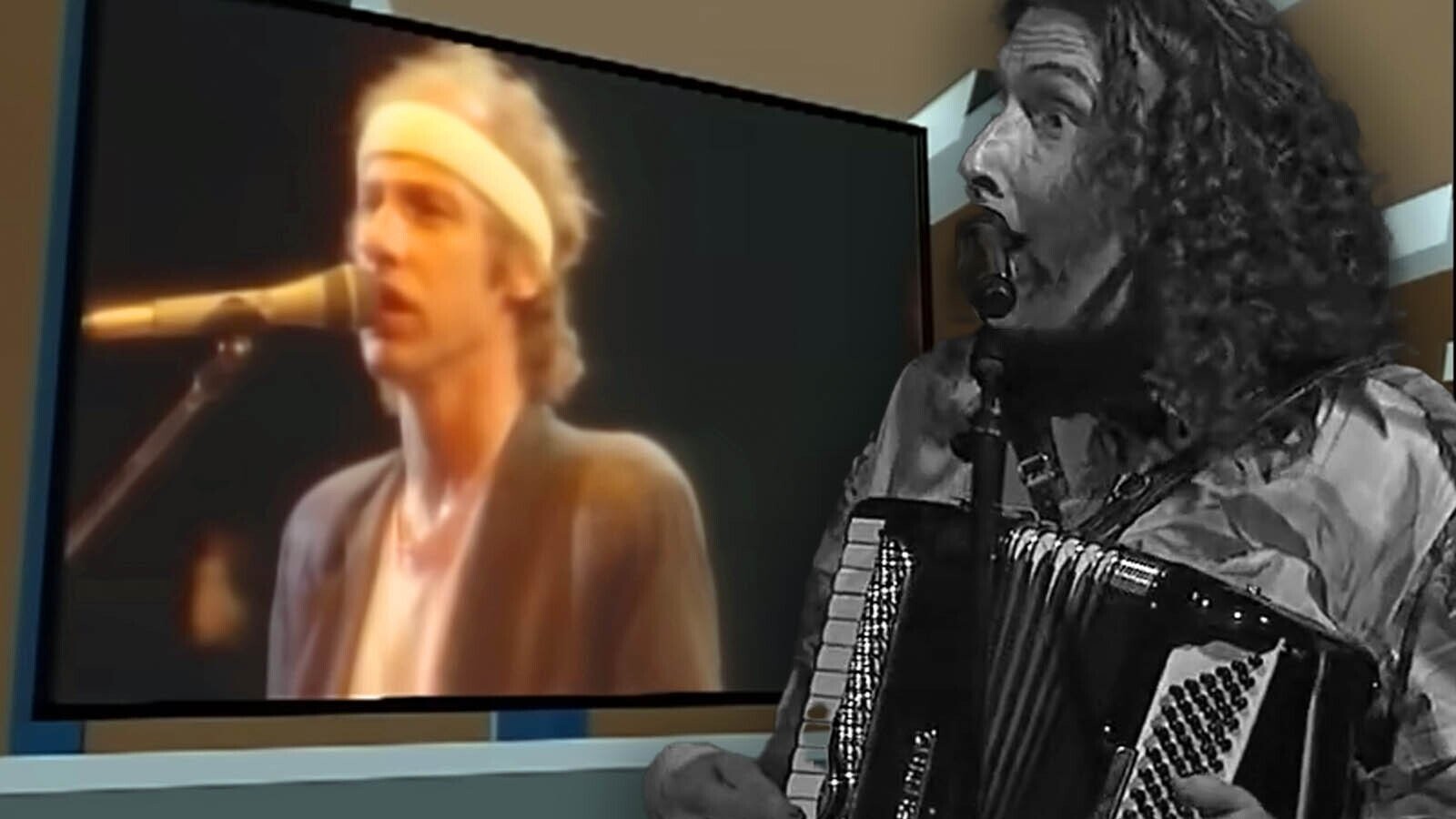
2. Mark Knopfler Played on “Money for Nothing/Beverly Hillbillies”
Dire Straits’ “Money for Nothing” was not just a hit; it was a landmark of 1980s rock video culture. The guitar riff was monstrous, the production was sleek, and the animated video looked like the future as imagined by a very expensive toaster. When Weird Al created “Money for Nothing/Beverly Hillbillies,” he did not merely parody the song. He smashed together Dire Straits’ sound with the theme and story world of The Beverly Hillbillies.
The result appeared in connection with Yankovic’s 1989 film UHF, and the title itself became part of the joke. It was long, awkward, and intentionally ridiculous, as if someone spilled a TV Guide into a rock studio. But the most important detail is this: Mark Knopfler, the Dire Straits guitarist and songwriter behind “Money for Nothing,” played guitar on Weird Al’s version.
That detail turns the parody into something more than imitation. It means the actual architect of that famous guitar feel helped build the comic version. Guy Fletcher of Dire Straits was also associated with the recording on synthesizer, strengthening the connection between the original and the parody.
The Joke Needed the Real Riff
Some parodies can survive with a rough impression. Not this one. “Money for Nothing” depends on guitar tone, rhythm, confidence, and swagger. Without the right riff, the parody would be like making a fake shark movie with a pool noodle. Funny, maybe, but not powerful.
Knopfler’s involvement gave the track authenticity. It also revealed something important about Weird Al’s method: the sillier the premise, the more serious the musical work has to be. The audience laughs harder when the performance sounds real. In this case, it was real enough that the original guitarist was literally in the mix.
That studio performance is one of the great examples of an artist not just approving a Weird Al parody but contributing to it. Knopfler did not stand outside the joke. He plugged in.
3. The Presidents of the United States of America Borrowed from “Gump”
In 1995, The Presidents of the United States of America released “Lump,” a compact, buzzing alternative rock single with a chorus that seemed scientifically engineered to stick to your brain like gum under a school desk. It was weird, catchy, and short enough to feel like it had sprinted past the finish line before other bands had finished tuning.
Weird Al transformed “Lump” into “Gump,” a parody about Forrest Gump, the Tom Hanks movie that had become a massive pop culture force. The match was almost too perfect. “Lump” already had a blunt, punchy title. “Gump” was right there, waving from a bus-stop bench.
What makes this case fun is that the influence appears to have traveled backward. The Presidents of the United States of America were known to incorporate elements associated with Weird Al’s “Gump” into later live performances of “Lump,” including the famous Forrest-style closing idea. In other words, the parody did not just imitate the original. It left fingerprints on how the original could be performed.
When the Parody Becomes Part of the Song’s Shadow
This is one of the strangest achievements a parody can have. A successful parody usually follows the original. But once audiences know the parody, they may start hearing it every time the original plays. The two songs become linked in public memory.
That is exactly what happened with “Lump” and “Gump.” For many listeners, the moment they hear the original riff, their brain may immediately jump to Forrest, chocolates, running, benches, and the entire 1990s arriving in a single blast of flannel and VHS tape. The Presidents leaning into that association in live settings shows an unusually generous sense of humor.
Years later, the connection between Yankovic and the band’s world continued in a different form when Weird Al covered “Peaches” in concert and was joined by Chris Ballew, the Presidents’ frontman, during a Seattle performance. That was not a performance of “Gump,” but it reinforced the same friendly loop between parody artist and original artist. The relationship had moved from spoof to salute.
4. Don McLean Nearly Got Rewired by “The Saga Begins”
Don McLean’s “American Pie” is one of the most famous long-form songs in American popular music: poetic, mysterious, emotional, and endlessly discussed by people who enjoy turning lyrics into historical excavation sites. Weird Al’s “The Saga Begins” used that grand structure for something wonderfully specific: summarizing Star Wars: Episode I – The Phantom Menace from Obi-Wan Kenobi’s point of view.
On paper, this sounds like something that should collapse under its own nerd weight. A parody of “American Pie” about trade disputes, Jedi training, and young Anakin Skywalker? That is a lot of cargo for one folk-rock spaceship. Yet it works because Yankovic mirrors the shape, pacing, and escalating drama of McLean’s original while replacing the mythic American imagery with galactic lore.
McLean approved the parody and later praised it warmly. The funniest part of the story is that his children reportedly played “The Saga Begins” so often that the Weird Al lyrics could interfere with McLean’s own performance memory. Imagine being Don McLean, standing before an audience ready to deliver one of rock’s sacred texts, and suddenly your brain whispers, “Are we sure this verse isn’t about Jedi?”
The Almost-Performance Still Counts in Spirit
Unlike the Crash Test Dummies example, this was not a full public duet. Unlike Mark Knopfler’s case, it was not a studio contribution. But it belongs on this list because it shows the most mischievous kind of parody success: infiltration.
When a Weird Al version becomes so familiar that it threatens to replace the original words in the original artist’s head, the parody has achieved a rare cultural victory. It has not destroyed the original. It has moved in next door, borrowed a cup of sugar, and started receiving mail.
McLean’s good humor about “The Saga Begins” also says a lot about the strength of the parody. “American Pie” is not a disposable pop tune. It is a major American song. For its writer to accept a Star Wars rewrite with grace shows how carefully Yankovic balanced reverence and absurdity.
What These Four Moments Reveal About Music Comedy
These examples are funny, but they also reveal a serious point about comedy music. A good parody does not survive on jokes alone. It needs musical intelligence. It needs timing. It needs the audience to know the original well enough to enjoy the twist. Most of all, it needs affection.
Weird Al’s best work rarely feels cruel. Even when he exaggerates an artist’s style or hijacks a song’s emotional tone, the result usually comes from admiration for how recognizable the original is. He studies songs the way a cartoonist studies faces. The nose may get bigger, the eyebrows may fly upward, but the likeness is there because the artist understands the subject.
That is why original artists can respond positively. Crash Test Dummies could share a stage with “Headline News” because the parody preserved their atmosphere. Mark Knopfler could play on “Money for Nothing/Beverly Hillbillies” because the guitar part still mattered. The Presidents could fold “Gump” energy back into “Lump” because the joke amplified the song’s playful absurdity. Don McLean could laugh at “The Saga Begins” because the parody treated “American Pie” as a structure strong enough to carry a galaxy.
The SEO-Friendly Truth: Weird Al Parodies Are Pop Culture Time Capsules
Search for Weird Al parody songs, and you are really searching through decades of pop culture memory. “Eat It” captures the Michael Jackson video era. “Smells Like Nirvana” captures grunge’s sudden mainstream explosion. “Amish Paradise” captures the mid-1990s collision of rap, controversy, and MTV. “White & Nerdy” captures the internet-age rise of geek identity. “The Saga Begins” captures the prequel-era Star Wars frenzy before social media turned every trailer into a global courtroom.
The four cases in this article are especially useful because they show artists interacting with those time capsules. They did not merely let Weird Al borrow their songs. In different ways, they stepped into the museum exhibit and pressed the big red comedy button.
For music fans, that is the joy. A Weird Al parody is both a joke and a receipt. It proves that a song mattered enough to be recognized instantly. It proves that the original had a hook strong enough to survive mutation. And when the original artist joins in, the parody becomes more than a spoof. It becomes a shared performance of cultural memory.
Experience Section: Listening to Weird Al Parodies Like a Fan, Not a Footnote
The best way to understand these four moments is not to treat them like trivia cards. Treat them like listening experiences. Put on the original song first. Hear the seriousness, the production choices, the vocal attitude, the little arrangement details that made it famous. Then play the Weird Al parody. Suddenly, the floor shifts. The melody is familiar, but the world has changed. It is like walking into your childhood home and discovering that the living room is now a taco restaurant.
That back-and-forth listening is where the magic lives. When you hear “Mmm Mmm Mmm Mmm” before “Headline News,” you realize how precisely Yankovic understood the original song’s storytelling rhythm. When you listen to “Money for Nothing” before “Money for Nothing/Beverly Hillbillies,” you notice that the joke only works because the guitar swagger remains intact. When “Lump” and “Gump” sit side by side, the parody feels less like vandalism and more like a second cartoon drawn over the same bold outline.
For many fans, Weird Al is also a gateway into music appreciation. A listener might discover Dire Straits because of a parody. A younger fan might learn about Don McLean through “The Saga Begins.” Someone who missed the 1990s alternative-rock moment might hear “Gump,” laugh at the Forrest references, and then go backward to find The Presidents of the United States of America. That is one of Yankovic’s underrated contributions: he sends people toward the source material.
There is also a social experience to these songs. Weird Al parodies are built for “Wait, you have to hear this” moments. They travel well at parties, on road trips, in family rooms, and in those chaotic late-night YouTube spirals where one music video becomes twelve. The humor is immediate, but the craft rewards repeat listens. You laugh first. Then you notice the rhyme scheme. Then you notice the production. Then you become the person explaining why the accordion guy is secretly one of the most disciplined musicians in pop comedy. Congratulations; you are now at least 40 percent funnier at dinner.
These artist-approved moments add another layer to that experience. Knowing that Crash Test Dummies performed with Weird Al makes “Headline News” feel warmer. Knowing Mark Knopfler played on the parody makes the guitar part feel like a wink from the source. Knowing The Presidents embraced parts of the “Gump” afterlife makes the original “Lump” feel even more elastic. Knowing Don McLean nearly had “The Saga Begins” running through his head during “American Pie” makes the whole story feel wonderfully human.
Ultimately, these experiences remind us that parody is not just about laughing at something. It is about recognizing something. You cannot parody what nobody knows. You cannot lovingly twist a song unless the song already has a shape worth twisting. Weird Al’s career proves that comedy can preserve music history in its own goofy, hyper-specific way. Sometimes the joke outlives the chart position. Sometimes the parody becomes part of how fans remember the original. And sometimes, if the universe is especially kind, the original artist walks onstage, plays the riff, borrows the line, or nearly sings about Jedi when they meant to sing about American pie.
Conclusion
The story of 4 Times Artists Performed Their ‘Weird Al’ Parodies is really a story about generosity in music. Popular songs can be treated like untouchable monuments, but Weird Al has always understood that a strong song can survive laughter. In fact, laughter often proves the song’s strength.
Crash Test Dummies, Mark Knopfler, The Presidents of the United States of America, and Don McLean each show a different way an original artist can interact with a parody. One joined the stage. One supplied the unmistakable guitar identity. One let the parody echo back into live performance. One nearly had his own classic rewired by a Star Wars spoof. Together, they prove that Weird Al’s parodies are not cheap imitations. They are pop culture conversations with better punchlines.
So the next time someone dismisses novelty songs as disposable, remind them that a joke song can preserve a riff, revive a movie reference, honor a songwriter, and make the original artist smile. That is not disposable. That is musical recycling with a Grammy-shaped compost bin.