
A formal dress can look perfect on the hanger and unexpectedly adventurous once you sit, bend forward, or reach for a dinner roll. Fortunately, learning how to cover cleavelf in the nearest tablecloth.
The best solution depends on how much coverage you want, whether the change should be temporary, and how the bodice is constructed. A refined underlayer can add coverage, fashion tape can control a shifting neckline, and professional tailoring can permanently reshape the dress. Here is how to choose and use each method without sacrificing style.
First, Make Sure the Dress Fits Correctly
A low neckline is not always the real problem. A loose bodice, long shoulder straps, poorly positioned cups, or inadequate bust support can make a reasonable neckline gape. Put on the exact bra, shapewear, adhesive cups, or support garment you plan to wear, then check the dress from the front and side.
Sit, walk, raise your arms, bend slightly, and take photos with and without flash. A neckline that looks secure while you stand still may open when you sit. Sheer mesh and pale lining may also become more transparent under strong lighting. Testing at home is much better than discovering the issue in 200 tagged photos.
Way 1: Add a Camisole, Bodysuit, or Modesty Panel
The simplest way to cover cleavage in a formal dress is to add an intentional layer beneath the neckline. This comfortable, reversible method works especially well with V-neck, wrap, scoop-neck, crossover, and button-front dresses.
Choose an Underlayer That Looks Intentional
A basic cotton tank may provide coverage, but it can make an evening gown look oddly casual. Better choices include a lace-trim camisole, seamless satin cami, high-neck lace bodysuit, nude mesh insert, or detachable modesty panel. A bodysuit stays smooth and resists bunching, while a modesty panel covers only the open area and may attach to bra straps or the dress lining.
Match the Dress Rather Than Fighting It
Match the insert to the gown or to your skin tone. Black lace under a black dress looks deliberate; ivory lace complements bridal and cream gowns; nude mesh preserves the visual line of a plunging neckline while reducing exposure.
Texture matters too. Smooth microfiber works under sleek crepe or jersey, while delicate lace suits chiffon, satin, velvet, and romantic designs. If the gown is heavily beaded, keep the insert simple. Two competing types of sparkle can turn “formal elegance” into “craft store after dark.”
Keep the Layer in Place
Attach the layer to the lining with lingerie loops, a few hand stitches, or tiny safety pins. Avoid pinning through silk, chiffon, fine satin, or sequined outer fabric, which may snag or retain visible holes. Test the finished layer while sitting and moving so it does not droop, twist, or creep upward.
Best for: substantial coverage, conservative venues, religious ceremonies, work events, sensitive skin, and anyone who wants a removable solution.
Way 2: Use Fashion Tape and Hidden Fasteners
When the neckline is nearly right but shifts, gaps, or opens too far, double-sided fashion tape may be the quickest fix. It does not add fabric, so it cannot cover a very deep plunge by itself. Instead, it keeps the existing edge close to the body and reduces accidental exposure.
Apply Fashion Tape Correctly
Begin with clean, completely dry skin. Lotion, oil, sunscreen, and perspiration can weaken the adhesive. Use tape specifically made for skin and clothing; household and duct tape belong in the garage, not on your décolletage.
- Put on the dress and mark where the neckline should sit.
- Place short strips along the inside edge of the neckline.
- Remove the backing, position the fabric, and press for several seconds.
- Repeat on the other side, then sit, turn, and raise your arms.
Short strips follow curves more naturally than one long piece. Too much tape may make soft fabric pucker or look stiff.
Pair Tape With a Discreet Closure
Wrap and crossover dresses often need an anchor where the two panels meet. A tailor can add a tiny snap, hook-and-eye, or thread loop. In an emergency, a miniature safety pin may work if it is hidden through the lining. The closure controls the center while tape holds the outer edges, creating more security for dancing, speaking, or repeated bending.
Protect Your Skin
Patch-test the product before the event, especially if you react to adhesives. Never tape irritated, broken, sunburned, or freshly shaved skin. Remove the tape slowly while supporting the skin; use oil or the manufacturer’s recommended remover when appropriate. Stop if removal becomes painful.
Best for: small gaps, shifting wrap necklines, soft draping, and last-minute adjustments. Adhesion may be weaker on velvet, rough embellishment, sweaty skin, or humid evenings, so carry spare strips.
Way 3: Have the Neckline Professionally Altered
For the most polished permanent solution, consult a tailor or seamstress experienced with formalwear. A professional can raise the neckline, shorten straps, sew a crossover higher, reshape cups, add support, or build a custom lace, mesh, tulle, or matching-fabric insert.
Start With the Least Invasive Change
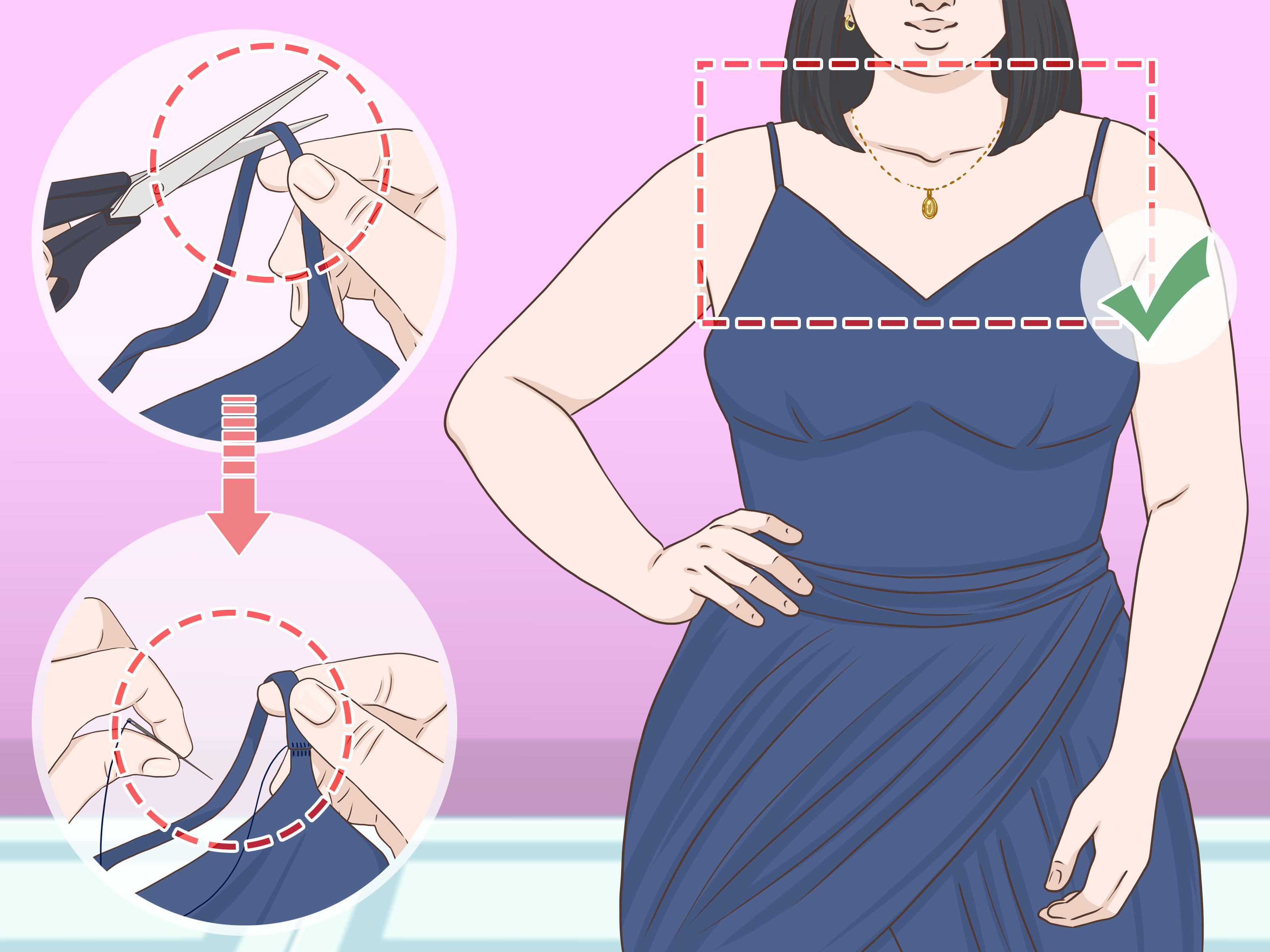
Shortening shoulder straps can lift the bodice and reduce cleavage, but excessive shortening may pinch the armholes or pull the waist upward. A wrap dress may only need its overlapping panels secured at a higher point. A plunging V-neck can often accept a triangular inset that echoes the dress’s lace, beading, color, or clean minimalist lines.
Strapless gowns may need better cup placement, boning, side-seam adjustments, or a waist stay rather than extra fabric at the top. Correcting the structure first usually produces a cleaner result.
Bring the Right Items to the Fitting
Wear the exact bra, shapewear, and shoes planned for the occasion. Different undergarments alter bust height and neckline placement. Ask the tailor to pin several coverage levels, then compare them while sitting, walking, bending, and taking photos.
Avoid Unnecessary Reconstruction
Small neckline changes are common, but major redesign can disturb boning, seams, cups, embellishment, and overall balance. Ask about cost and risk before allowing the bodice to be dismantled. Sometimes a removable lace topper or bodysuit is safer and more attractive than rebuilding the gown.
Best for: weddings, black-tie events, expensive dresses, difficult fabrics, repeat wear, or any neckline problem caused by poor fit.
How to Choose the Right Method
- Use a camisole, bodysuit, or modesty panel for noticeable, removable coverage.
- Use fashion tape and hidden fasteners when the neckline looks good but refuses to stay put.
- Choose professional alterations when fit is the underlying issue or you want a permanent finish.
The methods can work together. A tailored mesh panel may still benefit from one discreet strip of tape, and a camisole may look smoother when anchored to the lining. The best solutions are often quiet partnerships working behind the scenes.
Extra Tips for Polished Coverage
Choose Supportive Undergarments
A plunge bra may support a low neckline without showing, while a full-coverage bra may rise above the dress. The band should remain level, the cups should contain the bust without spilling, and the bra should not force the gown into an unintended shape.
Use Toppers for Flexible Coverage
A lace bolero, chiffon wrap, capelet, or tailored blazer can provide more coverage during a ceremony or professional portion of an event, then come off later.
Respect the Fabric
Stretch jersey moves, chiffon drifts, velvet may resist tape, and sequins can scratch an underlayer. Examine the fabric, lining, stretch, and seam allowance before choosing a fastener or alteration.
Common Mistakes to Avoid
- Using household tape that may irritate skin or damage fabric.
- Choosing a bulky camisole whose seams show through the bodice.
- Pinning directly through delicate outer material.
- Testing the dress only while standing still.
- Changing bras after the dress has been fitted or altered.
- Pulling the neckline so high that the armholes or waist become distorted.
Conclusion
The best way to cover cleavage in a formal dress is the one that looks intentional and lets you forget about the neckline. An elegant underlayer adds comfortable coverage, fashion tape controls small gaps, and tailoring creates the most integrated long-term result.
Correct the fit first, choose the least complicated solution that meets your needs, and test it with real movement and camera flash. When the dress survives sitting, dancing, hugging, and reaching for dessert, the mission is complete.
Experience Notes: What Usually Happens in Real Formal-Dress Situations
One common dressing-room experience begins with a gown that looks elegant from the front but opens several inches when the wearer sits. The first instinct is often to buy a higher-coverage bra. That can improve support, but it may create a new problem: the bra becomes visible. A lace modesty panel or bodysuit often works better because it treats the open area as a design feature rather than exposing an undergarment.
Another familiar scenario involves a wrap dress that behaves beautifully for ten minutes and then slowly separates during dinner. A safety pin may seem like the obvious rescue, but one placed through the outer fabric can pull, flash silver, or distort the drape. A tiny hidden snap at the crossover point, supported by two short pieces of fashion tape, is usually more successful. The snap manages tension; the tape prevents gaping.
Formal dresses purchased online create their own adventure. The model may have a shorter torso, different bust proportions, or a neckline held in place by styling clips during the photo shoot. Once the gown arrives, the plunge may sit lower than expected. Before assuming the dress is hopeless, evaluate the bodice. Shortening adjustable straps or taking in the side seams may stabilize the neckline enough that only a small insert is needed.
Bridesmaids and wedding guests also find that their preferred coverage changes with the setting. A neckline that feels comfortable at a reception may feel too open during a religious ceremony or around coworkers and grandparents. A removable lace topper, capelet, or modesty panel provides flexibility: more coverage for the ceremony and less for the dance floor.
People with fuller busts often discover that tape alone cannot control a soft, unstructured gown. The lesson is not that the tape failed; the dress needs support before adhesive. A properly fitted bra, built-in cups, boning, or a tailored waist stay can stabilize the bodice. Tape can then do its actual jobholding an edge in placeinstead of being asked to perform the work of a suspension bridge.
Then there is the classic last-minute emergency: the event begins in an hour, the tailor is unavailable, and the neckline suddenly appears twice as low as it did in the store. A useful emergency kit includes skin-safe fashion tape, miniature safety pins, a small sewing kit, and a simple lace panel or scarf. The goal is not to engineer couture in a hotel bathroom. It is to create a neat, secure solution that lasts through the evening.
Across these situations, the same lesson returns: coverage works best when it respects the dress. Matching the color, texture, and shape makes an insert look designed rather than improvised. Correcting the fit prevents layers from shifting. Testing movement reveals problems before they become public entertainment. A successful neckline fix lets you stop thinking about the neckline and focus on the event, the conversation, and whether anyone has located the dessert table.
Research note: This original, publication-ready article was synthesized from reputable U.S. fashion, bridal, tailoring, lingerie-fit, and skin-care guidance, including Brides, The Knot, David’s Bridal, Jovani, Good Housekeeping, Glamour, Byrdie, Southern Living, People, Cleveland Clinic, SewGuide, and Hurray Kimmay.