
There is a dangerous moment in the life of a SaaS company when growth slows and everyone suddenly becomes very interested in the color red.
Red pipeline numbers. Red churn charts. Red budget lines. Red faces in the board meeting.
The natural reaction is to slam on the brakes. Freeze hiring. Cut marketing. Cancel events. Reduce customer success coverage. Delay product investments. Tell the sales team to “do more with less,” a phrase that sounds wonderfully efficient until “less” includes the tools, leads, support, and product improvements required to do more.
Some cost discipline is healthy. The problem begins when slower growth causes a company to reduce the very activities that could restore growth. Performance weakens, morale falls, customers receive less attention, sales productivity declines, churn rises, and management responds with another round of cuts.
Congratulations: the business has entered the SaaS doom loop.
What Is a SaaS Doom Loop?
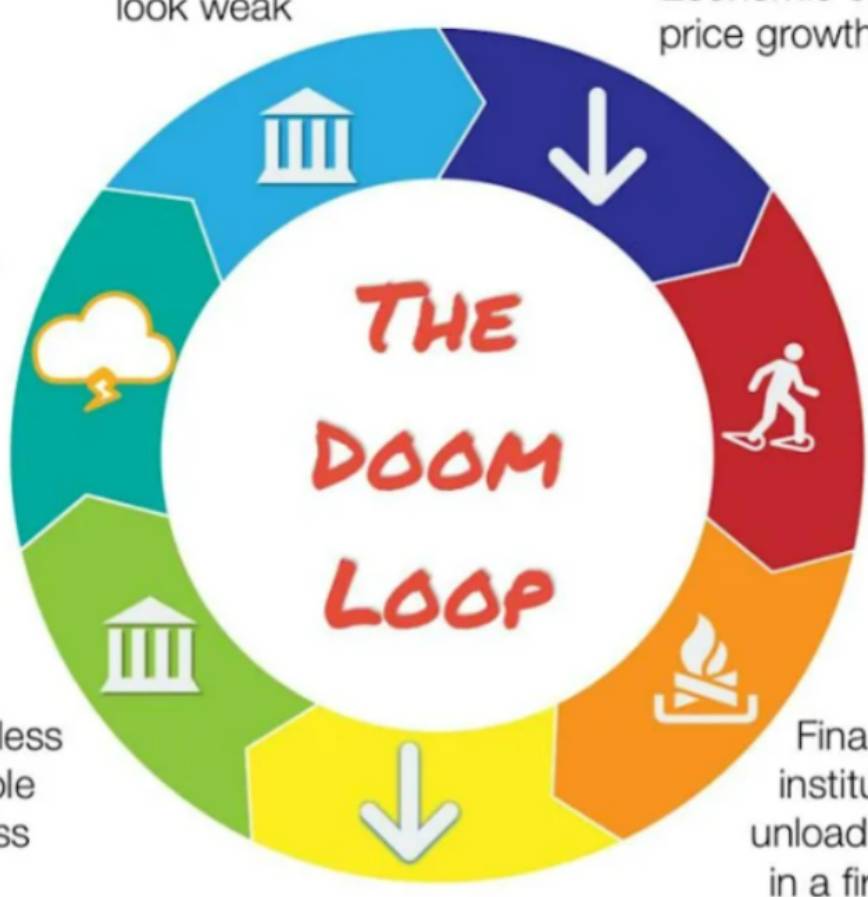
A SaaS doom loop is a self-reinforcing cycle in which disappointing growth causes a company to pull back too aggressively, making future growth even harder. SaaStr has described a version of this problem in which slower-growing startups gradually lose urgency and ambition, even though incremental improvements could still materially change the outcome.
A typical loop looks something like this:
- Revenue growth slows.
- Leadership becomes nervous about cash and forecasts.
- Budgets, hiring, travel, experimentation, or customer programs are cut.
- Fewer opportunities enter the sales pipeline.
- Product improvements arrive more slowly.
- Existing customers receive less proactive support.
- Expansion revenue weakens and churn increases.
- Growth slows further.
- Leadership cuts again.
Each individual decision may look reasonable. Together, they can create an impressive machine for turning a manageable slowdown into an existential crisis.
The lesson is not that SaaS businesses should spend recklessly. Quite the opposite. Modern SaaS management increasingly rewards efficient growth. Bessemer Venture Partners has documented the industry’s shift away from growth at any cost, while McKinsey’s analysis of software companies emphasizes the difficult balance between growth and free cash flow captured by the Rule of 40.
The goal is therefore not “never cut.” It is “cut intelligently without cutting the engine out of the airplane.”
Why SaaS Companies Are Especially Vulnerable
SaaS economics make feedback loops unusually powerful because today’s spending often produces tomorrow’s recurring revenue.
You may spend money acquiring a customer in January but recover the customer acquisition cost over many months. You may invest in onboarding today and see the payoff through lower churn next year. You may ship a product improvement this quarter that generates expansion revenue several quarters later.
That delay between investment and return can tempt management to optimize whatever looks expensive right now.
Customer Acquisition Happens Before Payback
Customer acquisition cost, or CAC, is paid before the full economic value of a subscription is collected. CAC payback therefore matters just as much as the size of a deal.
If a business suddenly cuts high-performing acquisition channels because marketing expenses look large on this month’s income statement, the immediate financial picture may improve while next quarter’s pipeline quietly develops a hole large enough to drive an enterprise software contract through.
Efficient SaaS management means distinguishing productive spending from unproductive spending. Andreessen Horowitz has similarly argued that difficult markets call for retention, profitable acquisition, cost discipline, and runway preservation rather than growth spending without economic justification.
Retention Compounds in Both Directions
SaaS businesses are beautifully unfair when retention is strong. They are also beautifully unfair in the opposite direction.
Net revenue retention measures how recurring revenue from an existing customer cohort changes after churn, contraction, upgrades, and expansion. If NRR exceeds 100%, the existing base can expand even before new customers arrive. Below 100%, sales must replace lost recurring revenue before generating true incremental growth.
That is why cutting customer success without understanding the likely retention impact can be particularly dangerous. You save a salary today but may lose subscription revenue for years.
The Seven Warning Signs of a SaaS Doom Loop
1. Every Problem Is Being Solved With Cost Cutting
When the only tool in the management toolbox is a budget reduction, every business problem begins to resemble an expensive nail.
Costs absolutely deserve scrutiny. But management should ask a second question: Why did growth slow?
If the cause is poor positioning, weak activation, bad onboarding, declining product quality, pricing friction, or a broken sales motion, reducing expenses alone does not fix it.
2. Marketing Is Measured Only by Spending
“We spent $500,000 on marketing” tells you remarkably little.
Did it produce pipeline? What was the CAC? Which customer segments converted? How quickly was CAC recovered? Which cohorts retained? Did certain channels produce customers who expanded while others produced customers who vanished after three invoices?
A doom-loop company sees marketing as a cost center. A disciplined SaaS company sees acquisition as a portfolio of investments and cuts the inefficient parts first.
3. New Logos Matter More Than Existing Customers
There is something psychologically satisfying about announcing a new customer. Nobody rings a gong because an existing customer quietly renewed for the fourth year.
Maybe they should.
Retention, expansion revenue, upgrades, cross-sells, and additional usage can become major engines of recurring growth. Paddle notes that expansion revenue improves lifetime value and can offset revenue lost through churn, while customer-success research from Gainsight has found a close relationship between stronger growth and lower churn among SaaS companies studied.
Do not starve the installed customer base while sending the entire company hunting for shiny new logos.
4. Product Usage Is Declining, but Nobody Is Panicking
Revenue is a lagging indicator. Usage often gives you the bad news earlier.
Watch activation rates, feature adoption, active users, frequency of use, time to first value, and cohort retention. Product-led growth frameworks emphasize acquisition, activation, engagement, retention, and monetization as connected stages rather than independent departments.
If customers have stopped using an important workflow, the renewal problem may already exist even though the renewal date is six months away.
5. Salespeople Are Discounting to Save the Quarter
Discounting can close deals. It can also create a small army of low-intent customers whose favorite product feature is the cancellation button.
Quarter-end desperation often produces poor-fit accounts, excessive promises, custom commitments, and uncomfortable handoffs to customer success.
Zendesk notes that unrealistic expectations set during the sales process can contribute to later churn.
A weak quarter does not become stronger merely because you borrowed revenue quality from the next four quarters.
6. The Company Stops Experimenting
When growth is booming, every department has experiments. When growth slows, experiments suddenly become “nonessential projects.”
That can be backward.
A slowdown may be exactly when you need to test a new pricing package, onboarding flow, ideal customer profile, acquisition channel, self-service motion, integration strategy, annual billing incentive, or product-led conversion path.
Experiments do not need massive budgets. They need clear hypotheses, defined success metrics, short feedback cycles, and permission to fail cheaply.
7. Morale Is Quietly Becoming a Business Metric
Teams can handle difficult goals. They struggle with goals nobody believes are achievable.
Repeated cuts combined with unchanged targets create an especially strange corporate sport: management removes half the rowing team, drills holes in the boat to reduce weight, and asks why everyone is paddling so slowly.
High performers eventually notice.
A SaaS turnaround therefore requires operational urgency without institutional hopelessness. Employees need to understand what changed, what metrics matter, what management is protecting, and how improvement will be measured.
How to Break the SaaS Doom Loop
Start With Cohort Economics, Not Company Averages
Company-wide averages hide useful information.
Calculate CAC, retention, lifetime value, expansion, support burden, and gross margin by customer segment, acquisition source, contract size, geography, and product tier whenever your data allows it.
You may discover that the business is not broken at all. One segment may have terrible economics while another is quietly thriving.
CloudZero’s SaaS unit-economics guidance similarly emphasizes looking beyond top-line growth to understand whether individual customer economics are actually sustainable.
Protect Your Best Growth Engine
Before reducing expenses, identify the company’s highest-performing growth loops.
Perhaps organic search produces customers with excellent payback. Maybe partner referrals close twice as fast. Perhaps accounts using a specific integration retain dramatically better. Maybe customers who complete onboarding within seven days expand more often.
Protect those mechanisms.
Cutting equally across every department may feel fair, but businesses are not kindergarten birthday parties. Every program does not deserve an identical slice of cake.
Attack Churn Before Buying More Traffic
Imagine pouring water into a bucket while somebody drills holes in the bottom.
Your instinct should not be, “We need a bigger hose.”
Before aggressively increasing acquisition, determine why customers leave. Separate voluntary churn, failed-payment churn, downgrades, low adoption, missing features, implementation failures, price objections, poor-fit customers, and competitive losses.
Mixpanel emphasizes retention analysis as a way to understand whether customers return, churn, upgrade, or downgrade, while HubSpot similarly treats churn, retention, and customer lifetime value as core retention metrics.
Improve Time to Value
The period immediately after signup is one of your best opportunities to influence long-term SaaS retention.
Do not celebrate when customers create accounts. Celebrate when they accomplish the thing that caused them to buy the software.
For a reporting platform, that might be publishing the first dashboard. For accounting software, it could be connecting bank accounts. For an automation tool, perhaps it is running the first successful workflow.
The faster customers reach meaningful value, the less time they have to wonder why your invoice keeps appearing.
Make Pricing Work With Customer Success
Good SaaS pricing allows revenue to grow as customer value grows.
That might involve seats, usage, transactions, data volume, projects, locations, premium capabilities, or hybrid pricing. The correct value metric depends on the product, but the underlying idea is straightforward: expansion should feel like a natural consequence of greater customer success rather than an annual hostage negotiation.
Scaled or usage-linked pricing can create expansion revenue as customer consumption increases, helping counteract contraction and churn.
Use a Small Set of Metrics That Tell the Whole Story
A useful anti-doom-loop SaaS dashboard might include:
- ARR and MRR growth
- New ARR
- Expansion ARR
- Gross revenue retention
- Net revenue retention
- Logo churn
- CAC by channel and segment
- CAC payback period
- Gross margin
- Burn multiple
- Activation rate
- Key product engagement metrics
- Pipeline coverage and win rate
Stripe’s SaaS metrics framework similarly groups acquisition, engagement, retention, growth, and economic indicators because no single metric provides a complete picture of a subscription business.
The purpose of a dashboard is not to create a museum of colorful charts. It is to identify where the machine is losing energy.
Efficiency Does Not Mean Playing Defense Forever
There is an important distinction between efficient growth and permanent austerity.
Efficient businesses still invest. They simply demand evidence that investment can create durable value.
That may mean increasing spending on a sales segment with excellent CAC payback while eliminating an expensive event program that produces almost no pipeline. It may mean hiring engineers to improve a retention-critical workflow while postponing five decorative features requested by one enthusiastic prospect.
It may even mean deliberately accepting higher short-term burn when management has strong evidence that a repeatable acquisition or expansion opportunity exists.
The objective is not minimizing expenses. The objective is maximizing the productive output of each dollar, employee, and month of runway.
A Practical 90-Day Anti-Doom-Loop Plan
Days 1–30: Diagnose
Segment revenue growth. Review churn reasons. Analyze cohorts. Recalculate CAC using fully loaded acquisition costs. Examine CAC payback. Identify the strongest and weakest customer segments. Interview recently churned customers and enthusiastic long-term users.
Do not begin with the assumption that you already know the problem.
Days 31–60: Focus
Choose two or three bottlenecks with the greatest economic impact.
For example:
- Reduce onboarding abandonment.
- Improve sales qualification.
- Increase adoption of a retention-driving feature.
- Fix involuntary churn caused by failed payments.
- Create a structured expansion program for healthy accounts.
Give each project an owner and measurable target.
Days 61–90: Reinvest
When something works, put resources behind it.
This is the step defensive companies frequently miss. They optimize successfully but then continue behaving as though the emergency never ended.
If CAC improves, expand the efficient channel. If onboarding improvements increase activation, accelerate the rollout. If a new package increases expansion without hurting retention, expose more customers to it.
Breaking a doom loop requires converting efficiency improvements back into intelligent growth.
Experience-Based Lessons: What the SaaS Doom Loop Feels Like in Practice
The most useful lessons about a SaaS doom loop often appear not in a spreadsheet but in the sequence of decisions surrounding it. A company rarely wakes up one Monday and announces, “Excellent news, everyone. We have successfully entered a self-reinforcing corporate decline.”
It happens gradually.
One recurring pattern is the company that misses a growth target and immediately freezes nearly every discretionary expense. The move improves runway on paper, so it feels responsible. Marketing experiments disappear. Sales travel is restricted. Customer success teams become stretched. Engineering concentrates exclusively on urgent tickets. Nobody is technically doing anything irrational.
Three months later, however, the pipeline is thinner because marketing stopped testing. Enterprise opportunities take longer because sales has fewer resources. Customers receive slower help. Product improvements that might have increased adoption never shipped. Revenue forecasts get worse.
Management looks at the new forecast and concludes that another round of cost reductions is necessary.
The original problem may have been a modest slowdown. The response turned it into a structural slowdown.
Lesson One: Never Confuse Activity With a Growth Engine
During difficult periods, teams sometimes defend programs because they are busy rather than effective.
Ten webinars, four conferences, 150 blog posts, 25,000 outbound emails, and a heroic number of LinkedIn messages can produce an impressive monthly report while generating remarkably little revenue.
The practical experience is simple: when resources become constrained, trace activities to outcomes. Which programs create qualified pipeline? Which customers retain? Which behaviors predict expansion? Which product capabilities influence renewal?
Protect the chain connecting activity to customer value and revenue. Question everything else.
Lesson Two: Bad Customers Can Make Growth Look Better Before They Make It Worse
One of the easiest ways to hit a SaaS growth target is to lower qualification standards.
It is also one of the easiest ways to create next year’s churn problem.
When sales teams are under extreme pressure, almost any logo begins to look attractive. But customers without a strong use case require more onboarding, more support, more concessions, and more custom work. They often expand less and cancel sooner.
Short-term bookings rise. Customer success becomes overloaded. Gross margins weaken. Churn arrives later, when everyone has conveniently forgotten which decision created it.
A healthier approach is to tighten the ideal customer profile during difficult periods rather than abandon it.
Lesson Three: Talk to Customers Before Reorganizing the Company
Teams sometimes spend weeks debating churn in internal meetings when ten customer conversations could reveal the answer.
You may discover that onboarding is confusing, a competitor has a critical integration, pricing becomes unattractive above a certain usage level, or customers never discovered the feature they originally bought the product to use.
Customer conversations are not statistically perfect, but they are wonderfully effective at destroying comfortable internal theories.
Lesson Four: Small Wins Restore Organizational Energy
A company trapped in a doom loop does not always need a revolutionary strategy. It may need several measurable victories.
Improve trial activation by 10%. Shorten implementation by a week. Recover failed subscription payments. Win back twenty churned accounts. Raise conversion in one high-quality channel. Improve renewal preparation for the top customer segment.
Small wins create evidence that improvement is possible. Evidence changes behavior. Teams experiment again. Leaders become willing to reinvest. Momentum starts moving in the opposite direction.
That is how the doom loop becomes a growth loop.
Conclusion: Build a SaaS Flywheel, Not a Doom Loop
Slow growth is uncomfortable, but it is not automatically fatal.
The dangerous part is allowing slow growth to create decisions that guarantee even slower growth.
Healthy SaaS companies resist that temptation by understanding unit economics, protecting productive acquisition, improving activation, obsessing over retention, developing expansion revenue, aligning pricing with value, and cutting spending selectively rather than emotionally.
The smartest question during a slowdown is not simply, “How can we spend less?”
Ask, “Which investments create durable customer value and efficient recurring revenueand which ones do not?”
Answer that correctly, and the cycle changes direction: better product experiences improve retention, better retention improves lifetime value, stronger unit economics create room for investment, efficient investment generates better growth, and growth restores confidence.
Same company. Same market. Very different loop.
Note: SaaS benchmarks should always be interpreted according to company stage, average contract value, customer segment, gross margin profile, pricing model, and go-to-market strategy. A metric that is excellent for an SMB self-service product may be unrealistic for an enterprise platform with long sales and implementation cycles.