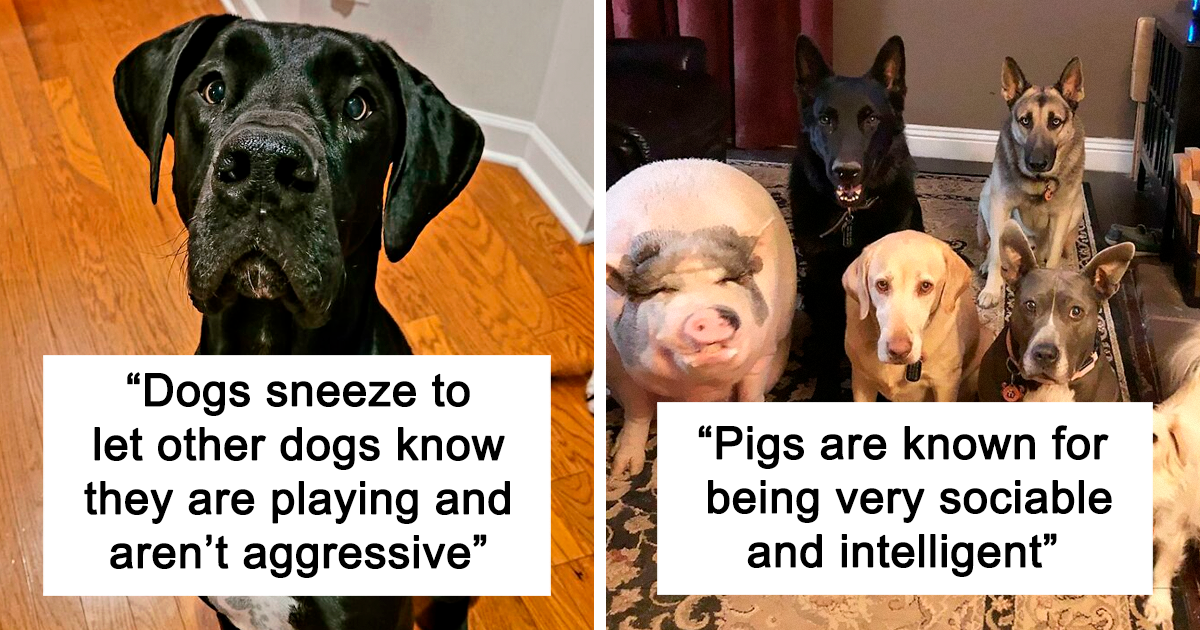

Animals have a magical talent for making humans stop mid-scroll, clutch an imaginary pearl necklace, and whisper, “I did not know that.” The animal kingdom is full of tiny behaviors, strange adaptations, and surprisingly tender moments that feel almost too charming to be real. Sea otters nap like floating teddy bears. Prairie dogs greet each other with little “kisses.” Flamingo parents make a special milk for their chicks. Somewhere out there, a baby koala is riding on its mother’s back like it has a yearly pass to the world’s cutest bus.
This collection of lesser-known facts about animals brings together real, science-backed details about wildlife, pets, birds, marine animals, insects, and oddball mammals that deserve their own applause. Some of these facts are adorable. Some are bizarre. A few are so wholesome they should come with a soft blanket and emotional support snacks.
Let’s wander through 40 cute animal facts that prove nature is not only clever, but also deeply lovable.
Sweet Animal Behaviors That Feel Almost Human
1. Sea otters hold paws while floating
Sea otters are famous for floating on their backs, and some hold paws with other otters while resting. It helps them stay together in the water, which is basically the wildlife version of saying, “Don’t drift away from me, bestie.”
2. Sea otter mothers use their bellies as baby rafts
A mother sea otter often carries her pup on her belly while floating, nursing, and resting. The pup looks like a tiny, fuzzy loaf being personally escorted across the ocean.
3. Dolphins have signature whistles that work like names
Bottlenose dolphins develop unique whistles that identify them as individuals. Other dolphins can recognize these signature sounds, which means the ocean may be full of cheerful “Hey, Jessica!” energy.
4. Elephants comfort each other when distressed
Elephants are highly social animals, and researchers have observed them using trunk touches, gentle body contact, and soft vocalizations to comfort upset herd members. That is not just intelligence; that is emotional intelligence with a trunk.
5. Prairie dogs greet each other with “kisses”
Some prairie dogs touch mouths in a behavior often called a greet-kiss. It may help them identify one another by scent or taste, but to human eyes, it looks like tiny neighbors saying hello before returning to serious prairie business.
6. African penguins have individual voices
African penguins use distinctive vocalizations to communicate. Mates can locate each other by sound, which is helpful when everyone around you is also wearing a tuxedo.
7. Kangaroo joeys peek out of the pouch before exploring
Young kangaroos and wallabies spend months developing in their mother’s pouch. Before they fully venture out, they often peek from the pouch like a shy roommate checking whether the kitchen is empty.
8. Opossum mothers carry babies on their backs
After opossum joeys leave the pouch, their mother may carry them on her back while she searches for food. It is practical, adorable, and only slightly like a furry school bus.
Adorable Animal Parenting Facts
9. Male seahorses give birth
Seahorses and sea dragons are rare examples of animals in which males become pregnant and give birth. After an elaborate courtship dance, the female transfers eggs to the male’s brood pouch, where the young develop.
10. Flamingo parents make “crop milk”
Flamingo chicks are fed a nutrient-rich fluid called crop milk that comes from the parents’ upper digestive tract. Both male and female flamingos can produce it, proving that flamingo parenting is very much a team sport.
11. Flamingo parents recognize their chick’s call
Flamingo chicks gather in large groups called crèches, but parents can still find their own young by listening for distinctive calls. Imagine daycare pickup, but everyone is pink and standing on one leg.
12. Giant panda cubs are tiny at birth
Newborn giant pandas are remarkably small compared with their mothers. They are blind, helpless, and usually weigh only a few ounces, which makes their transformation into bamboo-munching bears even more astonishing.
13. Panda cubs squeal, croak, and bleat
Giant pandas are more vocal than many people realize. Cubs can squeal and croak, while older pandas may bleat, honk, huff, bark, or growl. The friendly bleat is especially charming, like a bear trying politely to clear its throat.
14. Koala joeys ride on their mother’s back
A koala joey grows in its mother’s pouch, then later rides on her belly or back. Young koalas also gradually learn how to eat eucalyptus leaves, which is not as easy as it sounds when your nose keeps getting in the way.
15. Wombat pouches open backward
Wombats dig burrows, so their pouches open toward the rear. This helps keep dirt from filling the pouch while the mother digs. Nature looked at the problem and said, “We need a mud-resistant baby compartment.”
16. Tree kangaroo joeys may return to the pouch
Matschie’s tree kangaroo joeys stay in the pouch for many months. Even after they leave, they may return to nurse for a while, which is basically the marsupial version of moving out but still coming home for snacks.
Unexpectedly Cute Animal Adaptations
17. Red pandas are classified as carnivores but mostly eat bamboo
Red pandas belong to the order Carnivora, yet their diet is mostly bamboo. Because bamboo is low in energy and hard to digest, red pandas spend much of their lives eating and resting. Relatable? Absolutely.
18. Sloth fur can grow algae
Two-toed sloths have grooved hair that can collect algae, giving them a greenish tint during wet seasons. It helps with camouflage and makes the sloth look like it accidentally joined a moss appreciation club.
19. Sloths can swim surprisingly well
On land, sloths move with legendary slowness. In water, however, they can swim effectively, sometimes using a breaststroke-like motion to cross flooded forest areas.
20. Beavers have built-in underwater mouth protection
Beavers have special folds of skin behind their front teeth, allowing them to gnaw underwater without filling their mouths with water. It is a small design detail with major “nature is an engineer” energy.
21. Armadillos can have identical quadruplets
Nine-banded armadillos commonly give birth to four genetically identical pups from one fertilized egg. If you see four baby armadillos together, congratulations: you may be looking at the world’s tiniest armored clone squad.
22. Bats can flip upside down to land
Many bats slow down, stall, perform a little flip, and grab a surface to land upside down. It is a dramatic entrance for an animal that already sleeps like a Halloween decoration with excellent acoustics.
23. African penguins have unique chest spots
The black spots on an African penguin’s white chest are unique to each bird, almost like fingerprints. This helps researchers identify individuals, and it gives every penguin its own formalwear pattern.
24. Octopuses have three hearts
Octopuses have three hearts: one pumps blood through the body, and two pump blood through the gills. Add their intelligence and problem-solving skills, and you have a soft-bodied genius with extra cardiovascular enthusiasm.
Social Animals With Tiny Communities
25. Naked mole-rats have many vocal sounds
Naked mole-rats may not win a beauty contest judged by fluffy standards, but they are social superstars. They use numerous vocalizations to communicate in their underground colonies.
26. Naked mole-rats can run forward and backward
Life in tunnels requires flexibility. Naked mole-rats can move both forward and backward through their burrow systems, which is helpful when your hallway is narrow and your roommate has 26 siblings.
27. Meerkats can eat scorpions
Meerkats are small, social, and tougher than they look. They can prey on scorpions and some venomous creatures because they have a degree of resistance to venom.
28. Meerkats get much of their water from food
Meerkats can survive in dry habitats partly by getting moisture from roots, tubers, and fruits. Hydration through snacks? That is a lifestyle plan many of us could support.
29. Sugar gliders live in family groups
Sugar gliders are small nocturnal marsupials that live in social groups or colonies. They glide between trees using a membrane between their limbs, turning the forest into their personal night-time zip line.
30. Rock hyraxes start the day with group sunbathing
Rock hyraxes often live in colonies and may begin the day by sunning themselves together. It is less “lazy morning” and more “important thermal regulation,” but yes, it still looks like a cozy group meeting.
31. Dwarf mongooses groom and play together
Dwarf mongooses live in groups and are known for social behavior such as grooming, playing, and foraging together. They may be small, but their community life is rich, busy, and full of teamwork.
32. Siamangs often form long-lasting pairs
Siamangs, the largest gibbons, are known for strong pair bonds and loud calls amplified by a throat sac. Their calls can sound like a forest concert performed by two very committed vocalists.
Bird, Insect, and Amphibian Facts That Deserve a Tiny Applause
33. Hummingbirds build nests with spider silk
Female hummingbirds often use materials such as moss, feathers, plant fibers, and spider webs to build nests. Spider silk helps the nest stretch as the chicks grow, like a tiny expandable nursery.
34. Hummingbird eggs can be the size of coffee beans
Some hummingbird eggs are incredibly small, roughly the size of a coffee bean. The chicks hatch tiny and helpless, which makes their eventual high-speed flying skills even more impressive.
35. Honey bees dance to share food locations
Honey bee foragers use the famous waggle dance to communicate the location of valuable food sources. It is not just dancing; it is GPS with wings and excellent choreography.
36. Wood frogs can survive freezing
Wood frogs can survive winter by allowing parts of their bodies to freeze while glucose helps protect their cells. When warmer weather returns, they thaw and resume life like tiny amphibian superheroes.
37. Shoebills use their huge bills like a canteen
Shoebills are known for their dramatic shoe-shaped bills. That giant bill can also carry water to cool eggs or young in hot conditions, making the bird look prehistoric and oddly tender at the same time.
38. Penguins “porpoise” through the water
Penguins may waddle awkwardly on land, but underwater they are sleek swimmers. Many use a movement called porpoising, leaping in and out of the water to breathe while moving efficiently.
39. Humpback whale songs can travel for miles
Male humpback whales sing complex songs during breeding season. These songs can last many minutes and may be heard from miles away underwater, which makes the ocean feel like a concert hall with fins.
40. Quokkas may groom preferred mates
Quokkas are famous for their smile-like faces, but their social lives are interesting too. In some situations, a female may groom a male she favors, which is an understated but sweet courtship signal.
Why Cute Animal Facts Matter More Than We Think
It is easy to treat adorable animal facts as light entertainment, the biological equivalent of a cupcake. But these small details do more than make people say “aww.” They help us pay attention. When readers learn that a flamingo parent can lose some of its pink color while feeding its chick, that fact becomes a doorway into understanding bird parenting, nutrition, and survival. When someone discovers that sea otters are not just cute floaters but also important members of kelp forest ecosystems, affection can turn into curiosity, and curiosity can turn into care.
That is the quiet power of animal kingdom facts. They transform wildlife from “something out there” into living beings with habits, relationships, challenges, and personalities. A prairie dog greet-kiss may look adorable, but it also reveals a complex system of communication. A dolphin’s signature whistle may sound sweet, but it points to sophisticated social recognition. A mother opossum carrying joeys on her back is cute, yes, but it also shows the demanding work of survival in a world full of predators, traffic, weather, and limited food.
For content creators, parents, teachers, and animal lovers, these facts are also useful because they make science feel approachable. Not everyone wants to begin with taxonomy, population decline, or ecosystem dynamics. But almost everyone can begin with a baby sloth clinging to its mother like a living backpack. From there, the conversation can grow naturally into habitat loss, conservation, responsible wildlife watching, and why every species has a role.
Experiences That Make These Animal Facts Feel Even Sweeter
Anyone who has spent time around animals knows that the best moments are often the small ones. Not the dramatic documentary scenes with thunderclouds and orchestral music, but the quiet little behaviors that happen when you slow down enough to notice. A dog sighing with its whole body after finding the perfect patch of sunlight. A cat kneading a blanket as if preparing an invisible loaf of bread. A bird tilting its head with the seriousness of a tiny professor. These are the moments that turn ordinary days into tiny wildlife festivals.
Learning about lesser-known animal facts can change the way you observe the world. A walk in the park becomes more interesting when you realize birds are communicating through posture, calls, and movement. Watching ducks paddle across a pond becomes funnier when you notice how calm they look above water while their feet are busy below. Even seeing a squirrel pause with a snack feels different when you remember that many animals are constantly balancing curiosity, caution, hunger, and social signals.
One of the most rewarding experiences is sharing these facts with other people. Tell someone that flamingos feed their chicks crop milk, and you can almost see their brain do a tiny cartwheel. Mention that dolphins may recognize each other by signature whistles, and suddenly the ocean feels more personal. Explain that a wombat pouch opens backward so it does not fill with dirt, and there is a high chance someone will say, “Wait, really?” That little spark of surprise is the beginning of attention.
Animal facts are especially powerful with children because they make learning feel like discovery instead of homework. A child who hears that hummingbird eggs can be the size of coffee beans may start looking more carefully at flowers, trees, and nests. A young reader who learns that sea otter mothers float with pups on their bellies may become curious about oceans, kelp forests, and marine conservation. Cute facts can be stepping stones toward bigger ideas.
Adults need these moments too. Modern life is loud, fast, and full of screens that somehow always need charging. Animals remind us to notice softness, patience, cooperation, and play. Rock hyraxes sunbathe together. Dwarf mongooses groom each other. Elephants comfort upset companions. Penguins call to their mates. These behaviors do not make animals human, but they do remind humans that connection is not a luxury. In nature, connection is often survival.
The next time you see an animal photo, hear a bird outside, visit an aquarium, or watch a nature clip, try looking for the story behind the cuteness. The “aww” is only the doorway. Behind it is a world of biology, behavior, adaptation, and wonder. And honestly, if a tiny prairie dog greeting can make someone care more about grassland ecosystems, then nature’s public relations team is doing a spectacular job.
Conclusion
The animal world is full of surprises that are funny, touching, and scientifically fascinating. From sea otters holding paws to hummingbirds building stretchy nests with spider silk, these lesser-known facts about animals show that nature is endlessly creative. The cutest details are often connected to real survival strategies: parenting, communication, camouflage, bonding, feeding, or staying safe in extreme environments.
So yes, these facts may make people say “aww,” but they also invite us to look closer. Every adorable behavior has a purpose. Every strange adaptation tells a story. And every species, whether it is a glamorous flamingo or a wrinkly naked mole-rat, has something worth appreciating.
Note: This article is written for educational and general-interest purposes, based on real animal behavior and biology information from reputable wildlife, zoo, aquarium, conservation, and science sources.