
Note: Body-only HTML in standard American English, ready for web publishing.
If you have ever watched My Hero Academia and thought, “Cool, but what would my quirk be?” then congratulations: you are exactly the kind of person the internet was built for. Somewhere between anime fandom, personality quizzes, and the timeless human desire to imagine ourselves as ridiculously cool under pressure, the My Hero Academia quirk generator became a fan favorite. It taps into one of the series’ smartest ideas: powers are not just flashy special effects. In the world of MHA, quirks shape identity, status, work, confidence, friendships, and sometimes a truly alarming amount of property damage.
That is why a good MHA quirk generator feels more satisfying than a random superhero name picker. It is not just about whether you get fire, ice, or laser elbows. It is about discovering a hero power that matches your instincts, personality, strengths, and weaknesses. The best generators feel like a tiny entrance exam to U.A. High, minus the robot-smashing and emotional trauma.
This guide breaks down what makes a quirk generator fun, why the concept works so well in the My Hero Academia universe, what kinds of hero powers fans love most, and how to tell the difference between a lazy randomizer and a generator that actually feels true to the series. Along the way, we will also look at sample powers, naming ideas, and the kind of quirks that make you say, “Yes, this is completely impractical, and I want it immediately.”
What Is a My Hero Academia Quirk Generator?
A My Hero Academia quirk generator is usually a fan-made quiz, randomizer, or character-building tool designed to assign you a fictional power inspired by the anime and manga. Some are pure chaos machines that hand you a bizarre ability after one click. Others act more like personality assessments, using your preferences, habits, fears, and decision-making style to reveal a quirk that feels tailored to you.
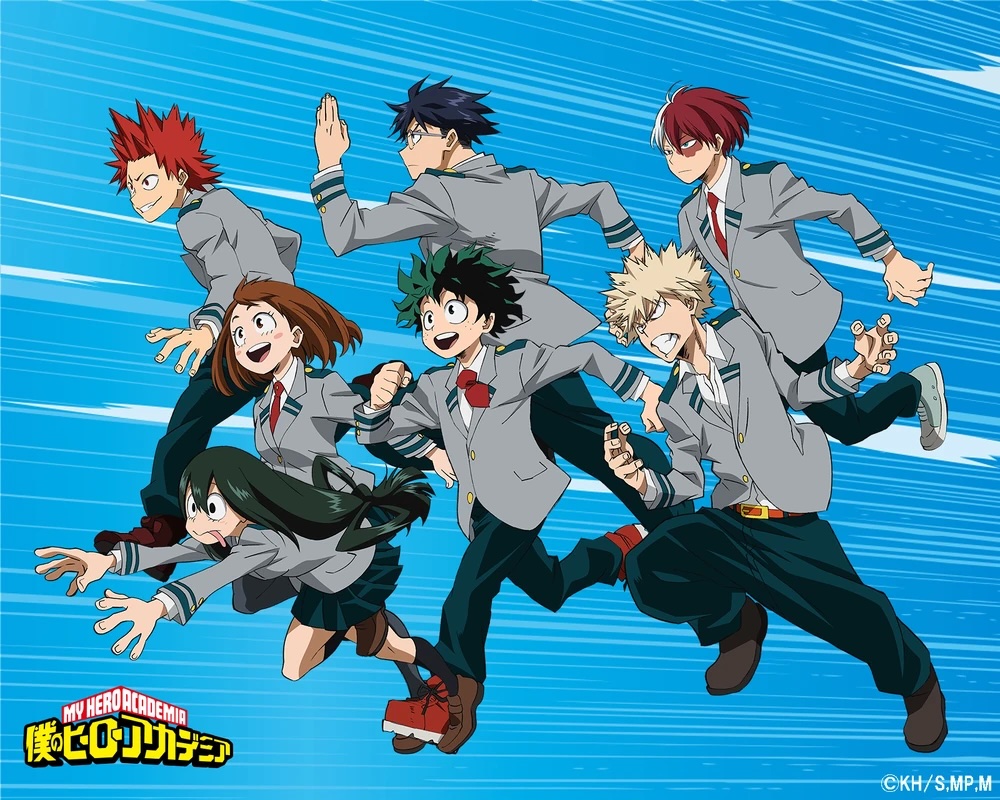
That second kind is where the magic happens. In My Hero Academia, powers are deeply tied to the people who use them. Bakugo’s Explosion is loud, aggressive, and impossible to ignore. Uraraka’s Zero Gravity is flexible, clever, and deceptively useful. Aizawa’s Erasure is strategic and intimidating. These are not powers pasted onto blank mannequins. They are extensions of character. A good hero power generator understands that and builds from personality first, spectacle second.
There is also an important reality check here: most quirk generators online are fan experiences, not official canon tools. That is not a drawback. In many ways, it is the whole point. Fans enjoy stepping into the world, imagining where they fit, and testing whether they are more “combat prodigy,” “support genius,” or “accidentally terrifying but still polite.”
Why Quirks Make the Perfect Generator Material
Not every fantasy power system works this well for generators. Quirks do, because they live in a sweet spot between structure and chaos. The world of MHA gives powers enough logic to feel coherent, but enough variety to stay wildly entertaining.
Quirks are personal
A quirk is rarely just a weapon. It can be a physical trait, a transformation, an emitted effect, or a hybrid ability with strange conditions. That makes the concept perfect for a quiz. Instead of asking only what power you want, a generator can ask how you solve problems, what role you take in a team, how you handle pressure, and whether you would rather rescue civilians or launch yourself through a wall like a patriotic missile.
Quirks have drawbacks
The best powers in My Hero Academia are rarely free. Strong abilities often come with limits, stamina costs, recoil, overheating, physical strain, or tactical weaknesses. That is exactly why fan-made quirk discovery tools are so fun: a result feels more believable when it includes both a strength and a catch. “You can create shockwaves by clapping” is decent. “You can create shockwaves by clapping, but your hands go numb if you overuse it” feels much more like it belongs in the series.
Quirks come in wildly different flavors
One person gets a legacy power with massive symbolic weight. Another gets sticky grape spheres. Another gets a tail. Another gets an ability that sounds silly until it becomes weirdly clutch in battle. That range keeps generators from becoming boring. A strong result can be powerful, supportive, technical, defensive, mobility-based, or just gloriously odd.
How the Best MHA Quirk Generators Actually Work
If you are searching for “discover a hero power” online, you will run into all kinds of results. Some are excellent. Some were clearly assembled at 2:13 a.m. with the confidence of a villain monologue and the quality control of a broken vending machine. The best tools tend to share a few traits.
They start with personality, not explosions
A lazy generator asks what color aura you like and then gives you “Thunder Phoenix.” A better one asks how you react when a plan falls apart, whether you lead or support, whether you trust instinct or analysis, and what matters more to you: speed, control, power, or versatility. Those answers create a power that feels earned.
They think beyond combat
My Hero Academia is not just about fights. Quirks affect school life, public image, rescue work, internships, mobility, confidence, and social perception. Great generators remember that. A support-heavy power can be every bit as interesting as a battlefield monster. A quirk that detects structural weakness, purifies water, stores kinetic force, or amplifies sound may not look dramatic at first, but in the right scenario it is hero gold.
They include limitations
This is non-negotiable. The most memorable anime power quiz results usually include a drawback, condition, or learning curve. That single detail makes the power feel less generic and more authentic. It also gives your imaginary hero room to grow, which is half the fun.
They give the power a real name
Quirk names matter. “Fire Blast” is serviceable, but “Heat Drift,” “Static Bloom,” or “Vector Lock” sounds like something a student would nervously announce before accidentally leveling gym equipment. Good naming gives a quirk personality, tone, and a touch of drama. This is anime. A little dramatic seasoning is not a bug. It is the sauce.
Popular Types of Quirks Fans Love to Generate
Even though fans say they want something “totally unique,” many My Hero Academia quirk generator searches circle back to a few power styles again and again. There is a reason for that.
Elemental quirks
Fire, ice, wind, electricity, smoke, acid, and light remain popular because they are easy to imagine and instantly cinematic. They also allow for offense, defense, movement, and visual flair. In other words, they do everything except your laundry.
Mobility quirks
Fans love powers that let them move differently: gliding, bouncing, teleporting short distances, sticking to walls, accelerating in bursts, or redirecting momentum. Mobility quirks feel heroic because they change how you enter a scene. And in superhero fiction, entrances are at least 40% of the job.
Support and strategy quirks
Some of the most interesting generators assign quirks that help teammates rather than dominate solo. Think barrier creation, sensory tracking, healing acceleration, equipment enhancement, or battlefield mapping. These powers often feel more believable in the MHA setting because the series values teamwork and training, not just raw force.
Hybrid quirks
These are especially satisfying because they feel like a natural fit for the series’ inheritance-heavy logic. A quirk that blends two conceptslike fog and electricity, gravity and sound, or plant growth and healingcan feel fresh without seeming random. It also gives your imagined hero more tactical depth.
How to Tell if Your Generated Quirk Feels Like Real MHA Material
Plenty of fan results are fun, but not all of them feel like they belong in the series. A quirk sounds more authentic when it checks a few boxes.
It solves one core problem clearly
Strong quirks usually have a central concept. Even flexible powers tend to revolve around one idea: explosive sweat, anti-gravity touch, erasing abilities by sight, hardening skin, or creating objects from the body. If your generated power does seventeen unrelated things, it may be less “hero course standout” and more “writer had too much coffee.”
It has a cost
Maybe it overheats the body. Maybe it requires focus. Maybe it burns calories, dries the skin, causes dizziness, or only works in short bursts. A drawback keeps a power from feeling cheap.
It reflects your role
Would your quirk fit a frontline fighter, rescue specialist, reconnaissance expert, crowd-control hero, support inventor, or stealth operator? Assigning a role makes the result feel grounded. It also turns your quirk from a vague fantasy into a character concept.
It sounds useful in a school setting
This one matters more than people think. My Hero Academia is built around learning, drills, exams, teamwork, and growth. A generator result feels right when you can imagine it being tested, refined, and improved over time. The perfect quirk is not just cool on paper. It is trainable.
Sample Quirks a Generator Might Give You
Here are a few examples of the kind of powers a well-built MHA quirk generator might reveal.
Quirk: Pulse Thread
You generate visible strands of energy from your fingertips and can connect them to objects or teammates. The threads can stabilize movement, pull light items, or create temporary trip-lines. Drawback: the threads snap if your concentration breaks, and overuse causes severe hand tremors. Best role: rescue and tactical support.
Quirk: Ember Step
Each step you take stores heat in your legs. After enough movement, you can release that heat in explosive dashes or high-impact kicks. Drawback: standing still for too long resets the charge, and overheating can cramp your muscles. Best role: close-range striker.
Quirk: Echo Mark
By touching a surface, you leave behind a temporary sound imprint. Later, you can replay, amplify, or distort that sound from a distance. Drawback: loud environments weaken accuracy, and repeated use can trigger migraines. Best role: stealth, intelligence, and distraction.
Quirk: Bloom Armor
Your skin can produce fast-growing plant fiber that hardens into protective layers. The armor can also anchor you to walls or shield another person. Drawback: it drains hydration quickly, and cold weather slows activation. Best role: defense and civilian rescue.
Notice what these examples have in common. Each has a single idea, a tactical use, a weakness, and a natural training path. That is exactly why they feel more satisfying than “Cosmic Ultra Dragon God Beam.” Fun? Sure. Subtle? Not remotely. MHA-authentic? Debatable.
Why Fans Keep Searching “Discover a Hero Power”
The phrase discover a hero power is appealing because it promises more than random entertainment. It offers self-insertion in the best way. It lets fans ask, “What kind of hero would I be?” That is different from asking, “Which character am I?” A character match is a mirror. A quirk generator is a doorway.
It also gives fans a creative shortcut. Once you know your power, everything else starts building itself: your costume, your combat style, your hero name, your weaknesses, your rival, your internship, and the exact speech you would give before doing something brave and slightly reckless. In other words, one quiz result can accidentally turn into a full-blown character file by dinner.
There is also a deeper reason these generators work so well. My Hero Academia has always treated power as something connected to identity and responsibility. The series asks what people do with the traits they are given, how they adapt, and whether courage can matter as much as raw ability. That is what makes quirk discovery feel personal. It is not just about getting a flashy result. It is about imagining the kind of person you would become with it.
Experiences Fans Relate To When Using a Quirk Generator
The funniest thing about trying a My Hero Academia quirk generator is how quickly it goes from “I’m just killing five minutes” to “Actually, this result explains my whole personality.” One moment you are clicking through a few harmless questions about teamwork, favorite weather, and how you respond to stress. The next moment you are staring at a result called Vector Pulse and thinking, “Honestly, yes, I do redirect emotional chaos into highly organized panic. This is accurate.”
A lot of fans have the same first experience: they want a flashy power, but the generator hands them something strategic. At first, that can feel like ordering a giant sundae and being served a protein bar. Then you think about it a little longer and realize the result actually fits. Maybe you got a scouting quirk, a support quirk, or an ability built around control instead of destruction. Suddenly, you are not disappointed anymore. You are smug. Dangerous smug. The kind of smug that says, “While you were all throwing explosions, I was mastering battlefield awareness.”
Another common experience is getting a quirk that sounds weak until your brain starts building scenarios around it. Maybe the power lets you manipulate friction, store sunlight in your skin, or create temporary markers that guide teammates through smoke. At first glance, it does not look like main-character material. Then the tactical possibilities start piling up. That is one of the most MHA things imaginable. The series repeatedly shows that intelligence, training, and creativity can turn a weird power into a serious advantage.
Fans also relate to the social side of the whole thing. A quirk result becomes an instant conversation starter. Friends compare powers, argue over who got the better one, and immediately begin ranking each other as if they are running a very dramatic sports festival in a group chat. Someone always gets a result that sounds overpowered. Someone else gets a power that seems oddly domestic, like “Perfect Temperature Control,” and then spends ten minutes making a convincing case that this is elite rescue-hero material. Usually, they are right.
Then there is the costume spiral. Once people discover a hero power, they start imagining everything around it. What would the hero suit look like? Would it need reinforced gloves, cooling vents, storage capsules, lenses, a cape, or absolutely no cape because that is how you get snagged on architecture and become an inspirational cautionary tale? The quirk becomes a full identity surprisingly fast.
For many fans, the best part is that a generator creates a version of heroism that feels personal. You are not borrowing Bakugo’s aggression or Todoroki’s elegance. You are not trying to copy One For All and blow out every bone in your body by Tuesday. You are getting a result that feels like yours. Even when it is silly, it can still be revealing. Maybe your ideal hero power is not the strongest one. Maybe it is the one that lets you protect, solve, adapt, endure, or outthink the room.
That is why these generators stick in people’s minds. They are playful, but they also tap into something real: the idea that everyone wants to know what they would bring to the team. In a world full of larger-than-life heroes, the most satisfying answer is not always “the biggest blast.” Sometimes it is simply, “Here is what makes you useful, memorable, and unexpectedly heroic.”
Final Thoughts
A My Hero Academia quirk generator is fun because it blends fandom, personality, and possibility into one fast, satisfying experience. The best ones do more than hand out random superpowers. They capture what makes the series work: powers with personality, strengths with trade-offs, and heroism that depends on how you grow into what you have.
So whether your result gives you a battlefield-breaking force quirk, a niche support ability, or something wonderfully weird that sounds useless until the exact right moment, lean into it. In the world of MHA, the most interesting heroes are rarely the ones with the simplest power fantasy. They are the ones who figure out how to make their quirks matter.