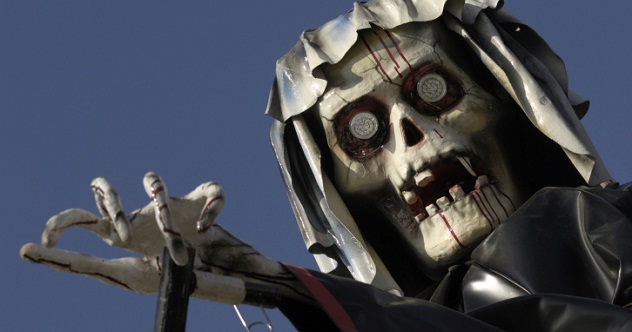

History has a wicked sense of humor. Not a polite, “ha-ha, pass the tea” kind of humor, but the sort that waits hundreds of years, raises one eyebrow, and says, “Well, that was oddly on-brand.” Some people live such distinctive lives that their deaths feel almost scripted by a cosmic writer with a taste for dark comedy. These are not just strange historical deaths; they are creepily ironic historical deaths, the kind that make you double-check the facts and then stare quietly at the wall for a minute.
Of course, irony does not mean a death is funny. Death is still death. But historical irony happens when a person’s end seems eerily connected to their life’s work, beliefs, reputation, invention, warning, obsession, or public image. A lawyer dies while proving an accidental shooting. A parachute inventor jumps with his own device. A composer is killed, in slow motion, by conducting. A king’s fate is changed by a monkey bite. History, apparently, does not mind being dramatic.
Below are ten of the most chilling, bizarre, and darkly poetic deaths in history. Some are well documented; a couple from the ancient world survive as traditional accounts rather than courtroom-grade evidence. Either way, each story shows why the past remains endlessly fascinating: it is full of humans trying to control fate, only to find fate holding the pen.
1. Qin Shi Huang: The Emperor Who Chased Immortality and May Have Poisoned Himself
Qin Shi Huang, the first emperor of a unified China, was not a man known for modest ambitions. He standardized writing, currency, measurements, and rule across his empire. He also ordered the creation of the famous terracotta army, because apparently even the afterlife needed a security detail.
But Qin Shi Huang had one problem no emperor could conquer: mortality. Obsessed with eternal life, he reportedly sent expeditions in search of immortality and consulted alchemists who prepared longevity elixirs. Here comes the creepy part: some of those elixirs likely contained mercury, a substance ancient alchemists associated with power and permanence, but modern science associates with poisoning and a very bad afternoon.
His exact cause of death in 210 BCE remains debated, but the irony is legendary. The ruler who wanted to live forever may have shortened his life by swallowing “immortality” medicine. It is the historical equivalent of buying a life jacket made of anvils.
2. Aeschylus: The Playwright Allegedly Killed by a Falling Tortoise
The ancient Greek playwright Aeschylus helped shape tragedy as a dramatic form, so naturally the story of his death sounds like a mythological stage prop gone rogue. According to ancient tradition, an eagle dropped a tortoise on his head, possibly mistaking his bald head for a rock suitable for cracking the shell.
The story gets even stranger. Some versions say an oracle had warned Aeschylus that he would be killed by a falling object, so he spent time outdoors to avoid being crushed by a collapsing house. If true, that plan had one tiny flaw: the sky is also above you.
Historians treat the tortoise tale with caution, because ancient biographies often enjoyed dramatic endings. Still, as a symbolic historical death, it is hard to beat. A master of tragedy, warned about falling doom, supposedly escaped buildings only to be defeated by airborne lunch.
3. Jean-Baptiste Lully: The Composer Who Died from Conducting Too Hard
Jean-Baptiste Lully was one of the great musical powers of Louis XIV’s France. He helped shape French opera, dominated court music, and understood spectacle better than most people understand their own passwords.
In 1687, while conducting a performance of Te Deum to celebrate the king’s recovery from illness, Lully used the heavy staff common among conductors of the time. Instead of gracefully guiding the music, he struck his own foot. The wound became infected. Gangrene followed. Doctors reportedly urged amputation, but Lully refused, partly because he wanted to keep dancing.
That decision proved fatal. The irony is painfully elegant: a composer whose career depended on rhythm, movement, ceremony, and royal performance was killed by the very act of beating time. Modern conductors use batons. Lully’s story explains why that was an excellent upgrade.
4. William Huskisson: The Railway Advocate Killed at a Railway Opening
William Huskisson was a British politician and supporter of railway development during the early industrial age. On September 15, 1830, he attended the grand opening of the Liverpool and Manchester Railway, one of the world’s most important early passenger rail lines.
The event was supposed to showcase the bright future of transportation. Instead, it became a grim warning label. Huskisson stepped onto the tracks during a stop and was struck by George Stephenson’s famous locomotive, the Rocket. He died from his injuries later that day.
Huskisson is often remembered as the first widely reported railway passenger fatality. The irony is hard to miss: a public figure attending a celebration of rail progress became one of its first major cautionary tales. The future arrived right on schedule, and unfortunately, it did not slow down.
5. Horace Lawson Hunley: The Submarine Pioneer Who Died Inside His Own Submarine
Horace Lawson Hunley helped develop early Confederate submarines during the American Civil War. His most famous vessel, the H. L. Hunley, was innovative, dangerous, cramped, and about as comforting as being sealed inside a metal cigar under hostile water.
During testing in 1863, the submarine sank, killing crew members. Hunley himself later joined a test run, and on October 15, 1863, the vessel sank again. This time, Hunley died along with the crew.
The submarine was later raised and used again, becoming the first combat submarine to sink an enemy warship. Then it vanished with another crew. Few inventions have such a dense résumé of achievement and disaster. Hunley’s death is creepily ironic because he was consumed, quite literally, by the technology he helped bring into military history.
6. John Sedgwick: The General Who Said They Couldn’t Hit Him
Major General John Sedgwick was one of the Union Army’s senior commanders during the American Civil War. On May 9, 1864, at the Battle of Spotsylvania Court House, Confederate sharpshooters were firing from a long distance. Some Union soldiers ducked. Sedgwick, trying to steady them, reportedly scolded their fear.
His famous remark was that the enemy “couldn’t hit an elephant at this distance.” Moments later, he was struck by a sharpshooter’s bullet and killed.
It is one of the most quoted examples of famous last words in American history. Whether the exact phrasing was polished by retelling, the basic event is well known: Sedgwick dismissed the danger and was killed by precisely that danger. History did not even wait a full paragraph before proving him wrong.
7. Clement Vallandigham: The Lawyer Who Won the Case by Shooting Himself
Clement Vallandigham was an American lawyer, politician, and former congressman from Ohio. In 1871, he defended a man accused of murder. His argument was that the victim might have accidentally shot himself while drawing a pistol from his pocket.
To prepare his demonstration, Vallandigham used a pistol he believed was unloaded. It was not. While showing how the accidental shooting could have happened, he shot himself in the abdomen. He died from the wound.
The grim twist? His demonstration helped prove the defense theory, and his client was acquitted. This may be the most legally ironic death on record: an attorney accidentally killed himself while proving that an accidental self-inflicted gunshot was plausible. Somewhere, a law professor is still sighing into a casebook.
8. Franz Reichelt: The Parachute Inventor Who Tested His Own Suit
Franz Reichelt, an Austrian-born tailor living in Paris, believed he could design a wearable parachute suit for aviators. In the early 1900s, aviation was still new, risky, and full of inventors who looked at gravity and said, “Let’s negotiate.”
On February 4, 1912, Reichelt climbed the Eiffel Tower to test his invention. Authorities believed he would use a dummy. Instead, he jumped himself. The parachute suit failed almost instantly, and he fell to his death in front of reporters and onlookers.
His death was widely publicized and even captured on film. The irony is brutal: a man trying to create a device that would save people from fatal falls died in a fall caused by trusting that very device. Reichelt’s story remains one of history’s starkest reminders that confidence is not the same thing as engineering.
9. Isadora Duncan: The Dancer Killed by Her Signature Scarf
Isadora Duncan was a pioneer of modern dance, famous for rejecting stiff classical traditions and embracing flowing movement, loose garments, and expressive freedom. Her image was inseparable from fabric in motion: scarves, drapery, and theatrical elegance.
On September 14, 1927, in Nice, France, Duncan entered an open car while wearing a long silk scarf. As the car moved, the scarf became tangled in the wheel or axle. It pulled violently around her neck and killed her.
The symbolism is almost too perfect and too terrible. Duncan’s flowing style helped define her art, yet one flowing accessory caused her death. It was not merely a strange accident; it was a fatal collision between beauty, machinery, and the modern world.
10. Thomas Midgley Jr.: The Inventor Killed by His Own Contraption
Thomas Midgley Jr. was a brilliant American inventor whose legacy aged about as well as unrefrigerated mayonnaise. He helped develop leaded gasoline and chlorofluorocarbon refrigerants, both celebrated in their time and later recognized as environmental and public-health disasters.
After contracting polio, Midgley created a rope-and-pulley system to help lift himself from bed. In 1944, he became entangled in the device and died. Many accounts describe the death as accidental, though some historical records note that the coroner ruled it a suicide.
Either way, the irony remains haunting. A man remembered for inventions with unintended consequences met his end through a device he designed for assistance. Midgley’s life is a cautionary tale about innovation without foresight, and his death reads like a final, mechanical footnote.
Why Ironic Historical Deaths Fascinate Us
Creepily ironic historical deaths stick in the mind because they feel like stories with endings too neat to be real. Most lives are messy. Most deaths are ordinary, private, or medically unremarkable. But when a person dies in a way that mirrors their obsession, profession, invention, confidence, or public identity, the human brain immediately starts looking for meaning.
That does not mean fate is actually writing punchlines. It means we are pattern-seeking creatures. We notice when a railway promoter dies at a railway ceremony, when a parachute inventor dies from a failed parachute, or when a lawyer proves his argument by becoming the tragic demonstration. These stories feel like moral fables because they compress a whole life into one unforgettable scene.
They also remind us that technology and ambition often arrive before caution. The submarine, the railway, the parachute suit, the automobile, radioactive research, and chemical invention all promised progress. Many of them did change the world. But each also carried danger. History’s creepiest deaths often occur at the border between human curiosity and human overconfidence.
Lessons and Experiences Related to Creepily Ironic Historical Deaths
Reading about these deaths is a strange experience because it creates two reactions at once. First, there is disbelief: surely the lawyer did not actually shoot himself while explaining an accidental shooting. Surely the dancer was not killed by the very scarf that symbolized her art. Surely the inventor of a parachute suit did not personally leap from the Eiffel Tower before the design was ready. Then comes the second reaction: history really is that weird.
The deeper experience is not simply morbid curiosity. It is recognition. Everyone has seen small-scale versions of this irony in daily life. The person who warns everyone not to spill coffee knocks over the mug. The tech expert forgets to save the file. The careful driver backs into the mailbox. These are not fatal, thankfully, but they reveal the same pattern: humans often stumble exactly where they feel most confident.
That is why stories of ironic historical deaths are useful beyond entertainment. They teach humility. Franz Reichelt’s death warns against testing confidence instead of testing equipment. Thomas Midgley Jr.’s legacy warns that clever inventions can have consequences far beyond the inventor’s first intention. William Huskisson’s accident reminds us that new technology needs new habits, not old assumptions in fancy clothes. Isadora Duncan’s scarf shows that style and safety sometimes need to have an awkward but necessary conversation.
There is also a research lesson here. Many “weird death” stories online are exaggerated, simplified, or completely false. The myth that Joseph-Ignace Guillotin died by guillotine, for example, is catchy but wrong. A good historical article has to separate documented irony from folklore. That is why ancient stories like Aeschylus should be described as tradition, while more modern cases can be handled with firmer language. The best version of history is not the dullest version; it is the version that knows when to wink and when to footnote.
For readers, the experience of exploring these deaths can also make history feel less like a parade of dates and more like a crowded room full of people making risky decisions, bold claims, foolish assumptions, and occasionally brilliant discoveries. These people were not cardboard figures. They were ambitious, vain, brave, stubborn, funny, frightened, and human. Their deaths became memorable because their lives had such strong themes.
In the end, the creepiest irony is not that history is cruel. It is that history is so often precise. It remembers the one sentence said too confidently, the one invention trusted too early, the one obsession followed too far. These stories endure because they make the past feel alive, and because they quietly ask every reader the same uncomfortable question: what is the thing you are so sure about that you have stopped treating it with respect?
Conclusion
The most ironic historical deaths are not just bizarre trivia. They are compact lessons in ego, invention, risk, symbolism, and the limits of control. Qin Shi Huang could command an empire but not eternity. Lully could command music but not infection. Sedgwick could command soldiers but not a sharpshooter’s bullet. Reichelt could design a parachute suit but not defeat gravity with optimism alone.
These stories fascinate us because they feel like history turning into literature. They are eerie, memorable, and sometimes so perfectly aligned with a person’s life that they seem fictional. But behind every strange ending was a real person, a real moment, and a reminder that irony is not just a literary device. Sometimes, it is the last thing history writes.