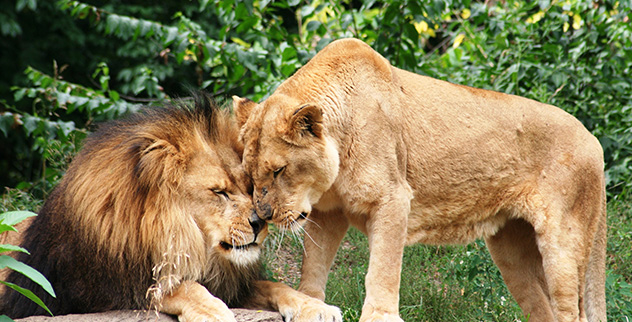

Animal sexuality is not a tidy little filing cabinet labeled “male meets female, everyone behaves politely, babies appear.” Nature took one look at that plan and said, “Cute, but what if we added gender-switching fish, pregnant males, all-female lizards, social sex among apes, and insects with reproductive strategies that sound like rejected horror movie pitches?”
The truth is that animal sexuality is wildly diverse, deeply practical, and often stranger than fiction. In the animal kingdom, sex can be about reproduction, but it can also help build alliances, reduce conflict, establish dominance, protect offspring, or solve the annoying problem of finding a partner in the pitch-black deep sea. Some animals change sex when the social situation demands it. Some reproduce without males. Some use courtship like theater. Some use it like chess. A few use it like a poorly supervised demolition project.
This article explores 10 incredible examples of animal sexuality, focusing on real behaviors that reveal how evolution experiments with bodies, roles, relationships, and reproduction. The goal is not to sensationalize nature but to appreciate it. After all, biology is already dramatic enough without adding a fog machine.
Why Animal Sexuality Is More Diverse Than Most People Think
When people talk about animal reproduction, they often imagine a simple male-female pairing. That happens often, of course, but it is only one chapter in a very large book. Animal sexual behavior can involve same-sex bonding, hermaphroditism, sex changes, sperm competition, mate guarding, elaborate courtship rituals, cooperative parenting, reproductive conflict, and even asexual reproduction.
From an evolutionary perspective, sexuality is shaped by survival and reproductive success. If a behavior helps an animal pass on genes, protect young, secure resources, or maintain social harmony, it may persist. That is why animal mating strategies can look bizarre to human observers while making excellent sense in context. Nature is not trying to be normal. Nature is trying to work.
10 More Incredible Examples of Animal Sexuality
1. Bonobos Use Sex as Social Glue
Bonobos are famous for turning social tension into physical affection. These close relatives of chimpanzees use sexual behavior not only for reproduction but also for bonding, reconciliation, alliance-building, and conflict management. Female bonobos, in particular, form powerful social relationships, and same-sex sexual behavior is a regular part of their social lives.
What makes this fascinating is that sex functions almost like a social language. A disagreement over food, a stressful encounter, or the arrival of a new group member may be smoothed over through sexual contact. In bonobo society, intimacy can act as diplomacy. Humans invented committee meetings; bonobos found a more direct method.
This example matters because it challenges the old idea that animal sexuality is only about reproduction. In bonobos, sexual behavior helps maintain a relatively peaceful social structure. It shows that sexuality in animals can be flexible, social, and deeply connected to group survival.
2. Clownfish Can Change Sex When the Group Needs It
Clownfish live in social groups with a strict size-based hierarchy. At the top is the dominant female, followed by a breeding male and then smaller nonbreeding males. If the dominant female disappears, the breeding male can permanently change sex and become the new dominant female. The largest nonbreeding male then moves up to become the breeding male.
This is called sequential hermaphroditism, and it is one of the most elegant examples of reproductive flexibility in reef fish. Instead of wasting time searching the reef for a new female, the group reorganizes from within. The system is efficient, practical, and very bad news for anyone who thinks “Finding Nemo” was biologically straightforward.
Clownfish prove that sex in animals is not always fixed in the way humans commonly assume. In some species, biological sex can be part of a social strategy, shifting when conditions make that change useful for reproduction.
3. Seahorse Males Get Pregnant
Seahorses are the poster animals for role reversal in reproduction. In seahorses and their relatives, females transfer eggs to a specialized pouch on the male’s body. The male fertilizes, carries, nourishes, protects, and eventually gives birth to the young.
This does not mean the female has no role; egg production is biologically expensive. But male pregnancy changes the usual parental investment pattern. Because males carry the developing offspring, mate choice and reproductive competition can become more complex than the simple “male competes, female chooses” model.
Seahorses remind us that parenting roles in nature are wonderfully varied. In this case, the male is not just “helping out.” He is the nursery, the security system, and the delivery room. Evolution looked at fatherhood and said, “Let’s make this literal.”
4. Deep-Sea Anglerfish Take Commitment to a New Level
In the dark depths of the ocean, finding a mate can be like searching for a candle in a stadium-sized freezer. Some deep-sea anglerfish solve this problem with one of the most extreme reproductive strategies on Earth. Tiny males attach themselves to much larger females. In some species, the male fuses with the female’s body, sharing tissues and blood circulation.
This strategy, known as sexual parasitism, helps ensure that when the female is ready to reproduce, sperm is already available. The male, meanwhile, becomes dependent on the female for nutrients. It is not romance in the greeting-card sense. It is more like evolution invented a permanent biological docking station.
The anglerfish example shows how harsh environments can shape extreme reproductive solutions. In the deep sea, where encounters are rare, staying attached may be the difference between reproductive success and lifelong loneliness in total darkness.
5. Whiptail Lizards Can Reproduce Without Males
Some whiptail lizard species are all female and reproduce through parthenogenesis, a process in which embryos develop from unfertilized eggs. Offspring are essentially genetic copies of the mother, though biological details can vary by species and mechanism.
Even more intriguing, some all-female whiptail lizards still perform courtship-like behaviors with one another. Researchers have found that these behaviors can help stimulate reproductive physiology and improve egg production. In other words, even without males, behavioral interaction still matters.
Whiptail lizards are a brilliant reminder that reproduction is not always a two-parent operation. Their system can allow rapid population growth because every adult individual can produce offspring. The trade-off is reduced genetic variation, which can make populations more vulnerable when environments change.
6. Bed Bugs Practice Traumatic Insemination
Bed bug reproduction is not gentle, charming, or likely to appear in a children’s nature calendar. Male bed bugs use a specialized organ to pierce the female’s body wall and transfer sperm into her body cavity rather than using a typical reproductive opening. This process is known as traumatic insemination.
Females have evolved anatomical adaptations that help reduce the damage caused by repeated mating, but the process can still be costly. In evolutionary terms, bed bugs are a vivid example of sexual conflict, where male and female reproductive interests do not perfectly align.
This behavior is scientifically important because it shows that reproduction can drive an arms race between the sexes. Traits evolve, counter-traits evolve, and eventually you end up with an insect whose love life sounds like a lawsuit waiting to happen.
7. Cuttlefish Males Use Disguise to Sneak Past Rivals
Cuttlefish are masters of camouflage. They can shift color, pattern, and texture with astonishing speed. Some smaller male cuttlefish use this ability during mating season to avoid conflict with larger males. Instead of fighting a rival they probably cannot beat, they may display female-like patterns on one side of the body while signaling to an actual female on the other side.
This kind of “sneaker male” strategy is not cowardice; it is evolutionary creativity. Large males may win physical contests, but smaller males can sometimes succeed through deception, timing, and visual trickery. Basically, cuttlefish invented the biological version of “act natural” and somehow made it work.
Cuttlefish sexuality highlights the connection between intelligence, communication, and reproduction. Their mating strategies show that success is not always about strength. Sometimes it is about performance, perception, and knowing exactly when to change your outfit.
8. Ducks Reveal a Hidden Evolutionary Arms Race
Many birds reproduce through a brief contact between cloacas, but ducks and some other waterfowl are exceptions because males have elaborate phalluses. Female ducks, in turn, can have complex reproductive tracts with spirals and dead-end structures. Researchers have interpreted this as evidence of sexual conflict and coevolution between male and female anatomy.
This example is not included for shock value. It matters because it shows that female anatomy is not passive in evolution. For a long time, many studies focused heavily on male reproductive traits while underexamining female reproductive structures. Ducks helped shift that conversation by showing how female anatomy can evolve in response to male mating strategies.
In short, duck sexuality is a reminder that evolution is not a one-player game. Both sexes can shape the rules, and sometimes the result is a corkscrew-shaped biological chess match.
9. Spotted Hyenas Challenge Simple Ideas About Sex Anatomy
Female spotted hyenas are larger and socially dominant over males, and their reproductive anatomy is famously unusual. Females have an enlarged clitoris often described as a pseudopenis, through which they urinate, mate, and give birth. This anatomy complicates reproduction but is also tied to the species’ distinctive social and hormonal biology.
Spotted hyenas live in complex matriarchal clans where rank, aggression, alliances, and inheritance matter. Their bodies and social systems do not fit simple expectations about male and female roles. Female dominance is not a quirky side note; it is central to how spotted hyena society works.
This example is important because it shows how anatomy, hormones, behavior, and social structure can evolve together. Spotted hyenas are not “weird” because nature made a mistake. They are remarkable because nature built a system that refuses to fit into our neat little categories.
10. Praying Mantises Sometimes Turn Mating Into a Meal
Praying mantises are famous for sexual cannibalism, though the behavior is often exaggerated in popular culture. In some mantis species, females may eat males before, during, or after mating, especially under certain conditions such as hunger or intense conflict. Males, unsurprisingly, have evolved behaviors to reduce their risk.
Sexual cannibalism can provide nutritional benefits to females, potentially supporting egg production. But it also creates obvious problems for males, who generally prefer not to end a date as an appetizer. Studies of mantises show that mating behavior can involve struggle, strategy, and risk assessment.
The mantis example captures a key lesson: reproductive success often involves trade-offs. What benefits one sex may harm the other. Evolution does not guarantee romance, fairness, or a pleasant evening. Sometimes it just rewards whatever works.
What These Examples Teach Us About Evolution
These examples of animal sexuality may seem wildly different, but they share a common theme: evolution rewards function, not familiarity. Bonobos use sex for social peace. Clownfish change sex to keep reproduction going. Seahorse males carry embryos. Anglerfish fuse bodies in the deep sea. Whiptail lizards reproduce without males. Bed bugs, ducks, mantises, cuttlefish, and hyenas all reveal different pressures shaping sexual behavior and anatomy.
The diversity of animal sexuality also warns us against forcing human assumptions onto other species. Terms like “male,” “female,” “mating,” “courtship,” and “parenting” are useful, but they do not always capture the full story. Animals live in ecological and evolutionary contexts very different from ours. Their strategies reflect food availability, predation, population density, social structure, competition, climate, and the simple logistical challenge of finding a suitable mate.
In other words, biology is not a rulebook. It is a history of experiments, with every living species representing a solution that has survived so far.
Common Myths About Animal Sexuality
Myth 1: Animal Sex Is Only About Reproduction
Reproduction is central, but not the whole picture. In some species, sexual behavior also builds social bonds, reduces aggression, signals status, or maintains alliances. Bonobos are the classic example, but they are not the only animals whose sexual behavior has social functions.
Myth 2: Male and Female Roles Are Always Fixed
Seahorses, clownfish, hyenas, and many fish species show that sex roles and reproductive responsibilities can vary dramatically. In some animals, males carry young. In others, individuals change sex. In others, females dominate the social hierarchy.
Myth 3: “Natural” Means Simple
Nature is many things, but simple is not one of them. Animal sexuality includes cooperation, conflict, flexibility, competition, deception, and adaptation. The more closely scientists look, the more complicated the story becomes.
Experience-Based Reflections: What Observing Animal Sexuality Can Teach Curious Humans
For readers, writers, students, wildlife lovers, and anyone who has ever fallen into a late-night nature documentary spiral, the topic of animal sexuality offers more than “wow, nature is strange” trivia. It teaches a useful habit of mind: look closer before judging. Many animal behaviors that seem shocking at first become understandable once we know the ecological pressure behind them.
Imagine watching clownfish in an aquarium. At first, they may look like bright orange confetti with fins, darting around an anemone as if they are late for a reef appointment. But behind that cheerful appearance is a tightly organized social system. The largest fish is female, the next largest is male, and every other fish has a place in the hierarchy. If the female disappears, the group does not collapse into chaos. It reorganizes. That observation can change the way we think about sex in nature: not as a rigid identity stamped once and forever, but in some species as a flexible biological role shaped by social need.
Or consider seahorses. Many people learn that male seahorses get pregnant and immediately treat it as a cute fact. It is cute, admittedly. A male seahorse giving birth looks like someone shaking popcorn out of a tiny underwater purse. But the deeper lesson is about parental investment. Seahorse reproduction shows that caregiving roles can evolve in unexpected ways. The sex that carries the embryos is not always the one we assume. Nature is very comfortable ignoring our assumptions.
Observing animal sexuality also encourages humility. Humans often use animals as symbols for our own cultural ideas. We call someone a “queen bee,” a “lone wolf,” or a “cuckold,” usually with more confidence than accuracy. But real animals rarely behave like neat metaphors. Wolves are social. Bees have astonishing reproductive systems. Cuckoos raise questions about parental strategy, not punchlines. The more we learn, the less useful stereotypes become.
For content creators and educators, this topic is also a reminder to balance fascination with respect. It is easy to write about bed bugs, ducks, or anglerfish with a carnival-barker tone. And yes, a little humor helps readers stay awake. But these behaviors are not jokes to the animals performing them. They are survival strategies shaped by millions of years of selection. The best writing lets readers laugh, then think, then say, “Wait, that actually makes sense.”
There is also an experience many nature enthusiasts share: the moment when “weird” becomes “wonderful.” At first, anglerfish fusion sounds unsettling. Then you picture the deep sea, where darkness is vast, food is scarce, and potential mates may be separated by enormous distances. Suddenly, permanent attachment is not bizarre for the sake of being bizarre. It is a solution to loneliness at biological scale. The same is true of whiptail lizards reproducing without males, cuttlefish using disguise, and bonobos using intimacy to calm conflict. Each behavior is a clue to a problem the species had to solve.
Finally, studying animal sexuality can make us better observers of life in general. It teaches us to ask better questions: What pressure shaped this behavior? What cost does it carry? Who benefits? What trade-off is hidden beneath the surface? Those questions apply far beyond biology. They train curiosity, patience, and scientific thinking. And in a world full of quick opinions, that is no small gift.
Conclusion
The animal kingdom is a spectacular reminder that sexuality is not a single script. It is a flexible, evolving set of strategies shaped by survival, reproduction, social life, and environment. From bonobos using sex as social glue to seahorse males giving birth, from clownfish changing sex to anglerfish fusing in the abyss, animal sexuality is stranger, smarter, and more diverse than most people imagine.
These 10 examples are not random oddities. They are windows into evolution’s creativity. They show that biology does not care whether a behavior matches human expectations. It only “cares” whether that behavior helps life continue. And if life continues through pregnant males, all-female lizards, deceptive cuttlefish, or deep-sea attachment issues, nature simply shrugs and keeps swimming.
Note: This article discusses animal reproductive behavior in an educational, biology-focused way. It is intended for science communication and general-interest reading, not for sensational or explicit purposes.