
When Mad Max: Fury Road roared into theaters in 2015, a lot of people expected “just another dusty reboot.”
Instead, George Miller slammed his foot on the gas and delivered a two-hour chase scene that somehow became a modern classic,
an Oscar-winning spectacle, and a film-nerd talking point that simply will not die. Today, it still pops up on lists of the
best action movies, best films of the 2010s, and “movies that melted my face off (in a good way).”
But where does Fury Road actually rank among action movies, the Mad Max franchise, and modern blockbusters?
And why do some viewers worship it while others shrug and reach for Die Hard or The Matrix instead?
Let’s drive straight into the desert of rankings and opinionsno steering wheel-screaming required.
How Critics Rank Mad Max: Fury Road
Near-Universal Acclaim
On paper, Fury Road looks like an unstoppable machine. It holds a sky-high critic score on Rotten Tomatoes and a
“universal acclaim” Metascore on Metacritic, with user ratings that comfortably sit in the “beloved” zone as well.
In plain English: critics went wild for it, and audiences mostly agreed.
Year-end lists tell the same story. Major critics’ groups and publications routinely placed Fury Road in their
top 10 films of 2015, and many put it at number one. Several large roundups of critics’ lists have shown the movie dominating
that year’s rankings, beating more traditional awards bait in the process.
Award-Season Beast
Awards bodies, which don’t always love action movies, made a rare exception. Mad Max: Fury Road scored ten Academy
Award nominations, including Best Picture and Best Directoralmost unheard of for a loud, gasoline-drenched chase movie.
It went on to win six Oscars, mostly in “craft” categories: editing, production design, costume design, sound mixing,
sound editing, and makeup and hairstyling. That haul made it the most-awarded film at the ceremony and set a record for
an Australian production.
Beyond the Oscars, the film racked up hundreds of wins and nominations from groups like the British Academy of Film and
Television Arts, critics’ circles in major cities, and the National Board of Review, which even named it Best Film of 2015.
When you zoom out and look at the awards landscape, Fury Road doesn’t just perform wellit dominates.
How Fury Road Ranks Within the Mad Max Franchise
Inside its own franchise, Fury Road is usually the war rig leading the pack. Many modern rankings of the
Mad Max films, especially those based on critic aggregation, place Fury Road firmly in the number one slot,
edging out the beloved The Road Warrior (Mad Max 2). That’s impressive, considering the original trilogy
has had decades to build a reputation.
Why the top spot? Several reasons:
- Technical leap: The stunts are more elaborate, the cinematography more polished, and the sound design more immersive than earlier entries.
- Modern pacing: It’s essentially one extended pursuit with almost no downtime, which plays well with contemporary audiences.
- Expanded focus: The story isn’t just about Max anymore; Furiosa and the escaping wives give the film a stronger emotional core and a richer ensemble.
Some longtime fans still argue that Mad Max 2 is the purest expression of the series’ scrappy, low-budget energy.
But if you go by aggregated rankings and mainstream conversation, Fury Road is the reigning champion of the wasteland.
Where It Ranks Among the Best Action Movies Ever
Outside the franchise bubble, Mad Max: Fury Road frequently appears on lists of the best action movies of all time.
Film magazines, entertainment sites, and fan polls continually place it alongside heavy hitters like
Terminator 2: Judgment Day, Die Hard, The Matrix, John Wick, and The Raid.
Different outlets shuffle the order, but a few patterns repeat:
- Top tier placement: Many lists slot Fury Road within the top 5 or top 10 action films ever made.
- Best of the 2010s: When critics rank the decade’s movies, Fury Road is almost always near the front of the convoy.
- Standout car chases: Articles that rank the greatest car chases in cinema history routinely single out the film’s sandstorm sequence and final run back to the Citadel.
So, is it the greatest action movie ever? That depends on who’s talking. For some fans,
the combination of practical effects, relentless pacing, and wild production design leaves everything else in the dust.
Others still crown older classics. But very few serious rankings ignore it.
Why Fury Road Scores So Highly
Visual Storytelling and Practical Mayhem
At its core, Fury Road is a masterclass in visual storytelling. Dialogue is sparse, exposition is minimal,
and character arcs unfold through glances, gestures, and choices made at 80 miles per hour.
Miller and his team rely on framing, color, and motion to guide your eye so you always know who’s chasing whom,
even when half the screen is on fire.
The movie also carries a reputation for prioritizing practical stunts. While digital effects are present,
much of what you seecars flipping, poles swinging, bodies flyingis captured in-camera with real stunt performers.
That tangible weight helps the action feel intense rather than cartoonish, which critics frequently cite as
a key reason the film rises above other CGI-heavy blockbusters.
Production Design That Tells a Story
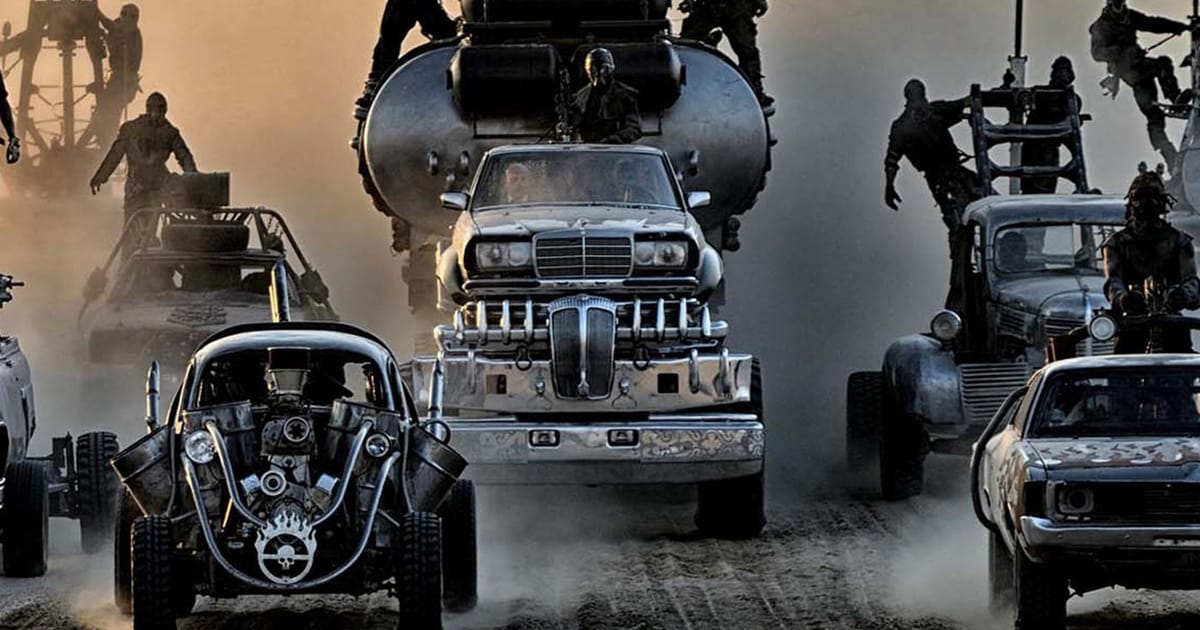
Every element of the film’s design reinforces its world. The Citadel’s brutal architecture, the rusted vehicles,
the War Boys’ chalk-white bodies, and Furiosa’s metal arm all communicate culture and history without anyone
stopping to lecture about it. This attention to detail is exactly what awards bodies honored with Oscars for costume,
production design, and makeup.
Even the color grading stands out. Instead of leaning into the washed-out, “gritty” palette common in post-apocalyptic stories,
Fury Road embraces vivid oranges and blues. The desert becomes strangely beautiful, turning the movie into a heavy-metal
album cover that’s constantly in motion.
Furiosa, Max, and the Power of a Simple Plot
Another reason the film ranks so high: its simplicity. The plot can be summarized in one line“they drive away, then they drive back”
but the emotional stakes deepen as the story barrels forward. Imperator Furiosa’s attempt to rescue the enslaved wives of Immortan Joe
adds a strong moral center, while Max shifts from traumatized loner to reluctant ally.
Many rankings and essays highlight Charlize Theron’s performance as Furiosa, arguing that she’s the true protagonist of the film.
Her quiet fury, vulnerability, and competence ground the chaos. Whether viewers show up for Tom Hardy’s grunts or the flamethrower guitar,
most leave remembering Furiosa’s tear-streaked face in the sand.
Common Criticisms and Dissenting Opinions
Of course, not everyone crowns Fury Road king of the wasteland. Browse fan forums and comment threads and you’ll find
recurring complaints:
- “It’s just one long chase.” Some viewers find the near-constant action exhausting or repetitive, preferring more traditional peaks and valleys.
- “Thin characterization.” The sparse dialogue and lean backstory don’t work for everyone. A portion of the audience likes more overt emotional explanation.
- “Overhyped.” When a film shows up on every “best of” list, expectations get unrealistically high, making some viewers feel underwhelmed.
In discussion threads, you’ll see people rank it as “top 10 but not number one,” placing it behind
Terminator 2, Die Hard, Predator, The Matrix, or The Raid.
The consensus isn’t that Fury Road is badfar from itbut that “best ever” is a crowded, subjective category.
A Balanced Ranking: Where Does Fury Road Really Sit?
Taking all this into accountcritic scores, awards, fan debates, and the film’s long-term impacta balanced view might look like this:
- Within the Mad Max franchise: #1 or very close second behind The Road Warrior, depending on how much you value scrappy early entries.
- Among 2010s films: Top tier, often in the top 5, especially for genre and blockbuster lists.
- Among all-time action movies: Comfortably top 10 for many critics and cinephiles; a strong candidate for #1 in the “modern era” of action cinema.
What makes the rankings so impressive is the film’s staying power. Nearly a decade later, it still comes up in conversations about
how to shoot action, how to use practical effects, and how to give a blockbuster a unique visual personality.
A lot of movies dominate the conversation for a year; Fury Road has been living rent-free in people’s brains since 2015.
How to Talk About Fury Road Without Starting a Comment War
Because opinions on the film can get passionate, it helps to frame your own ranking with a little nuance:
-
Separate “favorite” from “best.” You can acknowledge that Fury Road is a technical masterpiece
while still preferring the cozy chaos of Speed or the cool cynicism of Heat. -
Recognize what it changed. Even if it isn’t your #1, it clearly influenced the look and design of later action movies
and reinforced the value of practical stunts. -
Credit the team effort. It’s easy to talk only about Max and Furiosa, but the editors, stunt coordinators, sound designers,
and costume team are a massive part of why this movie ranks so high.
Once you do that, “Is it the greatest?” becomes less important than “What does it do better than almost anyone else?”
Experiences, Rewatches, and Fan Memories
Rankings and scores are fun, but they don’t fully explain why Mad Max: Fury Road lodges itself in people’s memories.
The real story lives in how viewers experience itwhere they saw it, who they watched it with, and how it felt when the engines
first started screaming.
For many fans, the theatrical experience is the gold standard. Imagine settling into a dark theater, the screen filling with
the barren wasteland of the opening shots, and thenalmost before you have time to adjusteverything explodes into motion.
The sound system rattles as engines rev, drums pound, and a flamethrower guitar shrieks somewhere off to the side.
It’s the kind of movie where you feel the bass in your chest before your brain has fully caught up with what’s happening.
Viewers often describe their first watch as “overwhelming, in the best way.” Some people leave the theater exhilarated,
others slightly dazed, needing a few minutes in the lobby just to process what they saw.
That raw sensory overload is one reason the film ranks so high in personal “most unforgettable cinema experiences” listsnot just
“best action movies.”
Rewatches tell another part of the story. The first time through, it’s easy to get swept up in the momentum and miss the details.
On a second or third viewing at home, fans start to notice smaller character beats: a War Boy hesitating, a glance between the wives,
the way Max subtly shifts from using people as shields to protecting them. People pause to appreciate the design of the war rigs,
spot graffiti on the Citadel walls, or catch the moment Furiosa wipes engine grease across her forehead like war paint.
These discoveries fuel endless online conversations. Someone posts a screenshot pointing out a background detail,
another person shares their ranking of the Mad Max films, and dozens of replies debate whether Fury Road
really deserves its spot at the top. Some fans swear it’s their number one action movie; others argue it sits just below
older favorites they grew up with. But even the skeptics usually admit it’s “technically incredible,” which is not something
you hear about every blockbuster.
Then there are the casual viewers who didn’t expect to care. They press play because a friend insists or because it’s streaming
and they’re curious about the hype. Halfway through, they realize they’ve barely checked their phonea small miracle in the
age of constant distraction. By the time the war rig turns around and the plan becomes “drive back into danger,” they’re in.
Home viewing setups have also helped keep the movie’s reputation alive. On a big TV with decent speakers or a soundbar,
the mix still feels thunderous. Late-night group rewatches turn into impromptu ranking sessions: Where does it sit compared to
John Wick? Is it a better car movie than Fast Five? Does Furiosa belong on the Mount Rushmore of action heroes?
The answers vary, but the fact that people keep asking is proof of its staying power.
This blend of technical excellence, strong character work, and unforgettable viewing experiences is ultimately what shapes
the film’s rankings. Numbersscores, box office totals, award countstell one side of the story. The other side lives in
the moments people talk about years later: Furiosa’s scream beneath the huge desert sky, the war rig charging back into the fire,
or that first time a flaming guitar soared across the screen and everyone realized this movie was truly, gloriously unhinged.
That’s why, whenever lists of the greatest action films get updated, Mad Max: Fury Road keeps showing up near the front.
It isn’t just a well-reviewed movie; it’s a shared experience that feels like a fever dream you can’t quite shakeand wouldn’t want to.
Conclusion: A Modern Classic That Earns Its Hype
In the end, Mad Max: Fury Road is both a critic’s darling and a fan favorite, a rare case where highbrow film discourse
and popcorn-munching excitement point to the same conclusion. Whether you personally rank it as the greatest action film ever made
or “just” a top-tier entry, it’s hard to deny its impact on how action movies are judged, shot, and remembered.
Maybe that’s the real victory. In a landscape crowded with interchangeable CGI destruction, Fury Road feels like a
handcrafted engine built for speed, personality, and a little bit of madness. Whatever spot you give it in your personal rankings,
it’s earned its permanent parking place in the action-movie hall of fame.