Here’s Why ‘King of the Hill’ Fans Don’t Have to Worry About Hank’s Politics in the Revival

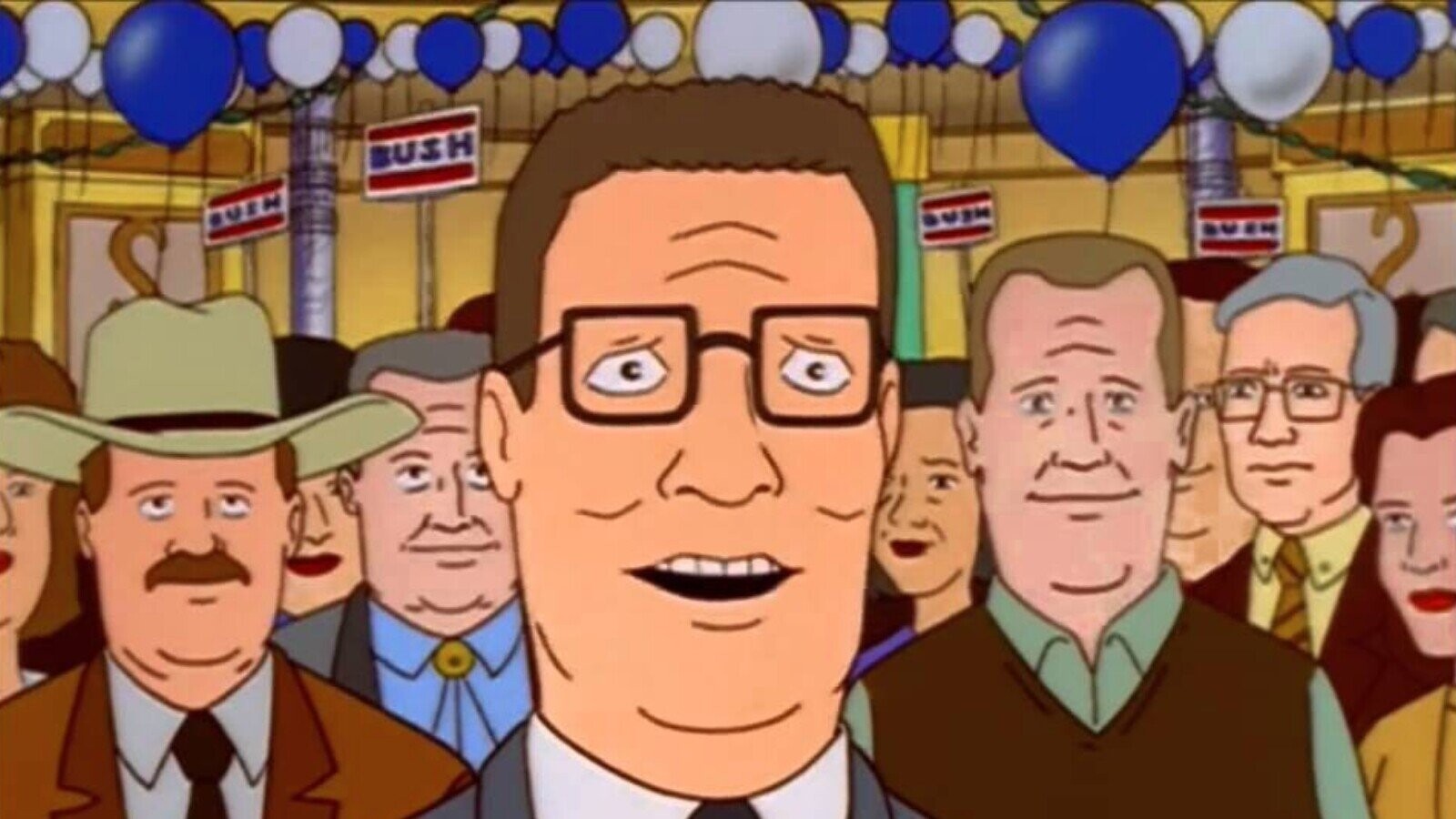
There are few TV characters who can make a trip to the hardware store feel like a moral crisis, but Hank Hill has always had that gift. The man loves propane, proper lawn care, firm handshakes, and a cleanly labeled garage shelf. Naturally, when King of the Hill returned in its Hulu revival, fans wondered how Hank would survive in modern America, where every barbecue grill has Bluetooth, every restaurant has a fusion menu, and every conversation online seems to become a congressional hearing by lunchtime.
The biggest question was not whether Hank would still say “I tell you what.” Of course he would. The real concern was whether the revival would turn Hank Hill into a loud political mouthpiece. Would the show drag him into nonstop culture-war shouting? Would Arlen become a battlefield of hashtags, cable-news arguments, and suspiciously viral speeches? Thankfully, the answer is no. Fans can relax, crack open an Alamo-style beverage, and breathe like they just found a propane tank stored upright.
The King of the Hill revival understands something the original series understood beautifully: Hank Hill may be conservative, but the show is not built to be a campaign ad. It is built around character, family, work, community, awkward love, and the eternal comedy of a decent man being confused by the world without becoming cruel about it.
Why Fans Were Nervous About Hank Hill’s Politics
It is easy to see why longtime viewers felt a little nervous. King of the Hill originally aired in a different media climate. The Fox animated sitcom ran from the late 1990s through the 2000s, a period when TV could joke about politics without every punchline becoming a digital boxing match. Hank was always a traditional Texas guy: respectful of authority, patriotic, rule-following, suspicious of nonsense, and emotionally allergic to oversharing. If feelings were a spice rack, Hank would keep them in the back cabinet behind the WD-40.
But today, audiences often sort characters into rigid political categories. A character who loves lawn care and church potlucks can be flattened into a stereotype. A character who dislikes sudden change can be mistaken for someone who dislikes people. That was never Hank. Hank Hill’s conservatism has always been more temperamental than ideological. He values order, decency, responsibility, local pride, and a job done correctly. He does not like chaos, cruelty, laziness, fraud, or anyone disrespecting propane and propane accessories.
That distinction matters. The revival wisely keeps Hank rooted in personality, not party talking points. His politics are not erased, but they are not allowed to swallow the show. Hank remains Hank: stiff, sincere, practical, sometimes wrong, often lovable, and almost always one awkward pause away from saying something unintentionally hilarious.
The Revival Keeps the Show Character-First, Not Partisan-First
The most reassuring thing about the Hulu revival is that it does not treat modern America like a checklist of arguments. Instead, it brings Hank and Peggy back to Arlen after years away and lets them experience change through ordinary life. Hank has to deal with new technology, unfamiliar food, altered social customs, and the strange feeling of returning home only to realize home kept moving while he was gone.
That is classic King of the Hill. The comedy comes from Hank trying to make sense of everyday life, not from him delivering lectures. A Wi-Fi-enabled grill is funnier for Hank than a stump speech because the grill represents exactly the kind of “progress” that offends his soul. In Hank’s world, a burger should not require customer support. A bathroom sign should not require a meeting. A restaurant menu should not sound like it was assembled by someone losing a bet on public radio.
This approach is why fans do not need to worry. The revival is interested in cultural change, but it is not interested in turning every scene into a debate stage. It uses modern details as pressure points for character comedy. Hank reacts. Peggy overreacts. Bobby adapts. Dale spirals. Bill suffers. Boomhauer remains a poetic weather system of mumbling wisdom. That is the engine of the show.
Hank Hill Was Never a Bigot in a White Shirt
One reason Hank still works is that the original show never treated him as a hateful man. He could be narrow, uncomfortable, stubborn, and hilariously repressed, but his baseline was decency. He often struggled with change, especially when it challenged his assumptions about masculinity, parenting, work, or community. Yet the show regularly allowed him to grow.
Think about the Hank-and-Bobby dynamic. Hank never fully understood Bobby’s interests. Comedy, performance, cooking, fashion, sensitivityBobby seemed designed by the universe to confuse his father. But the series rarely framed Hank’s discomfort as villainy. It framed it as a father trying, failing, and trying again. He wanted Bobby to be safe, capable, and respected. He also wanted him to stop doing things that made strangers stare at the Hill family in public. Parenting, in other words.
The revival benefits from this same emotional structure. Adult Bobby is not a rebellious punchline. He is a chef in Dallas, pursuing a life that is different from Hank’s but not empty or foolish. That gives the show a fresh way to explore generational change without reducing either man to a symbol. Hank is not simply “old America,” and Bobby is not simply “new America.” They are father and son, which is more interesting than a slogan and much harder to resolve in 22 minutes.
The Show’s Politics Work Because They Stay Local
King of the Hill has always been strongest when it keeps politics close to the ground. The show is not about abstract ideology; it is about how change lands in a neighborhood. That might mean a new business in town, a school policy, a church event, a work problem, a local election, a social trend, or some odd community panic that Dale somehow predicted for completely wrong reasons.
This local focus protects the revival from becoming preachy. Arlen is not a think tank. It is a place where people borrow tools, gossip in driveways, misunderstand each other, and still show up when things go sideways. Hank’s worldview matters because it affects how he treats his family, his neighbors, his work, and his town. That is far more durable than having him comment on every national headline.
In fact, the revival’s best political choice may be restraint. Hank can react to modern life without becoming a walking opinion column. He can be baffled by rideshare apps, video calls, food trends, and smart appliances without the show declaring war on modernity. The humor is not “new things are bad.” The humor is “new things are weird, especially when introduced to a man whose ideal technology is a dependable tape measure.”
Why Hank’s Common Sense Still Plays in 2025 and Beyond
Hank Hill’s appeal has always come from his common sense, even when that common sense arrives wrapped in khaki stiffness. He believes people should work hard, keep promises, respect boundaries, help neighbors, and not turn every minor inconvenience into a personal revolution. Those values are not owned by one political party. They are human values. They are also very funny when expressed by a man who treats a clean garage like a spiritual achievement.
The revival recognizes that Hank can be conservative without being cartoonishly extreme. He can be uncomfortable with change without being hateful. He can resist nonsense without rejecting kindness. That balance is rare in modern television, where many shows either mock traditional characters as idiots or sanitize them until they have no edge. Hank still has edge. It is just the edge of a freshly sharpened mower blade, not a chainsaw waved at strangers.
This is why the character feels relevant again. Many viewers, regardless of politics, know what it feels like to watch the world change faster than their comfort level. Hank’s confusion is relatable because it is specific. He is not angry at “the future.” He is angry that his grill has firmware. That is comedy with a human center.
Dale, Bobby, Peggy, and the Gang Help Keep Hank Balanced
A major reason fans do not have to worry about Hank’s politics is that Hank is never alone in the show’s moral universe. King of the Hill works as an ensemble. The alley is a pressure valve. The Hill home is a testing ground. Strickland Propane, local restaurants, school memories, and neighborhood rituals all pull Hank in different directions.
Dale Shows What Real Extremes Look Like
Dale Gribble has always been the show’s conspiracy-powered weather vane. In the revival, his paranoia feels even more relevant because modern America has caught up with some of his energy, though not necessarily his facts. That makes Dale a useful contrast to Hank. Hank may be traditional, but he is not Dale. Hank wants rules, order, and evidence. Dale wants a bunker, a theory, and possibly a raccoon trained in counter-surveillance.
Bobby Makes Change Personal
Adult Bobby is one of the revival’s smartest updates. He is no longer just the odd kid Hank cannot understand. He is a grown man with a career, taste, ambition, and his own relationship to Texas culture. His cooking career creates a perfect bridge between tradition and reinvention. Food, after all, is one of the most emotional ways people argue about identity. Hank may not understand every dish Bobby makes, but he understands work, pride, and doing something well.
Peggy Keeps the Ego Meter Spinning
Peggy Hill remains essential because she is both loving and absurdly confident. Hank’s politics could become heavy if the show centered only on his discomfort. Peggy prevents that by bringing her own brand of chaos: ambition, mispronounced Spanish, intellectual self-awards, and the confidence of someone who would absolutely nominate herself for a Nobel Prize in substitute teaching.
The Revival Is About Change, Not Political Panic
The best way to understand the revival is to see it as a story about returning. Hank and Peggy return to Arlen, but Arlen is not frozen in time. Bobby is grown. The neighborhood has shifted. Technology has invaded normal life. Tastes have changed. Even the old routines feel slightly different. That is not a political premise; it is a human one.
Anyone who has gone back to a hometown after years away knows the feeling. The streets are familiar, but the businesses are different. Your favorite place is now a boutique fitness studio. The old diner has a QR-code menu. Someone you remember as a baby now has a mortgage and opinions about sourdough. You are still you, but the setting has been updated without asking your permission.
That is Hank’s problem. Not that America has become “too political,” but that his personal operating system is being asked to download too many updates at once. The revival gets comedy from that tension while keeping affection for the character intact.
Why the Revival’s Restraint Is Good SEO for the Soul
From a storytelling perspective, restraint is the secret sauce. A louder revival might have grabbed headlines for a week. A smarter revival keeps fans watching because it feels like the show they loved. King of the Hill does not need Hank to become a meme machine. It needs him to be a recognizable human being dealing with specific problems in a specific community.
That is also why the show continues to attract a broad audience. Conservatives can recognize Hank’s respect for tradition. Liberals can appreciate the show’s critique of narrow thinking. Moderates can enjoy a comedy where people disagree without immediately trying to destroy one another. And everyone can agree that Bill needs help, Dale needs supervision, and Hank needs a grill that does not require a software update.
Specific Examples That Show Fans Can Relax
The revival’s setup gives fans several reasons to trust the direction. Hank’s return from overseas creates culture shock without making him a caricature. Bobby’s adult career gives the father-son relationship a new layer. Dale’s heightened conspiracy energy allows the show to comment on modern paranoia without making Hank carry that burden. Peggy’s personality remains a comedic force. The alley scenes still provide that old rhythm of friendship, beer, silence, and deeply unhelpful advice.
Most importantly, the creative direction keeps the show grounded in relatable stories. Instead of centering on national policy debates, the revival uses everyday shifts: smart grills, changing bathrooms, food trends, delivery culture, new social habits, and the emotional awkwardness of aging. These are topics Hank can react to naturally. They do not require him to become a pundit. They only require him to be Hank.
What Fans Should Expect from Hank Hill Now
Fans should expect a Hank who is older, not reinvented. He is still practical. He is still uncomfortable with emotional excess. He still loves the dignity of work. He still sees a well-maintained tool as a sign of civilization. But he is also returning to a world that has changed enough to challenge him in new ways.
That is exactly where Hank belongs as a comedy character. He is funniest when he is forced to adapt, not when he is allowed to stand still. The original show repeatedly placed him in situations that made him question assumptions. The revival continues that tradition. Hank may grumble, blink slowly, and retreat to the alley for counsel, but he is not built to hate the world. He is built to understand it reluctantly.
Fan Experience: Watching Hank Hill Without the Political Anxiety
For many longtime fans, returning to King of the Hill feels less like restarting a show and more like driving past an old neighborhood with the windows down. You remember the rhythm before you remember the plot. The dry pauses. The alley conversations. Peggy’s heroic overconfidence. Bobby’s sweet weirdness. Hank’s way of turning mild discomfort into a full-body event. The revival taps into that memory without pretending nothing has changed.
That is why the concern over Hank’s politics is understandable but ultimately unnecessary. Fans are not wrong to be cautious. Plenty of revivals have returned years later only to misunderstand what made the original work. Some over-explain the characters. Some chase trends. Some turn beloved people into billboards for whatever argument is hot that week. But King of the Hill has always been quieter than that. Its power comes from observation, not volume.
Watching Hank navigate modern life can feel oddly comforting because he reacts the way many people privately react before they have had coffee: “Why is this different? Who approved this? Is there a simpler version? Can I speak to someone who owns a clipboard?” The joke is not that Hank is stupid. The joke is that the world often changes in ways that are genuinely silly. A grill connected to three devices is ridiculous. A menu that needs translation from English into more English is ridiculous. A grown man needing an app to do something that used to require a phone call is, depending on the app, a minor constitutional crisis.
The best fan experience is to watch the revival not as a political test but as a character reunion. Hank is not there to confirm every viewer’s worldview. He is there to be recognizably himself. Sometimes he will be right. Sometimes he will be wrong. Sometimes he will be so awkward that the room temperature seems to drop five degrees. That mix is the point.
There is also something valuable about seeing a traditional character treated with affection but not worship. Hank is not mocked into dust, and he is not crowned king of common sense every time he clears his throat. The show gives him dignity while still letting him be funny. That balance is why fans across the political spectrum can still enjoy him. You do not have to vote like Hank, parent like Hank, grill like Hank, or fold jeans like Hank to understand him. You only have to recognize the human fear of becoming outdated and the human desire to remain useful.
In a media environment that often rewards outrage, King of the Hill offers a smaller pleasure: people trying to live near one another without turning every disagreement into a disaster. That may sound modest, but modesty has always been part of the show’s charm. Hank Hill does not need to win the internet. He needs to fix the problem in front of him, keep his family close, and maybe convince someone that charcoal is not a personality. For fans worried about the revival, that is the best possible news. Hank is still Hank, Arlen is still Arlen, and the show still knows that the funniest politics are often the ones hiding inside everyday life.
Conclusion
King of the Hill fans do not have to worry about Hank’s politics in the revival because the show has not forgotten what made him work. Hank Hill is not a culture-war puppet. He is a decent, stubborn, tradition-loving man trying to process a world that keeps rearranging the furniture. The revival uses modern life as comedy fuel, but it keeps the heart of the series intact: family, friendship, work, local community, and the awkward grace of people learning to change without losing themselves.
The result is a revival that feels timely without being trapped by the news cycle. Hank can still be conservative. Bobby can still be surprising. Peggy can still be Peggy with the force of a marching band entering a library. And Arlen can still be the rare TV place where disagreement does not erase humanity. That is why Hank Hill remains one of television’s most durable charactersand why his return feels less like a political risk and more like a welcome trip back to the alley.
Note: This article is an original synthesis based on current entertainment reporting, official streaming information, creator and cast interviews, and critical analysis from reputable U.S. media coverage.