Let There Be Light: Hotel Le Sud in the South of France, a Guesthouse Inspired by Picasso

Some hotels try to impress you with marble lobbies, velvet ropes, and a staff-to-guest ratio that makes you wonder if you accidentally joined a royal procession. Hotel Le Sud in Juan-les-Pins takes a different route. It opens the shutters, lets the Mediterranean light pour in, and says, “Relax. You are in the South of France now.”
Located in the heart of Juan-les-Pins, near Antibes on the French Riviera, Hotel Le Sud is a 29-room boutique guesthouse with the easy confidence of a place that knows charm does not need to shout. Inspired by Picasso, Jean Cocteau, Fernand Léger, Vallauris ceramics, and the golden glow of the Côte d’Azur, the hotel feels less like a conventional stay and more like stepping into a sunlit sketchbook. White plaster walls, terracotta floors, striped textiles, wicker lighting, hand-painted lines, and cheerful frescoes all work together to create a mood that is artistic without becoming precious.
In short, Hotel Le Sud is not trying to be a museum. It is trying to be a summer afternoon. And frankly, that is much harder to pull off.
Hotel Le Sud: A Boutique Guesthouse with Riviera Soul
Hotel Le Sud sits in Juan-les-Pins, a seaside neighborhood of Antibes known for sandy beaches, jazz history, glamorous 1920s memories, and that particular French Riviera light that has been seducing painters, writers, musicians, and people wearing linen shirts for generations. The hotel is close to the beach, near the train station, and within easy reach of Antibes, Cannes, Nice, and the wider Côte d’Azur.
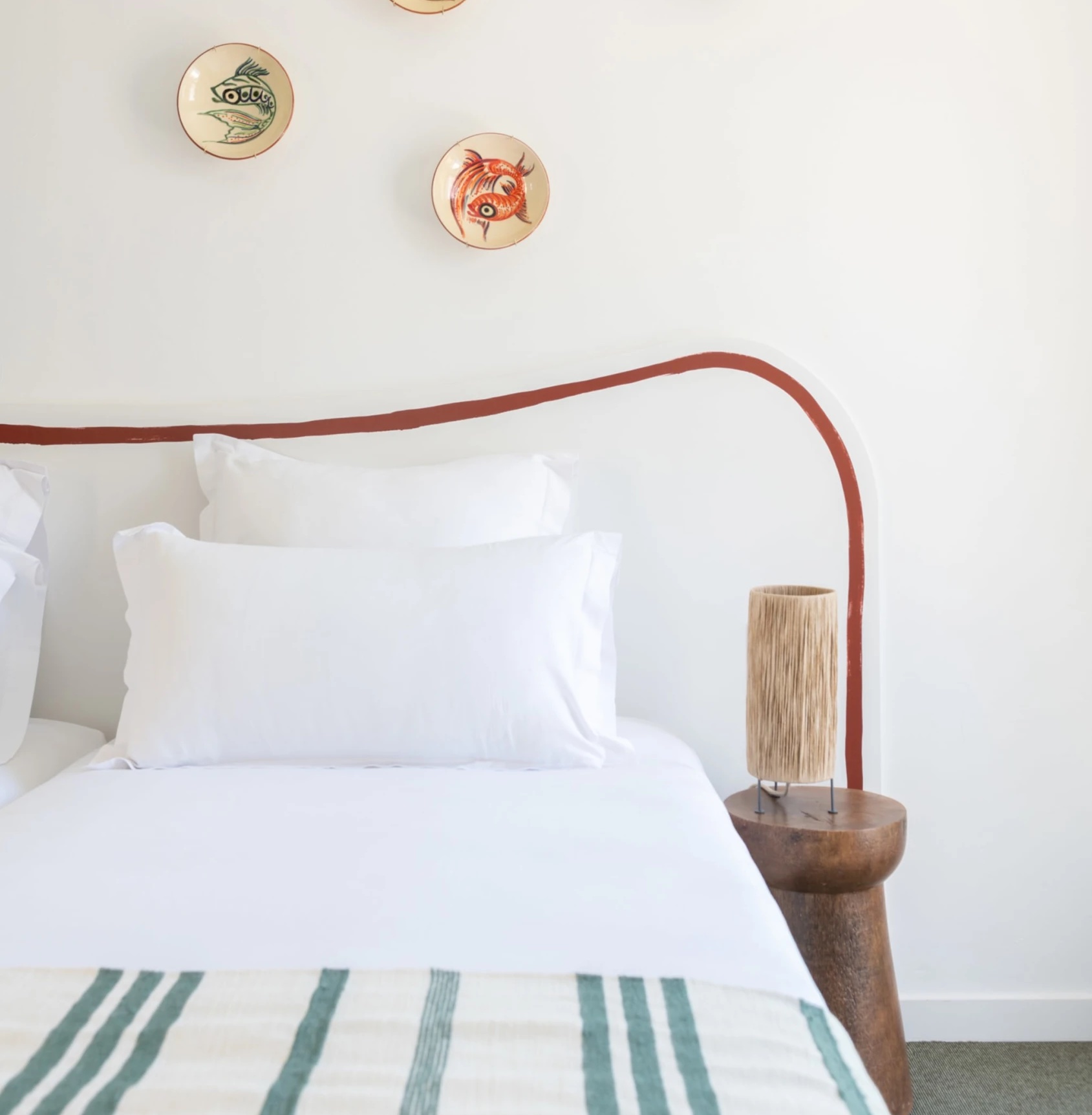
Its appeal begins with scale. With only 29 rooms, Hotel Le Sud avoids the anonymous feeling of a large resort. Instead, it leans into the intimacy of a guesthouse. You notice the details: a painted border running along a wall, a striped banquette in the café, a ceramic plate mounted like a small burst of color, a curved headboard outlined with an imperfect brushstroke. Nothing feels over-polished. The beauty is in the handmade energy.
The redesign, led by Paris-based designer Stéphanie Lizée, gives the hotel a relaxed Mediterranean personality. The interiors are clean but never cold, playful but never chaotic. This balance is the secret sauce. Many hotels inspired by famous artists end up looking like themed restaurants where even the napkins are trying too hard. Le Sud avoids that trap by using Picasso as an atmosphere rather than a costume.
Why Picasso Makes Sense Here
Picasso was not just some random name pulled from a design mood board. His connection to Antibes and the Côte d’Azur is real and deeply rooted. In 1946, he worked inside Château Grimaldi in Antibes, a historic building that later became the Picasso Museum. During that period, he created works full of Mediterranean brightness, mythological energy, sea air, and postwar joy. The region gave him color, space, and a sense of renewal.
Hotel Le Sud borrows from that spirit rather than copying Picasso’s paintings. That is important. The hotel does not slap cubist faces on pillows and call it a day. Instead, it channels the visual vocabulary of the French Riviera: terracotta from local pottery traditions, sunflower yellow, deep green, bold blue, natural textures, and hand-drawn forms. The result is a space that feels like it belongs to Antibes and Juan-les-Pins rather than a hotel showroom imported from nowhere in particular.
The influence of Vallauris ceramics is especially meaningful. Vallauris, a town near Antibes, became famous for pottery and ceramics, and Picasso worked there after the war. At Hotel Le Sud, ceramic pieces are not background props. They help define the visual rhythm of the rooms and public spaces, adding texture, irregularity, and that delightful feeling that someone with taste, not a spreadsheet, made the decisions.
The Design: White Walls, Terracotta, Wicker, and Color That Winks
The first thing guests often notice is the light. Hotel Le Sud is built around brightness: white plaster walls that bounce sunlight, pale bedding that keeps the rooms airy, and earthy floors that bring everything back down to the Mediterranean ground. The design is simple, but it is not plain. Think of it as a white linen shirt with a tiny paint stain from an artist’s studio. Perfect? No. Better than perfect? Absolutely.
Hand-Painted Details
One of the hotel’s most charming design ideas is the use of painted lines and borders. In some rooms, a strong band of color runs near the ceiling, giving the space architectural definition without heavy molding or decoration. In others, curved headboards are outlined with a brushstroke that looks intentionally human. The lines are not machine-perfect, and that is the whole point. The slight irregularity gives the rooms warmth and movement.
Natural Materials
Wicker lighting, rattan café chairs, wooden side tables, glazed tile, and terracotta surfaces add an easy coastal texture. These materials connect the interiors to the region’s outdoor lifestyle: beach walks, market baskets, shaded terraces, and the sacred French ritual of making a simple coffee last longer than some business meetings.
Stripes and Mediterranean Color
Stripes appear throughout the hotel, from textiles to banquettes. They bring a casual seaside rhythm without turning the space into a nautical cliché. The colorsgreens, blues, oranges, yellows, and terracotta tonesfeel sun-baked and painterly. They reference the South of France but remain restrained enough for guests to actually sleep. This is a hotel room, after all, not a drum solo.
The Café: A Small Stage for Riviera Living
The café at Hotel Le Sud is one of its most photogenic spaces, but it is more than a pretty corner. With rattan chairs, striped seating, ceramics, and a whimsical mural by artist Franck Lebraly, it captures the guesthouse’s personality in one room. It feels local, casual, and gently theatrical. You can imagine morning coffee here turning into a long conversation, then somehow becoming lunch, then becoming the reason you are late for the beach. Tragic, but survivable.
The café also helps Hotel Le Sud feel open rather than closed off. Boutique hotels can sometimes become too curated, as if guests are being trusted to look but not touch. Le Sud feels more welcoming. Its design invites use. You sit, sip, read, talk, plan your day, or simply stare into the middle distance like a tasteful character in a French film.
Juan-les-Pins: More Than a Pretty Beach Town
Juan-les-Pins has long been associated with leisure, music, and creative escape. In the early 20th century, it became a fashionable Riviera resort, loved by international visitors and artists. F. Scott Fitzgerald and Zelda Fitzgerald famously spent time in the area, and the town’s Jazz Age reputation still lingers like perfume on a silk scarf.
The Jazz à Juan festival, founded in 1960, gives Juan-les-Pins a musical legacy that remains central to its identity. Set among pine trees with the Mediterranean nearby, the festival has welcomed major jazz names over the decades and reinforces the area’s reputation as a place where culture does not hide indoors. It spills into gardens, terraces, beaches, and summer nights.
This matters because Hotel Le Sud is not an isolated design object. It belongs to a wider landscape of art, music, sea, and social life. A stay here works best when guests treat the hotel as a base for slow exploration: Antibes old town, the Picasso Museum, the beaches of Juan-les-Pins, local bakeries, small markets, Cap d’Antibes walks, and perhaps a train ride toward Nice or Cannes.
Who Should Stay at Hotel Le Sud?
Hotel Le Sud is ideal for travelers who appreciate design but do not want their vacation to feel like a furniture showroom. It suits couples looking for a romantic French Riviera stay, solo travelers chasing art and sunlight, friends planning a beach-and-culture getaway, and families who prefer charm over corporate sameness.
It is also a strong choice for travelers who want access. The hotel’s location near Juan-les-Pins makes it practical for beach days, museum visits, and regional train travel. You can dip into Antibes for old-town wandering, head toward Cannes for glamour, or stay close and enjoy Juan-les-Pins at a slower pace.
However, this is not the place for someone who wants a mega-resort with endless restaurants, golf carts, and a lobby the size of an airport terminal. Hotel Le Sud is more intimate. Its luxury is not about excess. Its luxury is atmosphere, location, light, and the pleasure of waking up in a room that seems to have been designed by someone who understands summer.
Design Lessons from Hotel Le Sud
One reason Hotel Le Sud has attracted attention from design lovers is that its ideas are surprisingly adaptable. You do not need a villa in Antibes or a Picasso budget to borrow some of its atmosphere at home.
Use White as a Canvas
White walls can feel sterile when left alone, but at Le Sud they act as a canvas. The warmth comes from natural materials, colored borders, ceramics, and textiles. The lesson is simple: white works best when it has friends.
Add Color Strategically
Instead of painting entire rooms in bold shades, Le Sud uses color in bands, lines, blankets, tiles, and small decorative accents. This creates energy without visual overload. A blue border, a terracotta tile edge, or a striped throw can do more than a room full of competing colors.
Choose Handmade Over Perfect
The hand-painted details are powerful because they are imperfect. They remind you that human touch matters. In a world full of identical hotel rooms and algorithm-approved interiors, a slightly wobbly brushstroke feels almost rebellious. A tiny revolution, but with better lighting.
A 500-Word Experience: How a Stay at Hotel Le Sud Can Feel
Arriving at Hotel Le Sud is the kind of travel moment that asks you to downshift. Not dramatically. No one needs to throw a phone into the sea. But you do feel the pace change. The station is close, the beach is nearby, and suddenly the day seems organized around smaller, better things: coffee, sunlight, sandals, a museum visit, a late lunch, a swim, another coffee because France has approved it.
The first experience is visual. You step inside and the palette does its quiet work. White walls clear the mental clutter. Terracotta tones warm the room. Stripes add movement. Wicker and wood soften the edges. Then the artwork arrives like a wink: a fresco, a painted line, a ceramic piece, a shape that feels both modern and old. It does not scream “Picasso.” It hums the tune instead.
Morning at the hotel is best treated slowly. Open the shutters, let the light in, and resist the tourist instinct to conquer twelve attractions before lunch. A stay here is better when you follow the logic of the place. Start with breakfast or coffee in the café. Notice the rattan chairs, the stripes, the mural, the way the room feels casual but considered. This is the kind of space that makes a simple croissant seem like part of an aesthetic philosophy. Is that excessive? Maybe. Is it wrong? Absolutely not.
From there, walk toward the beach or head into Antibes. The Picasso Museum is essential, not just because it connects directly to the hotel’s inspiration, but because it helps you understand the light. Inside Château Grimaldi, Picasso’s Mediterranean works feel alive with sea, myth, humor, and energy. After visiting, the colors at Hotel Le Sud make even more sense. The green is not just green. The terracotta is not just terracotta. The blue is not just blue. They become pieces of a regional language.
Afternoons can be delightfully uncomplicated. Swim, read, wander, find lunch, look at ceramics, pretend you are considering buying a straw hat, then actually buy the straw hat. Back at the hotel, the garden and pool area offer a small retreat from the movement of town. This contrast is part of the pleasure: Le Sud is central and practical, yet it can feel protected once you are inside.
Evenings in Juan-les-Pins carry their own rhythm. The town is not merely a beach stop; it has music in its history. During jazz season, that identity becomes literal, but even outside festival dates, you can sense the performance quality of the Riviera. People stroll, terraces fill, conversations rise, and the sky does that unfair Mediterranean thing where every sunset looks like it has a lighting designer.
Returning to the room after dinner, the hotel’s simplicity becomes its greatest strength. There is no heavy decoration to exhaust the eye. The room gives you enough beauty to feel transported and enough calm to actually rest. That is the genius of Hotel Le Sud: it understands that a guesthouse inspired by Picasso should not compete with Picasso. It should invite you to notice the same things he noticedlight, color, shape, pleasure, and the strange magic of the South of France.
Final Thoughts: A Guesthouse That Understands the South
Hotel Le Sud succeeds because it does not confuse inspiration with imitation. Its Picasso connection is thoughtful, regional, and atmospheric. The hotel uses the language of the Côte d’Azurlight, ceramics, painterly color, natural textures, and easy indoor-outdoor livingto create a stay that feels both stylish and approachable.
For travelers seeking a Picasso-inspired hotel in the South of France, Hotel Le Sud offers something more interesting than themed décor. It offers a sense of place. It gives guests a way to experience Juan-les-Pins not only as a beach destination, but as part of a larger Riviera story filled with artists, musicians, writers, ceramics, jazz, and Mediterranean light.
In a region known for grand hotels and high glamour, Le Sud chooses warmth. It is bright, intimate, cheerful, and human. And sometimes, especially on the French Riviera, that is the most luxurious thing of all.
Note: This HTML body is prepared for web publication; verify current room rates, booking policies, and seasonal amenities directly with the hotel before publishing time-sensitive travel details.