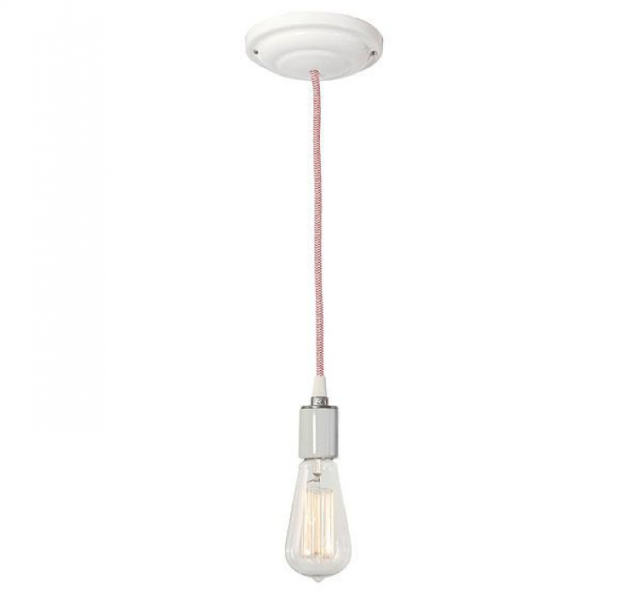

Some light fixtures enter a room politely. Others arrive like they own the lease, know where the good coffee mugs are, and have already adjusted the thermostat. The Lewis Pendant from Schoolhouse Electric belongs to the first groupbut with the confidence of the second. It is simple, compact, unfussy, and charming in the way that a well-made wooden spoon or a perfect white T-shirt is charming: it does not shout, but it gets invited everywhere.
Originally featured by design editors as a classic Schoolhouse Electric pendant, the Lewis Pendant is remembered for its clean porcelain socket, straightforward silhouette, and playful cord options, including red cloth cord variations that gave the fixture a small but memorable wink. In a world where lighting can sometimes look like a spaceship, a sculpture, or a chandelier having an identity crisis, the Lewis Pendant proves that restraint can be excitingespecially when the details are right.
This article takes a closer look at the design appeal of Lewis Pendants at Schoolhouse Electric, why schoolhouse-style lighting still works in modern homes, how pendants influence the mood of a room, and where this type of fixture shines best. Think of it as a design guide with fewer showroom whispers and more real-life usefulness.
What Makes the Lewis Pendant So Appealing?
The Lewis Pendant is a lesson in how little a light fixture needs in order to feel complete. At its core, the design is built around a porcelain socket, a visible bulb, a ceiling canopy, and a fabric-wrapped cord. That is it. No crystal droplets. No theatrical arms. No shade large enough to make your kitchen island look like it is wearing a hat.
And yet, the simplicity is exactly the point. The Lewis Pendant draws attention to material, proportion, and color. The porcelain socket gives it a clean, slightly vintage feeling. The cord becomes a design feature instead of something to hide. The bulb, especially when chosen thoughtfully, becomes part of the visual composition. The result is a pendant light that feels practical, stylish, and a little nostalgic without pretending your home is a museum of 1930s municipal buildings.
A Small Fixture With a Big Design Vocabulary
One reason Schoolhouse lighting has stayed so appealing is that it understands the language of American utility design. The company built its reputation around heritage-inspired lighting, old molds, honest materials, and a belief that everyday objects should be both useful and beautiful. The Lewis Pendant fits that design vocabulary neatly: it looks familiar, but not dated; minimal, but not cold; decorative, but not fussy.
It also offers a useful reminder for homeowners: not every design decision needs to be dramatic. Sometimes the smartest choice is the quiet one. A simple pendant over a sink, reading nook, bedside table, or breakfast corner can do more for a room than a giant statement fixture that makes everyone duck.
Schoolhouse Electric and the Beauty of Modern Heirloom Lighting
Schoolhouse Electric, now commonly known as Schoolhouse, was founded in Portland, Oregon, with a mission centered on thoughtful design, enduring materials, and pieces meant to become “modern heirlooms.” That phrase may sound lofty, but in lighting it makes perfect sense. A good fixture is not like a throw pillow you replace because the internet decided moss green is “over.” It is attached to your ceiling. It has responsibilities.
Schoolhouse built its identity around classic American formspendants, sconces, ceiling lights, hardware, and home goods that feel both historic and fresh. Its lighting collections often borrow from early twentieth-century utility design, factory lighting, schoolhouse globes, and domestic fixtures that were originally made to be durable, readable, and easy to live with.
The Lewis Pendant reflects that same approach. It is not a trendy object trying to win a social media contest. It is a well-proportioned pendant that can make a small space feel intentional. That is a surprisingly rare superpower.
Why Pendant Lighting Matters More Than People Think
Lighting is one of the fastest ways to change the personality of a room. Paint color matters. Furniture matters. Art matters. But lighting decides whether all of those things look warm and inviting or slightly suspicious, like a cafeteria after closing time.
Pendant lights are especially important because they operate at eye level in a visual sense. They hang down into the room, marking a zone and creating focus. Over a kitchen island, they say, “This is where pancakes happen.” Above a dining table, they say, “Please linger.” In a hallway, they say, “Yes, someone thought about this space.” A pendant is not just a light source; it is punctuation.
The Lewis Pendant as Design Punctuation
The Lewis Pendant works like a comma rather than an exclamation point. It breaks up a space gently. Its slim profile makes it ideal for smaller homes, apartments, cottages, bungalows, and rooms where a heavier fixture would feel bossy. Because it does not visually crowd the ceiling, it can also help preserve openness in narrow or low-ceilinged areas.
That makes it a strong choice for transitional spaces: above a small kitchen sink, beside a bed, near a desk, over a compact dining table, or in multiples along a corridor. When grouped, Lewis-style pendants can create rhythm without overwhelming the architecture.
The Power of the Porcelain Socket
The porcelain socket is one of the Lewis Pendant’s defining features. Porcelain has an old-fashioned honesty to it. It feels clean, durable, and slightly utilitarian. Unlike plastic, it carries visual weight. Unlike polished metal, it does not demand constant attention. It simply sits there looking competent, which is more than one can say for many decorative objects.
In white, the socket feels crisp and classic. It works beautifully with white walls, subway tile, pale cabinetry, and airy interiors. In black, the fixture becomes more graphic. It can add contrast to a light room or blend into darker, moodier palettes. Both options are versatile, but they create different moods. White whispers; black edits.
Why the Cord Matters
One of the most delightful details associated with the Lewis Pendant is the cloth cord. In many light fixtures, the cord is treated like an embarrassing secret. Here, it becomes part of the charm. A twisted cloth cord gives texture and a handmade quality to the fixture, while color introduces personality.
The red cord options that drew design attention are especially clever. Red is a small color with a big personality. Used sparingly, it can energize a room without turning it into a diner booth. A red cord on a simple pendant adds just enough surprise to make the fixture memorable. It is the design equivalent of wearing excellent socks with a navy suit.
How to Use a Colored Cord Without Regret
A colored cord works best when it has at least one friend in the room. That friend could be a red stripe in a rug, a piece of art, a kitchen towel, a book spine, a chair cushion, or even a tiny enamel knob. The goal is not to match everything perfectly. In fact, perfect matching can make a room feel nervous. The goal is to create a visual echo.
If your room is mostly neutral, a red cord can become the tiny spark that keeps the palette from falling asleep. If your room is already colorful, choose a cord that supports the palette rather than competing with it. Lighting should flirt with the room, not start a wrestling match.
Where Lewis Pendants Work Best
Because the Lewis Pendant is compact and visually light, it can fit in many places where larger fixtures would feel awkward. It is especially well suited for rooms that need focused illumination and a touch of character.
1. Over a Kitchen Sink
A single pendant over a kitchen sink is one of the most satisfying uses for a Lewis-style fixture. It provides task lighting where you actually need itwashing produce, rinsing dishes, pretending not to see the pan you “left to soak” three hours agoand it adds a finished look to the window or wall area above the sink.
2. Above a Breakfast Nook
In a breakfast nook, the Lewis Pendant can bring warmth without dominating the space. Pair it with a round table, a built-in bench, or a café-style setup, and the fixture helps define the corner as its own cozy destination. Add a warm bulb and suddenly cereal feels like a lifestyle choice.
3. Beside the Bed
Using pendants as bedside lights is a smart way to free up nightstand space. A pair of Lewis-style pendants can frame a bed beautifully while keeping the look clean. This is especially useful in small bedrooms where every square inch of tabletop real estate is already being contested by books, water glasses, chargers, and one mysterious receipt.
4. In a Hallway or Entry
Hallways are often neglected, but they are perfect for simple pendant lighting. A row of modest pendants can create rhythm and guide the eye through the space. The Lewis Pendant’s understated shape makes it suitable for this kind of repetition. It adds charm without making the hallway feel like a hotel corridor trying too hard.
5. In a Home Office
A pendant near a desk can make a work zone feel more intentional. The Lewis Pendant’s utilitarian roots work especially well with wood desks, metal shelving, pegboards, vintage chairs, and simple office setups. It offers the right balance of function and personalitya rare achievement in the land of home office décor, where many objects seem designed mainly to hold pens nobody uses.
Choosing the Right Bulb
With exposed-socket pendants, the bulb matters. A lot. The wrong bulb can make a beautiful fixture look harsh, awkward, or like it escaped from a hardware aisle. The right bulb completes the design.
For a Lewis-style pendant, a warm LED bulb is usually the safest choice. Look for a warm color temperature, often around 2700K, if you want a cozy residential glow. Clear bulbs can look crisp and vintage-inspired, while frosted bulbs soften glare. If the pendant hangs at eye level or near a seating area, a frosted or low-glare bulb may be more comfortable.
Dimmability is also worth considering. A pendant that feels perfect while chopping onions may feel too bright during dinner. A dimmer lets the room shift moods without requiring you to unscrew bulbs like a haunted-house caretaker.
How to Style Lewis Pendants With Different Interior Looks
The best thing about a simple pendant is its flexibility. The Lewis Pendant can adapt to several popular home styles without losing its identity.
Modern Farmhouse
In a modern farmhouse kitchen, a Lewis-style pendant adds authenticity without leaning into cliché. Pair a white porcelain socket with wood shelves, soapstone counters, brass hardware, and simple ceramics. The look feels warm and honest rather than overly themed.
Industrial Minimalist
For an industrial minimalist space, choose black porcelain, a dark cord, and a clear bulb. Combine it with concrete, steel, black-framed windows, or matte finishes. The pendant will feel graphic and useful, not decorative for decoration’s sake.
Classic Bungalow
In a bungalow or early twentieth-century home, the Lewis Pendant feels right at home. It respects older architecture without turning the room into a stage set. A cloth cord, warm bulb, and simple canopy can complement original wood trim, built-ins, and vintage tile.
Scandinavian-Inspired Spaces
In a Scandinavian-style interior, the white porcelain version works beautifully. Use it with pale woods, linen textiles, white walls, and functional furniture. Add a colored cord if the space needs a tiny burst of life. Even minimalism deserves a snack.
Installation and Scale: What to Think About Before Buying
Before installing any pendant, scale and height matter. A fixture that looks graceful online can feel strange if it hangs too low, too high, or in the wrong proportion to the surface below it. For kitchen islands and dining areas, pendants usually work best when they provide clear task lighting without blocking sightlines. Over a bedside table or reading corner, the height should feel comfortable when seated or lying down.
Because Lewis-style pendants are visually compact, they can be used alone in small spaces or in groups for a stronger effect. Three pendants over a long counter can create a balanced rhythm. Two pendants beside a bed can feel architectural. A single pendant in a pantry, mudroom, or powder room can make a small space feel surprisingly considered.
Always work with a qualified electrician for hardwired lighting, especially when changing fixture locations, adding dimmers, or dealing with older wiring. Beautiful lighting is wonderful; electrical improvisation is not a personality trait.
Why Simple Lighting Ages Well
Design trends move quickly. One year everyone wants oversized lanterns; the next year the internet decides mushroom lamps are the emotional support objects of civilization. But simple lighting tends to age more gracefully because it is based on proportion, usefulness, and materials rather than novelty.
The Lewis Pendant belongs to that category of design. It does not depend on a complicated silhouette or a trendy finish. It depends on the pleasing relationship between socket, cord, bulb, and ceiling. That is why it can work in kitchens, bedrooms, offices, and hallways without looking like it was chosen during a very specific online shopping fever.
Lewis Pendants and the Return of Human-Scale Design
One of the reasons fixtures like the Lewis Pendant continue to feel relevant is that people are craving human-scale design. After years of oversized furniture, open-plan echo chambers, and lighting fixtures large enough to have their own weather systems, smaller, more thoughtful objects feel refreshing.
A Lewis-style pendant does not try to be the biggest thing in the room. It asks a better question: What does this space actually need? Sometimes the answer is focused light, honest material, and one memorable detail. That is design maturity. It is also easier to dust.
of Real-Life Experience: Living With Lewis-Style Pendant Lighting
In real homes, pendant lighting has to do more than look good in a close-up photo. It has to survive breakfast, homework, late-night tea, awkward dinner conversations, and the occasional moment when someone waves a broom too enthusiastically. That is where the appeal of a Lewis-style pendant becomes clear. It is not fragile in spirit. It feels like a fixture designed for actual rooms, not just perfectly staged ones where nobody owns mail.
One of the most enjoyable experiences with a simple porcelain pendant is how quickly it can make a neglected corner feel intentional. A small breakfast nook, for example, may start as “that place where we drop grocery bags.” Add a modest pendant with a warm bulb, and suddenly it becomes a spot for coffee, reading, or a quiet bowl of soup. The light creates a boundary. It tells the brain, “This is a place.” That may sound dramatic, but good lighting often works in exactly that quiet way.
In kitchens, Lewis-style pendants are especially practical because they offer focused light without visual clutter. Over a sink, the glow makes evening cleanup less gloomy. Over a prep counter, it helps with real tasks like slicing vegetables, reading labels, or checking whether the avocado is ripe or merely pretending. The fixture does not need to be large to be useful. In fact, its small profile is part of the advantage; it gives light without stealing attention from tile, cabinetry, windows, or open shelves.
Another real-life benefit is flexibility. A pendant with a visible cord and simple socket can shift mood depending on the bulb and surrounding décor. Put it in a white kitchen with a warm bulb and it feels clean and classic. Add a colored cloth cord and it becomes playful. Install it in a darker office with a black socket and it feels more tailored. The same design language can speak several dialects, which is helpful if your taste changes faster than your renovation budget.
There is also something emotionally satisfying about lighting that looks understandable. Some fixtures are beautiful but mysterious, as if they require a design degree and a small prayer to change the bulb. A Lewis-style pendant is refreshingly direct. You can see what it is doing. Socket, cord, bulb, light. That clarity makes a room feel less precious and more livable.
For renters or homeowners working with smaller spaces, this kind of pendant can also be a lesson in restraint. Instead of adding more décor, you improve one permanent-feeling detail. The room becomes warmer, sharper, and more finished, but not crowded. It is the difference between accessorizing thoughtfully and panic-buying three baskets because a corner looked “sad.”
The best experience, though, may be the way a simple pendant blends into daily life. At first, you notice it every time you walk into the room. Then it becomes part of the atmosphere. It makes mornings gentler, evenings warmer, and ordinary tasks slightly nicer. That is what good lighting should do. It should not demand applause. It should quietly improve the room until you cannot imagine the space without it.
Conclusion: A Small Pendant With Lasting Glow
The Lewis Pendant at Schoolhouse Electric represents the best kind of lighting design: simple, useful, adaptable, and quietly memorable. Its porcelain socket, cloth cord options, and compact silhouette prove that a fixture does not need to be oversized or ornate to make a room feel finished. Whether used above a kitchen sink, beside a bed, in a hallway, or over a cozy breakfast nook, a Lewis-style pendant brings warmth and intention to everyday spaces.
In a design world often obsessed with the next big statement, the Lewis Pendant makes a persuasive case for the small, well-made detail. It is lighting with manners, personality, and just enough vintage charm to make a room feel collected rather than decorated by algorithm. And if you choose a red cord? Congratulations. Your ceiling has developed a sense of humor.