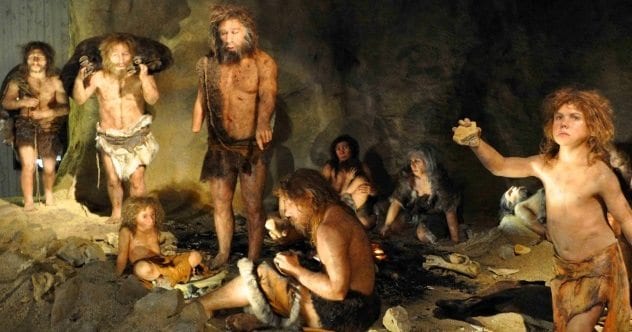

For a long time, Neanderthals had terrible public relations. They were painted as hairy, hunched, grunting cave neighbors who probably lost arguments with rocks. Modern science has been steadily correcting that cartoon. Neanderthals were not failed humans, and they were not knuckle-dragging extras in the background of our evolutionary movie. They were our close relatives, skilled survivors, toolmakers, hunters, caregivers, and possibly artists.
The more researchers study Neanderthal fossils, DNA, tools, hearths, pigments, teeth, and burial sites, the more familiar they look. Not identical to Homo sapiens, of course, but close enough to make us uncomfortable in the best possible way. They shared a common ancestor with modern humans, interbred with our species, and left genetic traces in many people alive today. In other words, the Neanderthal story is not just ancient history. It is part of the human story.
Below are ten remarkable traits Neanderthals had in common with modern humans, from family bonds and food habits to creativity, communication, and the very human habit of trying to make life a little warmer, safer, and less toothache-filled.
1. Neanderthals Shared Deep Family Roots With Modern Humans
Neanderthals and modern humans were separate human groups, but they were extremely close relatives. Both belonged to the broader human family tree, and both descended from earlier populations that lived hundreds of thousands of years ago. Neanderthals mainly occupied Europe and parts of western and central Asia, while early modern humans evolved in Africa before spreading widely across the globe.
The family connection is not only visible in bones; it is written in DNA. Genetic studies show that many people today, especially those with ancestry outside sub-Saharan Africa, carry a small percentage of Neanderthal DNA. That genetic inheritance is a powerful reminder that ancient human groups did not live in perfectly separate boxes. They met, interacted, and sometimes had children together.
This shared ancestry matters because it changes the question from “Were Neanderthals like us?” to “How much of us was already present in them?” The answer, increasingly, is: quite a lot.
2. They Had Large, Complex Brains
Neanderthals had large brains, often comparable in size to those of modern humans. Brain size alone does not automatically equal intelligenceotherwise elephants would be writing tax softwarebut it does suggest that Neanderthals had the neurological equipment for complex behavior.
Their brain shape differed from ours. Modern humans tend to have a more rounded skull, while Neanderthals had longer, lower skulls with strong brow ridges and robust faces. Still, the evidence of their behavior shows planning, memory, skill learning, cooperation, and adaptation. They made sophisticated tools, hunted dangerous animals, used fire, and survived harsh Ice Age environments.
In plain English, Neanderthals were not wandering around waiting for evolution to invent cleverness. They were already using it every day. Their intelligence may not have been identical to modern human cognition, but it was clearly advanced enough to solve real survival problems in difficult landscapes.
3. Neanderthals Were Skilled Toolmakers
One of the strongest similarities between Neanderthals and modern humans is technology. Neanderthals made and used stone tools, including carefully shaped flakes, scrapers, points, and hand tools associated with the Middle Paleolithic. These tools were not random sharp rocks picked up because they looked useful. They required planning, material selection, technique, and practice.
Some Neanderthal tools were designed for cutting meat, scraping hides, shaping wood, and processing plants. Others were attached to handles with adhesives such as birch tar, creating composite tools. That is a big deal. A composite tool is not just one object; it is a system. Stone, wood, adhesive, and hand skill all have to work together.
Modern humans still do this. A kitchen knife, a smartphone, a fishing rod, and a power drill are all composite tools built from parts. Neanderthals did not have Wi-Fi, which may have been healthier for their attention spans, but they understood the same basic principle: combine materials to make life easier.
4. They Used Fire for Warmth, Cooking, and Survival
Fire is one of the great human technologies, and Neanderthals knew its value. Archaeological evidence shows that they used hearths, controlled fire in many settings, and relied on heat for warmth, protection, cooking, and tool production. In cold Ice Age environments, fire was not a luxury. It was survival with sparks.
Cooking may have helped Neanderthals digest food more easily and safely. Fire also created a social center. A hearth is more than a heat source; it is a gathering place. Around fire, groups could repair tools, share food, watch children, treat injuries, and probably exchange information.
Picture a Neanderthal group gathered around a fire after a difficult hunt. Someone sharpens a stone flake. Someone else tends meat or plants near the heat. A child watches and learns. That scene may feel ancient, but the emotional structure is familiar. We still gather in kitchens, around campfires, and near grills, pretending we are “just cooking” when we are really bonding.
5. They Hunted Cooperatively and Strategically
Neanderthals were capable hunters. They pursued large animals such as deer, wild horses, bison, and other Ice Age game. Hunting animals of that size with close-range weapons required courage, teamwork, knowledge of animal behavior, and probably a very good reason not to oversleep.
Fossil injuries suggest Neanderthal life was physically demanding. Their bones often show trauma, which may reflect close-contact hunting and rugged environments. To survive, they likely needed coordinated group strategies: tracking, ambush, communication, food sharing, and protection from predators.
Modern humans also built survival around cooperation. One person can chase dinner; a group can plan it, corner it, carry it, cook it, and make sure children and older members eat too. Neanderthal hunting was not mindless violence. It was organized risk management with stone-tipped consequences.
6. Neanderthals Ate Varied Diets
The old stereotype says Neanderthals ate nothing but giant slabs of meat. Meat was certainly important in many regions, especially cold environments where large animals were abundant. But research from dental calculus, plant microfossils, charred food remains, and other archaeological evidence shows a more flexible menu.
Neanderthals consumed plants, nuts, seeds, tubers, mushrooms, and possibly cooked grains or legumes depending on location and season. Coastal groups may have eaten shellfish and marine foods. Their diet changed with the environment, which is exactly what modern humans do. People in Alaska, Arizona, Maine, and Florida do not eat the same traditional foods because landscapes hand out different grocery lists.
Some evidence also suggests Neanderthals used plants for medicinal purposes. That does not mean they had pharmacies with loyalty cards, but it does show practical knowledge of the natural world. Like modern humans, they learned from experience, passed down useful information, and adapted meals to survival needs.
7. They Cared for the Sick and Injured
One of the most moving similarities between Neanderthals and modern humans is caregiving. Several Neanderthal skeletons show serious injuries or health conditions that individuals survived for long periods. Survival after severe injury often implies help from others: food, protection, rest, and social support.
This matters because compassion is not preserved like a stone tool. Archaeologists cannot dig up kindness directly. Instead, they infer it from healed bones, long-term survival, and evidence that vulnerable individuals were not immediately abandoned. The picture that emerges is surprisingly humane.
Modern humans often define ourselves by empathy and care. We bring soup to sick friends, help injured relatives, and complain loudly about hospital parking. Neanderthals may not have had hospitals, but they appear to have understood that group members mattered even when they were hurt, old, or unable to contribute at full strength.
8. They May Have Communicated With Speech-Like Abilities
No one can record a Neanderthal conversation, which is unfortunate because the podcast potential would be enormous. However, anatomical and genetic evidence suggests Neanderthals had some capacity for complex communication. Studies of hearing ability, vocal anatomy, and genes associated with speech have raised the possibility that they could produce and perceive sounds similar to human speech.
Whether Neanderthal language was as complex as modern language remains debated. They may not have told long mythic stories, negotiated office politics, or argued about movie endings. Still, their daily life would have required communication. Coordinated hunting, toolmaking instruction, childcare, warnings, and social relationships all benefit from shared signals and possibly spoken language.
Modern humans are language machines. We explain, gossip, teach, sing, persuade, and occasionally send emails that should have been two sentences shorter. Neanderthals likely had their own communication system suited to their world, and it may have been richer than earlier generations assumed.
9. Neanderthals Showed Signs of Symbolic Thinking
Symbolic thought is one of the most fascinating areas of Neanderthal research. Evidence from pigments, possible ornaments, engraved objects, and debated cave art suggests that Neanderthals may have used symbols or decoration. Some sites have yielded shells, mineral pigments, and markings that point toward self-expression or social meaning.
Symbolism is important because it goes beyond basic survival. A scraper cuts. A spear kills. But pigment, ornaments, and marks can say something: “This means something to us,” “This belongs to our group,” or “I am not just practical; I have style.”
Modern humans use symbols constantly. Wedding rings, flags, tattoos, logos, religious objects, uniforms, and emojis all carry meaning. If Neanderthals used pigments or ornaments in symbolic ways, they were participating in a deeply human habit: turning objects into messages.
10. They May Have Buried Their Dead and Remembered Their People
Burial practices among Neanderthals remain debated in some cases, but several sites suggest that they may have deliberately placed the dead in pits or protected areas. Even when interpretations are cautious, the evidence has encouraged serious discussion about Neanderthal attitudes toward death.
Modern humans do not simply dispose of the dead. We mourn, remember, mark graves, tell stories, keep photographs, and visit places connected to people we have lost. If Neanderthals intentionally buried some of their dead, it suggests emotional and social depth. It may not prove religion or ritual in the modern sense, but it points to recognition, memory, and care.
That possibility is profound. A Neanderthal burial is not just an archaeological feature. It is a moment where ancient people may have paused and acknowledged that a life mattered. Across tens of thousands of years, that feels startlingly close.
Why These Similarities Matter
Neanderthals challenge our ego. For generations, modern humans liked to imagine a clear wall between “us” and “them.” We were creative; they were practical. We were emotional; they were mechanical. We had culture; they had survival. But science keeps taking bricks out of that wall.
The better view is not that Neanderthals were exactly the same as modern humans. They were not. Their bodies, skulls, population patterns, and cultural traditions differed from ours. But difference does not mean inferiority. Neanderthals were another way of being human: stockier, cold-adapted, resilient, intelligent, and socially capable.
Their extinction around 40,000 years ago was probably not caused by one simple failure. Climate change, small populations, competition, interbreeding, disease, and demographic pressure may all have played roles. In some sense, Neanderthals disappeared as a distinct population, but they did not vanish completely. Part of them survived in modern human genomes and in our growing understanding of what “human” can mean.
Experiences and Reflections: Meeting Neanderthals Through Modern Eyes
Learning about Neanderthals can feel strangely personal. At first, they seem distantfigures from museum glass, textbook diagrams, and cave reconstructions with dramatic lighting. But the more details you learn, the less they feel like “ancient others.” They begin to feel like relatives you never met, the kind who would have been excellent at camping and terrible at replying to text messages.
One of the most powerful experiences related to this topic is standing in front of a Neanderthal skull replica. The brow ridge is strong. The face projects forward. The skull looks different from ours, yes, but not alien. It carries the unmistakable outline of a human life. This was not a monster. This was someone who breathed cold air, felt hunger, recognized familiar faces, and probably knew fear, comfort, frustration, and relief.
Another striking experience comes from looking at stone tools. At first glance, they may seem simple. Then you imagine making one. You would need to choose the right stone, strike it at the right angle, control the force, shape the edge, and know what task it would perform. Suddenly that “simple” flake looks like a prehistoric engineering decision. Most modern people struggle to open plastic packaging without scissors. A Neanderthal could turn raw stone into survival equipment.
The fire evidence creates an even more familiar connection. Anyone who has sat around a campfire knows how quickly people gather near heat and light. Conversations slow down. Faces glow. Food tastes better. The dark feels less threatening. Neanderthals lived in a harsher version of that same experience. Their hearths were not decorative weekend fun; they were centers of safety, work, food, warmth, and social life.
The caregiving evidence may be the most emotional. When researchers describe individuals who survived serious injury, it becomes difficult to see Neanderthals as merely tough Ice Age hunters. Toughness was part of their world, but tenderness may have been too. Someone had to share food. Someone had to wait. Someone had to protect the injured. That kind of care feels deeply modern because it is deeply human.
Even the debate around Neanderthal art and symbolism is meaningful. Whether every claimed example holds up or not, the possibility itself changes how we imagine them. A hand mark, a pigment stain, a shell ornament, or an engraved line invites us to think about identity. Maybe Neanderthals decorated themselves. Maybe they marked spaces. Maybe they used objects to communicate status, belonging, memory, or beauty. Those possibilities make them feel less like survival machines and more like people with inner worlds.
In the end, studying Neanderthals is like looking into a cracked mirror. The reflection is not exactly us, but it is close enough to make us pause. Their story reminds us that humanity was never a single straight road. It was a branching path filled with experiments, encounters, losses, and inheritances. Neanderthals were one of those branches, and thanks to archaeology and genetics, we can still see their outline in our own.
Conclusion
Neanderthals were not the dull, brutish caricatures that once haunted popular imagination. They were intelligent, adaptable, social, and technologically skilled ancient humans. They made tools, used fire, hunted cooperatively, ate varied diets, cared for injured group members, communicated, and may have practiced symbolic behaviors and burial traditions. Most importantly, they were close enough to modern humans to share ancestry, environments, and even DNA.
The top traits Neanderthals have in common with modern humans reveal a bigger truth: being human is not defined by one species alone. It is shaped by connection, creativity, cooperation, memory, and survival. Neanderthals remind us that our family story is older, stranger, and far more interesting than a simple “us versus them” tale. They were not failed versions of us. They were remarkable relatives who lived their own human storyand left traces of it behind.