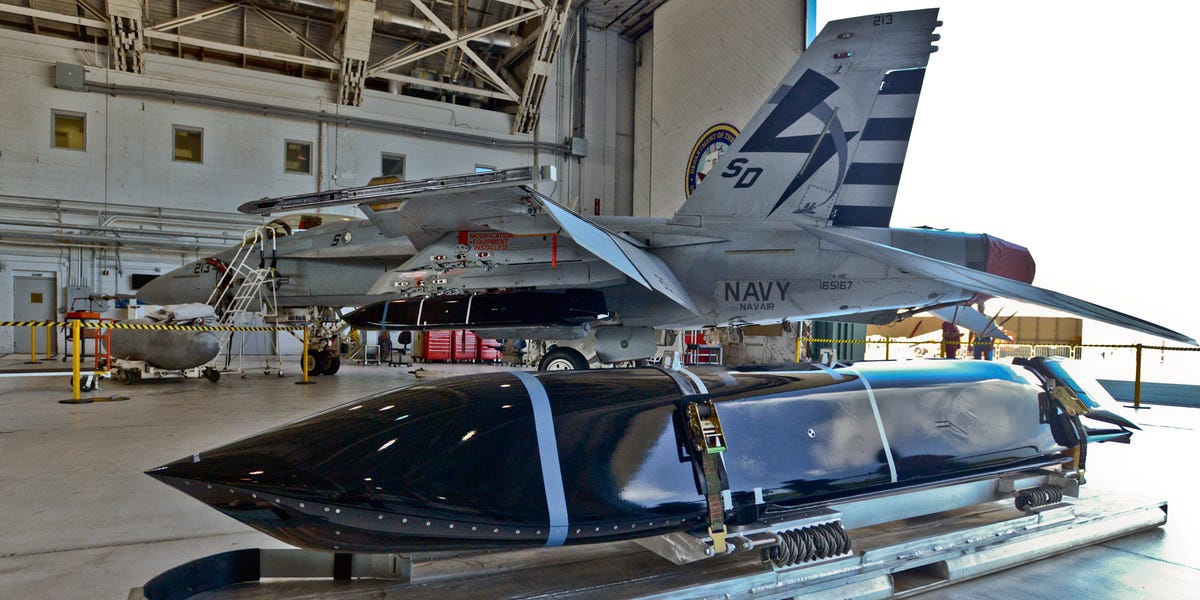

Every few years, the Pentagon unveils a weapon name that sounds like it belongs in a sci-fi trailer. HALO is one of those names. Short for Hypersonic Air-Launched Offensive Anti-Surface Warfare, HALO was supposed to become the U.S. Navy’s next big answer to a brutally modern problem: how do you sink hostile ships from farther away, faster, and with less time for the enemy to react?
On paper, the idea was deliciously ambitious. Take the Navy’s existing anti-ship playbook, turn the speed knob way up, stretch the range, make it carrier-compatible, and create a weapon that could threaten enemy surface fleets in heavily contested waters. In plain English: build a missile that could make rival warships very uncomfortable, very quickly.
But HALO’s story is not just about speed. It is about naval strategy, engineering reality, acquisition headaches, budget pressure, and the eternal military truth that a weapon is only useful if you can actually afford to field it in meaningful numbers. So yes, HALO matters. But not only because it was supposed to be fast. It matters because it reveals what the Navy really wants from future sea combat: longer reach, quicker strike options, more survivability, and a way to fight inside dangerous anti-access and area-denial environments without strolling into the missile equivalent of a hornet’s nest.
There is also one important twist. The title says the Navy is building HALO because that was the program’s original mission and public sales pitch. Yet the real story is more complicated. HALO became a symbol of where naval strike warfare is headed, but it also became a case study in how hard it is to turn a dazzling concept into a fielded weapon. In other words, this is a story about the future of naval warfare and the brick wall of reality meeting it halfway.
What HALO Was Supposed to Be
HALO was designed as the next step after the Navy’s Offensive Anti-Surface Warfare program’s first increment, which centered on the Long Range Anti-Ship Missile, better known as LRASM. LRASM already gave the U.S. military a stealthy, long-range anti-ship missile with far more sophistication than the old Harpoon family. But the Navy wanted more.
And in Pentagon language, “more” rarely means “slightly better cup holder.” It means a weapon that can survive longer, fly faster, hit harder, and keep operators farther away from trouble. HALO was envisioned as the more advanced successor: a higher-speed, longer-range, air-launched anti-ship weapon designed initially for carrier aircraft, especially the F/A-18E/F Super Hornet.
The “carrier-suitable” part is important. This was not some giant missile intended for a lumbering bomber with acres of wing space. The Navy wanted a weapon that could live in the grumpy, cramped, steel-on-steel world of carrier aviation. That means it had to survive deck handling, fit the logistics chain, work with catapult launches and arrested landings, and still deliver major anti-surface punch. Designing something that fast is hard. Designing something that fast and small enough for carrier operations is the engineering version of trying to build a race car that also fits in a studio apartment.
Why the Navy Wanted HALO So Badly
The Navy’s interest in HALO did not come out of nowhere. It came out of the strategic environment, especially the growing importance of long-range maritime warfare in the Indo-Pacific. Potential adversaries have invested heavily in anti-access and area-denial networks, often called A2/AD. That alphabet soup basically means layered systems of missiles, sensors, aircraft, ships, and defenses designed to keep U.S. forces at a distance or punish them if they come too close.
For decades, American naval power often operated with the assumption that carriers and escorts could push into a theater, establish dominance, and launch strikes from positions of relative confidence. That confidence has been shrinking. Today, a carrier strike group has to think more carefully about standoff distance, survivability, magazine depth, and how quickly it can destroy enemy naval targets before those targets contribute to a larger missile swarm or sensor network.
HALO was part of the answer to that problem. A faster anti-ship missile does several useful things. It reduces the time between launch and impact. It compresses enemy decision-making. It complicates defensive intercept geometry. It gives hostile ships less time to maneuver, jam, or escape. And it potentially reduces the reliance on continuous in-flight target updates, which are useful but can be vulnerable in contested electromagnetic environments.
That last point matters more than most headlines acknowledge. Naval warfare is no longer just about whether a missile can physically reach a ship. It is about whether the launch platform can still find, classify, track, and strike that ship in a chaotic, jammed, deceptive battlespace. The faster a missile closes the distance, the less chance there is for the target picture to go stale. In a fight against a mobile fleet, stale targeting data is a fancy way to miss something very expensive.
Was HALO Really Hypersonic?
Now we get to the part where the story develops a raised eyebrow.
Although HALO was publicly branded as a hypersonic missile, Navy officials later suggested the term might be a bit loose. Public comments indicated the weapon’s peak speed could land in the high Mach 4-plus range, which is extremely fast but does not automatically clear the classic Mach 5 threshold often used to define true hypersonic flight.
That does not make HALO unimpressive. High-supersonic speed is still a nightmare for ship defenses. A weapon moving in that regime still dramatically shrinks reaction time and increases interception difficulty. But it does mean the HALO label came with a little marketing sparkle. In defense programs, that is not unusual. Sometimes a weapon is sold as the revolutionary thing of tomorrow while engineers are quietly muttering, “Let’s first see if it fits under the wing and survives testing.”
The larger point is that the Navy did not really care about winning a dictionary argument. It cared about operational effect. If a missile could fly fast enough, far enough, and survive well enough to improve anti-ship warfare in the real world, the exact speed category mattered less than the combat value it delivered. The trouble is that operational value still has to survive the budget office, and the budget office is famously immune to cool acronyms.
Why Building HALO Was So Difficult
1. Carrier aircraft impose brutal size limits
The Air Force can pursue air-launched hypersonic concepts from large aircraft that have more room, more weight margin, and fewer deck-handling constraints. The Navy does not have that luxury for a carrier-launched anti-ship missile. A weapon intended for the Super Hornet has to balance speed, fuel, range, seeker systems, warhead, aerodynamics, and structural strength inside a far tighter envelope.
That trade space gets ugly fast. Want more range? You need more fuel. Want more speed? You may need a different propulsion approach and more thermal management. Want survivability and advanced guidance? Add sensors, processing, and software. Want a meaningful warhead for anti-ship work? Add weight. Soon the missile turns from “carrier-suitable” into “carrier-suitable if the laws of physics agree to be flexible today.”
2. Propulsion is not just hard; it is fussy
HALO’s competing designs were widely believed to draw from advanced ramjet or scramjet-related work and from lessons learned in other U.S. hypersonic efforts. That makes sense in theory. In practice, propulsion for very-high-speed cruise missiles is one of the nastiest corners of aerospace engineering.
You are dealing with extreme heat, tight tolerances, difficult materials, combustion stability, and a flight profile that leaves little room for friendly mistakes. It is one thing to make a prototype behave during a test campaign. It is another thing entirely to field a weapon that can be built repeatedly, handled safely at sea, maintained by fleet personnel, integrated with aircraft software, and trusted under operational conditions.
3. Maritime targeting is a moving problem
Hitting a fixed target is hard enough. Hitting a moving ship at long range in a contested environment is much harder. Sensors, network links, targeting quality, and the missile’s own seeker all have to work in harmony. A fast missile helps, but only if the kill chain feeding it is fast and resilient too.
The Navy was not chasing speed for bragging rights. It was chasing a better solution to the moving-target problem. Still, a missile cannot magically fix the rest of the architecture. If maritime surveillance, targeting updates, electronic warfare protection, and command-and-control pathways remain fragile, the missile’s headline speed does not guarantee headline success.
4. Acquisition risk kept piling up
Public reviews of U.S. hypersonic programs repeatedly highlighted a familiar set of problems: limited historical cost data, aggressive schedules, immature technologies, and the challenge of balancing speed to fielding with technical realism. HALO was no exception.
Even before the program’s fate turned sour, oversight reporting flagged concerns about how offensive hypersonic efforts were being developed. In HALO’s case, the Navy was pursuing a competitive approach early on, using digital engineering tools and seeking to move quickly. That sounds smart, and much of it was. But speed in acquisition can be a double-edged sword. Go too slow, and the threat passes you by. Go too fast, and you discover the bill only after you have already bought the PowerPoint slides.
There were also questions about user feedback and development practices across multiple hypersonic efforts. That might sound bureaucratic, but it is not trivial. Programs that do not absorb real operator input early enough can drift toward exquisite technical solutions that look wonderful in a briefing and awkward in actual service. Missiles do not just need to fly; they need to fit doctrine, handling, planning, and sustainment.
The Big Reversal: Why HALO Ran Into Trouble
For a while, HALO looked like a serious priority. Funding plans rose. Schedules pointed toward an early operational capability late in the decade. Public messaging stressed urgency. Then the brakes came on.
Later disclosures showed the Navy concluded the projected cost of HALO no longer aligned with the available budget and the program’s likely path to fielding. Reporting tied the setback to affordability pressures, industrial-base concerns, and broader budget realities. In plain English, HALO ran into the most dangerous weapon in Washington: arithmetic.
This matters because it changes how the story should be understood. HALO was not simply a grand futuristic weapon that the Navy continued building without interruption. It became a program that embodied a real operational need but could not survive the combination of technical ambition, cost growth, and fiscal pressure. The Navy effectively stepped back before it finalized the design or delivered an operational missile.
That is disappointing if you were rooting for a sleek, carrier-launched sea killer to arrive before the decade closed out. But it is also a useful reality check. Modern military competition is not only about inventing the most advanced thing. It is about fielding enough useful capability, at the right price, in time to matter. A missile that exists mainly in future-tense PowerPoint can still lose to a less glamorous weapon that is affordable, available, and already on the ramp.
So What Does the Navy Lean On Instead?
With HALO stumbling, the Navy still needs credible long-range anti-ship firepower. That means the focus shifts back to systems that are already fielded, being improved, or closer to operational maturity.
LRASM is the obvious anchor. It is subsonic, yes, but it is stealthy, long-ranged, and far less speculative than HALO. It also fits into the Navy’s current carrier air wing and broader strike ecosystem more comfortably. Improvements to LRASM and related targeting capabilities may not generate the same flashy headlines as a hypersonic missile, but they may generate something the fleet likes even more: usable combat power.
Maritime Strike Tomahawk gives ships another anti-ship option at long range. Naval Strike Missile adds another useful layer for smaller surface combatants. The Navy has also shown interest in faster anti-ship options linked to the SM-6 family and in broader long-range fires modernization. Meanwhile, the Navy’s Conventional Prompt Strike effort continues on a separate path for ships and submarines, though that is a different kind of hypersonic capability aimed at a different mission set.
That is the less dramatic but more mature picture: not one silver-bullet missile solving everything, but a mix of stealthy subsonic weapons, upgraded ship-launched strike options, emerging high-speed concepts, and a constant race to improve sensing and targeting. Naval warfare is turning into a layered competition of kill chains, not a one-missile beauty contest.
What HALO Tells Us About the Future of Naval Warfare
Even if HALO never reached operational service, the program still tells us a great deal about where the Navy thinks the fight is going.
First, the Navy clearly wants more stand-off anti-ship reach. That is not a theory; it is a design priority. Second, it wants speed that shortens enemy reaction time. Third, it wants weapons that fit the reality of contested seas, where sensors are under attack, networks are jammed, and carriers may need to launch from farther away than in past wars.
But HALO also shows that affordability is now a combat factor. A missile can be technologically dazzling and still fail strategically if it costs too much, arrives too late, or cannot be built at scale. In a prolonged conflict, inventory matters. Production matters. Sustainment matters. A Navy that can afford hundreds of good missiles may be more dangerous than a Navy that can only afford a small handful of fantastic ones.
There is another lesson here too: the future of naval strike warfare probably belongs to the marriage of missiles, targeting architecture, and digital integration. The missile itself is only one piece of the puzzle. The side that best combines surveillance, resilient communications, mission planning, software updates, and manufacturable weapons will have the edge. HALO was an attempt to push the missile piece forward. Its rise and stumble show that pushing one piece alone is not enough.
Experiences and Lessons Around HALO: What This Story Feels Like in the Real World
Programs like HALO are often described in sterile language: milestones, contracts, acquisition pathways, budget lines, and capability gaps. But the experience around a program like this is much more human than that. If you look at HALO from different angles, you start to see why it captured attention even before it turned into a cautionary tale.
For naval aviators and carrier planners, the attraction is obvious. Imagine being part of a carrier air wing tasked with operating in a region dense with hostile ships, long-range missiles, surveillance assets, and layered defenses. The basic emotional appeal of a weapon like HALO is simple: more reach, more speed, more breathing room. A pilot does not need a doctoral seminar on propulsion to appreciate the value of launching farther away and giving an enemy ship less time to react. The experience of modern naval aviation is increasingly shaped by contested distance. HALO was attractive because it promised to make that distance work for the Navy instead of against it.
For acquisition professionals, however, the experience is much less cinematic and far more exhausting. A program like HALO means balancing operators who want capability quickly, engineers who know how ugly development can get, industry teams pitching solutions, oversight bodies asking whether assumptions are realistic, and budget officials quietly sharpening spreadsheets like swords. The tension is constant. Move faster, but reduce risk. Demand more capability, but hold down costs. Make it revolutionary, but make it work on a carrier. It is easy to mock Pentagon bureaucracy until you remember these people are trying to turn extreme performance goals into hardware that must survive salt, heat, stress, bureaucracy, politics, and physics all at once.
For strategists and war-gamers, HALO represented a deeper experience: the growing realization that sea control in the Pacific will depend on who can find, track, and attack high-value targets first and from farther away. In that context, HALO was not just a missile. It was a shorthand for the Navy’s anxiety about future range disadvantages and enemy missile salvos. It symbolized a desire to hit first without having to drive carriers too close to danger. That experience is less about one weapon and more about the pressure of strategic competition itself.
And for taxpayers, analysts, and defense watchers, HALO offers a familiar emotional cocktail: excitement, skepticism, and eventual frustration. Excitement because the concept sounded like a major leap in naval strike capability. Skepticism because hypersonic programs are expensive, technically complex, and often sold with more confidence than evidence. Frustration because even when a capability appears strategically sensible, that does not mean it can survive the journey from concept to fleet service. HALO ended up feeling like many ambitious defense programs do: important enough to matter, promising enough to attract attention, and difficult enough to reveal the limits of ambition.
That may be the most useful “experience” to take from the HALO story. It reminds us that defense modernization is not a straight line from idea to victory. It is a collision between threat urgency and practical constraints. Sometimes the concept survives. Sometimes it is reshaped into something more affordable. Sometimes it dies and its lessons are absorbed into the next effort with a new acronym and a fresh coat of optimism. HALO may not have become the fleet weapon many expected, but the experience surrounding it will almost certainly shape whatever the Navy tries next in long-range maritime strike.
Conclusion
HALO was supposed to be the Navy’s sleek new answer to the fast-closing future of naval combat: a long-range, high-speed anti-ship missile built for carrier aviation and intended to help U.S. forces fight in heavily defended maritime theaters. The concept made strategic sense. The engineering challenge was enormous. The costs eventually became too much.
That does not make HALO irrelevant. Quite the opposite. HALO matters because it exposed the Navy’s priorities with unusual clarity. The service wants more reach, faster effects, and better survivability against advanced naval threats. It also learned, yet again, that the road to those goals runs through funding realism, producibility, and disciplined development, not just impressive concept art and ambitious schedules.
In the end, HALO may be remembered less as the missile that transformed naval warfare and more as the program that revealed where naval warfare is heading next. The Navy still wants a weapon with HALO’s logic: long-range, survivable, hard to stop, and deadly against ships in contested waters. Whether that eventually arrives under the HALO name or another acronym that sounds like it was generated by a caffeinated admiral remains to be seen.
One thing is certain: the demand for a better ship-killing missile did not disappear just because one program hit the wall. The Navy still needs that edge. The question now is not whether the mission matters. It is what form the next answer will take.