
The 1980s gave us neon, shoulder pads, power ballads, action heroes who never reloaded, and some of the most gloriously questionable movies ever projected onto a screen. For every Back to the Future, Die Hard, or The Breakfast Club, there was a cinematic pothole waiting nearby with bad dialogue, rubbery effects, strange musical numbers, and the confidence of a raccoon stealing a whole pizza.
This list of the 35 worst ‘80s movies worth the boos they got is not just about low ratings. It is about reputation, Razzie attention, critical backlash, franchise damage, bad creative choices, and movies that turned “What were they thinking?” into a full-body experience. Some are boring. Some are bizarre. A few are so bad they became beloved by midnight-movie fans. But all of them earned a special place in the dusty VHS cabinet of shame.
Before anyone throws popcorn: “worst” is subjective. A bad movie can still be entertaining, nostalgic, or accidentally brilliant. In fact, several films below have cult followings today. Still, when critics, audiences, and history all start booing in harmony, it is probably time to listen.
Why the 1980s Produced So Many Beautiful Disasters
The ‘80s were a boom time for Hollywood franchises, sequels, star vehicles, music-driven movies, toy tie-ins, fantasy adventures, and high-concept comedies. Studios learned that a famous face, a recognizable brand, or a loud poster could sell tickets before anyone asked whether the script had survived breakfast.
That led to some truly strange results. Sequels were rushed. Special effects were ambitious but not always convincing. Product placement became loud enough to deserve its own billing. Action movies got bigger, comedies got broader, and musicals sometimes behaved like they had been assembled during a disco fever dream.
The Golden Raspberry Awards, better known as the Razzies, also emerged during this era as a satirical counterweight to Oscar glamour. Whether you love or hate the Razzies, they helped preserve the reputation of many infamous ‘80s flops. In a way, they gave bad movies their own red carpetjust with more side-eye.
35 Worst ‘80s Movies Worth The Boos They Got
-
1. Jaws: The Revenge (1987)
A shark apparently develops a personal vendetta against one family and follows them like an aquatic debt collector. The original Jaws was suspenseful, elegant, and terrifying. This sequel was rubbery, illogical, and about as scary as a pool noodle with attitude. It remains one of the most notorious franchise collapses of the decade.
-
2. Jaws 3-D (1983)
Before the revenge shark, there was the theme-park shark in 3-D. The concept sounds fun in a carnival-ride way, but the execution is clunky, slow, and filled with effects that have aged like milk in a hot car. It turned a legendary horror brand into a gimmick with fins.
-
3. The Garbage Pail Kids Movie (1987)
Based on the gross-out trading cards, this movie is a parade of unpleasant puppets, awkward jokes, and visual choices that make viewers question whether cinema needed plumbing. It is ugly by design, but even intentional ugliness needs rhythm, wit, and structure. This one mostly offers chaos with a burp.
-
4. Mac and Me (1988)
Often described as an E.T. imitation with aggressive product placement, Mac and Me became legendary for its McDonald’s dance scene and shameless brand energy. It has since found ironic fame, especially through comedy clips, but as storytelling it feels like a commercial accidentally grew a plot.
-
5. Leonard Part 6 (1987)
Even its title sounds like a joke with five missing punchlines. Bill Cosby plays a retired spy battling bizarre villains, but the film’s tone wobbles between parody, action, and nonsense. Its reputation was so bad that it became a go-to example of star power failing to rescue a weak concept.
-
6. Howard the Duck (1986)
A Marvel character, George Lucas as executive producer, and an interdimensional duck should have created cult gold. Instead, audiences got tonal confusion, awkward creature effects, and uncomfortable comedy. Today, it is fascinating as a pre-superhero-boom artifact, but at release it waddled directly into critical disaster.
-
7. Bolero (1984)
Bolero aimed for sensual adventure but landed somewhere between travel brochure and perfume ad gone rogue. Bo Derek’s star power could not disguise the thin story, stiff pacing, and unintentionally funny seriousness. It became one of the decade’s signature Razzie-era punching bags.
-
8. Can’t Stop the Music (1980)
This Village People musical arrived when disco’s mainstream popularity was already cooling down. The movie is colorful, loud, and committed, but it also feels like a party invitation delivered after everyone has left. Its camp value is undeniable, yet its timing was spectacularly unlucky.
-
9. Xanadu (1980)
Roller skating, Greek muses, neon fantasy, and Olivia Newton-John should have been magical. Instead, Xanadu became a glittery symbol of overproduced confusion. The soundtrack has defenders, and the movie has camp charm, but as a narrative it skates in circles while smiling bravely.
-
10. Mommie Dearest (1981)
This one is complicated. Mommie Dearest is not boring; it is operatic, intense, quotable, and impossible to ignore. But its exaggerated tone turned a serious biographical drama into camp legend. The boos came because the movie seemed unaware of how theatrical it had become.
-
11. Inchon (1981)
A large-scale Korean War drama with a major cast should have carried weight. Instead, Inchon became infamous for its awkward script, troubled production history, and poor reception. It is the kind of prestige project that demonstrates money can buy explosions, but not necessarily emotional impact.
-
12. The Lonely Lady (1983)
Based on a Harold Robbins novel, this drama about ambition and exploitation in Hollywood became notorious for melodrama that felt both overheated and undercooked. Pia Zadora’s performance drew major Razzie attention, and the film’s serious intentions only made its awkwardness more visible.
-
13. Tarzan, the Ape Man (1981)
This version of the Tarzan myth shifts focus toward Jane, but the result is less revisionist adventure and more slow-motion vanity project. The movie’s exoticized imagery, thin plotting, and wooden drama made it feel outdated almost immediately.
-
14. The Pirate Movie (1982)
A musical comedy inspired by The Pirates of Penzance, this film tries to be cheeky, romantic, modern, and old-fashioned at once. Unfortunately, the jokes creak, the pop touches feel forced, and the whole thing behaves like community theater after drinking too much soda.
-
15. Megaforce (1982)
Megaforce has flying motorcycles, shiny uniforms, and heroic poses that look designed for action figures nobody asked for. It is not shy, which is admirable. But its empty spectacle and cartoonish military fantasy made it a cult object for viewers who enjoy cinematic overconfidence.
-
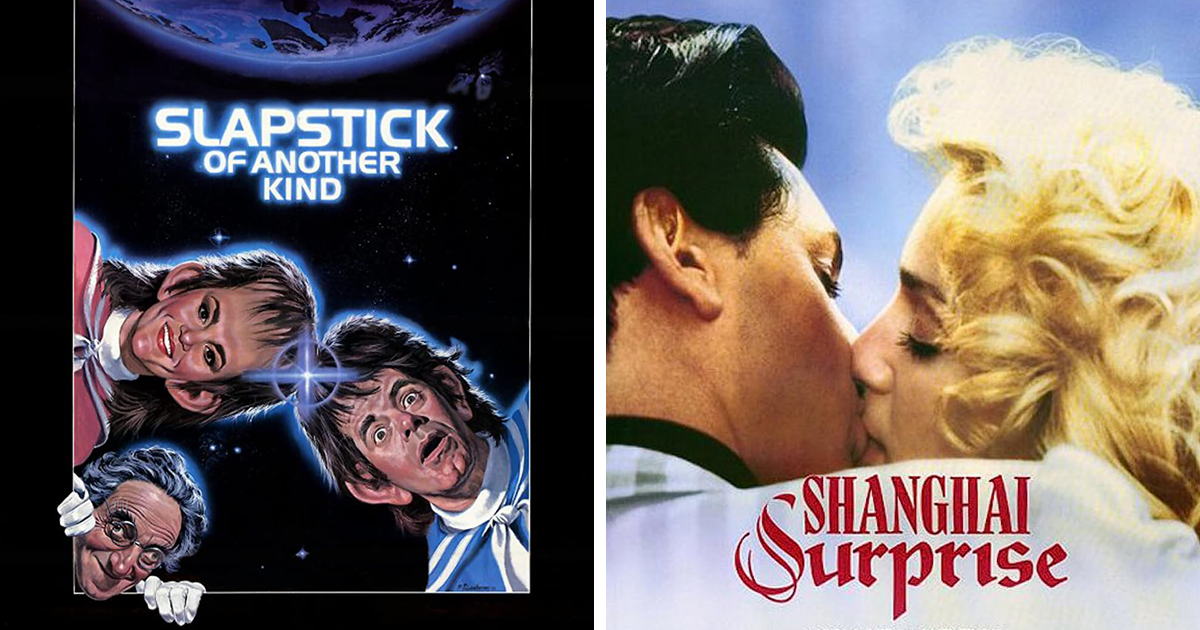
16. Slapstick of Another Kind (1982)
Jerry Lewis, Madeline Kahn, and Marty Feldman were talented performers, but this strange sci-fi comedy gives them little to work with. The movie is frantic without being funny and odd without being compelling. It is the rare comedy that seems to confuse noise with jokes.
-
17. Amityville 3-D (1983)
The haunted-house franchise entered the 3-D craze with a film that offers more floating objects than genuine fear. The scares are limp, the drama is flat, and the gimmick overwhelms whatever atmosphere might have survived. A haunted lamp would have shown more range.
-
18. Stroker Ace (1983)
Burt Reynolds had charm for days, but this NASCAR comedy runs on fumes. The humor is broad, the romance is thin, and the racing energy never becomes exciting enough to justify the noise. It feels like a movie assembled around a star persona rather than a story.
-
19. Sheena (1984)
A jungle adventure starring Tanya Roberts, Sheena has pretty scenery but little momentum. Its fantasy elements are handled with such stiffness that the movie becomes more postcard than adventure. The result is glossy, slow, and unintentionally funny.
-
20. Rhinestone (1984)
Dolly Parton and Sylvester Stallone in a country-music comedy sounds like either genius or a dare. Sadly, Rhinestone leans toward dare. Stallone’s fish-out-of-water energy is committed, but the script never finds the right rhythm. Dolly deserved stronger material and probably a better parking spot.
-
21. Cannonball Run II (1984)
This sequel has a huge cast, fast cars, and the relaxed vibe of famous people hanging out between catered meals. What it lacks is urgency, structure, and laughs that feel written instead of waved at. The movie coasts on celebrity cameos until the tires fall off.
-
22. Where the Boys Are ’84 (1984)
Trying to revive the 1960 spring-break comedy for the MTV generation, this remake serves up dated humor, thin characters, and awkward sexual politics. It wants to be breezy and naughty, but mostly feels like a beach towel left in the rain.
-
23. Under the Cherry Moon (1986)
Prince was a musical genius, but this black-and-white romantic comedy-drama proved that genius does not automatically transfer to every medium. The movie has style, no question, but its story is wispy and its tone slippery. Fans may enjoy the mood; critics were far less patient.
-
24. Shanghai Surprise (1986)
Madonna and Sean Penn had star heat, but this adventure comedy generated very little screen chemistry. The plot is muddy, the tone is uncertain, and the pacing drags. The film became better known for behind-the-scenes attention than anything happening onscreen.
-
25. Cobra (1986)
Cobra is not boring, but it is a mountain of macho clichés wearing sunglasses indoors. Sylvester Stallone delivers action-icon intensity, yet the movie’s grim violence, cartoon villains, and thin writing make it feel like a trailer stretched to feature length.
-
26. Masters of the Universe (1987)
Turning He-Man into a live-action fantasy epic should have been easy fun. Instead, budget limitations, Earth-bound plotting, and uneven effects drained much of Eternia’s magic. Dolph Lundgren looks the part, but the film often feels less like a kingdom-saving adventure than a toy commercial trapped in a warehouse.
-
27. Superman IV: The Quest for Peace (1987)
Christopher Reeve’s sincerity remains admirable, but this sequel is undone by cheap effects, awkward action, and a nuclear-disarmament plot that deserved a smarter movie. The franchise did not just stumble here; it tripped over its cape in public.
-
28. Ishtar (1987)
Ishtar has been partly reclaimed by some comedy fans, and Elaine May’s reputation deserves respect. Still, in the ‘80s it became shorthand for expensive Hollywood failure. Warren Beatty and Dustin Hoffman play terrible lounge singers, and the movie’s odd rhythms baffled many viewers expecting easy laughs.
-
29. The Running Man (1987)
This Arnold Schwarzenegger dystopian action film is entertaining in a loud, ridiculous way, but it also shows the decade’s love of one-liners and muscle overpowering satire. It is not the worst technically, yet its cheesier choices have aged into a mix of guilty pleasure and eyebrow workout.
-
30. Teen Wolf Too (1987)
The first Teen Wolf had Michael J. Fox and goofy charm. The sequel has Jason Bateman, boxing, and a strong case of sequel fatigue. It repeats the formula with less spark, proving that not every werewolf needs a second semester.
-
31. Police Academy 4: Citizens on Patrol (1987)
By the fourth entry, the Police Academy franchise was already stretching the joke like old chewing gum. Sharon Stone appears, which is interesting trivia, but the movie itself leans on recycled gags and cartoon chaos. The siren was still loud; the comedy battery was dying.
-
32. Hot to Trot (1988)
A talking-horse comedy starring Bobcat Goldthwait should at least be memorably strange. It is strange, yes, but the laughs are thin and the premise gallops nowhere. The horse may talk, but the screenplay has very little to say.
-
33. Caddyshack II (1988)
Sequels to beloved comedies are dangerous. Caddyshack II proves it with painful clarity. Without the original’s loose magic and cast chemistry, the follow-up becomes loud, forced, and oddly lifeless. Even the gopher looks like he wants legal separation.
-
34. Cocktail (1988)
Tom Cruise sells the confidence, Bryan Brown adds swagger, and the soundtrack knows what decade it is. But Cocktail is also glossy nonsense about bartending as if it were international espionage. It won Razzie attention because beneath the flair, the story is mostly foam.
-
35. Star Trek V: The Final Frontier (1989)
William Shatner directed this ambitious but messy entry, which sends the Enterprise crew searching for God. That is a big idea, but the execution suffers from uneven humor, weak effects, and a climax that launched a thousand fan debates. The movie boldly went where few viewers wanted it to go.
What Makes a Bad ‘80s Movie Worth Watching?
Not every bad movie deserves rediscovery. Some are merely dull, and dull is the true enemy. A memorably bad ‘80s movie usually has at least one redeeming feature: outrageous costumes, wild ambition, quotable dialogue, a strange performance, or a scene so baffling it becomes a conversation starter.
That is why movies like Mac and Me, Howard the Duck, and The Garbage Pail Kids Movie continue to attract viewers. They are not polished, but they are distinctive. You remember them. They leave fingerprints on your brain, possibly sticky ones.
There is also value in failure. Bad movies reveal the pressure points of their era. The ‘80s loved brands, sequels, pop soundtracks, celebrity vehicles, and bigger-is-better thinking. When those elements worked, Hollywood made classics. When they failed, it made fascinating wreckage.
Lessons From These Famous ‘80s Movie Flops
Brand recognition cannot replace a script
A toy, trading card, comic book, or hit franchise may get people into theaters once. It will not make characters believable, jokes funny, or pacing smooth. Several movies on this list prove that intellectual property is not a magic spell.
Sequels need a reason to exist
Jaws 3-D, Jaws: The Revenge, Caddyshack II, and Teen Wolf Too all show the danger of continuing a story after the creative engine has run out of gas. Familiarity helps marketing, but it can also remind viewers how much better the original was.
Camp is powerful, but it is hard to control
Some ‘80s disasters became cult favorites because they are fun to watch with the right crowd. But there is a difference between intentional camp and accidental embarrassment. The audience can feel when a movie thinks it is soaring while it is actually dragging a folding chair behind it.
Viewing Experience: Spending Time With the Worst ‘80s Movies
Watching the worst ‘80s movies is a very specific experience. You do not sit down with Leonard Part 6 or Mac and Me the way you sit down with a prestige drama. You prepare like a storm is coming. Snacks are essential. Friends help. A willingness to pause and say, “Wait, did that actually happen?” is not optional; it is the whole sport.
The funny thing is that many of these movies are more enjoyable now than they were meant to be. Distance softens the disappointment. A viewer in 1987 might have paid full ticket price for Superman IV and felt betrayed by the cheap effects and thin story. A viewer today can stream it with historical curiosity and laugh at the heroic sincerity fighting against budget limitations. Time turns some cinematic bruises into weird little museum pieces.
There is also a cozy nostalgia in bad ‘80s movies. Even when the film is terrible, the textures are irresistible: smoky nightclubs, synth music, practical creatures, mall culture, glossy sports cars, giant hair, and villains who dress like they were styled by a laser tag arena. These details make the failures watchable because they are rooted in a decade with a loud visual identity. A bad movie from the ‘80s rarely whispers. It enters the room wearing a leather jacket and demanding saxophone accompaniment.
The best way to experience these films is with curiosity rather than cruelty. Yes, the jokes fail. Yes, the effects wobble. Yes, someone approved a McDonald’s dance number in Mac and Me, and civilization continued anyway. But filmmaking is difficult. Even a bad movie requires hundreds of people trying to build something out of money, weather, egos, deadlines, costumes, rubber monsters, and hope. That is why the most entertaining bad films feel strangely human. You can sense the ambition under the mess.
Some of these movies are fun because they are energetic disasters. The Apple, Xanadu, and Can’t Stop the Music may wobble as stories, but they have color, music, and a fearless commitment to spectacle. Others, like Jaws: The Revenge, are fascinating because they take impossible ideas seriously. A revenge-seeking shark is objectively ridiculous, but the movie treats it like Greek tragedy with gills. That gap between intention and result is where bad-movie magic lives.
A personal rule helps: never watch these movies alone if you are expecting “quality,” but absolutely watch them alone if you enjoy studying pop-culture accidents. With friends, they become comedy events. Alone, they become time capsules. Either way, the worst ‘80s movies are not just failures; they are proof that Hollywood’s strangest swings sometimes miss the ball, the bat, and the stadiumbut still give us something to talk about decades later.
Conclusion
The 35 worst ‘80s movies worth the boos they got are more than a roll call of flops. They are reminders that Hollywood history is built from both masterpieces and misfires. The decade’s weakest films often reveal the same energy that powered its best ones: bold concepts, big personalities, catchy music, and a willingness to go all in. The problem, of course, is that “all in” sometimes means a psychic shark, a talking horse, or a duck from outer space flirting with disaster.
Still, these movies matter. They shaped cult conversations, fueled Razzie history, warned studios about lazy sequels, and gave audiences a new appreciation for the fine art of cinematic failure. Boo them, laugh at them, revisit them, or defend them at parties if you are brave. Just do not pretend they are boring. The worst ‘80s movies may not deserve Oscars, but they absolutely deserve popcorn.