
Note: This article is educational and is not a substitute for personalized medical advice. People with osteoporosis, a previous fracture, severe back pain, balance problems, or recent surgery should ask a physician or physical therapist for an exercise plan tailored to their fracture risk.
Introduction: Strong Bones Need Smart Movement
Osteoporosis can make exercise feel confusing. One article says, “Stay active!” Another warns, “Don’t bend, twist, jump, or sneeze too aggressively.” Suddenly, picking up a sock from the floor feels like an Olympic event with suspicious judging.
The truth is less scary and more useful: most people with osteoporosis should keep moving, but they may need to modify certain exercises and daily movements to protect the spine, hips, and wrists. Osteoporosis weakens bone structure, making fractures more likely, especially after a fall or when the spine is placed under repeated stress. That does not mean you should become best friends with the couch. In fact, safe weight-bearing exercise, resistance training, posture work, and balance practice can help support bone health, muscle strength, and fall prevention.
The key is knowing which movements raise risk and what to do instead. The biggest red flags are exercises that involve loaded spinal flexion, forceful twisting, high-impact jumping, uncontrolled heavy lifting, and activities with a high chance of falling. This guide explains the osteoporosis exercises and movements to avoid, safer alternatives, and practical ways to move through daily life without treating your skeleton like antique glass.
Why Certain Exercises Can Be Risky With Osteoporosis
Osteoporosis often affects areas that already do a lot of life’s heavy lifting: the spine, hips, and wrists. The vertebrae in the spine are especially vulnerable to compression fractures. When the back rounds forward repeatedly or under load, the front part of the vertebrae may take more stress. Add twisting, bouncing, or heavy weight, and the risk can increase, particularly for people with low bone density or a history of vertebral fracture.
Exercise risk depends on several factors: your bone density score, fracture history, age, balance, strength, medications, posture, and whether you already have pain or spinal changes. A movement that is fine for one person may be too aggressive for another. That is why osteoporosis exercise is not about fear. It is about matching the movement to the body in front of you.
1. Avoid Loaded Forward Bending of the Spine
The number one movement to treat carefully with osteoporosis is forward bending from the spine, especially when the back rounds like a question mark. This is called spinal flexion. It can happen during exercises, stretching, housework, gardening, and even getting out of bed.
Exercises to avoid or modify
- Sit-ups
- Crunches
- Toe touches
- Standing forward folds
- Seated hamstring stretches with a rounded back
- Roll-ups in Pilates
- Yoga poses that require deep forward bending
- Picking up weights from the floor with a rounded spine
These movements may place stress on the front of the spine. For someone with osteoporosis, especially spinal osteoporosis, repeated flexion can be a problem. The risk is higher when the movement is loaded, fast, repetitive, or done at the end range of motion.
Safer swaps
Instead of crunches, try gentle abdominal bracing, heel slides, dead bugs with careful form, or modified planks approved by a physical therapist. Instead of toe touches, stretch the hamstrings while lying on your back with a strap, keeping the spine neutral. Instead of bending at the waist to pick something up, use a hip hinge: bend from the hips and knees while keeping the chest lifted and spine long.
A helpful cue is: “Bring the object to you, not your spine to the object.” Your back will appreciate the promotion.
2. Avoid Forceful Twisting, Especially With Bending
Twisting alone can be risky for some people with osteoporosis, but twisting while bent forward is the combo meal nobody ordered. It can place rotational stress on the spine, especially if the movement is fast, repeated, or loaded.
Movements to be cautious with
- Russian twists
- Bicycle crunches
- Windmill-style exercises
- Deep twisting yoga poses
- Golf swings with forceful rotation
- Tennis strokes with aggressive trunk twisting
- Bowling with a large forward bend and twist
- Shoveling snow or soil while twisting
This does not mean every rotation is forbidden. Daily life requires turning. The goal is to avoid sudden, extreme, repetitive, or weighted twisting. A small, controlled turn from the feet and hips is very different from yanking the spine around like you are starting a stubborn lawn mower.
Safer swaps
Turn your whole body instead of twisting through the waist. When unloading groceries, face the counter rather than rotating from the trunk. During exercise, focus on anti-rotation core training, such as standing band presses or gentle stability work, if cleared by a professional. These exercises train the core to resist twisting rather than create it.
3. Avoid High-Impact Exercise if Your Fracture Risk Is High
High-impact exercise can build bone in some people, but for someone with established osteoporosis, previous fractures, poor balance, or high fall risk, it may be too risky. Impact is not automatically bad; inappropriate impact is the problem.
Exercises that may need to be avoided
- Jumping jacks
- Box jumps
- Burpees
- Running on hard surfaces
- High-impact aerobics
- Jump rope
- Plyometric workouts
- Fast dance workouts with hopping and sudden direction changes
For people with mild bone loss and good strength, some impact may be appropriate under guidance. But if you have osteoporosis, a history of fragility fracture, or balance concerns, high-impact moves can increase the chance of falls or fractures.
Safer swaps
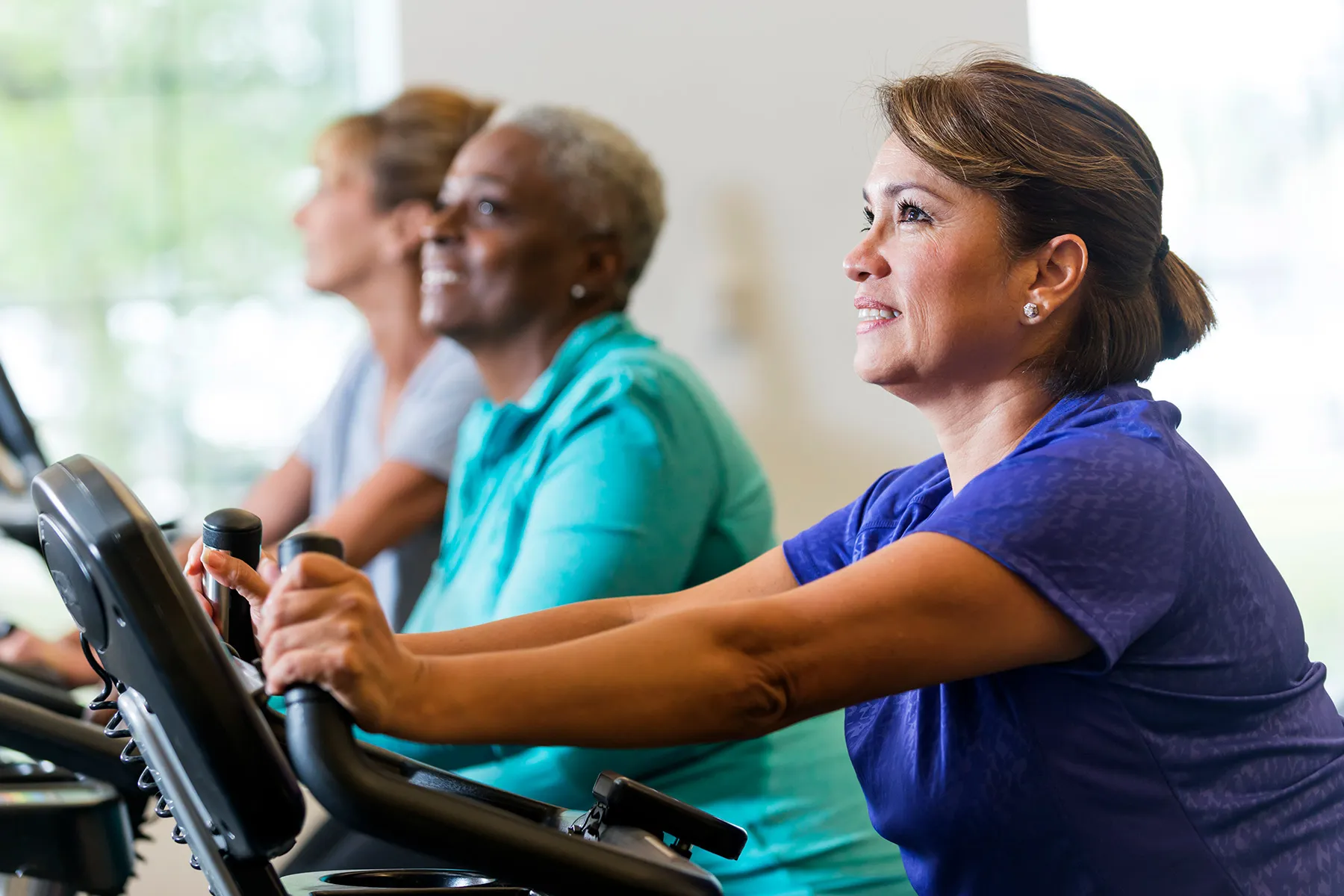
Try brisk walking, stair climbing with support, low-impact dance, elliptical training, water exercise for conditioning, or strength training with controlled form. Walking may not be the flashiest workout in the gym, but it is reliable, accessible, and less likely to make your knees file a complaint.
4. Avoid Heavy Lifting With Poor Form
Strength training can be excellent for people with osteoporosis when done correctly. The problem is not resistance training itself. The problem is lifting too much, too soon, with a rounded back, held breath, or uncontrolled movement.
Heavy lifting becomes risky when the spine flexes under load. Examples include deadlifting with a rounded back, lifting a heavy laundry basket from the floor, carrying overloaded grocery bags, or twisting while holding weight. Even everyday objects can become “gym equipment with bad intentions” when lifted carelessly.
Movements to avoid or modify
- Heavy deadlifts without professional supervision
- Deep loaded squats with poor alignment
- Overhead presses that cause back arching or loss of balance
- Loaded spinal flexion, such as weighted sit-ups
- Carrying heavy objects on one side only
- Lifting while twisting
Safer swaps
Use lighter weights, resistance bands, machines with back support, or body-weight exercises. Learn the hip hinge. Keep loads close to the body. Exhale during effort. Increase resistance gradually. A physical therapist or qualified trainer experienced with osteoporosis can help you build strength without turning your workout into a suspense movie.
5. Avoid Exercises With a High Risk of Falling
Many osteoporosis fractures happen after falls, especially hip and wrist fractures. That makes fall prevention a major part of safe exercise. Activities that challenge balance can be helpful, but they should be progressed carefully.
Activities to approach cautiously
- Fast step aerobics
- Unstable balance boards
- Outdoor cycling on uneven roads
- Ice skating or rollerblading
- Skiing without medical clearance
- Hiking steep trails without poles or support
- Exercising in cluttered spaces
Balance training should make you steadier, not give your coffee table a chance to attack. Start with supported balance exercises near a wall, counter, or sturdy chair. Tai chi, supervised balance classes, heel-to-toe walking, and sit-to-stand practice can improve confidence and stability.
6. Be Careful With Some Yoga and Pilates Moves
Yoga and Pilates can improve posture, breathing, mobility, and body awareness. However, some poses and sequences involve deep spinal flexion, end-range twisting, or rapid transitions that may not be safe for people with osteoporosis.
Yoga and Pilates moves that may need modification
- Deep forward folds
- Seated spinal twists
- Roll-ups and roll-overs
- Boat pose if it rounds the back
- Deep side bends
- Plow pose
- Headstands or shoulder stands
- Fast flows with poor control
The safer approach is not “never do yoga.” It is “do osteoporosis-aware yoga.” Choose instructors who understand bone health. Keep the spine long. Use blocks, straps, chairs, and walls. Avoid forcing range of motion. Flexibility should not require negotiating with your vertebrae.
7. Avoid Sudden, Jerky, or Bouncing Stretches
Stretching can help muscles and joints move comfortably, but aggressive stretching is not necessary. Bouncing, forcing, or pulling into deep ranges can increase strain and compromise posture. With osteoporosis, the safest stretches are slow, controlled, and spine-friendly.
Instead of bouncing toward your toes, stretch after a warm-up. Keep the chest lifted. Use props. Choose positions where the spine can stay neutral. Mild tension is fine; pain is not. A good stretch says, “Hello, muscle.” A bad stretch says, “I have made a terrible administrative decision.”
Daily Movements to Avoid With Osteoporosis
Exercise is only part of the story. Daily movement patterns matter because they are repeated all day long. A person may avoid crunches at the gym but round the spine 40 times while loading the dishwasher. Osteoporosis-safe movement is about building habits that protect your bones during ordinary tasks.
Getting out of bed
Avoid curling straight up like a sit-up. Instead, roll onto your side, bend your knees, keep your back long, and use your arms to push yourself up. This log-roll method reduces spinal flexion.
Picking things up
Avoid bending from the waist with a rounded back. Use a hip hinge, squat, golfer’s reach, or a grabber tool. Your future self will not judge you for using a reacher. Your future self may send a thank-you card.
Housework and gardening
Avoid twisting while vacuuming, shoveling, sweeping, or pulling weeds. Step with your feet instead of rotating through the spine. Use long-handled tools. Raise work surfaces when possible. Take breaks before fatigue ruins your form.
Carrying bags
Avoid carrying one heavy bag on one side. Divide weight into two lighter bags or use a rolling cart. Keep loads close to the body and avoid twisting while setting them down.
Sitting posture
Avoid long periods of slouched sitting. Use lumbar support, place feet flat on the floor, and stand up regularly. Posture is not about looking like a royal statue. It is about reducing unnecessary spinal strain.
What Exercises Are Usually Safer for Osteoporosis?
Now for the good news: the list of safe options is longer than the list of things to avoid. Many people with osteoporosis benefit from a well-rounded program that includes weight-bearing activity, resistance training, posture exercises, flexibility work, and balance training.
Often safer exercise choices
- Walking
- Stair climbing with support
- Low-impact aerobics
- Resistance bands
- Light to moderate strength training
- Wall push-ups
- Sit-to-stand exercises
- Heel raises
- Rows for upper-back strength
- Tai chi or supported balance training
- Posture and back-extension exercises approved by a professional
The best osteoporosis exercise program is progressive. It starts where you are and builds gradually. It also includes rest, good footwear, safe surroundings, and realistic goals. You do not need to train like a superhero. You need to train like someone who wants stronger muscles, better balance, and fewer “oops” moments.
How to Modify Exercise Without Giving Up Fitness
Modification is not failure. Modification is strategy. If a workout includes crunches, do abdominal bracing. If a class includes jump squats, do controlled chair squats. If a yoga teacher says “fold forward,” hinge slightly from the hips or stay upright with hands on blocks. If a dance routine gets too fast, reduce the range and keep your feet grounded.
Use the “spine-safe filter” before any movement:
- Does it round my back deeply?
- Does it combine bending and twisting?
- Does it require jumping or sudden landing?
- Does it make me feel unsteady?
- Does it require lifting more than I can control?
- Can I keep breathing and maintain good posture?
If the answer raises a red flag, modify the movement or skip it. Fitness is not a loyalty test. You are allowed to choose the version that keeps you strong and safe.
When to Stop an Exercise Immediately
Stop exercising and seek medical guidance if you feel sudden back pain, sharp hip pain, chest pain, dizziness, numbness, unusual shortness of breath, or pain after a minor movement that does not quickly settle. A new sudden back pain in someone with osteoporosis should be taken seriously because vertebral compression fractures can sometimes happen with surprisingly ordinary activities.
Also stop if you feel unstable or if your form collapses from fatigue. The last few sloppy repetitions are rarely worth it. Bones prefer consistency over drama.
Practical Experience: What People Often Learn After Living With Osteoporosis
Many people discover that osteoporosis changes how they think about movement, but not in the gloomy way they first imagined. At the beginning, the diagnosis may feel like someone placed a giant “fragile” sticker across daily life. The gym looks suspicious. The laundry basket looks heavier than it used to. Even a yoga mat can seem like it is plotting something. But with education and practice, most people begin to feel more capable, not less.
One common experience is learning that “avoid bending” does not mean “never move.” It means learning better mechanics. For example, someone who used to round the back to unload the dishwasher may start bending the knees, hinging from the hips, and placing one hand on the counter for support. At first, this feels awkward, like learning choreography for a very practical musical called The Dishes Must Be Done. After a few weeks, it becomes automatic.
Another common lesson is that strength training can be empowering when it is taught well. People often fear weights after an osteoporosis diagnosis, but carefully guided resistance exercise can improve confidence. A person might begin with wall push-ups, resistance-band rows, sit-to-stand practice, and heel raises. These moves look simple, but they support real-life strength: rising from a chair, carrying groceries, climbing stairs, and catching balance before a fall happens.
People also learn to respect fatigue. Good posture is easier at the start of a workout than at the end. That is why shorter, consistent sessions may work better than occasional heroic workouts. Ten careful minutes done regularly can beat one chaotic hour fueled by stubbornness and questionable playlist choices.
Group classes can be helpful, but they require self-advocacy. A person with osteoporosis may need to tell an instructor, “I do not do deep forward bends or twisting.” A good instructor will offer alternatives. A not-so-good instructor may look confused, which is your cue to protect your own body and modify anyway. Your spine does not need to win popularity contests.
Daily tools can also make life easier. A reacher, supportive shoes, night lights, handrails, shower grab bars, and clutter-free floors are not signs of weakness. They are signs of excellent risk management. The safest home is not boring; it is simply less interested in tripping you at 2 a.m.
Perhaps the biggest experience people share is the mental shift from fear to skill. Osteoporosis-safe movement is a skill. Once you understand neutral spine, hip hinging, controlled strength, balance practice, and smart modifications, exercise becomes less intimidating. You stop asking, “What am I not allowed to do?” and start asking, “How can I do this safely?” That question keeps the door open to strength, independence, and a more confident body.
Conclusion: Avoid Risky Moves, Not Movement Itself
Osteoporosis does not mean exercise is off-limits. It means your exercise plan should be smarter, more intentional, and kinder to your spine. The main exercises and movements to avoid with osteoporosis include loaded forward bending, forceful twisting, high-impact jumping, uncontrolled heavy lifting, and activities with a high risk of falling. Sit-ups, crunches, toe touches, deep forward folds, Russian twists, burpees, jump squats, and poorly controlled heavy lifts are common examples that may need to be skipped or modified.
The goal is not to become fearful of movement. The goal is to build strength, posture, balance, and confidence while reducing fracture risk. Safe weight-bearing exercise, resistance training, balance work, and posture-focused movement can all play a valuable role. Work with a healthcare provider, physical therapist, or osteoporosis-informed fitness professional when possible. Your bones may be quieter than your muscles, but they are paying attention. Treat them well, move wisely, and keep living fully.