
Note: This article is written for web publication and synthesizes real design-history, museum, auction, gallery, and modern furniture references without copying source text.
A pair of Pierre Jeanneret Easy Armchairs is not just seating. It is architecture that politely agrees to hold your coffee, your guests, and possibly your entire design personality. Low, angular, honest, and quietly dramatic, these chairs came from one of the most ambitious modernist projects of the 20th century: Chandigarh, India. Designed in the 1950s for public buildings, administrative offices, and institutional interiors, Jeanneret’s furniture was meant to be useful first. The fact that it now appears in collectible design auctions and highly edited interiors is the plot twist.
The phrase “Pierre Jeanneret, Pair of Easy Armchairs” usually refers to matching lounge-style chairs associated with the Chandigarh project, often made from teak or rosewood, woven cane, and upholstery. Many examples are linked to model families such as PJ-SI-29-A or related easy chair designs. Their appeal comes from a rare balance: modernist geometry, hand-crafted warmth, architectural structure, and a level of cool that does not need to shout across the room wearing sunglasses indoors.
Who Was Pierre Jeanneret?
Pierre Jeanneret was a Swiss architect and designer born in 1896. He was also the cousin and long-time collaborator of Le Corbusier, one of modern architecture’s most influential figures. For years, Jeanneret’s name sat in the shadow of his famous relative, but design history has been steadily correcting the record. He was not merely a sidekick with a pencil. He was a serious architect, planner, furniture designer, and practical problem-solver whose work helped shape modern interiors.
His most celebrated furniture emerged from Chandigarh, the planned city developed after India’s independence and partition. Le Corbusier led the broader architectural vision, while Jeanneret worked deeply on the city’s buildings, interiors, and furnishings. He served in Chandigarh for years and became closely associated with the city’s everyday design language. That matters because his chairs were not made as precious showroom objects. They were created for real use in offices, libraries, residences, schools, courtrooms, and government spaces.
The Chandigarh Story Behind the Easy Armchairs
Chandigarh was conceived as a symbol of a new India: modern, optimistic, civic-minded, and forward-looking. The buildings were monumental, but the furniture had to solve a more intimate challenge. People needed chairs, desks, tables, benches, stools, and cabinets that could withstand daily use in a hot climate. The pieces had to be durable, economical, repairable, and compatible with local materials and craftsmanship.
That is where Jeanneret’s genius becomes visible. Instead of importing a European furniture fantasy, he adapted modernist principles to local realities. Teak, cane, and Indian woodworking traditions became essential. Woven cane helped furniture breathe in warm weather. Solid wood frames offered strength. Simple joinery made pieces practical to build and maintain. The result was furniture that looked disciplined but never sterile.
The Easy Armchairs are part of this larger Chandigarh furniture family. Their low profile, sloped seating posture, wide arms, and angular frame make them more relaxed than an office chair but more architectural than a typical lounge chair. They are comfortable without becoming puffy. In other words, they are the furniture equivalent of someone who says, “I’m casual,” while wearing a beautifully tailored linen jacket.
Design Features of a Pierre Jeanneret Pair of Easy Armchairs
1. The Architectural Frame
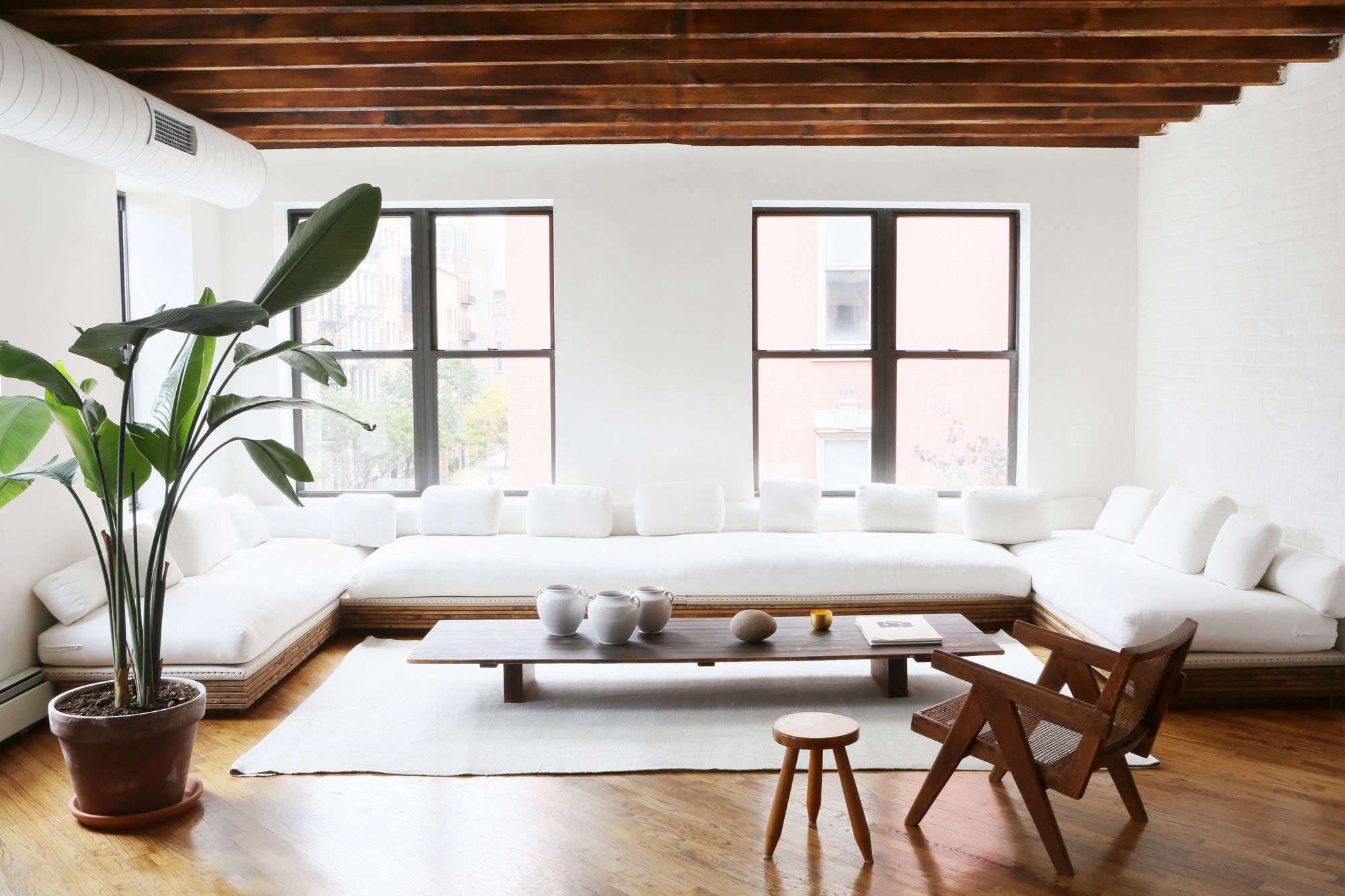
The first thing most people notice is the structure. Jeanneret’s chairs often use bold, geometric side frames, including compass-like or V-shaped supports. This gives the chair a strong silhouette from every angle. A pair looks especially powerful because the repeated geometry creates rhythm in a room. Place two of them opposite a sofa or beside a low table, and suddenly the living room has a backbone.
2. Teak, Rosewood, and Honest Materials
Original examples are commonly associated with teak, rosewood, cane, and upholstery. The wood is not just decorative; it is the chair’s architecture. Teak was valued for strength, stability, and resistance to climate. Rosewood examples can have a deeper, richer visual tone. Over time, the wood develops patina, which collectors often value when it is authentic and not overly refinished.
3. Woven Cane and Upholstery
Many Easy Armchairs combine cane panels with cushions or upholstery. Cane gives the design lightness and breathability, while upholstered seats or backs add comfort. Some vintage pairs have been restored with leather, sheepskin, linen, or fabric. The best restorations respect the chair’s original proportions. The worst ones turn a disciplined modernist chair into something that looks like it lost a fight with a hotel lobby.
4. Low, Relaxed Proportions
Easy Armchairs are designed for lounging rather than formal sitting. Approximate dimensions vary by model and production history, but many examples sit around 30 inches high, roughly 20 to 21 inches wide, and about 26 to 28 inches deep. Because these chairs were produced for different buildings and uses, small variations are normal. In collectible design, that variation is not always a flaw; sometimes it is part of the story.
Why Collectors Love a Pair Instead of a Single Chair
A single Pierre Jeanneret Easy Armchair is beautiful. A pair is a conversation. Two chairs bring symmetry, balance, and presence. They can frame a fireplace, soften a modern living room, or create an intimate reading corner. In the collectible market, pairs often attract attention because matching examples are harder to find than individual chairs. When the scale, finish, patina, and restoration quality align, a pair has a stronger decorative and investment appeal.
Design collectors also appreciate provenance. Some original chairs still carry stenciled inventory marks from Chandigarh institutions. These markings can connect a chair to a specific building, department, or public-use context. For buyers, documentation matters. A convincing history can separate a serious collectible from a “Jeanneret-style” chair that merely borrowed the haircut.
Original Vintage vs. Re-editions and Inspired Pieces
Today, the market includes several categories: original Chandigarh pieces, authorized or high-quality re-editions, and modern inspired designs. Each has a different purpose.
Original vintage Easy Armchairs are collectible objects. They may show wear, repairs, replaced cane, new upholstery, or refinished wood. These details do not automatically reduce value, but they should be understood clearly. Serious buyers look for provenance, original construction details, appropriate dimensions, and honest condition reports.
Re-editions and contemporary interpretations make the Jeanneret look more accessible for everyday interiors. Some are crafted with careful attention to materials and proportions. Others are trend-driven copies. The difference becomes obvious in the joinery, wood quality, cane work, and overall balance. A chair inspired by Jeanneret should still feel composed, not like it was assembled by someone who saw one blurry photo and said, “Close enough.”
How to Style Pierre Jeanneret Easy Armchairs
In a Minimalist Living Room
These chairs thrive in minimalist interiors because their geometry adds interest without clutter. Pair them with a low stone, wood, or glass coffee table. Keep surrounding objects simple: a wool rug, a floor lamp, a ceramic vessel, maybe a stack of art books. The chairs already bring character, so there is no need to add seventeen decorative pillows and a motivational sign about coffee.
In a Warm Modern Home
Jeanneret’s teak and cane work beautifully with warm neutrals, limewash walls, linen curtains, travertine, oak floors, and handmade ceramics. The chairs can soften contemporary architecture while keeping the room sophisticated. They also pair well with mid-century modern furniture, especially when you avoid making the room feel like a museum display.
In an Eclectic Interior
A pair of Easy Armchairs can anchor an eclectic room filled with books, art, vintage lighting, and global textiles. Their strong frame gives order to the mix. Add a small table between them and the arrangement becomes a natural place for conversation, reading, or pretending to read while actually scrolling design auctions.
Buying Guide: What to Check Before Purchasing
Provenance
Ask where the chairs came from. Were they sourced from Chandigarh? Is there documentation? Are there institutional markings? Has the seller handled comparable Jeanneret pieces before? Provenance is not just a fancy word used to make invoices look important. It is the chain of history that supports authenticity and value.
Condition
Look closely at the wood, cane, joints, arms, legs, and upholstery. Original wear can be attractive, but structural weakness is another story. Check for cracks, loose joints, heavy sanding, replaced sections, and uneven restoration. Cane replacement is common, but it should be done neatly and in keeping with the original design.
Dimensions and Model Type
Because Jeanneret designed many related chairs for Chandigarh, model identification matters. An Easy Armchair, Cross Easy Chair, Kangaroo Chair, Office Chair, and Committee Chair may share a family resemblance while differing in structure, scale, and use. Confirm the model description and compare it with known examples before buying.
Restoration Quality
A thoughtful restoration preserves the spirit of the chair. It stabilizes the piece, respects the geometry, and avoids over-polishing. Excessive refinishing can erase age and character. New upholstery should fit the chair’s proportions rather than overwhelm them. The goal is not to make a 1950s chair look factory-new; the goal is to let it look alive.
Why the Easy Armchairs Still Feel Modern
The enduring appeal of Pierre Jeanneret’s Easy Armchairs comes from restraint. They do not depend on ornament, novelty, or trend. They use clear lines, strong materials, and intelligent proportions. That is why they can sit comfortably in a historic home, a glass apartment, a creative studio, or a quiet reading room.
They also represent a kind of design thinking that feels especially relevant today. The chairs were made with local materials, craft knowledge, repairability, and practical use in mind. In an age of disposable furniture, Jeanneret’s work reminds us that good design should not collapse emotionally or physically after two moves and one enthusiastic dinner party.
The Cultural Debate Around Chandigarh Furniture
The rising global demand for Chandigarh furniture has also raised ethical and cultural questions. Many original pieces were designed for public institutions and later left, sold, discarded, exported, restored, and resold through international markets. Some preservation advocates in India have argued that these objects are part of Chandigarh’s heritage and should be protected. This debate adds complexity to the market.
For collectors, this means responsible buying matters. Documentation, legal export history, reputable sellers, and respect for the furniture’s origin should be part of the decision. These chairs are beautiful, yes, but they are also tied to a civic project, a city, and a post-independence design story. Owning one should feel less like capturing a trophy and more like caring for a chapter of modern design history.
Experience Section: Living With Pierre Jeanneret Easy Armchairs
Experiencing a pair of Pierre Jeanneret Easy Armchairs in a room is different from simply admiring them in a photograph. Online, the chairs look clean, angular, and collectible. In person, they feel warmer and more human. The wood grain catches light. The cane has texture. The seat sits low enough to encourage a slower posture. You do not flop into one of these chairs; you settle into it, like the chair has politely invited you to behave with slightly better taste.
The first practical lesson is that placement matters. These chairs need breathing room. Push them into a crowded corner and they lose their architectural power. Give them space around the sides, and the frames become sculptural. A pair works especially well across from a sofa, angled toward each other, or placed beside a window with a small table between them. Add a warm lamp and suddenly the room says, “Yes, we read serious books here,” even if the book is mostly there for atmosphere.
Comfort is also more nuanced than people expect. A Jeanneret Easy Armchair is not a giant recliner. It will not swallow you like a marshmallow with legs. Instead, it supports a relaxed but alert posture. That makes it ideal for conversation, reading, morning coffee, or quiet evenings. The chair feels casual, but it keeps its dignity. You can sit in it wearing jeans or a linen suit; the chair will not judge either outfit, though it may silently prefer the linen suit.
Materials shape the daily experience. Cane feels airy and tactile. Wood brings warmth and visual weight. Upholstered cushions add softness, but they should not be too thick. Overstuffed cushions can ruin the proportions and make the chair look confused about its career path. Natural fabrics, leather, or textured neutrals usually work best because they let the frame remain the star.
Maintenance is part of the relationship. Cane should be treated gently. Wood should be cleaned with care, not attacked with harsh products. Direct sunlight, extreme humidity, and careless dragging can shorten the life of any vintage chair. If the chairs are original, think like a custodian rather than a casual owner. They have survived offices, institutions, changing tastes, and the long journey into collectible design. The least we can do is not use them as ladder substitutes during curtain emergencies.
The most rewarding part of living with a pair is how quietly they elevate a room. They do not demand attention, but they reward it. Guests notice them, designers recognize them, and even people who know nothing about furniture often sense that the chairs have presence. That is the mark of enduring design: it communicates before anyone explains it.
Conclusion
A pair of Pierre Jeanneret Easy Armchairs brings together history, architecture, craftsmanship, and everyday comfort. Born from the Chandigarh project, these chairs were designed for practical use but became icons of modern furniture. Their teak or rosewood frames, woven cane, angular supports, and relaxed proportions make them timeless without feeling predictable. Whether viewed as collectible design, functional seating, or a cultural artifact, the pair offers something rare: beauty with backbone.
For buyers and design lovers, the key is to look beyond the trend. Study the model, materials, provenance, condition, and restoration quality. A good pair of Easy Armchairs is not just about owning a famous name. It is about appreciating how thoughtful design can travel from civic offices to contemporary homes while still feeling honest, useful, and quietly brilliant.