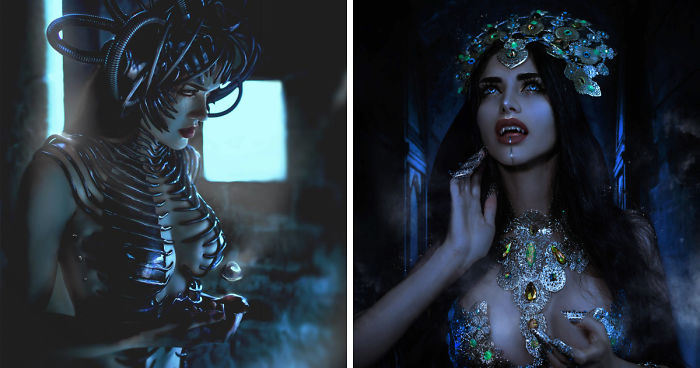

Some people see a portrait and think, “Nice lighting.” I see a portrait and wonder, “What if her hair became a storm cloud, her dress turned into moonlight, and a deer with suspiciously royal energy wandered into the frame?” That is the strange, sparkly neighborhood where fantasy photography lives. It begins with a camera, grows in Photoshop, and ends somewhere between a dream, a fairy tale, and a very determined file named final_final_reallyfinal.psd.
Fantasy photography is not just about making a pretty image with glowing particles sprinkled on top like digital parmesan. At its best, it is a hybrid art form: part portrait photography, part digital painting, part photo manipulation, part storytelling, and part “please do not ask how many layers this file has.” Artists such as Lillian Liu have shown how a personal daydream can become a polished visual world by blending real models, costumes, props, lighting, and creative retouching. The result feels handmade, cinematic, and emotionally alive.
The phrase “I use my camera and Photoshop to transfer fantasies into reality” captures the heart of this work. The camera provides evidence: a face, a gesture, a fold of fabric, a strand of hair catching light. Photoshop provides transformation: atmosphere, color, impossible details, painted texture, and visual logic that allows the unreal to feel strangely believable. Together, they create images that say, “This never happened, but admit it, you kind of wish it had.”
What Fantasy Photography Really Means
Fantasy photography is a style of visual storytelling that uses photographic reality as raw material for imagined scenes. It may include magical portraits, surreal landscapes, myth-inspired characters, dreamlike fashion editorials, gothic fairy tales, enchanted forests, underwater queens, celestial warriors, or modern people dropped into worlds that clearly skipped the memo about physics.
Unlike documentary photography, fantasy portrait photography does not promise to show life exactly as it is. Instead, it shows life as emotion remembers it. A lonely person may become a moonlit figure standing in a silver field. A confident subject may appear as a crowned sorceress surrounded by fire. A quiet model may become a goddess in a dress that looks as if it was tailored by a thunderstorm. The point is not accuracy; the point is resonance.
Still, the best fantasy composites are not random. They work because they respect the fundamentals of photography: light direction, perspective, color temperature, shadows, scale, composition, and mood. The mermaid can be imaginary, but the shadow under her elbow still has to behave. A dragon may fly across the background, but if it is lit from the left while the model is lit from the right, viewers will sense something is wrong, even if they cannot explain it. The human eye is a brutal little detective.
The Camera Is Where The Magic Starts
Photoshop is powerful, but it is not a wizard who fixes lazy planning while wearing a pointy hat. Strong fantasy images usually begin with strong source photographs. That means controlled lighting, intentional posing, careful wardrobe choices, and a clear concept before the shutter clicks.
A photographer creating fantasy portraits might start with a sketch or mood board. The idea may be simple: a winter queen, a forest spirit, a warrior princess, a celestial bride, or a portrait inspired by Asian mythology, medieval legend, Renaissance painting, or modern game art. From there, every decision supports the concept. The model’s pose, the angle of the camera, the makeup, the fabric texture, the background, and even the direction of the subject’s gaze all become pieces of the same puzzle.
Costumes matter. A cheap plastic crown can ruin an otherwise epic image faster than a coffee spill on a white dress. Fantasy photography often depends on tactile details: embroidered sleeves, metallic accessories, handmade headpieces, lace, leather, velvet, armor, flowers, veils, and jewelry. These real-world elements give the final image credibility. When the photographed materials look rich and dimensional, the digital additions feel more natural.
Lighting is equally important. Soft, diffused light can create a romantic fairy-tale look. Hard side light can make a warrior portrait feel dramatic. Golden-hour sunlight adds warmth and mythic glow. Studio lighting gives the artist control, especially when the background will be replaced later. If the photographer knows the final image will include moonlight, fire, glowing butterflies, or a supernatural portal, the lighting on the subject should leave room for those effects to make sense.
Photoshop Turns The Door Handle To The Impossible
Once the photoshoot is complete, Photoshop becomes the workshop where reality gets politely rearranged. In a fantasy composite, the artist may cut out the subject, extend the background, replace the sky, add painted highlights, adjust color, blend multiple photographs, create atmospheric haze, or paint details directly onto the image.
Layers are the foundation. A typical composite may include the original portrait, background elements, costume extensions, color grading layers, texture overlays, fog, sparks, painted hair, shadow adjustments, skin retouching, and final sharpening. If that sounds like a lot, it is. Composite photography is often less like taking a single photo and more like building a tiny film set inside a computer.
Layer masks are essential because they allow the artist to hide and reveal parts of an image without destroying the original layer. This non-destructive workflow matters. Fantasy art changes direction constantly. A glowing crown may look brilliant at midnight and mildly ridiculous the next morning. A purple sky may become blue. A floating castle may need to move three pixels to the left because the artist has developed strong opinions about castle alignment. Masks make revision possible.
Color grading is where the mood locks in. A cool blue palette can suggest moonlight, mystery, or winter magic. Warm oranges and reds can suggest fire, danger, or divine energy. Muted earth tones can create a mythological or painterly feeling. High contrast may feel cinematic; low contrast may feel dreamy. In fantasy photography, color is not decoration. It is emotional weather.
Why The Best Fantasy Images Still Feel Real
The secret to convincing fantasy photography is not making everything realistic. It is making the unreal elements obey the same visual rules as the real ones. That means matching perspective, lighting, sharpness, grain, depth of field, and shadow behavior.
For example, imagine a portrait of a model standing in a forest while a glowing stag appears behind her. The stag can be magical, but it still needs to sit inside the scene. If the forest background is slightly blurred, the stag should not be razor sharp. If the model is lit by warm sunset light, the stag should not look as if it wandered in from a fluorescent office. If leaves cast shadows on the ground, the stag should probably cast a shadow too. Otherwise, the whole thing starts to feel like a school project titled “My First Encounter With The Magic Wand Tool.”
Scale also matters. A fantasy artist may enlarge flowers, shrink people, or place castles in impossible locations, but the scene still needs internal logic. Viewers are happy to accept a woman standing inside a teacup if the reflections, shadows, and camera angle agree with the idea. The imagination is generous, but it prefers receipts.
The Role Of Digital Painting In Fantasy Portraits
Many fantasy photographers do more than blend photos. They paint on top of them. Digital painting can enhance hair, extend fabric, add glowing details, refine makeup, create magical symbols, sharpen costume edges, or introduce fantasy elements that were never photographed at all.
This is where artists like Lillian Liu stand out. Her approach combines portrait photography with painterly retouching, creating images that feel less like ordinary edits and more like illustrations built from real human presence. The subject remains recognizable and grounded, but the surrounding world becomes heightened, romantic, and mythic.
Digital painting also solves practical problems. Real fabric does not always flow like a Renaissance masterpiece in a wind machine. Hair does not always behave heroically. Smoke may drift in the wrong direction. A sleeve may wrinkle in a deeply unpoetic way. Painting lets the artist guide these details without losing the photographic base. It is not cheating; it is art direction with a stylus.
Fantasy Photography Is A Team Sport
Behind many magical portraits is a very real team of tired but enthusiastic humans. Models bring expression and movement. Makeup artists create character and texture. Hairstylists shape silhouettes. Costume designers and stylists build the visual identity. Assistants hold reflectors, arrange fabric, move lights, and occasionally stand in places where no one should stand unless they truly believe in art.
This collaboration is one reason fantasy photography feels so alive. A model who understands the story can give a pose that sells the entire image. A makeup artist can turn a simple portrait into a fairy queen, sea witch, warrior, or celestial traveler before Photoshop even opens. A designer can create wardrobe pieces that inspire the final edit. The photographer may lead the vision, but the finished picture carries many fingerprints.
Credit matters, especially in creative photography. If a final image depends on a designer’s gown, a makeup artist’s work, a model’s performance, and a hairstylist’s sculptural masterpiece, those collaborators deserve recognition. Fantasy photography may look like magic, but magic still has invoices, schedules, and group chats.
How Fantasy Images Connect With Viewers
People love fantasy photography because it gives visual form to private imagination. Everyone has an inner world. Most of us just do not have the lighting setup to photograph it. When viewers see a person transformed into a mythic version of themselves, they recognize the desire behind it: to be larger, stranger, braver, softer, more mysterious, or more powerful than everyday life allows.
That is why fantasy portraits are popular for personal projects, fine art portfolios, book covers, music visuals, cosplay, fashion editorials, and social media storytelling. They give people a chance to step outside ordinary identity. A subject who arrives in jeans and sneakers may leave the final image as a forest empress, moon priestess, or haunted queen. Not a bad upgrade, honestly. Most of us are just trying to look awake in passport photos.
Fantasy images also work because they mix familiarity with surprise. A human face anchors the viewer. The impossible setting invites curiosity. This balance keeps the image from becoming either too ordinary or too chaotic. The viewer knows where to look, but not exactly what to expect.
Creative Examples Of Camera-To-Photoshop Storytelling
The Mythic Portrait
A mythic portrait might begin with a model in a handmade crown, photographed against a plain studio backdrop. In Photoshop, the artist adds a stormy sky, painted light rays, floating dust, and a color grade that makes the skin glow against a dark background. The final image feels like a movie poster for a legend that does not exist yet, which is rude because now we all want to watch it.
The Enchanted Forest Scene
For an enchanted forest image, the photographer may shoot the subject outdoors during golden hour, then enhance the scene with mist, glowing insects, oversized flowers, and subtle color shifts. The trick is restraint. Too many sparkles and the forest becomes a birthday card from a unicorn. Just enough atmosphere, and it feels like the woods are keeping a secret.
The Surreal Fashion Composite
A surreal fashion composite may combine a clean studio portrait with graphic shapes, architectural backgrounds, painterly textures, and dramatic lighting. This style is less about fairy tales and more about visual impact. It is fantasy for people who prefer their magic with sharp cheekbones and editorial confidence.
The Dark Fairy Tale
Dark fantasy photography uses mood, shadow, and symbolism to create mystery. A simple portrait can become haunting with desaturated colors, fog, crows, cracked mirrors, bare branches, or a costume that looks elegant but slightly cursed. The best dark images do not scream “scary.” They whisper, which is worse, because now the wallpaper feels suspicious.
Why Photoshop Is Not The Enemy Of Photography
Every few months, someone announces that Photoshop has ruined photography, usually from a phone that automatically edits every image it takes. The truth is more nuanced. Photo manipulation can be unethical when it misleads viewers in journalism, documentary work, or contexts where accuracy is expected. But in fantasy photography, manipulation is the point. The image is not pretending to be evidence. It is presenting itself as art.
Photography has included manipulation for a very long time: darkroom techniques, double exposures, hand coloring, collage, retouching, dodging, burning, and staged scenes all existed before modern software. Photoshop did not invent imagination. It just gave imagination better buttons.
The key is honesty of intent. If an artist is creating a fantasy portrait, viewers understand that the glowing antlers, impossible moons, and floating fabric are part of the artwork. The ethical problem is not alteration itself. The problem is deception. In creative photography, the artist is not hiding the dream; the artist is inviting you inside it.
Practical Tips For Creating Fantasy Photography
Start With A Clear Concept
Before shooting, define the story. Who is the subject? What world do they belong to? What emotion should the image create? Mystery, wonder, sadness, power, romance, danger, humor? A clear concept prevents the edit from becoming a crowded attic of random effects.
Shoot With The Final Edit In Mind
If you plan to add wings, leave space around the shoulders. If you plan to extend a dress, photograph fabric movement. If you plan to replace the background, use lighting that can match the new environment. Future-you will be grateful. Future-you is already dealing with enough layers.
Use Consistent Light
Whether elements come from your own camera or stock assets, match the light direction and quality. Soft light should meet soft light. Harsh shadows should agree with harsh shadows. Color temperature should feel intentional. This single habit can make a composite look professional instead of pasted together.
Build Atmosphere Gradually
Fog, dust, sparks, glow, and texture can make an image feel cinematic, but too much atmosphere can flatten the subject. Add effects slowly. Lower the opacity. Step away. Come back. If the image looks like a glitter factory exploded, reduce by at least 40 percent.
Learn Non-Destructive Editing
Use masks, adjustment layers, smart objects, and organized folders. Name your layers if you have the emotional maturity. A clean workflow makes revision easier and keeps large projects from turning into digital archaeology.
Let The Subject Remain Human
Even in a dramatic fantasy portrait, the human expression should lead. The glowing crown is impressive, but the eyes carry the story. The best fantasy photography transforms people without erasing them.
The Emotional Power Of Turning Daydreams Into Images
Fantasy photography is more than technical skill. It is a way of honoring imagination. Many artists are drawn to this style because realism feels too small for what they want to say. A normal portrait can show a face. A fantasy portrait can show a secret identity, a childhood dream, a private mythology, or a feeling too strange for ordinary language.
There is also something generous about this kind of art. It allows subjects to see themselves differently. A person who is shy in daily life may become regal in the final image. Someone who feels ordinary may see themselves as cinematic, powerful, or otherworldly. The transformation can be playful, but it can also be deeply meaningful.
For the artist, every image becomes a negotiation between control and discovery. You may begin with one idea and end somewhere better. A lighting mistake becomes atmosphere. A fabric fold suggests movement. A color test unlocks the whole mood. Photoshop rewards patience, but it also rewards curiosity. Sometimes the best edits happen because you clicked something accidentally and pretended it was research.
Experiences Related To Using A Camera And Photoshop To Transfer Fantasies Into Reality
The most memorable part of creating fantasy photography is learning that the dream does not begin on the computer. It begins while standing in a room with a camera, a subject, and a slightly ridiculous amount of hope. You may have a sketch, a mood board, and a plan that looks very professional, but the real magic often appears in tiny accidents: a model turning her head at the perfect angle, sunlight passing through fabric, wind lifting hair at exactly the right second, or a prop reflecting light in a way nobody expected.
One useful experience is discovering that simple setups can become extraordinary. A plain wall, one light, a dark dress, and expressive hands can become a royal portrait with the right edit. A backyard can become an enchanted forest if the camera angle hides the neighbor’s trash bins. A bedsheet can become a ghostly veil if it is lit well and treated with respect. Fantasy photography teaches you to stop waiting for perfect locations and start seeing potential in ordinary spaces.
Another lesson is that Photoshop cannot replace emotion. You can add smoke, stars, glowing symbols, and dramatic skies, but if the subject’s expression feels empty, the image will feel empty too. The best sessions involve conversation. Ask the model to imagine the scene. Are they discovering a hidden power? Saying goodbye to a kingdom? Walking into danger? Waiting for a dragon that is late again because dragons are terrible with calendars? When the subject understands the story, the pose becomes more believable.
Patience is also part of the experience. Fantasy editing takes time. Sometimes the first version looks awful. The colors clash, the shadows argue, the background feels fake, and the magical glow looks less like moonlight and more like a haunted flashlight. That is normal. Composite work improves through revision. You adjust edges, soften shadows, repaint highlights, remove distractions, and slowly the scene begins to breathe.
There is a special thrill when separate pieces finally connect. The portrait, background, color grade, painted detail, and atmosphere suddenly stop looking like parts and start looking like a world. That moment is addictive. It is the reason artists stay up too late refining tiny details nobody else may notice. It is also the reason every fantasy photographer eventually develops a complicated relationship with coffee.
Creating these images also changes the way you look at reality. You start collecting textures mentally: cracked walls, cloudy skies, old trees, fabric patterns, rusted metal, reflections, candlelight, fogged windows. Everything becomes possible material. A walk through the city becomes a treasure hunt. A cloudy day is no longer bad weather; it is free diffusion. A weird branch is not just a weird branch; it is obviously the staff of a forest sorcerer who has excellent branding.
Most importantly, using a camera and Photoshop to transfer fantasies into reality teaches that imagination is practical. It needs batteries, planning, storage space, backups, collaboration, and skill. But it is still imagination. It still begins with the brave little question: “What if?” What if this portrait became a legend? What if this person became a myth? What if ordinary light opened a door to another world? The camera captures the evidence. Photoshop builds the doorway. The artist invites everyone to step through.
Conclusion
“I Use My Camera And Photoshop To Transfer Fantasies Into Reality” is more than a catchy title. It is a creative philosophy. Fantasy photography proves that the real and the unreal do not have to compete. They can collaborate. The camera gives fantasy a body; Photoshop gives it wings. Together, they turn daydreams into portraits, portraits into stories, and stories into images that linger in the mind long after the screen goes dark.
Whether the final artwork shows a fairy-tale queen, a surreal fashion figure, a dreamlike forest spirit, or a modern person transformed into myth, the goal remains the same: to make imagination visible. And honestly, in a world already full of ordinary photos, a little impossible beauty is not just welcome. It is necessary.
SEO Tags
Note: This article is written as original SEO content based on real fantasy photography, composite photography, Photoshop retouching practices, and publicly known creative workflows, with source links intentionally omitted for clean web publishing.