
Testing what you’re teaching without teaching to the test sounds like trying to eat soup with a fork: possible, maybe, but unnecessarily dramatic. In reality, the goal is simple. Teachers need to know whether students are learning the important stuff, while students deserve lessons that are richer than a countdown to Friday’s quiz. Good assessment should act like a flashlight, not a hammer. It should illuminate what students understand, where they are confused, and what instruction needs to do next.
The problem begins when assessment becomes the boss instead of the guide. When every lesson is reduced to “This will be on the test,” curiosity quietly packs a suitcase and leaves the building. Students may learn how to recognize the right answer, but they may not learn how to explain, transfer, question, create, revise, or apply knowledge when the wording changes. That is not mastery. That is educational karaoke.
Testing what you teach is not the enemy. In fact, it is responsible teaching. If a unit promises that students will analyze a theme, solve multi-step equations, design an investigation, or defend a historical claim, the assessment should actually measure those skills. The trouble starts when teaching narrows to mimic a test format instead of building the thinking the test is supposed to represent. The difference is subtle, but powerful: aligned teaching prepares students for learning; test drilling prepares them for patterns.
What Does “Teaching to the Test” Really Mean?
Not all test preparation is bad. Students should understand directions, formats, rubrics, timing, and expectations. Nobody wants a child to lose points because they did not know where to write the answer or because the multiple-choice bubbles looked like alien technology. Healthy test preparation removes unnecessary confusion.
Teaching to the test becomes harmful when instruction focuses mainly on test tricks, memorized prompts, narrow question types, or repeated practice with cloned items. Instead of exploring the subject, students learn to survive the assessment. They may know how to eliminate two wrong choices, but not how to explain why the remaining choice makes sense. They may memorize a writing formula, but freeze when asked to write for a real audience. They may pass the unit test and forget the content faster than a teacher forgets where they put the dry-erase marker.
A better approach is to teach to the standards, learning goals, and transferable skills behind the test. If the assessment is well designed, students who deeply learn the material should be ready for it. If the assessment is poorly designed, endless drilling will not magically make the learning meaningful. The teacher’s job is to protect the integrity of learning while still giving students a fair chance to show what they know.
Start With Clear Learning Targets
Strong assessment begins before the first worksheet, lecture, lab, discussion, or slightly chaotic group activity. It begins with a clear answer to one question: What should students know and be able to do by the end?
Learning targets should be specific, measurable, and understandable to students. “Understand fractions” is too foggy. “Compare fractions with unlike denominators using visual models, number lines, and equivalent fractions” gives both teacher and student a clearer destination. “Write better essays” is noble but vague. “Use textual evidence to support a claim and explain how the evidence proves the point” is teachable, observable, and assessable.
When learning targets are clear, assessment becomes less mysterious. Students know what quality looks like. Teachers can select tasks that match the target. Families can understand what progress means. Administrators can stop asking for “data” as if it grows naturally on classroom walls. Clear targets create a shared language for learning.
Use Backward Design Without Becoming Robotic
Backward design is one of the most practical ways to avoid accidental test obsession. The process is simple: identify the desired learning, decide what evidence would show that learning, then plan instruction that helps students build toward it. In other words, begin with the destination before choosing the road snacks.
For example, suppose a science teacher wants students to understand how ecosystems respond to change. A weak assessment might ask students to define “producer,” “consumer,” and “decomposer.” Those terms matter, but they do not prove students can reason about ecosystems. A stronger assessment might ask students to analyze a local pond after an invasive species appears, predict possible effects, and justify their reasoning with evidence. The teacher can still include vocabulary, but vocabulary serves the bigger thinking task.
Backward design does not mean every minute must be scripted like a courtroom drama. It means every activity should have a purpose. A discussion, simulation, short quiz, project, debate, journal entry, or lab can all support the same learning goal. The variety keeps instruction alive while alignment keeps it honest.
Build Assessments That Match Real Learning
The best assessments ask students to do the kind of thinking the course claims to value. If the goal is problem solving, students should solve unfamiliar problems, not merely repeat yesterday’s example with different numbers. If the goal is argument writing, students should construct arguments, not just identify topic sentences. If the goal is reading comprehension, students should make meaning from a text, not hunt for isolated details like academic raccoons in a trash can.
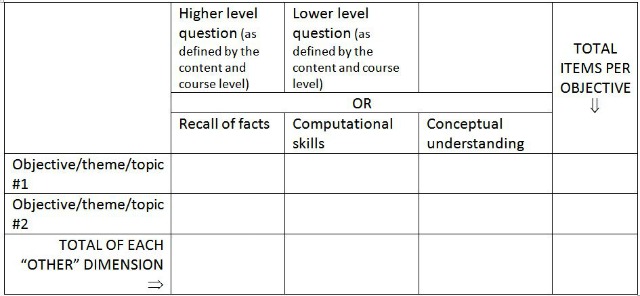
Good assessment alignment includes three parts: content, cognitive demand, and context. Content asks whether the assessment covers the right material. Cognitive demand asks whether the task requires the right level of thinking. Context asks whether students are applying learning in a meaningful situation. A history assessment about the American Revolution might include key events, but if it only asks students to match dates, it may miss the deeper goal of explaining causes, consequences, and competing perspectives.
Teachers can improve alignment by using a simple test audit. For each assessment item or task, ask: What learning target does this measure? What thinking does it require? Could a student answer correctly through memorization alone? Does this task give students a fair chance to show understanding? If the answer is uncomfortable, good. That means the assessment is getting a checkup.
Make Formative Assessment the Daily GPS
Formative assessment is the ongoing process of checking learning while there is still time to do something about it. It is not just a mini-test. It can be a quick write, exit ticket, thumbs signal, student explanation, concept map, peer discussion, whiteboard response, or one beautiful sentence that reveals exactly where the class got lost.
Think of formative assessment as classroom GPS. A summative test tells you where students ended up. Formative checks tell you whether they are currently driving toward the ocean, the mountains, or the cafeteria. When teachers use formative evidence well, they can reteach, regroup, enrich, slow down, speed up, or change the example before confusion hardens into misunderstanding.
For instance, after a math lesson on proportional relationships, a teacher might ask students to explain whether two recipes are equivalent. The answers may reveal that some students can compute cross-products but cannot explain proportional reasoning. That is gold. Not shiny gold, perhaps, but instructional gold. The teacher can adjust the next lesson toward visual models and explanation instead of assigning twenty more problems that repeat the same misconception.
Separate Practice From Performance
One reason classrooms drift into teaching to the test is that every task starts to feel graded. When students think every mistake will be recorded forever, they become cautious. Cautious learners often choose safe answers, safe topics, safe strategies, and safe silence. Learning needs room for messy attempts.
Teachers can reduce test pressure by clearly separating practice from performance. Practice is where students try, receive feedback, revise, and build skill. Performance is where students demonstrate what they have learned after preparation. Athletes practice before game day. Musicians rehearse before the concert. Students deserve the same logic, minus the marching band uniforms unless absolutely necessary.
A classroom that values practice might include ungraded retrieval quizzes, draft conferences, peer review, error analysis, skill stations, or reflection logs. These activities still generate evidence, but the evidence is used to improve learning rather than label students too early. When the final assessment arrives, it feels less like a trap and more like a chance to show growth.
Use Retrieval Practice Without Turning Class Into Quiz Mountain
Retrieval practice helps students strengthen memory by recalling information instead of only rereading or reviewing it. Short, low-stakes quizzes can be useful because they make students pull knowledge from memory, notice gaps, and revisit important ideas. The key phrase is low-stakes. If every retrieval opportunity feels like a tiny thunderstorm of judgment, students will remember the stress more than the content.
Effective retrieval practice can be quick and varied. Ask students to write three things they remember from yesterday, explain a concept without notes, draw a process from memory, answer a warm-up question, or teach a partner one key idea. Then give feedback, let students check notes, and invite correction. The goal is not to catch students forgetting. The goal is to help them remember more effectively.
Retrieval should connect to big learning goals, not random trivia. If students are learning literary analysis, retrieval might ask them to recall methods for analyzing character motivation. If students are learning chemistry, retrieval might ask them to explain why atoms form bonds. Used wisely, retrieval practice prepares students for assessments because it strengthens the learning itself.
Ask Better Questions Than the Test Asks
One of the best ways to avoid teaching to the test is to ask questions that go beyond the test. If students can answer deeper, messier, more interesting questions, they can usually handle simpler ones too. The reverse is not always true. A student trained only on basic recall questions may panic when asked to apply, justify, compare, or create.
In an English class, instead of only asking, “What is the theme?” a teacher might ask, “How does the author develop the theme through a character’s bad decision?” In social studies, instead of “What year did the event happen?” ask, “Why did different groups interpret the event differently?” In math, instead of “Solve for x,” ask, “Which solution strategy is most efficient here, and why?”
Better questions build flexible thinking. They also make class more interesting. Students are more likely to engage when questions invite debate, evidence, creativity, and explanation. Even better, these questions reveal understanding in a way that a stack of copied definitions never will.
Design Performance Tasks and Authentic Assessments
Performance tasks ask students to use knowledge and skills in a meaningful way. They might design a public service announcement, conduct a science investigation, create a budget, write a policy memo, build a model, present a solution, or curate a portfolio. Authentic assessment does not mean every task must involve glitter, cardboard, and a dramatic trip to the supply closet. It means the task resembles how knowledge is used beyond the test page.
For example, a health class could assess nutrition knowledge by asking students to evaluate a sample school lunch menu and recommend improvements based on dietary guidelines. A statistics class could ask students to analyze a real data set and explain whether a claim is supported. A civics class could ask students to write testimony for a local issue. These tasks test what was taught, but they do not reduce learning to test rehearsal.
Performance tasks also help students demonstrate strengths that traditional tests may miss. A student who struggles with multiple-choice questions may shine when explaining a process orally. A student who is quiet in discussion may produce a thoughtful written analysis. Assessment should not be a single locked door. It should provide several fair ways to show evidence of learning.
Use Rubrics as Teaching Tools, Not Secret Treasure Maps
A rubric should not appear only after grading, like a mysterious ancient scroll revealing why everyone lost points. Rubrics work best when students use them before, during, and after the task. They clarify expectations, define quality, and make feedback more specific.
A strong rubric focuses on the learning targets. For an argument essay, criteria might include claim, evidence, reasoning, organization, and conventions. For a science lab, criteria might include hypothesis, procedure, data analysis, explanation, and accuracy. The rubric should describe levels of performance in language students understand. “Demonstrates sophisticated command of analytical reasoning” may sound impressive, but “explains how the evidence supports the claim and addresses a possible counterargument” is more useful.
Teachers can use rubrics instructionally by showing sample work, asking students to score examples, inviting students to revise one criterion at a time, and holding short conferences. When students understand the rubric, they are not gaming the test. They are learning what quality looks like.
Teach Test-Wise Skills Without Making Them the Curriculum
Students need some test-wise skills. They should know how to read directions carefully, manage time, annotate a passage, plan a written response, check work, and avoid spending ten minutes emotionally negotiating with one confusing question. These are useful academic survival skills.
The trick is to teach them briefly and transparently, not let them take over the course. A teacher might spend one lesson unpacking constructed-response expectations, then return to rich reading and writing. A math teacher might show how to check reasonableness on multiple-choice problems, then continue building conceptual understanding. A science teacher might teach students how to interpret graphs used on exams, but still conduct investigations where students create their own graphs from data.
Healthy test preparation says, “Here is how this format works.” Harmful test preparation says, “This format is all learning is.” Students deserve the first message, not the second.
Use Data Like a Teacher, Not Like a Robot
Assessment data can be helpful, but it does not replace professional judgment. Numbers can show patterns, but teachers must interpret them. A class average may reveal that students struggled with inference questions, but the next step requires human thinking. Did students misunderstand vocabulary? Did they rush? Did the passage depend on background knowledge they did not have? Was the question poorly written? Did the lesson skip an important bridge?
Useful data conversations focus on action. Instead of asking, “Who failed?” ask, “What does this evidence suggest students need next?” Instead of sorting students permanently into groups, use data flexibly. A student may need support with fractions this week and enrichment in geometry next week. Learners are not canned goods; they do not belong on fixed shelves.
Teachers can use item analysis, student work samples, quick conferences, and class discussions to identify patterns. The goal is not to worship the spreadsheet. The goal is to make better instructional decisions.
Protect Curiosity and Deep Learning
The biggest danger of teaching to the test is not boredom, although boredom is definitely lurking nearby wearing comfortable shoes. The bigger danger is that students may conclude school is about guessing what adults want rather than developing ideas of their own. That belief damages motivation.
To protect curiosity, teachers can include inquiry questions, student choice, project options, real-world problems, and discussions that do not have one neat answer. A unit on weather can include required vocabulary and data interpretation while still asking students to investigate local climate patterns. A unit on persuasive writing can prepare students for a state assessment while still letting them choose issues they care about. A unit on geometry can include proofs and formulas while asking students to design something that actually uses spatial reasoning.
Deep learning and assessment are not enemies. They only become enemies when assessment is too narrow or instruction becomes too fearful. When students explore ideas, practice skills, receive feedback, and apply knowledge, assessment becomes part of learning rather than a separate monster under the desk.
Practical Classroom Strategies That Work
1. Write the Assessment Before Teaching the Unit
Draft the final task early, then check whether it truly matches the learning targets. This prevents last-minute tests that accidentally measure whatever was easiest to grade. It also helps teachers plan lessons that build toward meaningful performance.
2. Create a Balance of Question Types
Use selected response, short answer, explanation, application, discussion, and performance tasks. Different formats reveal different kinds of understanding. A balanced assessment system is more reliable than one format trying to do all the work.
3. Give Feedback Before the Grade
Feedback is most powerful when students can still use it. Instead of only marking final errors, give comments on drafts, practice problems, planning sheets, or early attempts. A grade ends the conversation. Feedback keeps it going.
4. Let Students Reflect on Evidence
Ask students to identify what improved, what still feels confusing, and what strategy helped them learn. Reflection turns assessment into metacognition. Students begin to understand not just what they know, but how they learn.
5. Reassess Important Skills
If a skill matters, one bad day should not be the final word. Offer opportunities for revision, retakes, or new demonstrations when appropriate. Reassessment communicates that learning is a process, not a single dramatic episode.
Common Mistakes to Avoid
The first mistake is confusing alignment with imitation. An aligned lesson teaches the knowledge and skills an assessment measures. An imitative lesson copies the test format until everyone involved loses the will to discuss theme, photosynthesis, or fractions ever again.
The second mistake is overgrading. If every warm-up, exit ticket, and rough draft receives a permanent score, students may hide confusion. Use some assessment evidence for feedback only. Let practice be practice.
The third mistake is relying on easy-to-score tasks at the expense of important learning. Multiple-choice questions can be useful, but they cannot measure everything. If collaboration, communication, reasoning, creativity, or analysis matter, students need tasks that make those skills visible.
The fourth mistake is ignoring student voice. Students can often explain what helped them learn, where they got stuck, and what type of evidence best shows their understanding. Their feedback should not control every decision, but it should inform teaching. After all, they are the ones doing the learning.
A 500-Word Experience Section: What This Looks Like in Real Classrooms
In classrooms where teachers test what they teach without teaching to the test, the mood feels different. There is still structure. There are still standards, rubrics, deadlines, quizzes, essays, projects, and the occasional pencil that mysteriously disappears into another dimension. But assessment does not dominate the room. It supports the room.
One common experience is the “exit ticket surprise.” A teacher finishes what felt like a clear lesson. Students nodded. A few even made the confident face students make when they want everyone to believe they understand. Then the exit tickets come in, and half the class has misunderstood the same key idea. In a test-driven classroom, this might feel like failure. In a learning-driven classroom, it is useful evidence. The teacher adjusts tomorrow’s lesson, uses a new example, asks students to compare two responses, and clears up the misconception before the unit test. The exit ticket did its job: it caught the wobble before the bicycle crashed.
Another experience comes from writing instruction. Suppose students are preparing for an argument essay assessment. Teaching to the test would mean drilling a rigid five-paragraph formula until every essay sounds like it was assembled in a factory. Testing what you teach means helping students understand claims, evidence, reasoning, audience, and organization. Students might examine strong and weak samples, highlight where reasoning explains evidence, debate which evidence is most convincing, draft introductions, revise body paragraphs, and use a rubric to improve their work. When the final essay arrives, students are ready not because they memorized a template, but because they practiced the thinking writers actually use.
In math, the difference is equally visible. A teacher could prepare students for a test on linear equations by giving page after page of nearly identical problems. Some students would succeed by pattern recognition. Others would quietly drown. A stronger approach mixes procedural fluency with conceptual questions: graph a situation, explain the meaning of slope, compare two pricing plans, find an error in a worked solution, and create a real-world example. The final test may still include equations, but students have learned what those equations mean. They can transfer the skill instead of clinging to one familiar format like a life raft.
Science teachers often see the value of authentic assessment during labs. Students may memorize the steps of the scientific method, but a performance task reveals whether they can actually ask a testable question, control variables, collect data, and draw a reasonable conclusion. The experience is sometimes messier than a traditional test. Materials spill. Groups disagree. Someone labels a graph axis with heroic creativity. Yet the teacher sees real evidence of scientific thinking. That evidence is worth the mess.
Students also experience assessment differently when teachers make success criteria visible. Instead of asking, “What do you want?” students begin asking, “What makes this explanation strong?” or “How can I improve my evidence?” That shift matters. It moves students from grade chasing to quality chasing. They become partners in assessment rather than victims of it.
Teachers who use this approach often report that tests become less frightening because they are no longer isolated events. Students have seen the learning targets, practiced the skills, received feedback, revised mistakes, and reflected on growth. The final assessment still matters, but it is not a mystery ambush. It is one more opportunity to show learning. And in a healthy classroom, showing learning is the whole point.
Conclusion
Testing what you’re teaching without teaching to the test is not about rejecting assessment. It is about using assessment with integrity. Teachers should absolutely measure what matters. They should align assessments with learning goals, gather evidence during instruction, provide feedback, and prepare students for the formats they will encounter. But they should not shrink the curriculum until it fits inside a bubble sheet.
The best classrooms treat assessment as part of a larger learning cycle: define the goal, teach deeply, check understanding, respond to evidence, let students practice, and ask them to demonstrate meaningful learning. That approach helps students perform better because they understand more. It also keeps school from becoming a test-prep treadmill with fluorescent lighting.
When assessment is done well, students do not simply learn how to pass. They learn how to think, explain, apply, revise, and transfer knowledge. That is the kind of learning worth testingand definitely worth teaching.
SEO Tags
Note: This article is written for web publication in standard American English and synthesizes research-backed assessment practices from reputable U.S. education organizations, university teaching centers, and classroom-focused professional resources.