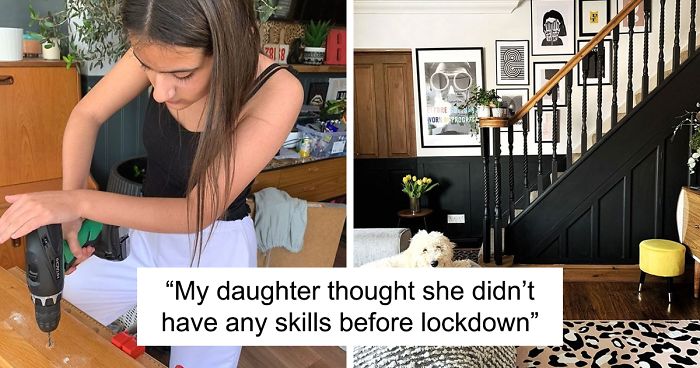
12-Year-Old Girl Redecorates Family Home In A Week For Just Around $125, And Here Are The Results

Most 12-year-olds spend a free week negotiating screen time, searching for snacks, or dramatically announcing that there is “nothing to do.” Bea Levache, however, apparently heard boredom knocking and answered with a handsaw, a paintbrush, and the confidence of a tiny interior designer with a surprisingly firm project deadline.
The story of a 12-year-old girl redecorating her family home in about a week for just around $125 became internet gold because it checks every box people love: a bored kid, a creative parent, a modest budget, and a final result that makes adults quietly wonder why their own hallway still looks like a storage-unit waiting room.
According to widely shared reports, Bea, from Kent in the United Kingdom, began helping her mother, Susie Levache, during lockdown. What started as a simple request to measure a wall for paneling turned into a full-on family home refresh. With guidance, basic tools, and a budget that would barely survive one impulsive trip to a home store, Bea managed to create a transformation that looked polished, personal, and far more expensive than it was.
But this story is more than a cute viral moment. It is also a useful lesson in budget home decorating, DIY confidence, and the magic of giving young people real responsibility instead of just telling them to “be creative” while hiding the good scissors.
Why This $125 Home Makeover Captured Everyone’s Attention
The internet is full of before-and-after makeovers, but many of them involve budgets that sound less like “weekend project” and more like “small yacht payment.” Bea’s project stood out because the amount was humble. Around $125 is not a renovation budget. It is a “let’s see what happens” budget. And that is exactly why people loved it.
The transformation reportedly included wall paneling, paint, room styling, and clever use of existing items. Instead of gutting rooms or buying brand-new furniture, Bea focused on high-impact changes: clean lines, fresh surfaces, better visual balance, and details that made ordinary spaces feel intentional.
That is the secret of many successful low-cost home makeovers. They do not try to replace everything. They identify what is dragging the space down, then fix the most visible problems first. A tired wall becomes an accent wall. A plain hallway gains paneling. A room with no personality gets color, art, and arrangement. Suddenly, the whole home looks like someone made a plan instead of simply surviving another Tuesday.
The Real Star: Budget Decorating With Big Visual Impact
A small decorating budget forces creativity. That might sound like something people say when they have no money left, but in design, limits can actually help. When you cannot buy your way out of a problem, you must solve it with proportion, color, texture, and placement.
Bea’s home makeover is a perfect example of what design experts often recommend for affordable decorating: paint, paneling, thrifted finds, rearranged furniture, and personal touches. These are the moves that make a room feel fresh without requiring a contractor, a second mortgage, or a mysterious uncle who “knows flooring.”
Paint Is the Tiny Budget’s Best Friend
Paint remains one of the most cost-effective ways to change a room. A new wall color can make a space feel brighter, moodier, cleaner, warmer, or more expensive. Even painting trim, doors, shelving, or a single accent wall can shift the entire mood of a home.
For a budget home makeover, paint works because it covers visual noise. Scuffed walls, dated tones, and mismatched finishes can make a room feel neglected. A thoughtful coat of paint says, “This space has entered its glow-up era.”
Wall Paneling Adds Architecture Without Major Renovation
One reason Bea’s project looked impressive is that wall paneling creates structure. It gives a flat wall depth and rhythm. Simple strips of wood or MDF can make a hallway, bedroom, or living room look custom, even when the materials are inexpensive.
Paneling also creates the illusion of craftsmanship. It suggests that the space was designed, not just decorated. That is why board-and-batten walls, picture-frame molding, and simple vertical panels continue to appear in DIY home decor projects. They are achievable, flexible, and extremely photogenic. In other words, they understand the assignment.
Rearranging Can Be Completely Free
Before buying anything, the smartest decorators look at what they already own. Moving furniture, swapping lamps between rooms, restyling shelves, or grouping accessories differently can make a room feel new at no cost.
This is the part of budget decorating that people underestimate. A chair that looks awkward in one corner may look charming beside a window. A mirror from a bedroom may brighten a hallway. A basket that held random cables may become stylish storage for blankets. The budget is zero, but the effect can be surprisingly strong.
How a 12-Year-Old Pulled Off a Home Refresh Adults Admire
Bea’s success did not come from being handed a blank check. It came from being trusted with a real project. That matters. Children and preteens often rise to the level of responsibility they are given, especially when the task has a visible result.
Measuring, cutting, painting, planning, and styling all require focus. A project like this teaches practical math, patience, sequencing, decision-making, and problem-solving. It also teaches the deeply adult lesson that DIY projects always take longer than expected and somehow involve at least one missing pencil.
Most importantly, the makeover gave Bea ownership. When a young person contributes to the family home, the space becomes more than a place they live. It becomes a place they helped shape. That sense of contribution can build confidence in a way lectures rarely do.
What Made the Results Look More Expensive Than $125?
The best budget makeovers do not scream “cheap.” They whisper, “I made choices.” Bea’s project worked because it used several classic design principles that make affordable spaces feel elevated.
1. A Clear Focal Point
Every room needs something that catches the eye first. It might be a paneled wall, a painted fireplace, a gallery arrangement, or a styled console table. Without a focal point, the eye wanders around the room looking for leadership, like a committee meeting with throw pillows.
A strong focal point makes a space feel organized. It also allows the rest of the room to stay simple, which is excellent news for anyone decorating on a tight budget.
2. Repetition and Cohesion
Repeating colors, materials, or shapes makes a home feel pulled together. Even inexpensive items can look intentional when they share a visual language. A black frame repeated in several rooms, a soft neutral wall color, or wood tones that appear more than once can help the whole home feel connected.
This is one of the easiest ways to avoid the “random cart at a discount store” effect. Budget decorating does not mean buying every cute thing. It means choosing the right few things and making them work hard.
3. Texture Instead of Clutter
Texture makes a room feel warm without making it messy. Wood, baskets, fabric, ceramics, plants, books, and layered textiles add interest even when the color palette is simple.
In low-cost decorating, texture is your friend because it adds depth. A thrifted basket, a painted frame, a secondhand vase, or a homemade cushion can soften a room and make it feel lived-in rather than staged by robots with beige programming.
4. Personal Style
The charm of Bea’s makeover was not just that it looked neat. It felt personal. That is the difference between a home and a showroom. A showroom says, “Please do not touch the pillows.” A home says, “We live here, but we have taste and possibly a label maker.”
Family photos, handmade art, meaningful objects, favorite colors, and quirky details make a space memorable. They also cost far less than designer accessories.
How to Try a Bea-Inspired Budget Home Makeover
You do not need to be 12 years old, wildly motivated, or trapped indoors during lockdown to borrow lessons from this project. A small budget can still produce a satisfying transformation if you plan carefully.
Start With One Space
Do not redecorate the entire house at once unless you enjoy chaos as a lifestyle brand. Choose one room, hallway, entryway, or wall. Small wins build momentum and prevent your home from looking like every drawer exploded simultaneously.
Make a Mini Budget
Write down the amount you can spend before shopping. Divide it into categories such as paint, supplies, hardware, thrifted decor, and safety items. Even a tiny budget needs a plan. Otherwise, it will disappear into three candles, one unnecessary tray, and a decorative object shaped like a pear.
Use What You Already Own
Shop your home first. Move artwork, restyle shelves, swap rugs, change pillow covers, and reuse leftover paint when possible. The cheapest decor item is the one you already paid for and forgot in a closet.
Choose One High-Impact DIY Feature
Panel one wall. Paint a door. Create a gallery wall. Replace cabinet knobs. Add peel-and-stick wallpaper to a small area. Paint a thrifted side table. One strong feature can make the whole room feel refreshed.
Thrift With a List
Secondhand shopping works best when you know what you need. Look for frames, baskets, lamps, small tables, mirrors, books, vases, ceramics, and solid wood pieces. Measure first. Inspect carefully. Avoid anything that smells suspiciously like a haunted basement.
Safety Matters, Especially With Kid-Led DIY
Bea’s story is inspiring, but it should not be mistaken for a permission slip to hand a child a power saw and hope for the best. A kid-led makeover should still be adult-supervised, age-appropriate, and safety-first.
Children can help with measuring, taping, planning, sanding by hand with proper protection, painting low areas, arranging decor, and choosing colors. Adults should handle dangerous tools, electrical work, heavy lifting, ladder work, and anything involving structural changes.
Older homes require extra caution. In the United States, homes built before 1978 may contain lead-based paint. Sanding or disturbing old paint can create dangerous dust, especially for children. When in doubt, test surfaces and hire certified professionals for risky work. A makeover should improve the home, not turn it into a science experiment nobody asked for.
Why This Story Feels So Good
Part of the appeal is obvious: the results were impressive. But the deeper reason people responded to Bea’s makeover is that it reminded them creativity does not require perfection. It requires permission to begin.
Many adults wait until they have the ideal budget, the perfect plan, or the confidence of a cable-TV design host. Bea simply started with one task and kept going. That is a powerful reminder. Sometimes the difference between “I hate this room” and “Wait, this is cute now” is one weekend, a small budget, and enough bravery to make the first mark.
Extra Experiences and Practical Lessons From a $125-Style Home Redecoration
A budget makeover like Bea’s also teaches several real-life lessons that apply far beyond paint and paneling. The first experience is learning that homes are not fixed objects. They can change. A dull hallway, an awkward corner, or a tired living room is not a life sentence. It is a design problem waiting for a practical answer.
One useful experience is the value of planning before buying. Many people begin decorating by shopping first, which feels fun until they come home with five unrelated items and no idea where any of them should go. A better approach is to walk through the room and write down what feels wrong. Is it too dark? Too empty? Too cluttered? Too beige? Once the problem is clear, the shopping list becomes smarter.
Another lesson is that measuring saves money. Bea’s first task reportedly involved measuring a wall, and that detail matters. Measuring helps prevent wasted materials, crooked layouts, and purchases that almost fit but not in any useful way. A tape measure may not be glamorous, but neither is returning a shelf because it blocks the light switch.
Budget decorating also teaches patience. Paint needs drying time. Panels need alignment. Thrifted items may need cleaning or repair. A room often looks worse before it looks better. This is the sacred DIY valley of doubt, where every project briefly whispers, “You have ruined everything.” Usually, you have not. You are just halfway through.
Families can also learn how creativity grows when people collaborate. A parent may understand tools and safety, while a child may bring fearless imagination. Adults sometimes overthink design because they know too many rules. Kids often choose what feels joyful. The best results can come from combining both: adult structure with youthful boldness.
There is also a financial lesson hidden in the makeover. When a young person sees how far $125 can go with planning, reuse, and effort, money becomes concrete. It is no longer just a number. It becomes paint, panels, brushes, thrifted decor, and visible results. That kind of hands-on budgeting can be more memorable than any lecture about saving.
Finally, a small home project can change how people feel in their daily routines. A refreshed entryway makes coming home nicer. A brighter bedroom can feel calmer. A styled living room can make family time feel more welcoming. The result is not only visual. It is emotional. A home makeover says, “This place matters, and so do the people living in it.”
That is why Bea’s story continues to resonate. It is not just about a 12-year-old with a paintbrush. It is about what happens when creativity, trust, effort, and a tiny budget meet in the same room. The results can be surprisingly beautifuland, thankfully, much cheaper than hiring someone to tell you your furniture is facing the wrong way.
Conclusion
The story of the 12-year-old girl who redecorated her family home in a week for around $125 proves that great design is not always about expensive furniture or professional renovation. Sometimes it starts with boredom, guidance, a modest budget, and a willingness to try.
Bea Levache’s makeover became popular because it felt achievable. It showed that paint, paneling, thrifted decor, rearranged furniture, and personal creativity can dramatically change a home. It also showed the value of giving kids meaningful responsibility. With supervision and safety in place, young people can contribute more than adults sometimes expect.
For anyone staring at a tired room and waiting for a giant budget to arrive, this makeover offers a friendly nudge: start small. Pick one wall. Move one piece of furniture. Paint one surface. Style one shelf. The goal is not perfection. The goal is progress, personality, and a home that feels more like you.
Note: This article is an original, publication-ready synthesis based on real reported details and reputable home decorating, DIY, budgeting, and child-safety guidance. No source links or citation markers are included in the article body for clean web publishing.