
Black cinema has never been a side chapter in movie history. It is the plot twist, the drumline, the monologue, the kitchen-table argument, the church hat, the spaceship, the protest sign, the love letter, and sometimes the perfectly timed joke that saves the whole scene. From silent-era race films to Oscar-winning dramas, from Blaxploitation swagger to Afrofuturist blockbusters, powerful Black movies have reshaped what American cinema can look like, sound like, and feel like.
This guide is not a dusty museum label. It is a celebration of Black films that changed cinema forever: movies that broke industry barriers, expanded genres, launched careers, challenged stereotypes, preserved culture, influenced fashion and music, and gave audiences the unforgettable pleasure of saying, “Finally, that feels real.”
Why Black Movies Matter to Film History
Black movies matter because representation is not decoration. It changes whose stories get funded, whose faces become iconic, whose neighborhoods become cinematic landscapes, and whose pain, joy, humor, romance, rage, spirituality, and imagination are treated as universal. Early Black filmmakers such as Oscar Micheaux worked outside a segregated Hollywood system to create “race films” for Black audiences. These films pushed back against racist caricatures and gave Black viewers heroes, families, professionals, lovers, dreamers, and rebels at a time when mainstream studios often preferred insulting shortcuts.
That spirit kept evolving. In the 1970s, films such as Shaft, Sweet Sweetback’s Baadasssss Song, Sounder, and Claudine showed different sides of Black life: action cool, rural endurance, working-class tenderness, political anger, and urban style sharp enough to cut glass. Then came the independent explosions of the 1980s and 1990s, when Spike Lee, Julie Dash, John Singleton, Kasi Lemmons, Charles Burnett, the Hughes brothers, and many others gave Black cinema a new grammar. Their films did not ask permission to exist. They walked into the room, adjusted the lighting, and started directing traffic.
The Films That Redrew the Map
Silent-Era Resistance and the Birth of Black Independent Cinema
Within Our Gates remains one of the essential Black movies because it directly answered Hollywood’s racist storytelling with a complicated, urgent portrait of Black life. Body and Soul, The Scar of Shame, and The Exile helped prove that Black audiences deserved stories with moral conflict, romance, ambition, betrayal, and artistry. These films did not have Marvel budgets or studio machinery. They had something more dangerous: purpose.
Classic Hollywood, Musicals, and the Fight for Dignity
Mid-century films such as Stormy Weather, Cabin in the Sky, Carmen Jones, A Raisin in the Sun, and Nothing But a Man expanded the screen image of Black performers and families. Sidney Poitier’s era brought polished restraint and moral force to films such as Lilies of the Field, In the Heat of the Night, and Guess Who’s Coming to Dinner. Later critics would rightly debate the limits placed on Poitier’s image, but his presence changed the room. Hollywood could no longer pretend Black stardom was some experimental garnish.
The 1970s: Swagger, Protest, Soul, and Survival
The 1970s gave Black cinema a jolt of electricity. Sweet Sweetback’s Baadasssss Song helped define independent Black radical cinema. Shaft turned a detective into a leather-jacketed cultural event. Super Fly mixed crime drama with Curtis Mayfield’s legendary music. Lady Sings the Blues gave Diana Ross a major dramatic showcase. Cooley High treated Black teen friendship with warmth and heartbreak. Killer of Sheep found poetry in ordinary working-class life, proving that “small” stories can echo louder than explosions.
The New Black Film Wave
By the late 1980s and 1990s, Black filmmakers were changing the language of American movies. Spike Lee’s Do the Right Thing turned one Brooklyn block into a national argument about heat, racism, policing, music, and community. John Singleton’s Boyz n the Hood brought South Central Los Angeles into mainstream consciousness with aching clarity. Julie Dash’s Daughters of the Dust created a dreamlike visual language rooted in Gullah Geechee culture. Kasi Lemmons’ Eve’s Bayou made memory, family secrets, and Southern Gothic atmosphere feel intoxicating. These movies did not simply add Black stories to cinema; they changed cinema’s rhythm.
167 Powerful Black Movies That Changed Cinema Forever
This list is not ranked. Think of it as a cinematic family reunion: some elders, some legends, some cousins who arrive late but bring the best playlist. Together, these films show the range of Black cinema across drama, comedy, horror, documentary, romance, science fiction, sports, music, history, and political storytelling.
- Within Our Gates (1920)
- Body and Soul (1925)
- The Scar of Shame (1927)
- The Exile (1931)
- The Blood of Jesus (1941)
- Stormy Weather (1943)
- Cabin in the Sky (1943)
- Pinky (1949)
- Carmen Jones (1954)
- Edge of the City (1957)
- Porgy and Bess (1959)
- Odds Against Tomorrow (1959)
- A Raisin in the Sun (1961)
- Nothing But a Man (1964)
- Uptight (1968)
- The Learning Tree (1969)
- Watermelon Man (1970)
- Sweet Sweetback’s Baadasssss Song (1971)
- Shaft (1971)
- Sounder (1972)
- Super Fly (1972)
- Lady Sings the Blues (1972)
- Blacula (1972)
- The Spook Who Sat by the Door (1973)
- Coffy (1973)
- Claudine (1974)
- Cooley High (1975)
- Cornbread, Earl and Me (1975)
- Car Wash (1976)
- Killer of Sheep (1977)
- The Wiz (1978)
- The Fish That Saved Pittsburgh (1979)
- A Hero Ain’t Nothin’ but a Sandwich (1978)
- Stir Crazy (1980)
- The Color Purple (1985)
- She’s Gotta Have It (1986)
- Hollywood Shuffle (1987)
- School Daze (1988)
- Coming to America (1988)
- Do the Right Thing (1989)
- Glory (1989)
- To Sleep with Anger (1990)
- House Party (1990)
- Mo’ Better Blues (1990)
- Daughters of the Dust (1991)
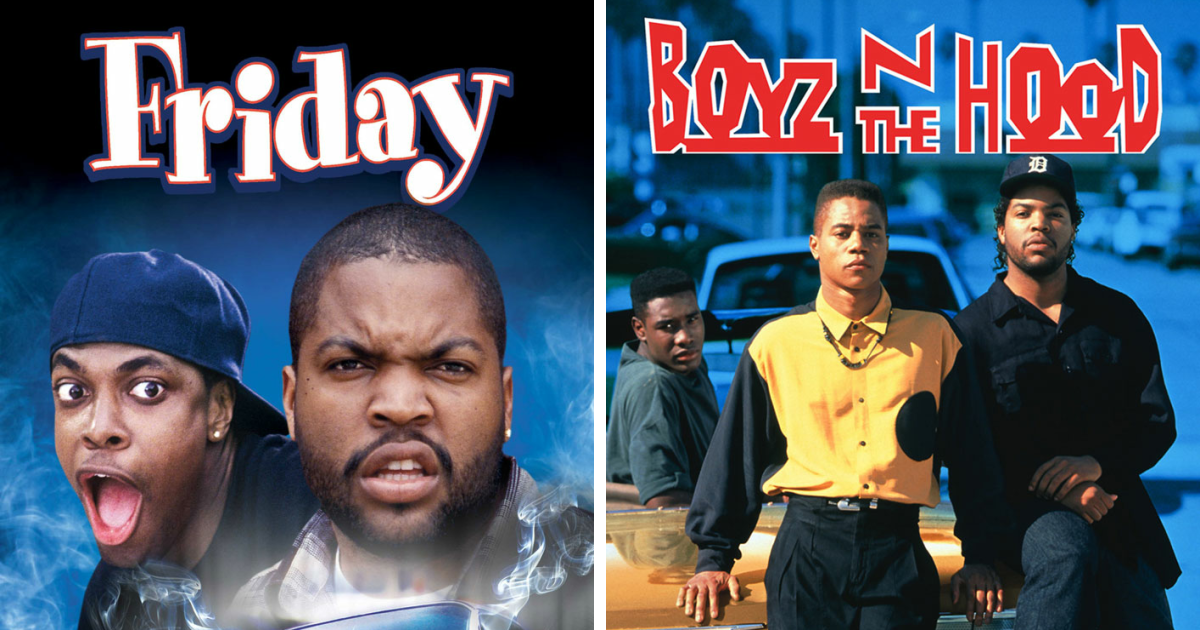
- Boyz n the Hood (1991)
- Jungle Fever (1991)
- New Jack City (1991)
- Mississippi Masala (1991)
- Straight Out of Brooklyn (1991)
- One False Move (1992)
- Malcolm X (1992)
- Juice (1992)
- Boomerang (1992)
- Just Another Girl on the I.R.T. (1992)
- Menace II Society (1993)
- The Inkwell (1994)
- Crooklyn (1994)
- Jason’s Lyric (1994)
- Fresh (1994)
- Hoop Dreams (1994)
- Friday (1995)
- Devil in a Blue Dress (1995)
- Waiting to Exhale (1995)
- Dead Presidents (1995)
- Clockers (1995)
- Set It Off (1996)
- Get on the Bus (1996)
- The Watermelon Woman (1996)
- Soul Food (1997)
- Eve’s Bayou (1997)
- Amistad (1997)
- Love Jones (1997)
- How Stella Got Her Groove Back (1998)
- He Got Game (1998)
- Belly (1998)
- The Best Man (1999)
- The Wood (1999)
- Life (1999)
- Bamboozled (2000)
- Love & Basketball (2000)
- Remember the Titans (2000)
- The Original Kings of Comedy (2000)
- The Brothers (2001)
- Baby Boy (2001)
- Training Day (2001)
- Barbershop (2002)
- Brown Sugar (2002)
- Antwone Fisher (2002)
- Paid in Full (2002)
- Drumline (2002)
- City of God (2002)
- Bad Boys II (2003)
- Baadasssss! (2003)
- Ray (2004)
- Crash (2004)
- Hustle & Flow (2005)
- Coach Carter (2005)
- The Gospel (2005)
- Dreamgirls (2006)
- Akeelah and the Bee (2006)
- Idlewild (2006)
- The Pursuit of Happyness (2006)
- Stomp the Yard (2007)
- Talk to Me (2007)
- This Christmas (2007)
- Cadillac Records (2008)
- The Secret Life of Bees (2008)
- Notorious (2009)
- Precious (2009)
- Good Hair (2009)
- For Colored Girls (2010)
- Night Catches Us (2010)
- Pariah (2011)
- The Help (2011)
- Attack the Block (2011)
- Middle of Nowhere (2012)
- Django Unchained (2012)
- Fruitvale Station (2013)
- The Butler (2013)
- 12 Years a Slave (2013)
- The Best Man Holiday (2013)
- Belle (2013)
- Dear White People (2014)
- Selma (2014)
- Dope (2015)
- Creed (2015)
- Straight Outta Compton (2015)
- What Happened, Miss Simone? (2015)
- Moonlight (2016)
- Hidden Figures (2016)
- Fences (2016)
- Loving (2016)
- Get Out (2017)
- Girls Trip (2017)
- Mudbound (2017)
- Detroit (2017)
- Marshall (2017)
- Black Panther (2018)
- Sorry to Bother You (2018)
- Blindspotting (2018)
- If Beale Street Could Talk (2018)
- BlacKkKlansman (2018)
- The Hate U Give (2018)
- Hale County This Morning, This Evening (2018)
- Us (2019)
- Queen & Slim (2019)
- The Last Black Man in San Francisco (2019)
- Dolemite Is My Name (2019)
- Just Mercy (2019)
- Clemency (2019)
- Ma Rainey’s Black Bottom (2020)
- Da 5 Bloods (2020)
- One Night in Miami (2020)
- Judas and the Black Messiah (2021)
- The Forty-Year-Old Version (2020)
- Soul (2020)
- Respect (2021)
- King Richard (2021)
- Passing (2021)
- The Woman King (2022)
- Nope (2022)
- Till (2022)
- Black Panther: Wakanda Forever (2022)
- They Cloned Tyrone (2023)
- American Fiction (2023)
- The Color Purple (2023)
Modern Black Movies and the New Box Office Imagination
Modern Black cinema has expanded in every direction at once. Moonlight won Best Picture by telling an intimate story about Black boyhood, masculinity, queerness, silence, and tenderness. Get Out turned the horror genre into a social X-ray, making audiences laugh, gasp, and side-eye teacups forever. Black Panther proved that Afrofuturism, superhero spectacle, African-inspired design, and Black global pride could become a box office phenomenon. Girls Trip reminded Hollywood that Black women-led comedies can bring the laughs and the receipts. American Fiction sharpened the satire around publishing, race, taste, and the market’s hunger for trauma packaged neatly enough to win awards.
These films changed cinema because they widened possibility. Black characters could be kings, scientists, hustlers, poets, detectives, vampires, astronauts, grieving sons, fearless daughters, exhausted parents, comic geniuses, flawed lovers, and cosmic souls. In other words, Black cinema insisted on the radical idea that Black people are people. Hollywood, bless its expensive little heart, has taken a surprisingly long time to absorb that lesson.
How These Movies Changed the Industry
The impact of powerful Black films can be seen in casting, financing, awards, criticism, film-school syllabi, streaming libraries, preservation projects, and fan communities. Movies such as Daughters of the Dust, Killer of Sheep, Do the Right Thing, Boyz n the Hood, and Love & Basketball continue to influence directors because they prove that style and specificity are not enemies. The more exact a film is about a community, the more universal it can become.
Black cinema also changed genre rules. Before Get Out, horror had often used Black characters as warnings, sidekicks, or early casualties. Jordan Peele flipped the formula and made racism itself the monster hiding in plain sight. Before Black Panther, major superhero films rarely centered African diasporic imagination with such scale. Before Waiting to Exhale, Love Jones, and The Best Man, Hollywood too often acted as if Black romance needed either a lecture or a tragedy to justify itself. These films said: sometimes people just want love, friendship, wine, poetry, and a soundtrack that refuses to age.
Viewing Experiences: What It Feels Like to Watch Black Cinema Deeply
Watching 167 powerful Black movies is not like checking boxes on a film-school assignment. It is more like traveling through a living archive where every room has a different temperature. One night, you may watch Within Our Gates and feel the shock of how boldly early Black filmmakers challenged racist mythology. The next night, Stormy Weather may remind you that Black performance has always carried elegance, athleticism, wit, and musical genius even when the surrounding industry tried to limit the frame. Then Do the Right Thing arrives, and suddenly your living room feels hotter. You can practically hear the pavement sizzling. That is not just filmmaking; that is climate control by cinema.
The experience becomes richer when you stop expecting one “type” of Black movie. Love Jones is not trying to be Menace II Society. Daughters of the Dust is not built like Friday. Get Out does not move like Fences, and Girls Trip certainly did not come to the party to whisper politely in the corner. Black cinema contains multitudes: historical epics, absurdist comedies, family dramas, experimental documentaries, sports stories, biopics, musicals, coming-of-age tales, and horror films that make you suspicious of every smiling stranger with a teacup.
One of the most rewarding viewing habits is pairing films across decades. Watch A Raisin in the Sun beside Soul Food, and you can see how the Black family home changes but remains a battlefield of dreams, money, memory, and love. Pair Shaft with Black Panther, and the evolution of Black cool becomes almost architectural: from city streets and private-eye swagger to vibranium, royal debates, and world-building on a mythic scale. Watch Killer of Sheep near Hale County This Morning, This Evening, and you notice how quiet observation can become political without raising its voice.
These movies also create community. People quote them at cookouts, argue about them in classrooms, rank them online, defend them like cousins, and revisit them when life changes. A teenager may first come to Boyz n the Hood for the cultural reputation and leave with an ache about fathers, friends, and futures. An adult may return to Waiting to Exhale and suddenly understand every look, every sigh, every “I deserve better” moment with new clarity. A viewer who once watched Moonlight for awards-season homework may later see it as one of the most delicate films ever made about silence.
The best experience is not passive. These films ask viewers to notice craft: the colors in Daughters of the Dust, the music in Super Fly, the blocking in Fences, the satire in Bamboozled, the controlled unease in Get Out, the costume design in Black Panther, the emotional architecture of Love & Basketball. The reward is a deeper understanding of cinema itself. Black movies did not merely change representation; they changed editing rhythms, soundtracks, performance styles, genre expectations, and the emotional vocabulary of the screen.
Conclusion: Black Cinema Is Cinema
To say these 167 powerful Black movies changed cinema forever is not an exaggeration; it is a correction. For too long, film history treated Black artistry as a special category instead of a central force. The truth is clearer: Black filmmakers, actors, writers, composers, editors, cinematographers, costume designers, critics, archivists, and audiences have shaped the movies from the beginning. Their work has challenged injustice, created beauty, invented style, built stars, preserved memory, and opened doors that should never have been closed in the first place.
Whether you begin with Oscar Micheaux, Spike Lee, Julie Dash, John Singleton, Ava DuVernay, Ryan Coogler, Barry Jenkins, Jordan Peele, Kasi Lemmons, Gina Prince-Bythewood, or a title you randomly pick because the poster looks irresistible, the journey through Black cinema is one of the richest adventures in movie history. Bring curiosity. Bring snacks. Maybe bring tissues. Definitely bring respect.
Note: This article synthesizes established film history from reputable U.S.-based film, archive, museum, awards, and culture sources, including public preservation records, cinema archives, Academy records, critic essays, and Black film history resources.