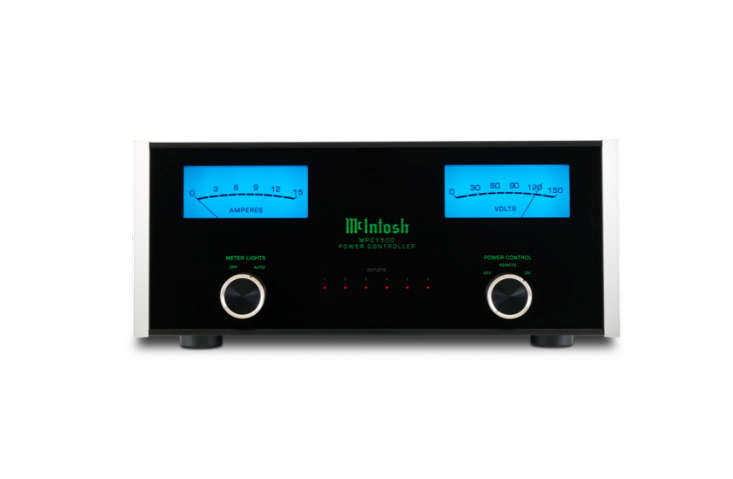

Editorial note: The McIntosh MPC1500 is officially a power controller, not a stereo receiver in the traditional sense. It does not tune radio stations, amplify speakers, or decode streaming services. However, because many audio shoppers search for it as the “McIntosh MPC 1500 Receiver,” this guide keeps the requested title while clearly explaining what the component actually does: protect, organize, monitor, and condition power for a serious high-end audio system.
What Is the McIntosh MPC1500?
The McIntosh MPC1500 is a luxury power controller built for people who take home audio seriously enough to worry about the electricity feeding it. That may sound dramatic until you remember that even the most beautiful amplifier is still helpless without stable AC power. A $10,000 amplifier connected to noisy, sagging, surge-prone wall power is like a grand piano placed in a room with a leaky roof. It may still play, but nobody should be surprised when things get messy.
In simple terms, the MPC1500 sits between the wall outlet and your audio components. Instead of treating power as an afterthought, it treats power as part of the system. It is designed to reduce unwanted AC line noise, provide surge protection, monitor voltage and current draw, and allow connected components to power on in a more controlled way. For McIntosh fans, it also looks exactly how it should: black glass, aluminum end caps, glowing blue meters, and the kind of front panel that says, “Yes, this rack has a mortgage.”
The word “receiver” can create confusion here. A normal receiver combines several functions in one chassis, usually including amplification, input switching, and radio tuning. The MPC1500 does none of that. Instead, it supports the gear that does. It is more like the electrical foundation under a listening room than the star singer on stage. Not glamorous? Maybe. Important? Absolutely.
Why Power Management Matters in High-End Audio
Modern homes are noisy places electrically. Computers, dimmers, refrigerators, routers, chargers, LED lighting, smart appliances, gaming consoles, and home theater devices all share the same electrical environment. Some of them behave politely. Others act like raccoons in a restaurant dumpster. That noise can travel through AC lines and potentially affect sensitive audio electronics.
Does every system need a massive power controller? No. A compact desktop setup or entry-level stereo probably does not need an 87-pound power-management tank. But in a high-resolution system with separate amplifiers, preamplifiers, disc players, DACs, streamers, turntables, and theater processors, power quality becomes harder to ignore. The more revealing the system, the more obvious little annoyances can become.
The MPC1500 is aimed at systems where the owner has already invested heavily in amplification, source equipment, speakers, cables, racks, and room setup. At that level, the goal is not to create magical fairy dust. The goal is to reduce avoidable problems: AC interference, surge exposure, messy power sequencing, voltage awareness, and the spaghetti disaster behind the rack.
Design and Build: Classic McIntosh, Built Like a Vault Door
McIntosh products are famous for their black glass faceplates, illuminated logos, aluminum trim, and blue meters. The MPC1500 follows that visual language proudly. It looks like it belongs beside a McIntosh preamp, amplifier, or disc player because it was designed to live in that world. The front panel does not scream for attention; it simply glows with the confidence of a component that knows it weighs more than some small furniture.
The official North American dimensions are 17-1/2 inches wide, 7-5/8 inches high including feet, and 22 inches deep including the front panel, knobs, and cables. The unit weight is listed at 87 pounds. That number matters. This is not a plug strip with a fancy badge. Before buying one, measure your rack, check shelf weight limits, and maybe warn your lower back that its weekend plans have changed.
The mass is not just for drama. At the heart of the MPC1500 is a large toroidal isolation transformer specially wound to act as a low-pass filter for unwanted AC line noise. The transformer occupies a major role in the unit’s design and helps explain why the component is physically substantial. In the high-end world, “heavy” does not automatically mean “better,” but in this case the weight is connected to a real engineering purpose.
Key Features of the McIntosh MPC1500
Toroidal Isolation Transformer
The MPC1500 uses a specially wound toroidal isolation transformer intended to reduce unwanted noise from the AC line. This matters because electrical noise can sneak into audio systems in ways that are annoying to diagnose. A system may sound slightly edgy, less open, or less stable, and the owner may blame the DAC, the speakers, the cables, the weather, or Mercury being in retrograde. Sometimes the culprit is simply dirty power.
The transformer design is meant to isolate connected components from certain line disturbances and help provide cleaner, more consistent power. In a revealing two-channel setup, this can contribute to a quieter background and a more settled presentation. In a home theater rack, it can help organize power delivery across many connected components.
Quick-Acting Surge Suppression
Surge protection is one of the MPC1500’s most practical benefits. Expensive audio gear deserves more than blind faith in the wall outlet. The MPC1500 includes a quick-acting surge suppression module designed to respond when voltage rises beyond normal operating levels. Unlike many basic surge protectors that are sacrificial, McIntosh describes the MPC1500’s suppression system as non-sacrificial, meaning it is not designed to be used up after a surge event in the same way many ordinary devices are.
That is a big deal for long-term ownership. Nobody wants to protect a five-figure audio system with a mystery strip found behind a television in 2009. The MPC1500 gives serious systems a more appropriate layer of defense.
Six Receptacles, Up to Twelve Components
In the North American version, the MPC1500 includes six medical-grade duplex receptacles, allowing up to twelve components to be connected. Other regional versions use appropriate receptacle types for local electrical systems. Two receptacles are always on when the unit is plugged in, while four are programmable. That setup makes the MPC1500 useful for both simple and complex systems.
For example, a turntable power supply and a network streamer may be placed on always-on outlets, while amplifiers or source components can be switched. The programmable outlets can be configured through rear-panel power control switches, giving owners flexibility over how different pieces wake up and shut down.
Voltage and Current Meters
The front-panel meters are not just decoration, although they are absolutely doing some style work. One meter displays voltage, and the other displays current draw. That means owners can actually see what is happening instead of guessing. If the voltage drops noticeably under load, the system may be experiencing AC line sag. If current draw jumps during loud playback, the meter makes that behavior visible.
This is helpful for system planning. Large amplifiers can pull serious current, especially during dynamic passages. Seeing current draw in real time gives the owner a better sense of how hard the system is working. It is also fun in the same way a performance car’s gauges are fun. You may not need to stare at them every second, but you are glad they are there.
McIntosh MPC1500 Specifications
| Feature | North American Version |
|---|---|
| Product Type | Power controller / power conditioner |
| Output Voltage | 120 volts AC nominal |
| Power Requirement | 120 volts, 60Hz |
| Maximum Current | 12 amps |
| Maximum Power | 1440 watts |
| Load Regulation | ± 2.5% |
| Receptacles | Six medical-grade duplex receptacles |
| Always-On Receptacles | Two |
| Programmable Receptacles | Four |
| Meters | One volt meter and one ampere meter |
| Dimensions | 17-1/2 inches W x 7-5/8 inches H x 22 inches D |
| Weight | 87 pounds |
Who Should Consider the McIntosh MPC1500?
The ideal MPC1500 owner is not someone casually plugging in a Bluetooth speaker beside a lamp. This product makes sense for dedicated audio enthusiasts, home theater owners, collectors, and McIntosh system builders who want premium power management that matches the quality and appearance of their other components.
It is especially logical for systems with multiple separates. Think power amplifier, preamplifier, SACD/CD player, DAC, streamer, turntable power supply, phono stage, home theater processor, and maybe a second-zone amplifier. Once a system reaches that level, a power controller is not just about protection. It becomes part of the installation strategy.
McIntosh owners will also appreciate the integration. The MPC1500 can work with McIntosh power control connections, allowing system components to turn on and off in a more coordinated way. That is cleaner than crawling behind a rack like an audio archaeologist every time you want to listen to a record.
What the MPC1500 Will Not Do
Good power management is valuable, but it is not magic. The MPC1500 will not turn poor speakers into reference monitors. It will not fix a bad room, cure harsh recordings, or make a compressed streaming file sound like a master tape. It also will not replace smart system fundamentals such as proper speaker placement, appropriate amplification, room treatment, and safe electrical wiring.
It is best understood as a high-end support component. When the rest of the system is already capable, the MPC1500 helps protect that investment and may allow the system to perform more consistently. If the system has obvious acoustic problems, solve those first. Buying a premium power controller before adjusting speaker placement is like polishing a car before checking whether it has tires.
Setup Tips for Better Results
First, place the MPC1500 on a strong shelf with enough ventilation. The owner’s manual recommends leaving space around the unit so airflow is not blocked. This is important because power components generate heat, and heat is the enemy of long-term reliability.
Second, connect the MPC1500 directly to a proper wall outlet. Avoid plugging it into another power strip or extension cord. That defeats the purpose and creates unnecessary weak links. If your listening room has questionable wiring, consult a qualified electrician before adding expensive audio equipment. The best power controller in the world cannot make unsafe wiring safe.
Third, think carefully about which components should be always on and which should be switched. Low-power source components may benefit from always-on receptacles, while amplifiers may be better assigned to controlled outlets. In larger systems, sequencing can help avoid sudden power demands when everything turns on at once.
Fourth, use the meters. They are not there only to impress guests, although they will absolutely impress guests. Watch voltage behavior and current draw during normal listening. Over time, you will understand what is typical for your system. That makes unusual behavior easier to spot.
Sound Quality: What Can Owners Realistically Expect?
Power products are controversial in audio circles because experiences vary. Some listeners report quieter backgrounds, better image stability, smoother treble, and improved dynamics after adding high-quality power conditioning. Others hear little change, especially if their home power is already clean and their system is not especially sensitive to noise.
The honest answer is that results depend on the room, the electrical environment, and the system. The MPC1500 is most likely to make a meaningful difference in a revealing system located in a noisy electrical environment. It is also valuable even when sonic changes are subtle, because protection, organization, monitoring, and system control are practical benefits.
In other words, do not buy the MPC1500 expecting it to sprinkle golden audiophile confetti over every recording. Buy it because you have a serious system and want a serious power foundation. Any sonic refinement should be treated as part of the overall benefit, not the only reason to own it.
Price and Value
The MPC1500 has always lived in premium territory. When it entered the power control category, it was announced with a suggested retail price of $4,500. Current dealer listings commonly place new units around $7,000, depending on availability and market conditions. That puts it far above ordinary surge protectors and many power conditioners.
Is it expensive? Absolutely. This is McIntosh, not a coupon-bin accessory. But value in high-end audio is rarely about low price alone. The value argument depends on the system it supports. In a modest system, the money would usually be better spent on speakers, room treatment, or source upgrades. In a serious McIntosh rack, the MPC1500 can make more sense because it protects expensive components, visually matches the system, and provides power control features that cheaper devices do not.
Common Questions About the McIntosh MPC1500
Is the McIntosh MPC1500 a receiver?
No. It is a power controller. It does not include an amplifier, tuner, or streamer. It manages AC power for other audio and video components.
Can power amplifiers be connected to it?
Yes, provided the total current draw of all connected components remains within the unit’s rated limits. Owners should always follow the manual and consider the demands of large amplifiers carefully.
Does it replace a dedicated electrical circuit?
No. A dedicated circuit can be a separate electrical upgrade for serious listening rooms. The MPC1500 conditions, protects, and organizes power, but it does not change the basic capacity or safety of the home’s wiring.
Is it only for McIntosh systems?
No. It can be used with third-party components, but it is especially attractive in McIntosh systems because of matching design and power control integration.
Real-World Ownership Experience: Living With the McIntosh MPC1500
A realistic ownership experience with the McIntosh MPC1500 begins before the first listening session. It starts with logistics. The box is large, the unit is heavy, and installation is not something to do one-handed while holding coffee. This is the kind of component that makes you clear the rack, plan cable routes, and briefly question whether your audio hobby has become a strength-training program.
Once installed, the MPC1500 changes the feel of a system. Instead of a cluster of components fighting for outlets behind the rack, there is a central power hub. The back of the system becomes more logical. Source components, amplifiers, and processors can be grouped with intention. The two always-on outlets are useful for gear that benefits from staying powered, while the programmable outlets help manage components that should wake up only when needed.
Daily use is where the MPC1500 becomes satisfying. Turn on the system, and the connected components can power up in a controlled sequence rather than all at once. The blue meters glow, the voltage meter settles, and the current meter gives a little movement when music starts playing. There is something reassuring about seeing the system’s electrical behavior instead of guessing. It makes the listening room feel less like a pile of expensive boxes and more like a properly engineered installation.
During quiet listening, the biggest impression may be psychological and practical: confidence. The system feels protected. The power path feels organized. The rack looks finished. In high-end audio, that matters. A listening room is not only about sound; it is about ritual. Lowering the stylus, selecting an album, dimming the lights, and seeing those McIntosh meters glow is part of the experience. The MPC1500 adds to that ritual without demanding attention from the music itself.
With dynamic music, the current meter becomes surprisingly entertaining. Big orchestral hits, bass-heavy tracks, and loud movie scenes can make the meter move in ways that connect the visual and sonic experience. It is not necessary, but it is fun. Audiophiles pretend to be purely scientific until a glowing meter starts dancing, and then suddenly everyone is twelve years old again, except with better speakers.
The practical benefits show up over time. A system with many components becomes easier to manage. Power sequencing reduces the awkwardness of turning pieces on and off manually. Surge protection adds peace of mind during storms or unstable electrical conditions. The unit’s heavy build also gives the impression that it is designed for long service rather than quick replacement.
Still, the experience is not perfect for everyone. The MPC1500 is large, heavy, and expensive. It needs space, ventilation, and a system worthy of its cost. Owners with simple setups may find it excessive. But in a high-end McIntosh-based room, it feels natural. It completes the rack visually and functionally. It is not the component that sings, but it helps make sure the singers, amplifiers, and sources have a cleaner stage to perform on.
Final Verdict
The McIntosh MPC1500 is best understood as a premium power foundation for serious audio systems. It is not a receiver, despite the search phrase, and buyers should not expect it to behave like one. Instead, it is a heavy-duty power controller with isolation, surge suppression, monitoring, programmable outlets, and classic McIntosh styling.
For casual listeners, it is probably overkill. For high-end audio owners with complex systems, expensive components, and a desire for cleaner power management, it is a compelling piece of equipment. The MPC1500 protects the system, organizes the rack, integrates beautifully with McIntosh gear, and adds those iconic blue meters that make even electricity look classy.
If your audio system is still growing, prioritize speakers, amplification, room setup, and source quality first. But if your system is already serious and you want power control that matches the ambition of the rest of your rack, the McIntosh MPC1500 deserves a close look. It may not be the star of the show, but in a truly refined system, even the stage crew wears a tuxedo.