
Note: This article is an original editorial piece inspired by the charm of funny and relatable comics. It does not reproduce copyrighted comic panels, captions, or artwork.
Some comics do not need dragons, laser battles, or a villain with cheekbones sharp enough to slice bread. Sometimes all a comic needs is a tired person, a suspiciously judgmental cat, a phone battery at 3%, and one tiny life problem that somehow feels like a full-scale national emergency. That is the magic behind 47 comics that are equal parts funny and relatable: they take ordinary life, hold it up like a wrinkled receipt from your bag, and say, “Look. This is us.”
Relatable comics work because they turn private embarrassment into public laughter. They make procrastination, awkward small talk, overthinking, work stress, social anxiety, messy rooms, snack cravings, pet drama, and adult responsibilities feel less like personal failures and more like group activities. In the best possible way, these comics are emotional mirrors with punchlines.
The modern webcomic scene has made this kind of humor more popular than ever. Artists can now publish directly to readers, build loyal communities, and turn tiny observations into viral moments. A single four-panel strip about wanting to cancel plans, loving sleep too much, or pretending to understand taxes can travel farther than a motivational quote and do a lot less damage to everyone’s mood.
Why Funny And Relatable Comics Hit So Hard
The funniest relatable comics usually begin with one simple truth: humans are strange little creatures trying to look normal in public. We rehearse conversations in the shower, forget why we walked into a room, buy vegetables with noble intentions, and then watch them transform into soup ingredients of shame in the refrigerator drawer.
That is why slice-of-life comics feel so satisfying. They do not laugh at us from a distance; they laugh with us from inside the same chaotic group chat. The humor is not always loud. Sometimes it is a tiny raised eyebrow, a character sinking into a blanket burrito, or a deadpan pet silently judging every choice made in the household.
Relatable Humor Makes Everyday Life Feel Less Lonely
One of the biggest reasons people love relatable webcomics is that they make common struggles visible. A comic about avoiding emails is not really about email. It is about dread, delay, guilt, and the ridiculous optimism of telling yourself, “I’ll answer that after lunch,” for nine consecutive lunches.
When readers see a comic that captures something oddly specific, the reaction is immediate: “How did this artist get inside my brain?” That tiny moment of recognition builds connection. It reminds us that being awkward, tired, distracted, dramatic, or mildly confused by adulthood is not rare. It is basically the human operating system.
The Best Comics Use Exaggeration Without Losing Truth
Relatable comics are rarely realistic in a literal sense. A character may melt into a puddle after one social interaction. A cat may stare like a tiny landlord. A Monday morning may appear as a shadowy monster wearing office shoes. But the emotional truth is accurate. That exaggeration is what makes the joke land.
Great cartoonists understand that comedy often lives in the gap between what happened and how it felt. Maybe your alarm only rang once. Emotionally, however, it attacked you. Maybe your inbox only has twelve unread messages. Spiritually, it is a haunted forest. A good comic knows the difference and draws the haunted forest.
What These 47 Comics Usually Capture Best
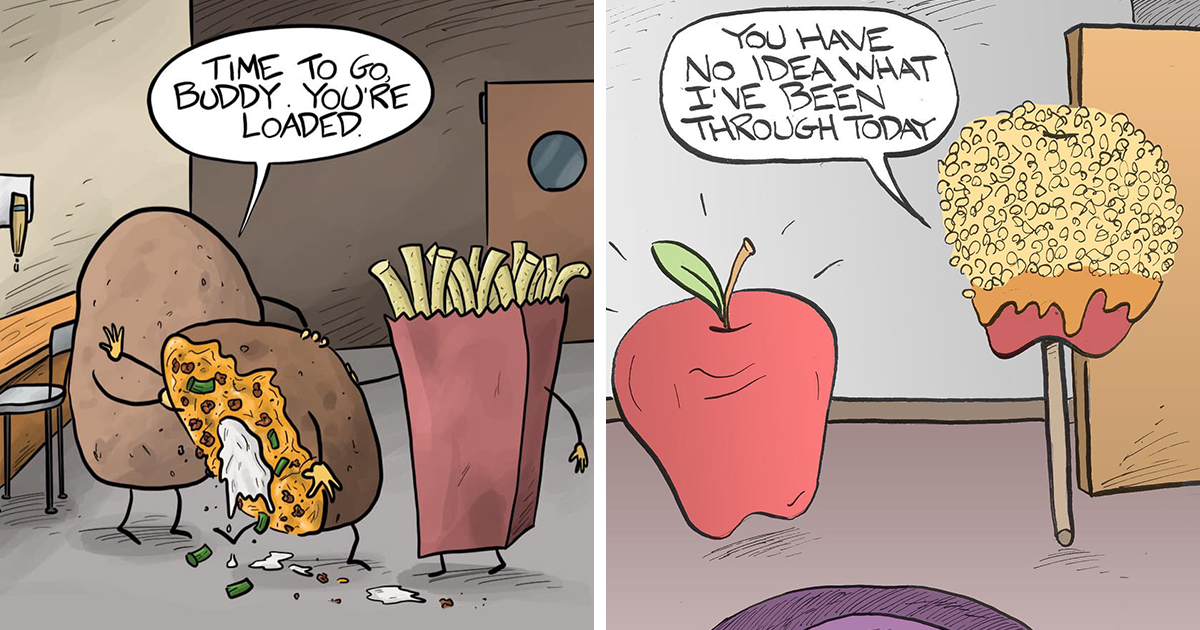
A collection of 47 funny relatable comics gives readers a full buffet of tiny life disasters. Some jokes are about work. Some are about relationships. Some are about pets, food, sleep, confidence, creativity, and the suspicious way time disappears when you open one app “just for a second.” Together, they create a portrait of modern life: messy, dramatic, sweet, and deeply snack-motivated.
- The alarm clock that feels less like a device and more like a personal enemy.
- The heroic promise to sleep early, immediately defeated by one more episode.
- The mysterious confidence of buying salad ingredients before ordering pizza.
- The panic of hearing “Can we talk?” with no context whatsoever.
- The emotional workout of sending a normal text and rereading it like a legal document.
- The strange joy of canceled plans, also known as winning the introvert lottery.
- The pet who owns the house but graciously allows humans to pay rent.
- The work meeting that could have been an email, a sticky note, or a dream.
- The overflowing laundry chair, a furniture item found in nearly every modern habitat.
- The fridge inspection performed every ten minutes despite no new food appearing.
- The decision to “quickly check” social media and return three years later.
- The confidence of starting a new hobby before purchasing unnecessary supplies.
- The awkward half-wave when you are not sure someone is waving at you.
- The deep betrayal of stepping on a wet spot while wearing socks.
- The emotional support hoodie that has seen everything and judged nothing.
- The brain becoming most productive exactly when it is time to sleep.
- The fake calm of saying, “No worries,” while worrying professionally.
- The dramatic difference between outside personality and at-home goblin mode.
- The motivational speech given to yourself before doing one simple chore.
- The tiny heartbreak of realizing the weekend has a closing time.
- The budget plan destroyed by one cute mug, candle, or snack run.
- The suspicious optimism of downloading a productivity app instead of being productive.
- The social battery draining faster than a phone from 2014.
- The kitchen becoming messy immediately after being cleaned, as if cursed.
- The impossible choice between being responsible and being comfortable.
- The dramatic friendship between humans and blankets.
- The panic of accidentally making eye contact with someone twice.
- The inner monologue that turns a tiny mistake into a full courtroom trial.
- The “I deserve a treat” economy, which remains financially unstable but emotionally essential.
- The joy of finding money in an old pocket and treating it like a government grant.
- The way pets demand attention only when you are finally busy.
- The fear of phone calls, especially unexpected ones from unknown numbers.
- The fantasy of being organized, usually performed while standing beside clutter.
- The heroic plan to drink more water after drinking only coffee and vibes.
- The universal confusion of adulthood: everyone seems official, but nobody got a manual.
- The tiny victory of finishing a task you avoided for eleven emotional business days.
- The suspicious way one small errand becomes a full-day expedition.
- The habit of saving articles, videos, and recipes for a future self who apparently has unlimited discipline.
- The soft chaos of loving people but also loving silence.
- The closet full of clothes and the daily declaration of having nothing to wear.
- The grocery store math that turns three items into a receipt with plot twists.
- The weird confidence of giving advice you personally refuse to follow.
- The strange comfort of knowing everyone is improvising adulthood.
- The emotional damage caused by a printer refusing to cooperate.
- The brain’s talent for remembering embarrassing moments from seven years ago.
- The small but mighty happiness of a perfect snack at the perfect time.
- The final realization that life is easier when you can laugh at the mess.
The Secret Ingredients Of Relatable Webcomics
Relatable comics may look simple, but they are built with smart creative choices. The drawings are often clean and expressive, allowing readers to understand the joke quickly. Facial expressions do heavy lifting. A single tired stare can communicate more than a paragraph about burnout, grocery prices, and why pants with buttons are sometimes unreasonable.
Another key ingredient is pacing. Many comics rely on a setup, a pause, and a twist. The first panel introduces a normal situation. The second panel builds expectation. The final panel flips the emotion, exaggerates the reaction, or exposes the hidden thought everyone was pretending not to have. It is comedy architecture, just with more sweatpants.
Simple Art Can Carry Big Feelings
Some of the most beloved funny comics use minimal art styles. That simplicity is not laziness; it is strategy. When a character is drawn with simple shapes and expressive eyes, readers can project themselves into the scene. The less specific the character looks, the more universal the feeling becomes.
This is why comics about adulthood, awkwardness, and daily routines can connect across different audiences. You do not need to share the exact same life as the artist to understand the experience of being tired, embarrassed, excited, hungry, overwhelmed, or emotionally defeated by a fitted sheet.
Pets Make Everything Funnier
No discussion of relatable comics is complete without pets, the unpaid comedians of the household. Cats, dogs, birds, rabbits, and other companion animals bring instant comic tension because they behave like tiny chaos agents with excellent timing. A cat sitting on a laptop during a deadline is funny because it is both absurd and completely believable.
Pets also make relatable comics warmer. They add affection to the chaos. Even when the joke is about destroyed furniture, stolen food, or a dog looking guilty beside an exploded pillow, the emotional center is love. Annoying love, perhaps. Love with fur on it. But love.
Why Readers Share These Comics
People share relatable comics because they do the explaining for us. Instead of writing a long message that says, “I am exhausted, overstimulated, hungry, trying my best, and possibly becoming a blanket-based life form,” you can send a comic and say, “This.” Efficient. Elegant. Emotionally accurate.
Funny and relatable comics also give people permission to be imperfect. They turn small failures into shared jokes. Forgot a deadline? Comic material. Avoided a chore? Comic material. Bought a planner and then forgot to use it? Premium comic material with bonus irony.
In that sense, these comics are not just entertainment. They are tiny social bridges. They help friends, partners, coworkers, and online communities say, “Same here,” without needing a big dramatic speech. The joke opens the door, and recognition walks in wearing pajama pants.
What Makes A Comic Both Funny And Relatable?
A comic can be funny without being relatable, and it can be relatable without being especially funny. The sweet spot is when both qualities arrive at once. The reader sees a familiar situation, then the artist adds a twist that makes it sharper, sillier, or more emotionally honest than real life.
The best relatable comics are specific enough to feel true but broad enough to feel shared. “Being tired” is common. “Being so tired you stare into the fridge like it contains answers to your destiny” is comic gold. The detail makes the joke memorable.
Another important quality is kindness. Relatable humor works best when it teases human behavior without becoming cruel. The joke is not “people are terrible.” The joke is “people are ridiculous, and I am definitely people.” That softer approach is why readers return to these comics for comfort as much as laughter.
Experience: What Reading 47 Relatable Comics Feels Like
Reading a collection like 47 Comics That Are Equal Parts Funny And Relatable feels a little like sitting on the couch with a friend who knows exactly how dramatic your brain can be. At first, you think you are just scrolling for a quick laugh. Then one comic catches you off guard. It is about avoiding laundry, losing motivation, or pretending to be relaxed while your mind is building a tiny disaster museum. Suddenly, you are not just laughing. You are feeling personally identified by a drawing with two dots for eyes.
The experience is surprisingly comforting. A good relatable comic has the power to make daily stress feel smaller. Not gone, of course. The emails are still there. The dishes are still forming a ceramic mountain in the sink. The laundry chair remains legally occupied. But the comic changes the mood around those things. It turns frustration into a joke, and jokes are easier to carry than guilt.
One of the best parts of reading these comics is the instant urge to share them. You see a strip about canceling plans and immediately know three people who need it. You see one about a pet acting like the CEO of the apartment and send it to the friend whose dog has more furniture than they do. Relatable comics travel because they are emotional shortcuts. They say, “This is me,” “This is you,” or, most dangerously, “This is us during finals week, tax season, or any Monday before coffee.”
There is also a nice rhythm to a collection of 47 comics. One comic might be silly. The next might be painfully accurate. Another might make you laugh because the character’s face is doing exactly what your soul does when someone says, “Let’s go around the room and introduce ourselves.” The variety keeps the reading light, but the theme stays consistent: life is weird, and everyone is improvising.
That is why funny relatable comics are more than quick internet snacks. They are tiny reminders that being human is not supposed to look polished all the time. Sometimes it looks like eating cereal for dinner, overthinking a text, talking to your pet like a roommate, and celebrating when a canceled obligation gives you back your evening. If 47 comics can make people laugh at those moments instead of feeling defeated by them, that is not just entertainment. That is a small act of emotional housekeeping, and honestly, it is much easier than folding actual laundry.
Conclusion
47 comics that are equal parts funny and relatable remind us that the funniest parts of life are often hiding in plain sight. They live in awkward conversations, unfinished chores, overambitious plans, snack-based decision-making, unpredictable pets, and the endless mystery of how adulthood continues to be so expensive and so poorly explained.
The reason these comics work is simple: they make people feel seen. They transform ordinary struggles into shared laughter and turn tiny embarrassments into moments of connection. Whether you love webcomics, slice-of-life humor, funny comic strips, or everyday life cartoons, this kind of art proves that a small drawing can carry a surprisingly big truth.
In a world full of serious headlines, busy schedules, and inboxes that reproduce like rabbits, relatable comics offer a small but valuable pause. They say, “Yes, life is chaotic. Yes, you are tired. Yes, your pet may be judging you. But at least we can laugh about it.” And sometimes, that laugh is exactly what the day needed.