
Every bull market eventually develops a personality. At first, it is cautious and a little awkward, like a party guest standing near the snack table. Then earnings improve, fears fade, and investors begin making eye contact with risk again. Eventually, the market may become so confident that a company adding “AI,” “quantum,” or “next-generation platform” to a presentation can cause keyboards to smoke from all the buy orders.
That stage is what economists mean by animal spirits: the emotional force that pushes people to hire, invest, spend, build, and occasionally convince themselves that gravity is merely a suggestion. Animal spirits are not automatically bad. Confidence is necessary for economic growth. But when confidence outruns cash flow, earnings, and reality, investors start asking an uncomfortable question: did the market just top?
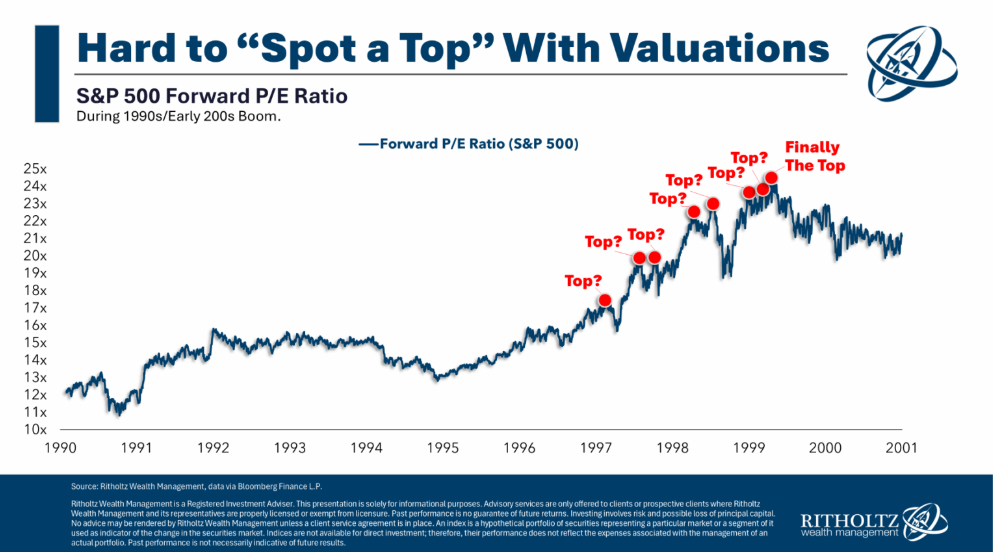
The honest answer is that no one knows in real time. Market tops do not arrive with balloons, a marching band, and a sign reading “Please Exit in an Orderly Fashion.” They usually look perfectly reasonable while they are happening. The better question is whether the ingredients for a market correction are building: rich valuations, narrow leadership, fading liquidity, stubborn inflation, unrealistic profit expectations, and a crowd that treats every dip as a buy-one-get-one-free sale.
As of mid-2026, the U.S. stock market presents a fascinatingly mixed picture. Corporate investment and earnings expectations remain supportive, especially around artificial intelligence infrastructure and productivity spending. At the same time, inflation has stayed sticky enough to complicate interest-rate expectations, large-company concentration remains high, and investors have less room for disappointment than they did near the beginning of the bull market.
That does not prove the stock market has peaked. It does mean the market has entered a phase where discipline matters more than excitement.
What Are Animal Spirits in the Stock Market?
The phrase “animal spirits” became famous through economist John Maynard Keynes, who used it to describe the human impulses that influence economic decisions. People do not make every business or investment choice with a spreadsheet and a calculator. They also use confidence, fear, optimism, storytelling, momentum, envy, and the nagging suspicion that everyone else is getting rich without them.
In the stock market, animal spirits often appear in recognizable forms:
- Investors chase recent winners because “this time feels different.”
- Companies receive higher valuations for future promises than for current profits.
- Market pullbacks are dismissed as temporary inconveniences.
- Speculative sectors attract enormous attention, even when business models are still baking.
- Investors begin viewing risk as something that happens only to other people.
None of these signals alone means a crash is coming. Markets can remain expensive, enthusiastic, and mildly ridiculous for longer than skeptics expect. But a market driven mainly by expanding optimism rather than expanding earnings is more fragile. It is like a Jenga tower built with confidence: impressive from a distance, slightly alarming up close.
Why Investors Are Asking Whether the Market Has Topped
1. Valuations Have Less Room for Error
When stock prices rise faster than earnings, investors are paying more for each dollar of future profit. That is not irrational if companies are genuinely becoming more productive or if earnings estimates are improving. However, higher valuations make markets more sensitive to even small disappointments.
A company can report strong earnings and still see its stock fall if investors expected spectacular earnings, a parade, and perhaps a small laser show. In an expensive market, “good” is often not enough. Companies must deliver “better than hoped,” and then explain why next quarter may be even better.
This is why valuation matters most near possible market tops. It does not tell investors the exact day a rally ends. It tells them how much optimism is already baked into the price.
2. Market Leadership Has Become More Concentrated
One major warning sign is when a small group of mega-cap companies does most of the heavy lifting for the index. The S&P 500 may appear broad and healthy on a headline chart, but a handful of giant companies can mask weakness underneath the surface.
Concentration is not a crime. Great companies deserve to become large. The problem is that a market becomes more vulnerable when too much investor optimism is attached to too few businesses. If one or two leaders miss earnings, face regulation, trim spending plans, or simply stop being treated like silicon-based royalty, the broader index can wobble.
Investors should look beyond the headline number. Are small-cap stocks participating? Are industrials, financials, health care, consumer companies, and equal-weight indexes keeping pace? Or is the market being carried uphill by a few companies with unusually strong shoulders?
3. Inflation Is Still the Party Crasher
Inflation is one of the market’s least popular dinner guests because it forces everyone to talk about interest rates. Higher inflation can keep borrowing costs elevated, pressure consumer budgets, reduce valuation multiples, and make central banks less eager to cut rates.
The market has spent much of the past several years trying to predict when easier monetary policy will arrive. Sometimes investors price in rate cuts before policymakers are ready to deliver them. When that happens, the market can become vulnerable to a painful adjustment in expectations.
The key issue is not whether inflation rises or falls in a single month. The important question is whether inflation stays stubborn enough to limit policy flexibility while growth slows. That combination can create a difficult environment for high-priced growth stocks because it pressures both earnings expectations and valuations at the same time.
4. The Economy Looks Resilient, but Not Invincible
A market top often develops when investors are celebrating a strong economy just as the underlying data begin losing momentum. That does not mean every slowdown becomes a recession. It means markets can shift quickly once investors realize that growth is no longer accelerating.
Recent economic data have shown a mixed backdrop: continued growth, corporate investment, and resilient consumer activity alongside inflation pressure, uneven household confidence, and concern about credit conditions. That is not an economic disaster. It is simply a reminder that the market is not operating in a magical weather-proof bubble.
When corporate profits grow, the bull case has genuine fuel. When profit growth slows while stock prices continue racing higher, the bull case begins relying more heavily on mood, momentum, and the mystical power of “maybe next quarter.”
The Case That the Market Has Not Topped Yet
Calling a market top too early is one of Wall Street’s oldest hobbies. Investors have warned about bubbles during nearly every major advance, and sometimes the market kept climbing until the warning labels ran out of ink.
There are several reasons the current rally may have more life:
- Corporate earnings can still improve. If productivity gains, capital spending, and business investment translate into stronger profits, high valuations may become more defensible.
- Artificial intelligence spending is not purely a slogan. Companies are investing real money in data centers, chips, software, networking, and automation. The question is whether returns eventually match the spending.
- Investor sentiment is not universally euphoric. Some sentiment surveys remain cautious, which matters because true market extremes often require near-total agreement that risk has disappeared.
- Economic growth has not vanished. A market can survive higher rates and uncertainty when businesses continue producing, hiring selectively, and generating cash flow.
- Participation could broaden. If more sectors and smaller companies join the advance, the market may become healthier rather than simply higher.
In other words, the market may be expensive without being finished. The difference depends on whether earnings eventually catch up with prices or whether prices keep running ahead like a golden retriever that spotted an open gate.
Five Signs That Would Make a Market Top More Likely
1. Earnings Estimates Start Falling
Rising prices can survive high valuations if analysts continue raising earnings forecasts. A more serious warning appears when stock prices stay elevated but earnings revisions turn negative. That suggests investors are paying premium prices for a shrinking set of expectations.
2. Market Breadth Deteriorates
If fewer stocks make new highs while the index keeps rising, leadership may be narrowing. Weak breadth does not guarantee a crash, but it can indicate that the rally is becoming dependent on a smaller group of names.
3. Volatility Jumps While Prices Stall
A sudden rise in market volatility can reveal that investors are quietly buying protection even as stock prices remain close to highs. Volatility is not a crystal ball, but it can be a smoke alarm. You do not panic because it chirps once; you do check whether something is burning.
4. Credit Conditions Tighten
Markets love easy access to capital. When credit becomes harder to obtain, weaker companies struggle first, followed by consumers, commercial borrowers, and eventually parts of the economy investors assumed were invincible. Watch lending conditions, bond spreads, refinancing activity, and default trends.
5. The Narrative Becomes More Important Than the Numbers
Every bull market has a story. The healthiest markets have stories supported by revenue, margins, productivity, and cash flow. The riskiest markets have stories supported mainly by slides, adjectives, and a CEO saying “transformational” before breakfast.
When valuation discussions disappear and every concern is waved away as “short-term noise,” animal spirits may be taking the steering wheel.
What Investors Should Do Instead of Trying to Nail the Exact Top
The goal is not to sell everything because a headline feels spooky. The goal is to make sure your portfolio can survive being wrong. Investors who try to call every market top often create two problems: they leave too early, then they chase back in after prices rise.
A more practical approach is portfolio maintenance:
- Review whether your stock allocation still matches your time horizon and risk tolerance.
- Rebalance positions that have grown far larger than intended.
- Reduce dependence on one sector, theme, company, or social-media narrative.
- Keep enough cash or high-quality fixed income for near-term needs.
- Avoid using borrowed money to chase a market that already feels expensive.
- Write down your investment plan before the next volatile day arrives.
This is not glamorous. Nobody makes a dramatic movie about rebalancing a diversified portfolio. But boring decisions are often the decisions that keep investors from becoming the cautionary tale in someone else’s podcast.
Animal Spirits and the AI Trade
The artificial intelligence boom sits at the center of today’s market debate. On one hand, AI is a real technological shift with major implications for software, data centers, semiconductors, energy infrastructure, cybersecurity, health care, logistics, and business productivity. It is not comparable to a passing novelty product or a digital pet rock.
On the other hand, real technology can still create unrealistic stock prices. Railroads transformed commerce. The internet transformed communication. Smartphones transformed daily life. Yet investors in every great technological era have occasionally paid prices that assumed perfection would arrive next Tuesday.
The durable winners of an AI-driven economy may not be identical to the market’s hottest names today. Some companies will earn exceptional returns from AI. Others will spend heavily, compete aggressively, and discover that enthusiasm does not automatically become profit.
That is why investors should separate the long-term opportunity from the short-term valuation question. A great technology can be a poor investment at the wrong price. A good company can be a disappointing stock if expectations are too grand.
So, Did the Market Just Top?
Maybe. But “maybe” is not a useful trading signal by itself.
The market shows several late-cycle traits: elevated valuations, concentrated leadership, intense enthusiasm around a powerful technology theme, and sensitivity to inflation and interest-rate expectations. Those factors deserve respect. They do not provide a signed certificate announcing the end of the bull market.
The more balanced conclusion is this: the market appears increasingly vulnerable to disappointment, but it still has potential support from earnings growth, capital investment, and economic resilience. Investors should treat this environment as a time for risk management, not prophecy.
Animal spirits can keep a market running longer than expected. They can also disappear with astonishing speed. The best defense is not pretending to know the exact top. It is building a portfolio and a decision-making process that can survive both another rally and an overdue correction.
Experience-Based Lessons From Markets That Felt Like They Could Only Go Up
Investors who have lived through multiple market cycles tend to remember the emotional parts more clearly than the percentages. They remember the coworker who bought the hottest stock after it doubled, the family member who stopped opening brokerage statements during a downturn, and the friend who sold at the bottom because “I cannot take this anymore.” Markets teach lessons in very expensive handwriting.
One recurring experience is that the mood at a market peak rarely feels dangerous. It usually feels efficient. The popular explanation sounds logical: earnings are strong, technology is changing the world, monetary policy will eventually improve, and smart investors are buying every dip. Each point may be partly true. The problem begins when investors assume those truths eliminate all risk.
Another lesson is that price movement changes behavior faster than most people expect. When stocks rise, investors become more comfortable owning risk. They check portfolios more often. They feel smarter. They may gradually increase position sizes without realizing it because the winners keep growing. A portfolio that began diversified can become dominated by a small number of successful stocks. That feels wonderful until the market changes direction and the “diversified” portfolio turns out to have been wearing a disguise.
Experienced investors also learn that corrections are emotionally louder than they appear on a long-term chart. A 10% decline may look like a minor wiggle years later, but during the moment it can feel like the financial sky is falling through the living-room ceiling. Headlines become dramatic. Commentators suddenly discover new reasons the world might end before lunch. This is why having a written investment plan matters. It helps separate a temporary emotional reaction from a genuine change in financial goals.
A useful habit from past market cycles is rebalancing when things feel easiest, not when they feel hardest. Selling a small portion of an oversized winner during a rally can feel painfully boring. Buying diversified assets after they have underperformed can feel equally unexciting. Yet those quiet decisions often prevent investors from making desperate decisions later.
The final lesson is humility. Nobody consistently rings the bell at the top. Even skilled investors often get the timing wrong. The goal is not to become a market fortune-teller in a velvet cape. The goal is to avoid turning normal optimism into reckless overconfidence. A sensible portfolio, reasonable expectations, diversified exposure, and patience may not produce dramatic dinner-party stories. They can, however, help investors remain in the game long enough for compounding to do its quiet work.