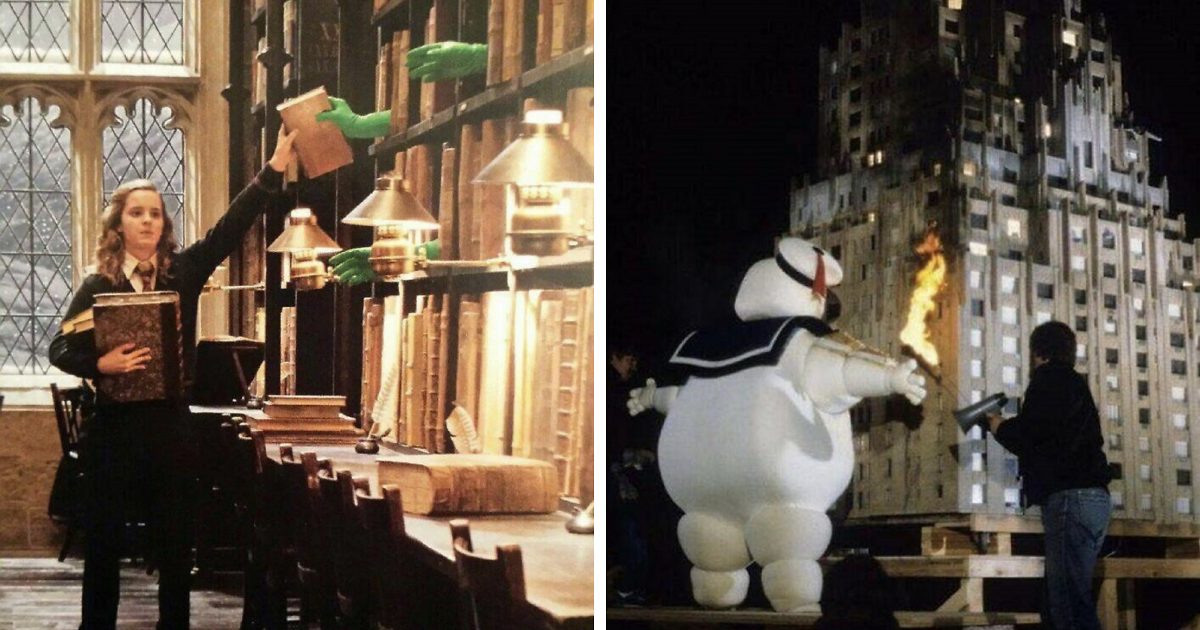

Movie magic is basically a very expensive group project where everyone agrees to pretend a foam rock is a mountain, a tennis ball is a dragon,
and a 40-foot LED wall is “outer space.” Then along come behind-the-scenes photosthose glorious, slightly chaotic snapshots of film setsand suddenly
you can’t unsee the strings. (Sometimes literally. Hi, harnesses.)
And that’s the fun part. Behind-the-scenes photos of movies don’t ruin the illusion so much as upgrade it. They turn “Whoa, that’s impossible” into
“Whoa, they built that?” They reveal filmmaking secrets: the practical effects that still hold up, the visual effects (VFX) tricks that fool your brain,
and the sheer number of people required to make one actor look like they’re casually strolling through a collapsing city.
Why behind-the-scenes photos change how you watch a film
A great behind-the-scenes photo is like pulling back a stage curtain and finding… a second stage. There’s the set you see on screen, and then there’s the set
that makes the set possible: lighting rigs, camera tracks, stunt pads, miniature models, green screens, and a crew member holding something important
just out of frame (often a reflector, sometimes a leaf blower, occasionally the entire emotional stability of the production).
These images give you a new perspective on the filmmaking process. They show how directors and crews solve problems: how to make gravity optional,
how to make a monster feel real without showing it too much, how to flip a truck without flipping the budget into oblivion. If you love movie set photos,
you’re not just looking at “how it’s made”you’re seeing thousands of micro-decisions that shape the final story.
19 behind-the-scenes photos that instantly reframe iconic moments
Below are 19 types of behind-the-scenes shotsmany of them famous production stills or set photosthat make you appreciate the craft even more.
You might recognize the movies immediately. You might recognize the technique first. Either way, expect your next rewatch to come with bonus commentary
from your brain: “Ah yes, that’s where the rig was.”
1) The Wizard of Oz: When “somewhere over the rainbow” is a very busy soundstage
One of the most perspective-shifting behind-the-scenes photos from classic Hollywood is a simple one: actors in costume, crew nearby, and the set looking
just a little less like a magical land and a little more like a meticulously painted, carefully lit workplace.
The new perspective: the film’s wonder isn’t accidental. It’s engineered. The contrast between the fantasy on screen and the reality around it highlights
the precision of old-school studio filmmakingsets designed to guide your eyes, lighting designed to flatter Technicolor, and camera choices that help the
world feel bigger than the walls.
2) Star Wars: Miniatures that look like galaxies
Behind-the-scenes photos from Star Wars often show model makers hunched over tiny ships, explosions staged in miniature, and practical effects teams
doing the kind of hands-on work that makes you want to applaud with both hands and a third hand you don’t have.
The new perspective: a huge chunk of “space opera” history was built on tables. These movie behind-the-scenes images remind you that scale is a feeling.
Your brain doesn’t ask, “Is this a 3-foot model?” It asks, “Does this look like a real object photographed like a real object?” The answer, remarkably, is yes.
3) Jaws: Spielberg and the shark that forced suspense to level up
There are iconic behind-the-scenes photos of Steven Spielberg posing with (or supervising) the mechanical shark nicknamed “Bruce.”
In still images, it can look like a big prop. In the movie, it’s pure panic.
The new perspective: limitations can become style. When the “monster” is temperamental, filmmakers lean harder on tension, editing, music, and point of view.
A single production still of the shark mid-build is a reminder that fear isn’t only about what you seeit’s about what the movie convinces you is about to happen.
4) Jurassic Park: The T. rex that was “alive” long before CGI finished the sentence
Some behind-the-scenes photos from Jurassic Park show the full-scale T. rex animatronic looming over the set while crew members work like mechanics
at the world’s most terrifying pit stop.
The new perspective: practical effects are performance. The dinosaur isn’t just “a prop.” It’s a character with physical presence, shadows, texture, and weight.
When you see the animatronic up close, you understand why the actors’ reactions feel so convincing: they were reacting to something that was actually there.
5) Titanic: A ship, a tank, and the audacity of building heartbreak at scale
Behind-the-scenes photos from Titanic frequently reveal massive partial ship sets perched above a gigantic water tank, with crews positioned like ants
doing construction work on a floating city.
The new perspective: spectacle is logistics. Seeing the set (especially when it’s clearly “only” part of the ship) helps you realize how much the movie relies on
framing, choreography, and controlled chaos. It also makes the emotional scenes hit harderbecause you can sense the physical labor behind the illusion.
6) The Lord of the Rings: Forced perspective that turns a table into a magic trick
A famous kind of behind-the-scenes photo from The Lord of the Rings shows actors sitting at what looks like the same tablebut it isn’t. The set is built so
different parts of the table are closer or farther from the camera, creating the size difference between characters without shrinking any humans.
The new perspective: “practical” doesn’t mean “simple.” Forced perspective is an elegant lie that requires carpentry, blocking, and camera placement to work.
When you see the rig, you don’t think “fake.” You think “clever.” And then you rewatch scenes just to admire how smoothly the trick holds.
7) 2001: A Space Odyssey: Space travel built with patience, precision, and very long takes
Behind-the-scenes images from 2001 often show massive rotating sets, painstaking camera setups, and crews operating like scientists in a laboratory.
The photos feel calmalmost quietcompared to the film’s cosmic scale.
The new perspective: innovation is frequently slow. The production techniques behind the film demanded careful exposures and meticulous control.
When you see the set, you understand how the movie achieves its hypnotic realism: it doesn’t rush you. It convinces you.
8) Psycho: The shower scene as a choreography of camera angles
Behind-the-scenes photos from Psycho that show the bathroom set, the camera placement, and the crew’s proximity to the action can feel almost surreal.
The scene is famous for intensity; the set photo is famous for how constructed intensity really is.
The new perspective: editing and staging do the heavy lifting. A single still of a camera squeezed into a tight set reminds you that “fear” can be assembled
from angles, cuts, sound, and timingwithout needing to show much directly.
9) The Shining: The Steadicam shot that turns hallways into a haunted roller coaster
A behind-the-scenes image of a Steadicam operator tracking a child actor through the Overlook Hotel set reframes the film’s most unforgettable movement:
that smooth glide behind the tricycle, the camera floating like a ghost with perfect posture.
The new perspective: camera movement is storytelling. The Steadicam isn’t just a stabilizerit’s a character. Seeing the operator and rig reminds you that
the “presence” you feel in those hallways is engineered through motion, height, and distance.
10) The Matrix: Bullet time is basically a camera convention in a semicircle
Behind-the-scenes photos of bullet time show an arc of still cameras arranged around the performer, like a sci-fi ribcage made of lenses.
The final effect looks like impossible time manipulation. The set photo looks like a photography nerd’s dream birthday party.
The new perspective: iconic visual effects can come from mechanical problem-solving. Bullet time wasn’t “just CGI”it was planning, hardware, and post-production
stitched together. Once you’ve seen the rig, you can’t help but admire the engineering behind the style.
11) Inception: The rotating hallway that made gravity file a complaint
Behind-the-scenes shots of Inception’s hallway fight reveal a full corridor set mounted to rotate, creating “zero gravity” by physically moving the world around
the performers. It’s the cinematic equivalent of “We could do CGI… or we could build a spinning room.”
The new perspective: practical effects aren’t nostalgicthey’re strategic. By rotating a real set, the film captures real light, real shadows, and real physics
fighting back. The behind-the-scenes image makes the final scene feel even more impressive, because your brain knows it wasn’t faked from scratch.
12) Gravity: The LED “light box” that put Earth in the room
Behind-the-scenes photos from Gravity often show an actor inside a box lined with programmable lights, which can display and reflect the shifting glow of Earth,
space, and movementwithout relying solely on a flat green screen.
The new perspective: realism is lighting. When an actor’s face reflects a moving horizon, your brain believes the environment. Seeing the light box reminds you that
some of the most advanced visual effects start with getting the light right on set.
13) Avatar: Performance capture that looks like pajamasuntil it becomes a planet
Behind-the-scenes images from Avatar show performers in capture suits covered in tracking markers, surrounded by cameras, reference props, and sometimes
a virtual camera system that lets filmmakers “see” the CG world in motion.
The new perspective: acting is still acting. The tech is enormous, but the foundation is performancebody language, timing, emotion.
The set photos highlight a weird truth: the most futuristic films can depend on very human work happening in an empty space.
14) Mad Max: Fury Road: Stunts that look like an insurance adjuster’s origin story
Behind-the-scenes photos from Mad Max: Fury Road often reveal stunt performers strapped into rigs, vehicles choreographed like dancers,
and practical explosions staged with a level of planning that feels both thrilling and deeply responsible.
The new perspective: “practical” doesn’t mean reckless. It means controlled. Those photos reframe the movie’s chaos as choreographyprecision hidden inside
apparent mayhem.
15) The Dark Knight: The truck flip that proved “real” still hits different
One behind-the-scenes angle of the famous truck flip shows the street setup, the engineered rigging, and the careful positioning required to turn a giant vehicle
into a cinematic punctuation mark.
The new perspective: practical stunts change the air in a scene. You can feel weight and momentum because the stunt has real consequences for physics, not just pixels.
Seeing the behind-the-scenes photo makes you appreciate the courage and calculation behind one “simple” moment of shock.
16) Back to the Future: The DeLorean is cooler when you see the wires (and the brains)
Behind-the-scenes photos of the DeLorean time machine often show it surrounded by crew, cables, and equipment that looks like it came from a garage that only fixes
cars from the future.
The new perspective: props are storytelling machines. The time machine isn’t just a vehicle; it’s a character with design languagevents, lights, and weird attachments
that suggest purpose. Seeing it off-camera lets you notice the craftsmanship that makes the fantasy feel functional.
17) E.T. the Extra-Terrestrial: The friend you love… was also an incredibly talented puppet
Behind-the-scenes photos of E.T. show the puppet on set with actors, technicians nearby, and the careful staging needed to bring a small creature to life in a
human-sized world.
The new perspective: emotion can be engineered. When you see how the puppet is positioned, lit, and interacted with, you realize the film’s tenderness isn’t an accident.
It’s the result of collaboration between performance, puppetry, and cinematographyall aimed at making you believe in a friendship.
18) The Avengers: Superheroes, assembly required (plus a lot of green screen)
Behind-the-scenes images from big superhero productions often show actors in partial costumes, motion-capture elements, or standing in front of green screens while
surrounded by reference markers and stand-ins. It’s glamorous… in a “we’re pretending this tennis ball is a space monster” kind of way.
The new perspective: scale is a collaboration between departments. A city-wide battle is built from plates, previs, stunts, sound design, and VFX.
The set photo reminds you that even when the final image is digital-heavy, the scene still needs human timing, physical movement, and real camera choices.
19) La La Land: The musical number that’s secretly an athletic event
Behind-the-scenes photos from big dance sequences reveal the less romantic truth: choreography is physics. You’ll see cranes, steadicams, traffic control,
dancers resetting positions, and a team managing timing like they’re conducting an orchestra made of sneakers.
The new perspective: the “effortless” feeling is the hardest thing to create. A behind-the-scenes still makes you respect the rehearsal hours, the camera planning,
and the endurance required to make joy look casual.
How to use behind-the-scenes photos to level up your next rewatch
Train your eye for “in-camera” clues
When you know what a forced-perspective rig looks like, you start noticing how characters are blocked. When you’ve seen a rotating set, you notice how light behaves.
Behind-the-scenes photos teach you to watch movies like a craftsperson: not just “what happened,” but “how did they make me feel that?”
Notice what’s practical, what’s digital, and what’s both
Modern filmmaking is rarely one-or-the-other. It’s hybrid. Practical effects provide texture and real lighting; VFX extend worlds and remove limitations.
The best movie behind-the-scenes imagery highlights collaborationhow departments build a believable moment together.
Appreciate the invisible jobs
The most mind-expanding part of movie set photos is often the crew. Behind every iconic shot is a line of people doing unglamorous, essential work:
rigging, painting, timing, measuring, resetting, checking continuity, protecting safety, and somehow keeping everyone fed.
Once you notice that, the credits feel less like an ending and more like the movie’s final reveal.
Bonus: The behind-the-scenes photo rabbit hole (and why it’s so satisfying)
There’s a specific kind of joy that happens when you fall into a behind-the-scenes rabbit hole. It starts innocently: you see a production still on social media,
or you click a “making of” gallery because you’re curious. Five minutes later, you’re zooming in on a miniature spaceship to admire the paint weathering and thinking,
“Someone did that on purpose, and I love them for it.”
The experience is part nostalgia, part detective work. Nostalgia, because behind-the-scenes images often capture a film before it becomes “a classic.”
Everyone looks focused, maybe a little tired, and completely unaware they’re building something people will quote for decades. Detective work, because your brain starts
connecting dots: Oh, that’s why the shadows look so real. That’s how they hid the cut. That’s the ramp that made the stunt possible.
It also changes how you watch. The first time you see a movie, you’re inside the story. After you’ve spent time with filmmaking secrets, you get a double feature:
the story and the craft. A chase scene becomes choreography. A “simple” conversation becomes lighting, lens choice, and blocking designed to guide emotion.
You might rewatch a scene and suddenly notice the quiet heroics of set designthe way a doorway frames a character, or how a practical prop catches light and makes the
environment feel lived-in.
The best part is that the experience doesn’t make you colder as a viewer; it often makes you more generous. When you know how hard it is to pull off one seamless shot,
you’re impressed by different things. You celebrate the small miracles: the believable eye-line to a creature that wasn’t there, the stunt that feels heavy instead of floaty,
the edit that hides a reset, the miniature that looks like a world. You also become kinder to movies that try something ambitious. Even when the illusion wobbles, you can
recognize the attemptand the teamwork behind it.
If you want to turn the rabbit hole into a ritual, try this: pick one movie you love, then find five behind-the-scenes photos from its production. Study them like postcards
from an alternate universe. Ask what problem each photo is solving. Then rewatch one scene with that knowledge. You’ll feel the strange, satisfying sensation of seeing
a familiar moment with new eyeslike discovering a secret door in a house you’ve lived in for years.
Conclusion
Behind-the-scenes photos of movies don’t just show you what happened on setthey show you what had to be invented to make the story feel inevitable.
From practical effects and forced perspective to LED light boxes and camera arrays, these images give a new perspective on film production and the people
who turn imagination into something you can watch with popcorn.
The next time you see a behind-the-scenes shot, don’t think of it as “breaking the spell.” Think of it as learning the spell’s recipe.
Then go rewatch your favorite scene and enjoy the upgraded magic: now you’re impressed twiceonce by the story, and once by the craft that made it real.