
Note: This article is written for educational and editorial purposes only. It discusses rocket propulsion concepts at a high level and is not a guide to modifying, manufacturing, repacking, or experimenting with rocket motors.
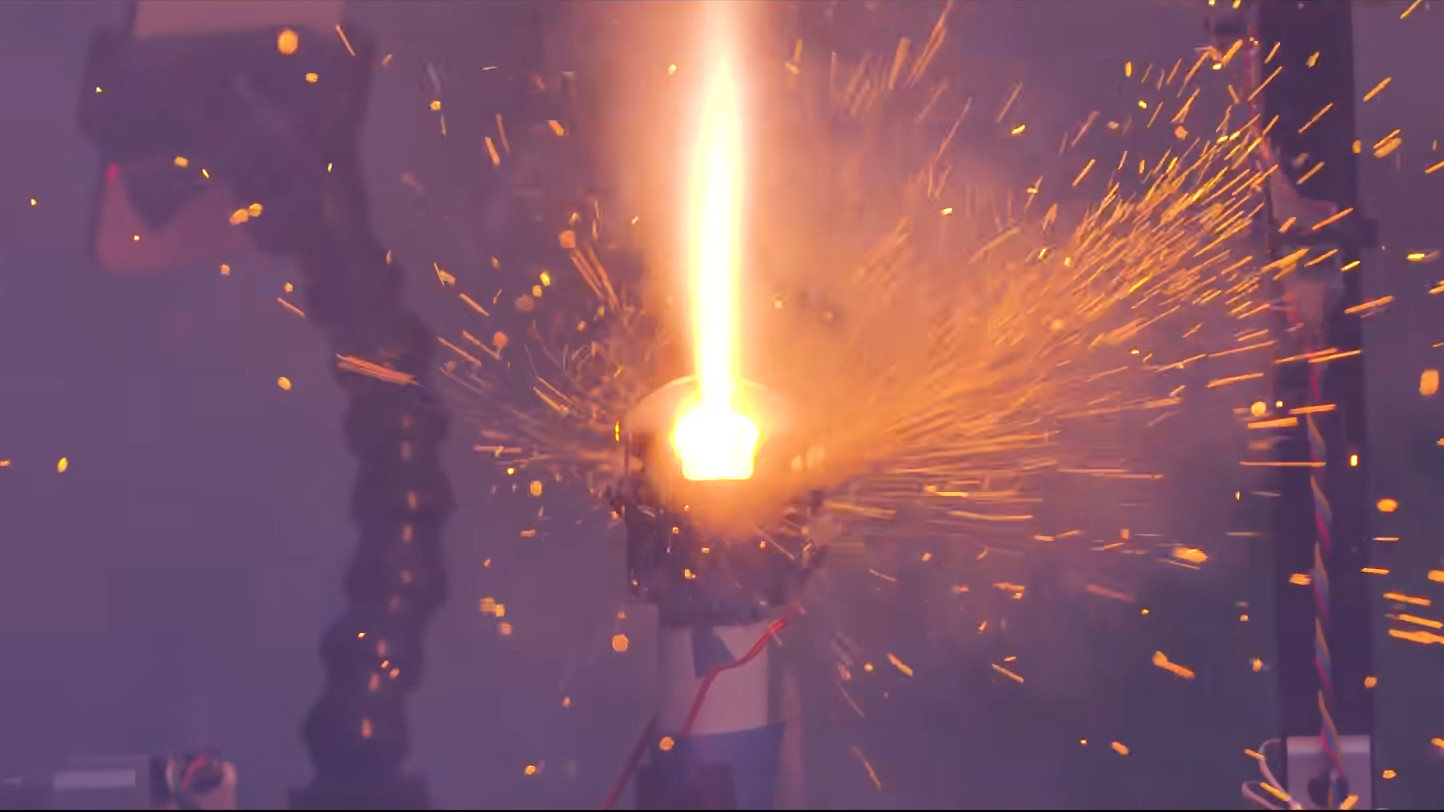
Solid rocket motors are the espresso shots of propulsion: compact, intense, and absolutely not interested in your feelings once they get started. Light one, and it burns according to its design until the propellant is gone. That is part of why solid rocket motors are loved in aerospace, model rocketry, launch escape systems, military systems, and space boosters. They are mechanically simpler than many liquid engines, can deliver enormous thrust, and can sit ready for long periods. But there is one awkward party trick they generally refuse to perform: real-time throttling.
So what does the phrase “Throttle Your Solid Rocket Motors With This One Simple Trick!” actually mean? The joke hides a useful engineering lesson. In most traditional solid rocket motors, you do not truly throttle the motor the way you throttle a liquid-fueled rocket engine. Instead, you control the effective thrust the vehicle experiences. In other words, the motor keeps doing its fiery job, while the vehicle uses clever design, steering, staging, thrust vectoring, timing, or system-level control to manage how that thrust affects flight.
That difference matters. A real throttle changes how much propellant flows into a combustion chamber. A solid motor has its fuel and oxidizer already mixed into a solid propellant grain. Once combustion begins, the burn is governed by the grain design, chamber pressure, nozzle behavior, and motor construction. You can design the thrust curve before launch. You can choose a motor with a specific performance profile. You can steer the exhaust. You can sequence multiple motors. But grabbing a neat little lever marked “less fire, please” is not usually on the menu.
Why Solid Rocket Motors Are So Hard to Throttle
Liquid rocket engines have plumbing. That plumbing may be complex enough to make a caffeinated octopus cry, but it gives engineers a direct path to throttling. Adjust the flow of fuel and oxidizer, and the engine can produce more or less thrust within its operating range. That is one reason liquid engines are useful for precision landing, deep-space maneuvers, and missions that require multiple starts or variable thrust.
A solid rocket motor works differently. The propellant is cast or formed into a solid grain inside the motor case. When the motor ignites, combustion occurs along exposed surfaces of that grain. The hot gas rushes through a nozzle, accelerates, and produces thrust. The motor’s thrust curve is largely “programmed” by its internal geometry and nozzle design before ignition. That is brilliant if you want simplicity and reliability. It is less brilliant if you suddenly wish the motor could calm down halfway through its performance like a polite orchestra.
Think of it like lighting a sparkler versus adjusting a gas stove. With a gas stove, you turn a knob and change the fuel flow. With a sparkler, once it is burning, it burns according to its composition and shape. A solid rocket motor is obviously far more sophisticated than a sparkler, but the basic control problem is similar: the energy source is already packaged together.
The “One Simple Trick”: Control Effective Thrust, Not the Burn
The simple trick is not a magic way to make a conventional solid motor behave like a liquid engine. It is a shift in thinking. Instead of asking, “How do we throttle the motor?” ask, “How do we control how much of the motor’s force is useful to the vehicle at this moment?”
That is the heart of effective thrust management. A solid motor may keep producing thrust according to its designed curve, but the vehicle can alter direction, attitude, stability, drag, staging timing, or the contribution of multiple motors. In professional systems, thrust vector control can steer the exhaust nozzle or otherwise direct the thrust line. In spacecraft, arrays of small thrusters can create stepped control by firing selected units. In launch vehicles, solid boosters may provide massive early thrust while liquid core engines handle more flexible control tasks.
This is why the phrase “Yes. No. Sort of.” fits the topic so well. Can you throttle a normal solid rocket motor like a liquid engine? Usually, no. Can you design a solid propulsion system whose total effect changes over time? Yes. Can you reduce the vehicle’s useful acceleration without changing the chemistry happening inside the motor? Sort ofand that “sort of” is where engineering gets interesting.
Grain Geometry: The Original Thrust Programmer
Before anyone gets excited about movable parts, remember the oldest and most important solid-motor control method: design the burn profile in advance. The shape of the propellant grain determines how much surface area burns as time passes. More burning surface generally means more gas production and more thrust. Less burning surface generally means less gas production and less thrust.
Engineers can design motors with different thrust-time behaviors. A motor might produce a strong initial kick and then taper off. Another might aim for a more neutral, steady thrust. Another might produce a progressive curve that rises as the burn surface changes. This is not real-time throttling; it is pre-planned performance. The motor is not listening to flight conditions and adjusting itself. It is following the script written into its geometry.
That script can be extremely useful. A launch vehicle may need a high initial push to leave the pad, then a different thrust profile to limit loads as it accelerates through dense atmosphere. A sounding rocket may need a predictable burn for altitude planning. A model rocket motor may be selected based on safe, certified performance data. In all cases, the key idea is the same: solid motors can be tailored, but they are usually tailored before flight.
Thrust Vector Control: Steering the Firehose
Thrust vector control, often shortened to TVC, is another major concept. Instead of changing the amount of thrust, TVC changes where the thrust points. If a nozzle can be steered, the rocket can rotate, correct its attitude, and stay on course. Large solid boosters can use steering systems to direct the exhaust nozzle under guidance commands.
This is not throttling in the classic sense. The motor is still producing thrust. But to the vehicle, the direction of that thrust is everything. A rocket that cannot aim its thrust is like a shopping cart with one bad wheel: technically moving, spiritually chaotic. TVC gives the control system a way to manage attitude even when the motor itself is not adjustable in output.
NASA’s Space Launch System solid rocket boosters are a dramatic example of solid propulsion at scale. Each booster is enormous, produces millions of pounds of thrust, and burns for roughly two minutes. The boosters do not behave like tiny adjustable gas burners. They are carefully designed, inspected, and integrated systems. Their thrust vector control hardware helps steer the nozzle based on avionics commands, showing how solid propulsion can still be part of a controlled launch system without being freely throttleable.
Why Liquid Engines Get the Landing Glory
When people think about throttling rockets today, they often picture reusable boosters descending tail-first, engines glowing, landing legs ready, and the internet preparing to scream. That kind of landing is strongly associated with liquid rocket engines because liquid engines can often throttle, restart, and respond dynamically during descent.
A landing rocket needs to match thrust to weight, manage speed, correct position, and avoid turning into a very expensive lawn dart. Too much thrust and the vehicle goes back up. Too little thrust and gravity wins the argument. Liquid engines have an advantage because their propellant flow can be adjusted. The control system can command a lower or higher thrust level as needed.
Solid motors, by contrast, are better suited for jobs where high thrust, readiness, and simplicity are more important than delicate modulation. They are excellent for boosters, escape motors, tactical systems, and certain space maneuvers. They are less convenient for hovering, soft landing, or repeated throttle changes. Trying to make a conventional solid motor do a liquid engine’s job is like asking a sledgehammer to play jazz piano. Admirable ambition, questionable instrument.
Can Solid Motors Ever Be Truly Throttleable?
There are advanced propulsion concepts that blur the line. Some research and specialized systems explore variable nozzles, pintle-style mechanisms, controllable propellants, hybrid rocket designs, or arrays of small solid thrusters. These approaches can provide forms of variable thrust, restart capability, or stepped control, depending on the technology.
Hybrid rockets deserve a quick mention because they sit between solid and liquid systems. In a hybrid motor, one propellant component is solid and the other is typically liquid or gas. Because at least one component flows through a controllable system, hybrids can offer some throttling possibilities that traditional solids do not. They still come with their own engineering challenges, but they show why propulsion categories are not always neat little boxes.
Electrically controlled solid propulsion is another interesting area, especially for small spacecraft. Some systems use small solid thruster units that can be individually commanded. Instead of one big continuously variable motor, the spacecraft may use a set of small impulses. That is more like controlling a light display by turning many bulbs on and off than dimming one giant bulb. It is not the same as a classic throttle, but it can provide useful control.
Why “Do Not Modify the Motor” Is Not Boring Advice
In hobby rocketry, safety is not a decorative sticker on the box. Certified model rocket motors are tested, labeled, and intended to be used as manufactured. Altering a motor case, nozzle, propellant, delay element, or casing is unsafe and outside responsible sport rocketry practices. The correct way to explore performance is to use approved motors, safe launch procedures, simulations, manufacturer data, and organized clubsnot to improvise changes to energetic hardware.
This is especially important because a rocket motor is not just “a tube with fire.” It is a pressure vessel, a combustion chamber, a nozzle, and an energy storage system all having a very serious meeting at high temperature. Small changes can create unpredictable pressure behavior. What looks like a harmless tweak can become a failure mode faster than you can say, “Well, that seemed fine in CAD.”
The best engineering habit is to separate curiosity from unsafe experimentation. You can learn a huge amount by studying thrust curves, watching test footage from reputable sources, using flight simulation software, reading safety codes, joining a recognized rocketry organization, and building airframes around certified components. That path may sound less dramatic than “one simple trick,” but it has a much better chance of ending with useful data instead of a visit from people holding clipboards and concerned facial expressions.
Real-World Example: Big Boosters, Planned Power
The Space Launch System solid rocket boosters show why solid propulsion remains valuable. A pair of large solid boosters can provide most of the initial liftoff thrust, helping push a heavy launch vehicle off the pad and through the early part of flight. Their role is not to delicately sip propellant. Their role is to deliver huge, predictable force during a planned window.
Once their job is done, boosters separate from the core stage. That architecture lets the launch vehicle use different propulsion systems for different phases. Solids provide the muscular first shove. Liquid engines can handle more flexible control where needed. This division of labor is common in rocket design: do not force one technology to be perfect at everything. Let each system do what it does best.
The SEO-Friendly Truth: Throttling Is a System Problem
For readers searching “how to throttle solid rocket motors,” the honest answer is that traditional solid motors are not normally throttleable after ignition. But the better answer is more interesting: rocket vehicles can manage thrust effects at the system level. Thrust curve design, nozzle engineering, guidance, thrust vector control, staging, drag management, and motor selection all shape the final flight behavior.
That is why the phrase “solid rocket motor throttling” can mean several things depending on context. In strict propulsion language, throttling means changing engine output. In practical vehicle design, it can also mean changing how much acceleration, control authority, or useful force the vehicle experiences. The difference may sound subtle, but engineers live in those subtleties. They build entire vehicles there. They probably label the storage bins, too.
Common Misconceptions About Solid Rocket Throttling
Misconception 1: “A nozzle trick can make any solid motor throttle safely.”
Nozzle behavior affects thrust, pressure, and flow, but that does not make arbitrary nozzle changes safe or simple. The motor is an integrated system. A nozzle is not an accessory; it is a critical pressure and flow component.
Misconception 2: “If you can steer thrust, you are throttling.”
Steering thrust is not the same as reducing total thrust. It changes direction, not necessarily output. It can reduce acceleration along a particular axis, but the motor itself may still be producing its designed thrust.
Misconception 3: “Solid motors are primitive.”
Not even close. Solid motors can be highly engineered, carefully inspected, and mission-critical. Their simplicity is relative, not crude. A modern solid booster is a serious aerospace system, not a giant firework with a résumé.
Misconception 4: “Throttling is always better.”
Variable thrust is useful, but it adds complexity. For missions that need high readiness, compact storage, or a powerful one-time impulse, a solid motor may be exactly the right tool.
Experience Notes: What This Topic Teaches in Real Projects
One of the most useful experiences around solid rocket motor discussions is watching beginners discover the difference between “engine control” and “vehicle control.” At first, many people assume every rocket must have a throttle, because cars have pedals, drones have motor speed controllers, and video games have neat little power sliders. Then they see a solid motor thrust curve and realize the motor is more like a pre-recorded drum solo. Once it starts, the performance follows the track.
In classroom demonstrations, rocketry clubs, and simulation-based projects, this realization changes the entire design conversation. Instead of asking how to change the motor mid-burn, teams begin asking smarter questions. What thrust curve is appropriate for the vehicle mass? How stable is the airframe? What happens when wind pushes the rocket off its ideal path? How much coast time is expected before recovery deployment? How do weight, drag, and center of pressure affect the flight?
That is where solid propulsion becomes a great teacher. It forces planning. You cannot casually fix everything after ignition. The vehicle must be designed around the motor’s known behavior. The recovery system must match the expected altitude and speed. The launch site must fit the total impulse and safety requirements. Even the most enthusiastic builder learns that rockets reward preparation and punish improvisation.
Another experience that comes up often is the temptation to overcomplicate the first solution. People see advanced thrust vector control or reusable booster landings and immediately want to jump to the cinematic version. But most successful learning projects start with boring excellence: clean construction, stable design, accurate mass estimates, reliable recovery, and careful documentation. The exciting control systems make more sense after the fundamentals stop wobbling.
There is also a valuable communication lesson here. “Throttle your solid rocket motor” is a catchy headline, but the accurate explanation is more nuanced. A good writer or educator should use the hook to invite curiosity, then clarify the science. The fun headline gets people in the door. The responsible explanation keeps them from walking out with the wrong idea. In rocketry, that distinction matters because misunderstood concepts can become unsafe assumptions.
Finally, the topic teaches humility. Rockets look simple from far away: pointy end up, fire end down, applause optional. Up close, every design choice interacts with every other design choice. A change in thrust affects acceleration. Acceleration affects aerodynamic loads. Loads affect structure. Structure affects mass. Mass affects performance. Performance affects recovery. Recovery affects whether you get your rocket back or donate it to a tree with excellent taste in aerospace hardware.
The best takeaway is this: solid rocket motors do not need to be throttleable to be fascinating. Their limitations are part of their engineering personality. When you understand those limits, you can design around them intelligently. The “one simple trick” is not a secret hack. It is the mature engineering habit of managing the whole system instead of trying to force one component to do something it was never designed to do.
Conclusion
Solid rocket motors are powerful, reliable, and beautifully stubborn. In conventional form, they are not throttleable like liquid rocket engines because their fuel and oxidizer are already locked into a solid propellant grain. But that does not mean engineers are helpless. By designing the grain geometry, selecting the right motor, steering thrust, staging propulsion systems, using arrays, or relying on other vehicle-level control strategies, engineers can manage how thrust affects flight.
So, can you throttle a solid rocket motor with one simple trick? Not really. Can you control effective thrust in clever ways? Absolutely. The real trick is understanding the differenceand respecting the motor enough not to treat it like a toy with a volume knob.