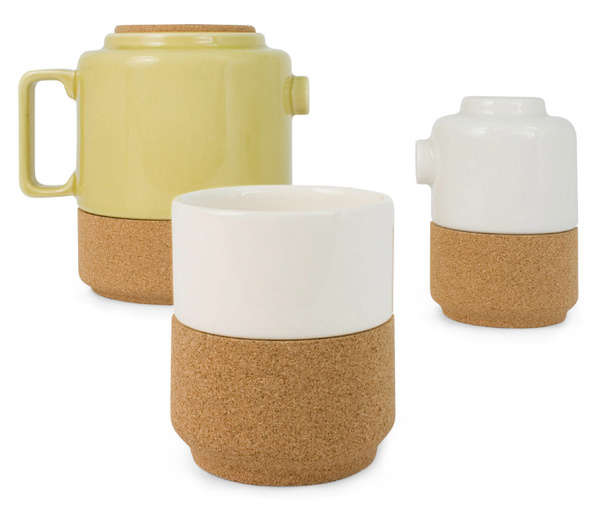

Some tableware whispers. Some tableware shouts. And then there is the cork-and-color tea set: the friendly extrovert of the breakfast table, wearing a ceramic coat, a cork hat, and just enough color to make your chamomile feel like it has weekend plans.
A tea set that combines cork and color is more than a pretty object. It is a small design lesson in how materials can change the way we experience everyday rituals. Cork brings warmth, grip, texture, and a natural story. Color brings personality, contrast, mood, and joy. Together, they turn a teapot, cups, sugar pot, or creamer into something that feels handmade, modern, earthy, and surprisingly practical.
The best version of this idea often pairs ceramic or earthenware with cork accents: cork lids, cork sleeves, cork stoppers, cork bases, or cork-wrapped handles. Add a pop of blue, red, yellow, green, or soft pastel, and suddenly the tea set becomes both functional object and tabletop centerpiece. It is the kind of design that makes people say, “Wait, where did you get that?” before they even ask what kind of tea you are serving.
Why Cork Works So Well in a Tea Set
Cork may look humble, but it has serious design credentials. It comes from the outer bark of the cork oak tree, especially Quercus suber, a tree long associated with Mediterranean landscapes. The bark can regenerate after careful harvesting, which is why cork is often praised as a renewable material. Unlike hardwood that requires cutting down the tree, cork is harvested from the bark while the tree remains alive.
That background matters because today’s consumers are not just asking, “Is it cute?” They are also asking, “What is it made of?” and “Will I feel guilty every time I pour Earl Grey?” Cork answers with a confident little nod. It is lightweight, naturally textured, compressible, and a good insulator. These traits make it useful in wine stoppers, flooring, bulletin boards, trays, coasters, and, yes, tableware accents.
Cork Adds Warmth Without Bulk
Tea sets are often made from ceramic, porcelain, stoneware, glass, or metal. Each material has strengths, but many can feel cold or formal. Cork softens that impression. A cork lid on a ceramic teapot makes the piece look more approachable. A cork sleeve around a cup adds visual warmth and makes the cup easier to hold. A cork base under a sugar pot gives the object a grounded, tactile quality.
This is why cork is beloved in modern home design. It has a soft matte surface, a naturally speckled pattern, and a neutral tone that sits comfortably beside white, cream, black, clay, navy, terracotta, and bright accent colors. Cork does not compete with color. It lets color do the singing while it keeps the rhythm steady in the background.
Cork Helps With Heat, Grip, and Table Protection
The beauty of a cork and ceramic tea set is not just decorative. Cork is useful around hot beverages because it offers insulation. A cork-wrapped cup can be more comfortable to hold than a plain ceramic cup filled with hot tea. A cork base can help protect a wooden table or stone counter from heat marks. A cork stopper can create a pleasing, snug fit for a sugar pot or creamer lid.
Of course, cork is not magic. It should not be soaked, scrubbed aggressively, or tossed into the dishwasher like a dinner plate that has given up on life. But when treated with basic care, cork performs beautifully in the tea ritual. Wipe it gently, keep it dry after cleaning, and avoid leaving it in standing water.
The Role of Color: Why This Tea Set Feels So Fresh
Color changes the emotional temperature of tableware. A white teapot with cork details feels clean and Scandinavian. A blue teapot with cork feels coastal, relaxed, and slightly artsy. A red cork stopper on a sugar pot creates a playful focal point. A yellow cup with a cork sleeve feels cheerful enough to make a rainy morning less dramatic.
In a cork and color tea set, the color does two jobs. First, it makes each piece easier to notice. Second, it gives the set a personality. A neutral tea set can be elegant, but a colorful tea set can feel like an invitation. It says, “Sit down, stay a minute, and do not pretend you are too busy for biscuits.”
Bright Colors Create Energy
Bright colors such as tomato red, cobalt blue, citrus yellow, grass green, and coral are excellent for casual kitchens, creative studios, breakfast nooks, and family tables. They bring energy without requiring a full redesign of the room. A small object like a teapot can add just enough visual spark to wake up open shelving or a quiet countertop.
A colorful cork tea set can also work as a seasonal accent. In spring, pair it with pale linens and fresh flowers. In summer, place it on a tray with iced tea glasses and sliced fruit. In fall, let cork echo the warmth of wood, cinnamon, and baked goods. In winter, a colorful teapot becomes a tiny rebellion against gray weather.
Muted Colors Create Calm
If bright colors feel too loud, muted tones offer another path. Sage green, dusty blue, clay pink, oatmeal beige, charcoal, and soft mustard pair naturally with cork. These colors feel modern but not trendy in a disposable way. They work especially well in minimalist interiors, Japandi-inspired spaces, organic modern kitchens, and homes where texture matters as much as color.
The key is contrast. Cork has a natural golden-brown tone, so it looks beautiful beside cool shades like blue and green. It also complements warm shades like terracotta and rust. Against black or white ceramic, cork becomes architectural. Against pastel ceramic, it becomes charming and gentle.
Design Inspiration: Where Cork-and-Color Tea Sets Fit
The idea of combining cork and tea service has appeared in several modern design conversations. Some tea sets use cork as a lid or stopper. Others wrap cork around ceramic bodies, almost like a jacket. Designers have also explored porcelain paired with cork for collections that merge Japanese tea culture, Scandinavian simplicity, and Mediterranean material traditions.
One well-known example often associated with this concept is the Whistler-style cork teapot, a design that pairs earthenware with cork and colorful accents. Its appeal lies in the contrast: smooth ceramic meets raw cork, while color gives the piece a cheerful identity. Other contemporary tea sets use cork lids with porcelain bodies, stackable cups, and minimalist trays to create a compact, design-forward serving experience.
These designs work because they do not treat cork as an afterthought. Cork is not merely decoration glued on at the last minute. It becomes part of the object’s function and story. It helps define how the piece is held, opened, displayed, and remembered.
For Modern Kitchens
In a modern kitchen, a cork and color tea set can break the monotony of stainless steel, white cabinets, and smooth stone surfaces. Place it on an open shelf, and it becomes a friendly interruption. Put it on a breakfast bar, and it invites use instead of hiding in a cabinet. The cork adds natural texture; the color adds life.
For Rustic and Farmhouse Spaces
Rustic kitchens already love wood, linen, clay, and handmade objects. Cork fits into that language easily. A cream ceramic teapot with a cork lid looks at home beside a wooden cutting board, woven basket, and stoneware mugs. Add a green or blue accent, and the set feels collected rather than staged.
For Small Apartments
Small spaces need objects that earn their rent. A cork-and-color tea set can function as drinkware, decor, and conversation starter. It can sit on a small tray, open shelf, or compact cart. Because cork is lightweight and visually soft, it does not make a small kitchen feel crowded. Color helps the set act like artwork without needing wall space.
How to Style a Tea Set That Combines Cork and Color
Styling a cork and color tea set does not require a design degree or a budget that makes your wallet sweat. Start with the mood you want. Cozy and earthy? Pair the set with linen napkins, a wooden tray, and honey in a glass jar. Bright and playful? Add patterned saucers, citrus slices, and a colorful tea towel. Minimal and calm? Use a plain tray, one small vase, and neutral cups.
The goal is not to overdecorate. The tea set already has texture and color, so give it space to breathe. A cork lid, a bright teapot, and a simple cup can say plenty. Think of it like accessorizing an outfit: one excellent scarf is stylish; seven scarves is a laundry incident.
Use a Tray to Create a Mini Tea Station
A tray makes the set feel intentional. Choose wood for warmth, metal for contrast, ceramic for a clean look, or cork for a coordinated theme. Add tea tins, a small spoon, sugar cubes, honey, lemon, and napkins. This creates a ready-to-use tea station that looks attractive even when nobody is actively brewing.
Mix Cork With Other Natural Materials
Cork plays nicely with bamboo, rattan, oak, walnut, linen, cotton, stone, clay, and glass. The result feels layered and human. If your tea set has a bold color, natural materials prevent the table from looking too busy. If the set is muted, those textures add depth.
Let One Color Lead
When styling colorful tableware, choose one dominant color and repeat it lightly. A blue teapot can connect with blue napkins or a blue flower vase. A red cork stopper can echo a red jam jar or striped towel. Repetition makes the table look designed, not random.
Buying Tips for a Cork and Color Tea Set
Before buying a tea set that combines cork and color, consider how you will actually use it. A beautiful teapot that pours like a confused waterfall will become shelf decor very quickly. Look for a comfortable handle, a balanced body, a clean-pouring spout, and an opening wide enough for easy cleaning.
Check whether the ceramic pieces are dishwasher safe and whether the cork components are removable. Removable cork lids or sleeves are easier to care for. If the cork is permanently attached, read the care instructions carefully. In most cases, cork should be wiped clean instead of soaked.
Also think about capacity. A small teapot is wonderful for solo tea rituals or two-person mornings. A larger pot works better for hosting. If the set includes cups, consider whether they are comfortable to hold, whether the rim feels smooth, and whether the cup size matches your tea habits. Some people want dainty cups. Others want a mug big enough to emotionally support a Monday.
Care and Cleaning: Keeping Cork Beautiful
Cork is low-maintenance, but it does appreciate manners. Keep it away from long soaking sessions. Wipe it with a damp cloth when needed, then let it air dry completely. Avoid harsh chemicals, abrasive scrubbers, and dishwasher cycles unless the manufacturer specifically says the cork part can handle it.
For ceramic pieces, follow the maker’s instructions. Many ceramic or porcelain components are dishwasher safe, but handwashing may preserve color and finish longer. If your tea set has a cork lid, remove it before washing the pot. If it has cork sleeves, check whether they slide off. Treat the cork like a natural material, not a plastic part, and it will age with charm.
Why This Design Trend Feels So Right Now
A tea set that combines cork and color feels current because it sits at the intersection of several design values: sustainability, tactility, comfort, and personality. People want homes that look good but do not feel sterile. They want objects with texture. They want materials that tell a story. They want color, but not chaos. Cork and color answer all of that in one compact, useful object.
This kind of tea set also reflects the shift toward smaller rituals. Not everyone has time for an elaborate afternoon tea ceremony every day, but many people can pause for ten minutes. A thoughtful teapot, a warm cup, and a pleasing color can make that pause feel more meaningful. The object helps create the habit.
Experience Section: Living With a Cork-and-Color Tea Set
The first thing you notice when using a cork and color tea set is that it feels less formal than traditional porcelain. It does not demand perfect posture or tiny cucumber sandwiches cut by someone named Beatrice. It feels relaxed. You can use it on a weekday morning while wearing mismatched socks, and it still makes the table look considered.
Imagine a quiet Sunday. The kitchen is still sleepy, the light is soft, and the kettle begins its tiny thunderstorm on the stove. You place a ceramic teapot with a cork lid on a wooden tray. The cork looks warm against the glazed color, and the whole thing feels like a small design object that also happens to make tea. You add loose-leaf jasmine, pour hot water, and let it steep. The cork lid lifts easily, the ceramic body holds heat, and the color gives the table a cheerful center. Suddenly breakfast toast feels less like survival and more like a ritual.
For hosting, the experience gets even better. Guests tend to notice unusual material combinations. A cork and color tea set gives them something to ask about without forcing awkward small talk. Instead of discussing the weather for the seventh time, someone says, “Is that cork?” Then the conversation moves naturally into design, travel, sustainability, kitchens, favorite teas, or the eternal debate over whether herbal tea counts as tea. It is a social object in the best sense.
In a work-from-home setting, the set can also help mark transitions. Many people blur breakfast, email, lunch, and screen fatigue into one long rectangle of productivity. A colorful teapot with cork details creates a visual cue: pause now. Brew something. Step away from the laptop before your eyes begin negotiating with management. The tactile quality of cork makes the act of serving tea more grounded. It is a tiny reminder that real materials still exist outside the glowing screen.
There is also something pleasing about the way cork ages. Unlike glossy plastic, which often looks worse with wear, cork can develop character. Small changes in tone or texture can make it feel used in a good way. A cork lid that has been lifted hundreds of times becomes part of the household rhythm. A cork sleeve that has warmed your hands through many cups of tea becomes familiar. That familiarity matters. The best home objects are not just admired; they are used, reached for, and quietly depended on.
A cork-and-color tea set is especially useful in small rituals with children, roommates, or family. Color helps each person identify a cup. Cork makes pieces feel friendlier and less precious. A small tea tray can become a weekend cocoa station, a study-night herbal tea setup, or a simple dessert table with cookies and fruit. The set adapts without losing its charm.
Outdoors, the combination feels even more natural. On a balcony, patio, or garden table, cork connects visually with plants, wood, and woven textures. A bright ceramic teapot adds the fun. It is not camping gear, but it has a casual ease that suits fresh air. A simple tray with tea, lemon slices, and a cork-accented pot can make even a tiny balcony feel like a boutique guesthouse.
The real pleasure is that the design makes an ordinary act feel slightly more intentional. You are still just making tea. Nobody is awarding medals. But the material contrast, the color, the warmth of cork, and the smooth ceramic surface all make the moment more sensory. In a world full of rushed meals and disposable cups, that small upgrade feels surprisingly generous.
Conclusion: A Small Tea Set With a Big Design Personality
A tea set that combines cork and color proves that functional objects do not have to be boring. Cork adds warmth, insulation, texture, and a renewable-material story. Color adds emotion, personality, and visual energy. Ceramic or earthenware provides structure and durability. Together, these elements create a tea set that feels modern, friendly, and memorable.
Whether styled in a minimalist apartment, a rustic kitchen, a colorful breakfast nook, or a cozy home office, this kind of tea set brings charm to the everyday. It is practical enough for daily use and distinctive enough to display. Most importantly, it makes tea feel like a moment instead of a task. And frankly, if a teapot can improve your mood before 9 a.m., it deserves a respectable place on the shelf.
Note: This original SEO-ready article is based on real information about cork materials, cork oak harvesting, ceramic tea set design, color styling, and modern tabletop trends; source links are not included per request.