
There is a special kind of startup optimism that appears just before a company reaches $10 million in annual recurring revenue. The product works, customers are paying, the team is suddenly too large to fit around one whiteboard, and somebody has probably begun using the phrase “operational cadence” without irony. It is an exciting stage, but it is also where the easy answers quietly pack a suitcase and leave.
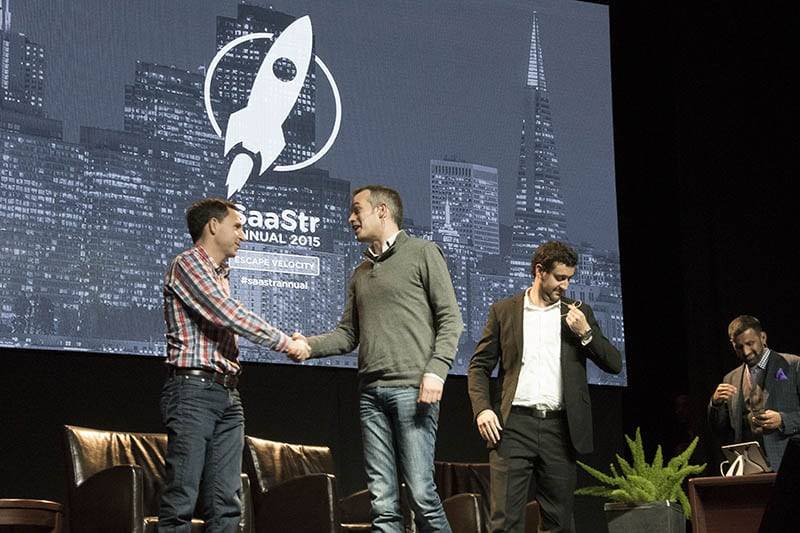
At the first SaaStr Annual in 2015, Talkdesk, Greenhouse, and Algolia were highlighted alongside Gainsight as breakout SaaS companies growing at roughly 15% to 20% per month. The group became known as the “20%ers club,” representing companies that had found strong demand but were still building the systems needed to turn momentum into durable scale. Years later, SaaStr reported that all four had grown to roughly or above $200 million in ARR, making their earlier lessons far more interesting than a typical “we had a cool launch” startup story.
This is not a story about one universal SaaS playbook. Talkdesk sold cloud contact-center software. Greenhouse modernized recruiting. Algolia made search infrastructure easier for developers and product teams. Gainsight helped companies manage customer success and retention. Different markets, different buyers, different sales motionsand yet the path toward $10 million ARR revealed several stubbornly similar truths.
Why $10 Million ARR Matters So Much in SaaS
Reaching $10 million ARR is not a finish line with balloons and a giant ceremonial check. It is evidence that something repeatable may be happening. By this stage, investors and operators generally expect to see a clearer customer wedge, a predictable lead funnel, sales representatives who can independently reach quota, and a scalable revenue motion rather than a founder performing heroic spreadsheet magic at midnight.
The number matters because a company can no longer rely on charm, luck, and a CEO who remembers every customer’s dog’s name. The business must explain how it acquires customers, helps them succeed, renews them, expands accounts, and hires people without accidentally cloning the founder. That is where Talkdesk, Greenhouse, Algolia, and Gainsight each developed a distinctive advantage.
Talkdesk: Turning Customer Support Into a Growth Engine
Talkdesk’s early story is a reminder that an “unsexy” category can be wonderfully attractive when customers still have painful problems. Contact centers were hardly new, but Talkdesk made it easier for businesses to create cloud-based call centers that connected with internal tools such as Salesforce and Zendesk. When a customer called, support agents could see relevant account information instead of playing a thrilling game of “Who Is This Person and Why Are They Mad?”
At the 2015 panel, Talkdesk had reportedly climbed from nearly nothing to about $6 million ARR within the prior 12 months. Earlier, the company had reached $1 million ARR with minimal capital, a small team in Portugal, and a founder handling much of the commercial work in the United States.
Founder-Led Customer Learning Before Scale
Tiago Paiva’s early approach was intensely hands-on. He handled customer success, support, sales, and much of the customer-facing work while engineering remained in Portugal. He personally met many of the company’s first customers and described how those in-person relationships helped Talkdesk close meaningful early deals.
The bigger lesson was not “every founder should live on airplanes forever.” The lesson was that direct customer contact sharpened product-market fit. Talkdesk eventually narrowed its focus toward customer-support use cases rather than trying to satisfy every imaginable voice-related use case. That decision shortened sales cycles and reduced the temptation to build random features for every enthusiastic prospect with a budget and a very specific request.
Talkdesk also showed the importance of timing senior hires correctly. Paiva later identified a VP of Sales as someone the company could have hired earlier. Once the team raised capital, it began adding sales leadership, sales representatives, and marketing capability around an already-proven customer need.
Greenhouse: Building a Repeatable Hiring Machine
Greenhouse approached SaaS growth through recruiting infrastructure. Instead of trying to become a giant all-purpose HR system, it focused on helping companies organize candidate sources, structure interviews, compare applicants, and improve hiring decisions. The product solved a practical problem: companies wanted to hire better people without turning every open role into a chaotic scavenger hunt across inboxes, spreadsheets, referrals, and half-forgotten calendar invites.
By 2015, Greenhouse had grown from about 450 customers to more than 800 customers, while reporting plans for revenue to quadruple during the year. It also expanded rapidly in headcount and raised capital to strengthen infrastructure, enterprise readiness, internationalization, and sales capacity.
Learn the Sales Motion Before Hiring a Sales Army
Greenhouse cofounder Daniel Chait shared one of the most useful early-stage SaaS principles: learn before scaling. He sold personally before hiring representatives, focusing on who bought the product, why they bought it, what they paid, and how the sales process actually worked. Once that process was sufficiently repeatable, Greenhouse hired its first three representatives together and trained them through direct observation.
That is a meaningful distinction. Founders often believe they need a VP of Sales because growth feels messy. Sometimes they do. But Greenhouse waited until it understood not only how the founder sold, but also how a sales team could sell. The company then emphasized value-based sellingteaching representatives to uncover pain, explain business impact, and make a credible ROI case rather than simply reciting features like a software brochure that learned to talk.
Greenhouse also understood funnel math. Chait argued for keeping pressure on the top of the funnel, even if that occasionally made sales-rep efficiency look less tidy. An underfed sales team is rarely an efficient sales team; it is just a group of talented people slowly becoming experts at office basketball.
Algolia: Letting Developers Create the Distribution Engine
Algolia took a different route. Its founders initially worked on an offline search product for mobile devices, then shifted toward a hosted search-as-a-service model. That change was important because it aligned the company with a much broader need: businesses wanted fast, relevant search without building and operating a search engine themselves.
At the 2015 panel, Algolia had gone from zero to seven figures in revenue within about 12 months. The company moved beyond a small self-service pricing model toward larger enterprise agreements while still maintaining transparent pricing and a developer-friendly entry point.
Product-Led Growth Meets Enterprise Trust
Algolia’s growth model combined self-service adoption with enterprise sales. Developers and product teams could discover and test the product, while larger customers could purchase a more formal solution. Nicolas Dessaigne explained that enterprise revenue became meaningful, but the company still valued the long tail of developers and product managers who could start through the website.
The company also understood something many SaaS teams learn later than they should: customer success can be marketing. Algolia found that developers talked to one another, and happy users created word-of-mouth momentum. Dessaigne described customer success as one of the company’s strongest marketing investments because satisfied technical users influenced peers, teams, and future buying decisions.
Focus mattered here as well. Algolia once declined a potentially large offline software-development-kit deal because it did not align with the company’s SaaS direction. Turning down a large check can feel like refusing free pizza when the office is hungry, but strategic focus often protects the product, positioning, and team from becoming a collection of unrelated side quests.
By 2017, Algolia reported 3,000 paying customers across 100 countries and billions of searches each month, showing how a developer-first product could expand into a large global infrastructure business.
Gainsight: Making Customer Success a Board-Level Growth Function
Gainsight’s climb was different because it helped build the category it sold into. Customer success was not always a widely understood software function. In the early 2010s, companies often treated post-sale work as support, account management, or a polite series of “just checking in” emails. Gainsight helped popularize the idea that customer health, adoption, retention, and expansion should be managed systematically.
When Nick Mehta joined Gainsight as CEO in 2013, the company had less than $1 million in recurring revenue. The business evolved from customer-health analytics toward daily workflows and automation, eventually helping define what customer-success platforms could do for growing SaaS businesses.
Retention Is Not the Quiet Cousin of Growth
Gainsight’s central insight was simple: a company cannot sustainably grow by pouring new customers into a leaky bucket. Net revenue retention, gross revenue retention, customer adoption, and expansion revenue are not merely finance metrics. They show whether customers are receiving enough value to stay, grow, and recommend the product.
That idea has become central to SaaS valuation and strategy. Research and executive commentary continue to link stronger net revenue retention with durable SaaS growth, because healthy existing accounts can compound revenue while reducing dependence on constantly acquiring new logos.
Gainsight’s lesson for companies nearing $10 million ARR is especially sharp: do not wait until churn becomes a board-slide emergency. Build customer-success discipline when the customer base is still manageable enough to learn from. The best renewal strategy is not a heroic renewal call in month eleven. It is a customer who received clear value in months one through ten.
The Shared SaaS Playbook Behind Four Very Different Companies
Despite their different markets, Talkdesk, Greenhouse, Algolia, and Gainsight shared five practical habits.
1. They Found a Clear Wedge
Talkdesk concentrated on support use cases. Greenhouse specialized in structured recruiting. Algolia solved fast search for developers and digital businesses. Gainsight focused on customer success and retention. Each company began with a focused promise rather than trying to become the entire software aisle at once.
2. They Learned Before They Accelerated
Greenhouse learned the sales process before scaling representatives. Talkdesk learned from direct customer interactions. Algolia tested pricing and enterprise demand gradually. Gainsight learned how to convert an emerging category into a business problem executives could understand.
3. They Treated Hiring as a Growth Lever, Not a Headcount Contest
Early hires were not just bodies added to an org chart. The companies looked for specific capabilities: experienced sales leadership, demand generation, customer-facing engineers, and people who could teach the next layer of the organization. In SaaS, one excellent early leader can create a repeatable function; one poor hire can create a very expensive group chat.
4. They Built Around Customer Value
Every company had a different product, but all depended on customers realizing value quickly. That principle improves conversion, expansion, retention, word of mouth, and pricing power. It also creates something extremely rare in software: customers who voluntarily explain your product to other people without being bribed by a webinar gift card.
5. They Used Metrics as Decision Tools, Not Decorative Wallpaper
Revenue targets mattered, but so did lead volume, sales capacity, customer fit, adoption, and retention. The winning question was not merely “How do we reach $10 million ARR?” It was “What must be true about our product, customers, people, and process for $10 million ARR to be sustainable?”
What Changes After the $10 Million ARR Milestone?
Crossing $10 million ARR introduces a new kind of complexity. Finance, forecasting, customer segmentation, international expansion, security expectations, leadership layers, and implementation capacity all become more important. Companies can no longer improvise every process, but they also cannot bureaucratize themselves into a productivity coma.
The best businesses preserve the speed of the early days while building enough structure to avoid breaking under success. They retain founder curiosity, formalize what works, and stop confusing frantic activity with strategic progress. Growth is exciting. Durable growth is better. Durable growth with reasonable sleep is practically science fiction, but worth pursuing.
Conclusion: $10 Million ARR Is Proof, Not Permission to Relax
Talkdesk, Greenhouse, Algolia, and Gainsight showed that the route to $10 million ARR is not one-size-fits-all. One company wins through customer intimacy, another through a disciplined sales process, another through developer love and product-led adoption, and another through retention-driven category creation.
The common denominator is not a magic funnel formula. It is disciplined learning. The strongest SaaS companies use early traction to identify their best customers, sharpen their value proposition, hire deliberately, improve retention, and build a revenue engine that can operate without constant founder heroics. That is what turns a promising startup into a scalable company.
Experience Lessons: What the Road to $10 Million ARR Really Feels Like
The road to $10 million ARR rarely feels like a clean upward graph. It feels more like trying to assemble a bicycle while riding it downhill, during a rainstorm, while three different departments ask whether the handlebars are “strategically aligned.” Revenue may look smooth on a board slide, but the operating reality is usually a mixture of small wins, awkward hiring mistakes, unexpected customer requests, and a few months where everyone wonders whether the company has lost its mind.
One of the most important experiences from this stage is learning that growth exposes weaknesses rather than creating them. A weak onboarding process may seem manageable with 20 customers. At 200 customers, it becomes a renewal problem. At 2,000 customers, it becomes a reputation problem. The same applies to product reliability, sales qualification, pricing discipline, customer support, and management communication. Scale does not politely hide flaws. It gives them a louder microphone.
Another experience is discovering that the founder must evolve. In the earliest phase, a founder can personally sell, support customers, review product details, and decide nearly everything. Near $10 million ARR, that approach becomes a bottleneck. The founder still needs to stay close to customers and the product, but must spend more time designing systems, recruiting leaders, clarifying priorities, and protecting company focus. It can feel uncomfortable because delegation initially looks like losing control. In reality, thoughtful delegation is how a company gains the capacity to grow.
Teams also learn that revenue quality matters more than revenue theater. A large contract that requires unusual product work, impossible support commitments, or permanent discounting can create more trouble than it creates value. The best operators ask whether a deal strengthens the core business. Does it fit the ideal customer profile? Will the customer succeed? Can the team support similar customers repeatedly? Will the contract improve the product roadmap or distort it?
Finally, companies approaching $10 million ARR learn that morale becomes an operating metric. Hypergrowth can be thrilling, but it can also exhaust people. Leaders need to communicate why priorities change, celebrate real progress, and make room for teams to learn. A company does not become scalable because it has a dashboard full of numbers. It becomes scalable when talented people understand the mission, trust the direction, and have enough clarity to make good decisions without waiting for the founder to answer every Slack message.
Note: The ARR figures and growth stories in this retrospective are historical milestones drawn from publicly reported company and industry information. They are illustrative of each company’s earlier growth stage and should not be interpreted as current revenue disclosures or investment advice.