
Note: This article is for general informational and SEO content purposes only. Allergy symptoms can overlap with infections, irritation, asthma, autoimmune conditions, and other medical issues. Anyone with trouble breathing, throat swelling, faintness, or a fast-spreading reaction should seek urgent medical care.
Introduction: When the Immune System Gets Dramatic
Most people hear “allergy” and picture peanuts, pollen, or a cat that has personally declared war on their sinuses. But the allergy world is much stranger than that. Some people break out in hives after touching cold water. Some react to sunlight. Some can eat a food safelyunless they exercise afterward, which sounds like the immune system hiring a personal trainer just to cause chaos.
Before we dive into the weirdest allergies, one important clarification: not every condition below is a classic IgE-mediated allergy, the type associated with immediate reactions to foods, insect venom, or latex. Some are physical urticarias, contact allergies, hypersensitivity reactions, or allergy-like immune responses. In everyday language, people often call them “allergies” because the symptomshives, swelling, itching, wheezing, nausea, or even anaphylaxisfeel allergic. The science is more precise; the experience is still very real.
Here are 40 weird allergies and unusual allergic reactions that sound made up, but absolutely belong in the “the human body is a mysterious little goblin” file.
Physical Triggers That Can Make Skin Rebel
1. Water Allergy: Aquagenic Urticaria
Aquagenic urticaria is one of the rarest and strangest conditions on the list. Contact with waterregardless of temperaturecan trigger small itchy hives. Rain, showers, sweat, or tears may become a problem. Imagine your skin treating a normal Tuesday shower like a surprise attack.
2. Water-Induced Itching: Aquagenic Pruritus
Unlike aquagenic urticaria, aquagenic pruritus causes intense itching after water exposure without obvious hives. The skin may look normal, which can make the condition especially frustrating. The person feels like they are being attacked by invisible ants while everyone else says, “But I don’t see anything.” Helpful? Not even slightly.
3. Cold Allergy: Cold Urticaria
Cold urticaria can cause hives, swelling, or more serious reactions after exposure to cold air, cold water, ice, or cold drinks. For some people, swimming in cold water can be dangerous because a large area of skin is exposed at once. Ice cream becomes less “fun dessert” and more “potential medical plot twist.”
4. Heat or Sweat Allergy: Cholinergic Urticaria
Cholinergic urticaria is often triggered by rising body temperature. Exercise, hot showers, spicy food, stress, or a summer afternoon can bring on tiny itchy hives. The body is basically saying, “We are slightly warm. Release the panic confetti.”
5. Sun Allergy: Solar Urticaria
Some people develop hives within minutes of sun exposure. Solar urticaria is different from ordinary sunburn; it is an immune-related reaction to light. In severe cases, large-area exposure may cause systemic symptoms. For these patients, “touch grass” must come with shade, long sleeves, and a strategic exit plan.
6. Polymorphous Light Eruption
Often called a sun allergy, polymorphous light eruption causes itchy bumps, patches, or blisters after UV exposure. It commonly appears after the first strong sun exposure of spring or summer. The skin seems to forget what sunlight is every year and reacts like it just met a celebrity it hates.
7. Pressure Urticaria
Delayed pressure urticaria can happen after pressure on the skin from tight clothing, backpack straps, sitting, or carrying heavy bags. Swelling may appear hours later. That means your jeans can betray you long after you have changed into pajamas.
8. Dermatographism: Skin Writing
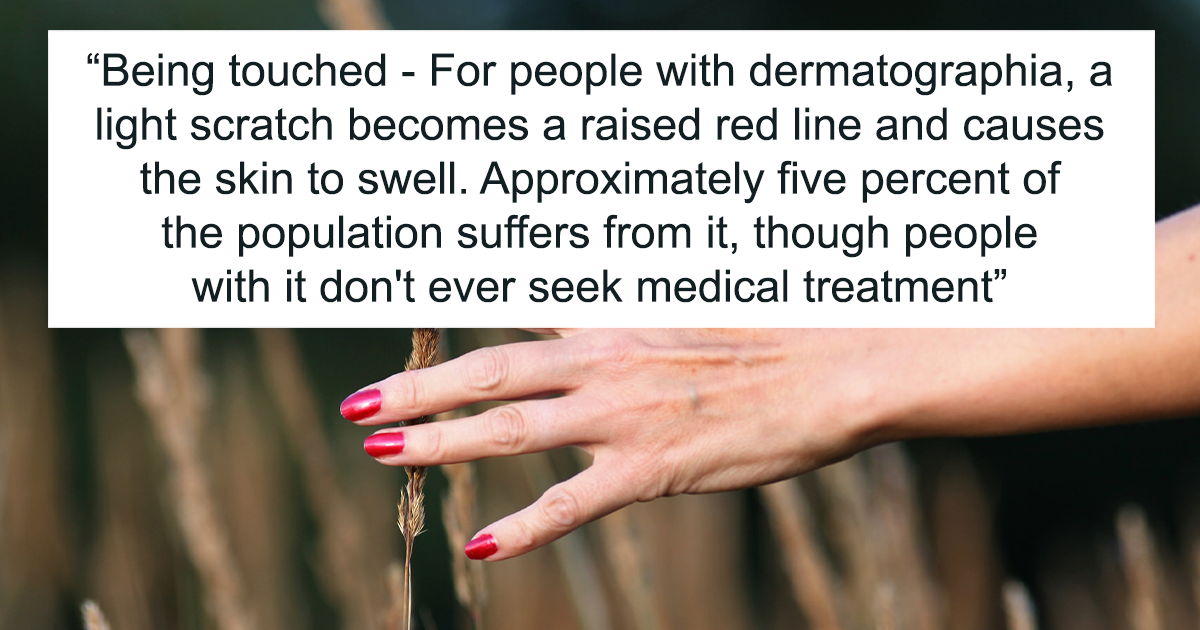
Dermatographism, also called skin writing, causes raised red lines after scratching or stroking the skin. Some people can literally “write” on their skin with light pressure. It is a terrible party trick, but admittedly a memorable one.
9. Vibration Allergy
Vibratory urticaria or angioedema can be triggered by vibration from tools, lawn mowers, motorcycles, or even vigorous towel drying. The reaction may cause swelling, redness, or itching. Your immune system apparently saw a power drill and decided it was time for drama.
10. Exercise-Induced Anaphylaxis
Exercise-induced anaphylaxis is rare but serious. Physical exertion can trigger hives, swelling, breathing problems, dizziness, or a dangerous drop in blood pressure. It can occur at different levels of activity, which makes diagnosis tricky and management important.
11. Food-Dependent Exercise-Induced Anaphylaxis
This one is extra weird: a person may tolerate a food and tolerate exercise separately, but react when the two happen together. Wheat is a common trigger, but shellfish, nuts, tomatoes, and other foods have been reported. It is the immune system’s version of saying, “I’m fine with each guest individually, but not this dinner party.”
Food Allergies With Strange Twists
12. Red Meat Allergy From a Tick Bite
Alpha-gal syndrome can develop after certain tick bites and may cause delayed reactions to beef, pork, lamb, venison, or other mammalian products. Unlike many food allergies, symptoms often appear several hours after eating. A burger at dinner can become hives at midnight, which is rude scheduling.
13. Gelatin Allergy
Gelatin is made from animal collagen and can appear in marshmallows, gummy candies, capsules, vaccines, and medical products. Some people with alpha-gal syndrome or specific gelatin sensitivity may react to it. The villain is not always the steak; sometimes it is the innocent-looking gummy bear.
14. Sesame Allergy
Sesame may sound ordinary, but it can be hidden in breads, sauces, spice blends, tahini, and processed foods. In the United States, sesame is now recognized as a major food allergen for labeling purposes. Tiny seed, big attitude.
15. Pollen Food Allergy Syndrome
Also called oral allergy syndrome, this happens when pollen-allergic people react to proteins in raw fruits, vegetables, or nuts. Birch pollen may cross-react with apples or carrots; ragweed may cross-react with melons or bananas. Cooking often changes the proteins enough to reduce symptoms.
16. Latex-Fruit Syndrome
People with latex allergy may also react to foods with similar proteins, including banana, avocado, kiwi, chestnut, papaya, or tomato. This does not happen to everyone with latex allergy, but when it does, the produce aisle suddenly feels like a suspense movie.
17. Carmine Dye Allergy
Carmine, also called cochineal extract, is a red coloring made from insects and used in some foods, cosmetics, and drinks. Rare allergic reactions have been reported. Yes, the phrase “bug-based lipstick allergy” is medically less ridiculous than it sounds.
18. Spice Allergies
Spices such as coriander, cumin, mustard, paprika, or celery seed can trigger allergic reactions in sensitive people. Spices may be hard to identify because labels sometimes group them under general terms. The mystery culprit may be hiding in the seasoning like a tiny culinary ninja.
19. Lupin Flour Allergy
Lupin is a legume sometimes used in gluten-free or high-protein baked goods. People allergic to peanuts may be at higher risk of reacting to lupin because both are legumes. “Gluten-free” does not automatically mean “allergy-simple.”
20. Buckwheat Allergy
Despite its name, buckwheat is not wheat. It can appear in noodles, pancakes, cereals, and even pillows filled with buckwheat hulls. Reactions can range from mild symptoms to severe allergy in sensitive people.
21. Seaweed Allergy
Seaweed allergies are uncommon, but they have been reported. Seaweed can show up in sushi, snacks, supplements, and food thickeners. For some people, “healthy ocean snack” becomes “why is my mouth itchy?”
22. Honey Allergy
Honey can contain pollen, bee-related proteins, or plant compounds that trigger reactions in rare cases. Most people tolerate honey perfectly well, but those with severe pollen or bee-related sensitivities should pay attention to symptoms.
Contact Allergies Hiding in Daily Life
23. Nickel Allergy
Nickel is one of the most common causes of allergic contact dermatitis. It may be found in jewelry, belt buckles, zippers, eyeglass frames, coins, and phones. If your earlobes hate cheap earrings, nickel may be the tiny metal gremlin involved.
24. Fragrance Allergy
Fragrance ingredients in perfumes, lotions, shampoos, detergents, candles, and “fresh” products can cause allergic contact dermatitis. The word “natural” does not guarantee safety. Poison ivy is natural too, and nobody invites it to brunch.
25. Hair Dye Allergy
Permanent hair dyes may contain chemicals such as paraphenylenediamine, often shortened to PPD, that can trigger allergic reactions. Symptoms may include scalp itching, facial swelling, rash, or blistering. Always patch test when instructed, because “new hair, new face swelling” is not the makeover anyone requested.
26. Tattoo Ink Allergy
Allergic reactions to tattoo ink can happen, especially with certain pigments. Red ink is often reported as a common culprit, but any color can cause trouble. The reaction may appear as itching, swelling, bumps, scaly patches, or raised areas in one part of the tattoo.
27. Sunscreen Allergy
Some people react to chemical sunscreen ingredients, preservatives, or fragrances. Others develop photoallergic contact dermatitis, where sunlight helps activate the reaction. The product meant to protect you from the sun can, very unfairly, become part of the problem.
28. Nail Product Allergy
Acrylates in gel nails, acrylic nails, or nail adhesives can trigger allergic contact dermatitis. The rash may appear not only around the nails but also on the eyelids or face after touching those areas. Your manicure may be cute; your immune system may be deeply unimpressed.
29. Leather Allergy
Some leather products are processed with chromium compounds that can trigger allergic contact dermatitis. Shoes, watch straps, gloves, and belts may be sources. When your feet itch after wearing certain shoes, the problem may not be fashion judgmentit may be chemistry.
30. Cement Allergy
Cement can contain chromates that cause allergic contact dermatitis, especially in construction workers. Hands, wrists, and forearms are commonly affected. This is one reason protective gloves matter; cement is not just “spicy dirt.”
31. Formaldehyde Allergy
Formaldehyde and formaldehyde-releasing preservatives can appear in some cosmetics, cleaning products, and wrinkle-resistant fabrics. Sensitive people may develop rashes after exposure. Your “easy-care” shirt should not require a dermatologist.
32. Laundry Detergent Allergy
Fragrances, dyes, preservatives, or enzymes in detergents can irritate or trigger allergic contact dermatitis. The rash often appears where clothing touches the skin. The culprit may be less “mysterious rash” and more “your socks are full of perfume.”
33. Poison Ivy, Oak, and Sumac Allergy
These plants contain urushiol, an oily resin that causes allergic contact dermatitis in many people. The rash may appear in streaks or patches after exposure. It is one of nature’s most successful pranks, and it does not need Wi-Fi.
Animal, Insect, and Environmental Allergies That Get Weird
34. Cockroach Allergy
Cockroach particles can trigger allergic rhinitis and asthma symptoms. It is not glamorous, but it is real. The allergen may be found in saliva, droppings, and body parts. Sorry. The truth is not always pretty.
35. Dust Mite Allergy
Dust mites are microscopic creatures that live in bedding, carpets, and upholstered furniture. People are usually allergic to proteins in mite waste and bodies. Your pillow may look peaceful while hosting a very tiny apartment complex.
36. Mold Allergy
Mold spores can trigger sneezing, congestion, itchy eyes, cough, and asthma symptoms. Mold can grow indoors in damp areas and outdoors in soil, leaves, or rotting wood. If your basement smells like a wet sock’s diary, investigate.
37. Pet Saliva Allergy
Many people say they are allergic to pet hair, but the proteins often come from saliva, dander, or urine. Cats and dogs spread allergens while grooming, shedding, and lounging like royalty. The fur is mostly the delivery vehicle.
38. Horse Allergy
Horse dander can trigger strong reactions in some people, including nasal symptoms, asthma, hives, or eye irritation. Even clothing worn around horses may carry allergens. A romantic horseback ride is less romantic when your lungs file a complaint.
39. Mosquito Bite Allergy: Skeeter Syndrome
Skeeter syndrome is a large local inflammatory reaction to mosquito bites. Swelling, warmth, redness, and itching can become dramatic and may resemble infection. The mosquito is tiny; the reaction can be theatrical.
40. Semen Allergy
Semen allergy, or seminal plasma hypersensitivity, is a rare reaction to proteins in semen. Symptoms can include burning, itching, swelling, hives, or, rarely, systemic reactions. It can be partner-specific and is often confused with infections or irritation, so medical evaluation matters.
How Weird Allergies Are Diagnosed
Unusual allergies are often diagnosed through a combination of medical history, timing, symptom patterns, skin testing, blood testing, patch testing, or supervised challenge tests. The timeline is often the biggest clue. Did hives appear after cold exposure? Does itching happen only after showers? Does a rash show up two days after wearing a watch? Does a reaction happen only when a certain food and exercise team up like villains in a buddy movie?
For food and venom allergies, doctors may look for IgE-mediated reactions and assess the risk of anaphylaxis. For contact dermatitis, patch testing can help identify delayed skin allergens like nickel, fragrance, preservatives, or hair dye chemicals. For physical urticarias, controlled exposure tests may help confirm triggers such as cold, pressure, heat, or vibration.
What To Do If You Suspect a Strange Allergy
First, do not diagnose yourself from one weird afternoon. Skin and breathing symptoms can have many causes. Keep a symptom diary with dates, foods, medications, activities, products used, weather, exercise, and timing. Patterns are gold. “I get hives every time I jog after eating shrimp” is much more useful than “my body hates me,” even if both feel emotionally accurate.
Second, take severe symptoms seriously. Trouble breathing, throat tightness, fainting, widespread hives, facial swelling, or repeated vomiting after exposure may suggest anaphylaxis and requires emergency care. People with diagnosed severe allergies may be advised to carry epinephrine and have a written action plan.
Third, simplify your environment when tracking a reaction. Switch to fragrance-free products, avoid new cosmetics, wash new clothing before wearing it, and introduce foods or products one at a time when medically safe. The fewer suspects in the room, the easier it is to find the culprit.
Experiences: Living With Weird Allergies in the Real World
Living with a strange allergy can feel like being the detective in a mystery where the suspect is your own shampoo, the weather, your sandwich, or the sun. People with rare allergies often describe the same experience: first confusion, then disbelief, then a long phase of “Am I imagining this?” Because unusual triggers can sound absurd, patients may be dismissed by friends, coworkers, or even rushed clinicians. Someone who reacts to cold may hear, “Everyone gets cold.” Someone with pressure urticaria may hear, “Maybe your backpack is just heavy.” Someone with fragrance allergy may be told, “But it’s expensive perfume.” Unfortunately, luxury does not stop molecules from causing a rash.
The everyday logistics can be exhausting. A person with cold urticaria may check pool temperature before swimming, avoid icy drinks, carry medication, and explain why winter sports are not simply “not their thing.” Someone with fragrance allergy may dread elevators, office air fresheners, hotel rooms, scented candles, and that one coworker who believes cologne should enter the room five minutes before he does. A person with alpha-gal syndrome may need to ask about beef stock, gelatin, dairy ingredients, medications, and restaurant cross-contact. Eating out becomes less spontaneous and more like negotiating a tiny legal contract with the menu.
There is also a social side. Weird allergies can make people feel high-maintenance when they are actually trying to stay safe. They may decline invitations, bring their own food, avoid hugs from someone wearing heavy fragrance, or leave a sunny picnic early. The best support is simple: believe them, do not pressure them to “just try a little,” and avoid turning their medical condition into party entertainment. Curiosity is fine; interrogation over appetizers is not.
Practical experience usually teaches people to become excellent planners. They learn which products are safe, which restaurants listen, which fabrics irritate, which weather apps matter, and which friends can be trusted not to say, “But it’s organic!” as if organic poison ivy would politely stop itching. Over time, many people build a routine: read labels, carry medication if prescribed, photograph reactions for the doctor, save ingredient lists, and keep backup clothing or skin products nearby.
The biggest lesson from weird allergies is humility. The immune system is powerful, protective, and occasionally ridiculous. What sounds unbelievable to one person may be daily life for another. So if someone tells you they are allergic to sunlight, cold, water, semen, tattoo ink, or a food only when combined with exercise, the right response is not laughter. It is: “That sounds difficult. How can I help make this safer for you?” That sentence is not only kindit is medically smarter than pretending the body always follows common sense.
Conclusion
Weird allergies may sound like internet folklore, but many are documented medical realities. Some involve classic immune reactions to foods, insect venom, latex, or animal proteins. Others are physical urticarias triggered by temperature, pressure, sunlight, water, sweat, or vibration. Still others are delayed contact allergies hiding in jewelry, cosmetics, clothing, detergents, tattoo ink, nail products, or hair dye.
The key takeaway is not to panic over every itch. The key is pattern recognition. When symptoms repeat after the same exposure, timing, food, activity, or product, it is worth taking notes and talking to a qualified healthcare professional. Allergies can be strange, but with the right diagnosis and management plan, even the weirdest triggers become easier to understandand much less likely to run your life like a tiny, itchy dictator.