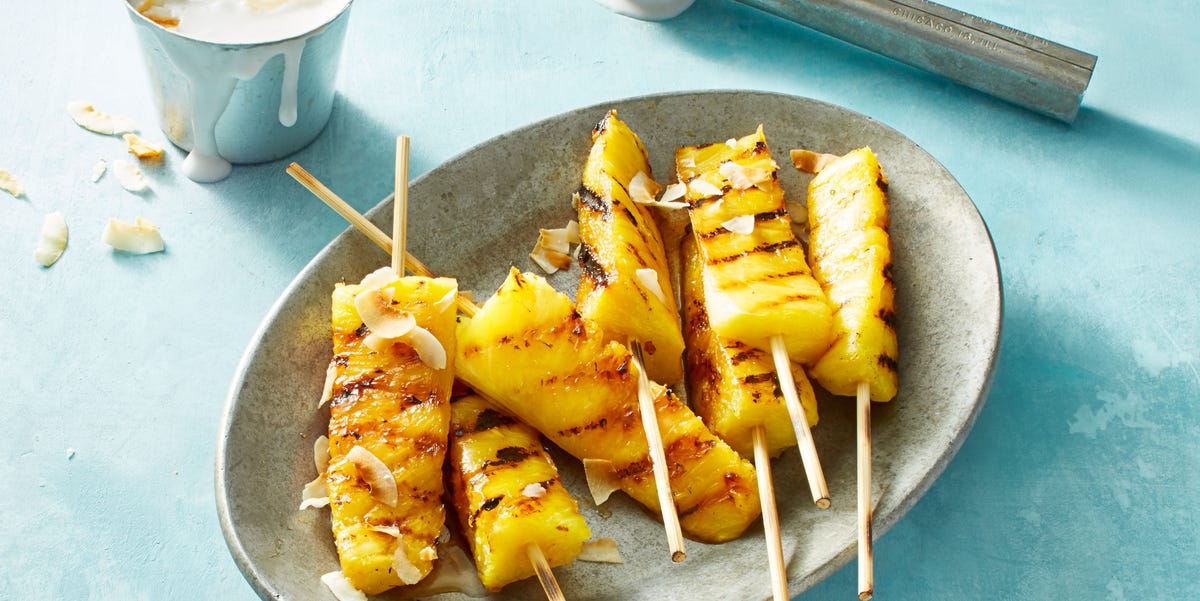
Best Caramelized Pineapple Skewers Recipe – How To Make Caramelized Pineapple Skewers

Fresh pineapple is already sweet, juicy, and capable of making an ordinary fruit bowl feel like it booked a tropical vacation. Put it on a hot grill with brown sugar, cinnamon, butter, and lime, however, and it becomes something entirely different: golden, smoky, sticky, and dangerously easy to eat straight from the skewer.
This caramelized pineapple skewers recipe delivers deeply browned edges without turning the sugar coating into charcoal. The secret is using firm-ripe fruit, drying the pineapple well, cooking over controlled heat, and saving part of the glaze for the final minutes. That last step creates a glossy caramelized finish rather than a burnt-sugar emergency.
Serve the skewers as a summer grilling dessert, a colorful cookout side, or a quick topping for vanilla ice cream. They require only a handful of ingredients, yet they look impressive enough to make guests assume you planned dessert days ago. There is no need to correct them.
Caramelized Pineapple Skewers Recipe at a Glance
- Prep time: 15 minutes, plus 30 minutes for soaking wooden skewers
- Cooking time: 8 to 10 minutes
- Total time: About 40 minutes
- Yield: 6 servings
- Cooking method: Outdoor grill, grill pan, or broiler
- Difficulty: Easy
Wooden skewers should be soaked in water for at least 30 minutes before grilling to reduce scorching. Metal skewers can be used immediately, although their handles become extremely hot.
Why This Caramelized Pineapple Recipe Works
Pineapple contains plenty of natural sugar, but adding a thin brown sugar glaze produces faster, more even browning. Brown sugar also contributes a mild molasses flavor that tastes warmer and more complex than plain white sugar.
Cinnamon supports that caramel flavor without overwhelming the pineapple. Lime juice cuts through the sweetness, while vanilla gives the finished skewers a dessert-like aroma. A pinch of salt may seem tiny, but it keeps the glaze from tasting flat or aggressively sugary.
Most importantly, the recipe uses medium to medium-high heat rather than the hottest possible fire. Pineapple can handle strong heat, but a sugary coating burns faster than bare fruit. Controlled heat gives the inside time to warm and soften while the outside develops dark golden grill marks. Established grilled-pineapple recipes similarly rely on moderate heat, short cooking times, and frequent observation.
Ingredients You Will Need
- 1 medium fresh pineapple
- 3 tablespoons unsalted butter, melted
- 1/4 cup packed light brown sugar
- 1 teaspoon ground cinnamon
- 1/4 teaspoon kosher salt
- 1 tablespoon fresh lime juice
- 1 teaspoon vanilla extract
- 1/8 teaspoon cayenne pepper, optional
- Finely grated lime zest, for serving
- Toasted shredded coconut, optional
- Vanilla ice cream or Greek yogurt, optional
- 6 to 8 wooden or metal skewers
Choosing the Best Pineapple
Look for a pineapple that feels heavy for its size and has a sweet fragrance near the base. The shell should be mostly golden yellow with some green areas, and the fruit should feel firm with only a slight amount of give. Avoid pineapples with leaking juice, mold, fermented odors, or large soft spots.
The pineapple does not need to be extremely ripe. In fact, slightly firm fruit is easier to cut, thread, turn, and grill. Overripe pineapple may taste wonderful but can soften too quickly and slide off the skewers. Grilling also intensifies sweetness, so a pineapple that seems only moderately sweet when raw can still produce excellent results.
Can You Use Canned Pineapple?
Fresh pineapple gives the skewers the best structure and flavor, but canned pineapple chunks can work when thoroughly drained and dried. Choose large chunks packed in juice rather than heavy syrup. Syrup-packed fruit is more likely to scorch before it develops a pleasantly caramelized surface.
How to Cut Pineapple for Skewers
- Place the pineapple on its side and slice off the leafy crown and bottom.
- Stand it upright on the flat base.
- Cut downward in strips to remove the peel, following the curve of the fruit.
- Remove any remaining brown “eyes” with the tip of a paring knife.
- Cut the pineapple lengthwise into four large sections.
- Slice away the hard center core from each section.
- Cut the flesh into pieces measuring approximately 1 1/4 inches.
Large, consistently sized pieces stay securely on the skewers and cook at roughly the same speed. Tiny chunks tend to soften too quickly, while dramatically uneven pieces produce the classic skewer problem: one piece is pale, another is perfect, and a third has joined the dark side.
After cutting, spread the pieces over paper towels and pat them dry. Removing excess surface moisture helps the glaze cling and encourages browning instead of steaming.
How to Make Caramelized Pineapple Skewers
Step 1: Prepare the Skewers and Grill
Soak wooden skewers in water for at least 30 minutes. Meanwhile, preheat an outdoor grill to medium or medium-high heat, approximately 375 to 425 degrees Fahrenheit.
Scrub the grates clean and lightly oil them with a folded paper towel held in long-handled tongs. Do not pour oil directly onto a lit grill. A clean, properly heated grate helps the pineapple release after it has formed a caramelized crust.
Step 2: Make the Brown Sugar Glaze
In a small bowl, whisk together the melted butter, brown sugar, cinnamon, salt, lime juice, vanilla, and optional cayenne. Continue stirring until the mixture becomes glossy and mostly smooth.
Transfer about half of the glaze to a separate clean bowl and reserve it for finishing. The first portion will flavor the raw pineapple; the reserved portion will be brushed on near the end of grilling.
Step 3: Assemble the Pineapple Skewers
Thread five or six pineapple chunks onto each skewer. Leave a small space between the pieces so hot air can circulate around their edges. Packing them tightly creates soft centers but fewer caramelized surfaces.
Arrange the assembled skewers on a rimmed baking sheet. Brush all sides lightly with the first portion of glaze. Avoid drowning the pineapple. A thin coating browns more cleanly and is less likely to drip into the fire.
Step 4: Grill Without Constantly Moving Them
Place the skewers across the grill grates and close the lid. Cook for 2 to 3 minutes without moving them. Once the pineapple releases easily, rotate each skewer and cook another side.
Continue turning every 2 minutes until multiple sides have dark golden grill marks, approximately 8 to 10 minutes total. Fruit develops a better sear when it is allowed to remain undisturbed during the first few minutes.
Step 5: Add the Final Glaze
During the final 1 to 2 minutes, brush the pineapple with the reserved glaze. Turn the skewers once more so the brown sugar becomes shiny and lightly bubbling.
Watch closely at this point. The difference between mahogany-colored caramel and burnt sugar can be shorter than the time required to find your serving platter.
Step 6: Rest and Serve
Transfer the skewers to a clean platter and let them rest for 3 minutes. The glaze will thicken slightly as it cools. Finish with lime zest, toasted coconut, or a tiny pinch of flaky salt.
How to Make Pineapple Skewers Without an Outdoor Grill
Grill Pan Method
Heat a cast-iron grill pan over medium-high heat. Lightly oil the ridges, add the glazed skewers, and cook for 2 to 3 minutes per side. Open a window or turn on the exhaust fan because caramelized sugar can produce some smoke.
Broiler Method
Line a rimmed baking sheet with foil and place an oven-safe rack on top. Arrange the skewers on the rack and position them approximately 6 inches below the broiler. Broil for 3 to 4 minutes per side, brushing with the reserved glaze during the final minute.
Skillet Method
For the simplest indoor version, remove the pineapple from the skewers and cook the chunks in a large cast-iron skillet. Work in batches to avoid crowding. Brown the fruit for about 2 minutes per side, then return it to the skewers for serving.
Common Mistakes and How to Avoid Them
The Sugar Burns Before the Pineapple Browns
The grill is probably too hot, or too much glaze was applied at the beginning. Move the skewers to a cooler part of the grill and continue cooking over moderate heat. Apply only a thin initial coating and save the rest for the end.
The Pineapple Sticks to the Grates
Make sure the grill was fully preheated, cleaned, and lightly oiled. Pineapple may also stick when turned too soon. Give the sugar enough time to form a crust before attempting to lift the skewer.
The Fruit Is Soft and Watery
Overripe pineapple, crowded skewers, or wet fruit may be responsible. Begin with firm fruit, pat it dry, and leave small gaps between the chunks.
The Skewers Taste Sweet but Flat
Add the recommended salt and lime juice. Sweet desserts still need acidity and seasoning. A pinch of cayenne, chili powder, or flaky salt can also make the pineapple taste more vibrant without making it truly spicy.
Flavor Variations
Coconut Pineapple Skewers
Replace half the butter with full-fat coconut milk and garnish the finished skewers with toasted coconut. Coconut milk has appeared in several established grilled-pineapple preparations because its richness complements both cinnamon and tropical fruit.
Chili-Lime Pineapple
Skip the vanilla and increase the cayenne to 1/4 teaspoon. After grilling, add lime zest and a light dusting of chili-lime seasoning.
Maple-Bourbon Pineapple
Replace the brown sugar with 3 tablespoons of maple syrup and add 1 tablespoon of bourbon. Because alcohol can flare over open flames, simmer the glaze briefly in a saucepan before brushing it onto the fruit.
Ginger Pineapple Skewers
Add 1 teaspoon of finely grated fresh ginger to the glaze. Ginger provides a lively, slightly peppery contrast to the buttery brown sugar.
Savory Pineapple Skewers
Reduce the brown sugar to 1 tablespoon and omit the vanilla. Add smoked paprika, black pepper, and a splash of low-sodium soy sauce. Serve the pineapple alongside grilled pork, chicken, salmon, shrimp, or tofu.
What to Serve With Caramelized Pineapple Skewers
For dessert, place the warm skewers over vanilla ice cream, coconut ice cream, frozen yogurt, or lightly sweetened Greek yogurt. The contrast between hot pineapple and a cold creamy topping is especially satisfying. Grilled-pineapple recipes from several test kitchens use similar hot-and-cold pairings.
For a cookout, serve the skewers with grilled chicken, pork tenderloin, fish tacos, coconut rice, or black bean salad. The sweet acidity of pineapple provides balance against smoky, salty, and spicy foods.
You can also slide the fruit off the skewers and use it in sundaes, parfaits, pancakes, waffles, pound cake, fruit salsa, or tropical shortcake. Chopped leftovers are particularly good with yogurt and granola the following morning.
Make-Ahead and Storage Tips
The pineapple can be peeled, cored, and cut up to one day in advance. Refrigerate the pieces in an airtight container and pat them dry before glazing. The brown sugar mixture can also be prepared a day ahead and gently rewarmed until brushable.
For the best texture, assemble and glaze the skewers shortly before cooking. Leaving pineapple in the sugary mixture for several hours draws moisture from the fruit and makes the surface wetter.
Refrigerate cooked pineapple in an airtight container for up to three days. Remove the pieces from wooden skewers before storage. Reheat them briefly in a hot skillet, under the broiler, or on a grill. A microwave works, but it softens the caramelized edges.
Frequently Asked Questions
Do I Have to Core the Pineapple?
Removing the core is recommended because it is noticeably tougher and more fibrous than the surrounding flesh. A small amount will not ruin the recipe, but completely cored pieces are easier to bite from a skewer.
Should Pineapple Be Marinated Before Grilling?
A long marinade is unnecessary for this dessert. Pineapple already contains abundant juice and flavor. Applying a thin glaze immediately before grilling helps the surface brown without making the fruit soggy.
Can I Make the Recipe Vegan?
Yes. Replace the butter with melted coconut oil or a plant-based butter suitable for high-heat cooking. Serve with dairy-free vanilla or coconut ice cream.
Can I Add Other Fruit to the Skewers?
Firm peaches, nectarines, mango, strawberries, and bananas can be grilled, but they do not all cook at the same speed. For more predictable results, place each type of fruit on separate skewers.
Why Is My Pineapple Not Caramelizing?
The fruit may be too wet, the grill may not be fully heated, or the skewers may be moved too frequently. Pat the pineapple dry, preheat the cooking surface, and let each side remain in contact with the heat long enough to brown.
The Experience of Making Caramelized Pineapple Skewers
The most time-consuming part of this recipe is not grilling. It is persuading a spiky pineapple to become a neat collection of evenly sized pieces. Once the fruit is trimmed, the rest of the process moves quickly. For a relaxed cookout, cutting the pineapple earlier in the day makes dessert feel nearly effortless when everyone is ready to eat.
One of the first lessons cooks discover is that more sugar does not automatically create better caramelization. A thick layer looks promising while the pineapple is raw, but much of it melts, drips through the grates, and burns. A light coating produces cleaner grill marks and allows the flavor of the fruit to remain recognizable. The goal is caramelized pineapple, not a brown sugar cube with a pineapple somewhere inside.
The grilling stage is pleasantly interactive. Within a few minutes, the fruit begins to smell warmer and sweeter, with notes of cinnamon, vanilla, and toasted sugar. The surfaces touching the grates darken first, while the exposed sides remain bright yellow. Turning each skewer gradually creates a mixture of golden edges, darker charred patches, and juicy centers.
There is often a temptation to keep moving the skewers because sugary food feels as though it must be supervised every second. Watching is useful; constant turning is not. Leaving each side alone for a couple of minutes is what creates defined browning. When a piece resists the grate, waiting another 20 or 30 seconds often allows it to release naturally.
The final glaze is the moment the recipe changes from grilled fruit to a proper dessert. The butter and brown sugar begin bubbling almost immediately, forming a shiny coating around the pineapple. This stage also demands the most attention. A cooler section of the grill is valuable when one skewer darkens faster than the others.
Serving the skewers warm creates the most memorable contrast. The pineapple remains juicy and slightly firm in the middle, while its edges taste smoky and candied. Cold vanilla ice cream melts into the crevices, creating an instant sauce. Toasted coconut adds crunch, and lime zest makes the whole plate smell fresher before anyone takes a bite.
For parties, individual skewers are convenient, but smaller children may find hot pointed sticks awkward. Sliding the cooked fruit onto a platter is safer and makes sharing easier. For adults, the skewers provide an appealing handheld dessert that does not require plates unless ice cream becomes involvedwhich, realistically, it probably should.
Leftovers offer a different but equally useful experience. Refrigeration softens the caramelized coating, yet the smoky flavor remains. Chopped grilled pineapple can rescue plain oatmeal, yogurt, or pancakes from a deeply uneventful morning. It can also be turned into salsa with jalapeño, red onion, cilantro, and lime.
Perhaps the best part of making caramelized pineapple skewers is how forgiving they are. A few dark edges add character, uneven pieces still taste good, and the recipe can move easily from dessert to side dish with a change of seasoning. It looks festive, smells impressive, and requires no pastry skills, candy thermometer, or emotional negotiation with a layer cake.
Final Thoughts
The best caramelized pineapple skewers combine juicy fresh fruit with a restrained brown sugar glaze, steady grill heat, and a bright finish of lime. Drying the fruit and delaying the final layer of glaze are small steps that make a noticeable difference, producing glossy caramelization without bitter burned sugar.
Serve the skewers with ice cream for an easy summer dessert, season them with chili and lime for a cookout side, or chop the leftovers into breakfast bowls and salsa. However they are served, expect them to disappear quickly. Pineapple apparently becomes very popular after spending ten minutes near a fire.