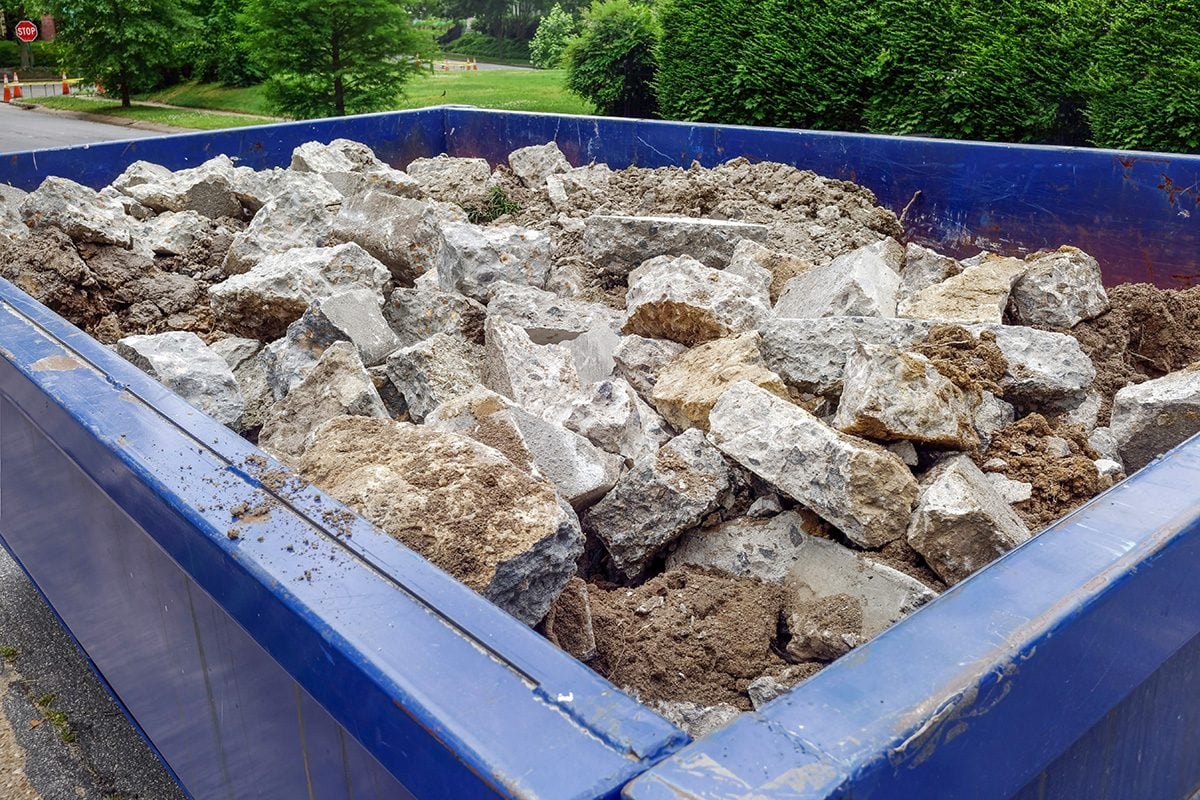

Concrete is great until it is not. A cracked patio, outdated sidewalk, or mystery slab behind the shed can feel as permanent as a bad tattoo. The good news: most concrete can be removed, reused, recycled, or hauled away without turning your yard into a dust-covered disaster zone.
The right plan depends on how much concrete you have, what is embedded in it, and what local facilities will accept. This guide explains how to get rid of concrete safely, how to recycle concrete debris, and when a professional crew is worth every penny.
Start by Identifying What You Are Removing
First, decide whether the concrete is merely in the way or doing an important job. A freestanding path, patio, or thin garden pad is very different from a foundation, retaining wall, footing, pool deck, or slab tied into a house. Do not remove structural concrete without qualified advice.
Check for three common complications:
- Reinforcement: Rebar and wire mesh take longer to cut and may affect recycling rules.
- Contamination: Soil, asphalt, wood, plastic, adhesive, paint, or trash can turn a clean recycling load into mixed construction debris.
- Hidden services: Utility lines, irrigation, drainage, electrical conduit, and communication cables may run near or below the slab.
Cracks do not tell you exactly how thick the concrete is or what it contains. Treat every old slab as a possible surprise package, only heavier.
Estimate the Weight Before You Make a Hauling Plan
Concrete looks manageable until you try to lift it. Normal-weight concrete is commonly estimated at about 150 pounds per cubic foot, although actual weight varies.
For a rectangular slab:
length × width × thickness = cubic feet
cubic feet ÷ 27 = cubic yards
A 12-foot by 10-foot patio that is 4 inches thick is roughly 40 cubic feet, or about 1.5 cubic yards. At 150 pounds per cubic foot, it weighs close to 6,000 pounds before dirt and steel are added. That is why a pickup bed should never be loaded by optimism alone.
Use the estimate to choose a disposal method. Check your vehicle or trailer payload rating, and remember that concrete fills a weight limit long before it fills a container.
The Best Ways to Get Rid of Concrete
Reuse Sound Pieces on Site
Reusable concrete chunks can become garden edging, rustic steps, landscape borders, or base material beneath another hardscape project. Crushed clean concrete may work as sub-base for a path or patio when the project design allows it.
Reuse should be deliberate, not disguised dumping. Do not bury random rubble where it will interfere with drainage, planting, fencing, or later repairs. Keep it away from waterways and areas that need healthy usable soil.
Recycle Clean Concrete
A concrete recycling facility is often the best destination for a clean load. Facilities commonly crush concrete, remove metal, and process the material into recycled aggregate that can be used for road base, fill, or other construction uses.
Call before loading. Ask whether the facility accepts material from homeowners, rebar, brick, block, or wire mesh. Also ask about chunk-size limits, contamination rules, load minimums, fees, truck restrictions, and required load covers. One phone call can prevent a trailer full of debris from taking an unplanned field trip.
Use a Construction and Demolition Facility
A construction and demolition facility may be the better choice when concrete is mixed with other nonhazardous remodeling debris. It can be convenient, but it may cost more than separating clean concrete for recycling.
Sort first whenever practical: clean concrete in one pile, scrap metal in another, and actual trash somewhere else. Concrete is not picky, but recycling facilities often are.
Hire a Hauling or Removal Company
For a thick driveway, reinforced patio, tight access area, or slab near a structure, professionals can be the least stressful option. A reputable crew can break, load, haul, and dispose of the material with suitable equipment.
Request a written scope. Confirm whether the quote includes breaking, hauling, disposal, rebar handling, base removal, dust control, site protection, and cleanup. The cheapest estimate is not a bargain if it leaves a mountain of rubble behind.
Do Not Assume Curbside Pickup Will Take It
Many household trash programs do not accept concrete, and some cities exclude it even when they allow small amounts of building debris. Never leave concrete at the curb unless your local program expressly permits it. Check with the municipal solid-waste department, transfer station, recycler, or C&D facility instead.
Prepare Safely Before You Break Anything
Call 811 Before Digging
If the job includes excavation or work around the slab’s edges, contact 811 before breaking ground. Wait for utilities to mark their approximate underground lines and confirm that required responses are complete.
Never assume a shallow patio has nothing beneath it; old irrigation lines and buried cables enjoy proving people wrong.
Plan for Silica Dust
Concrete contains crystalline silica. Cutting, drilling, grinding, and breaking can create fine airborne dust, so use water suppression or tool-mounted dust collection whenever appropriate. Avoid dry cutting or grinding when a wet or vacuum-assisted option is available.
Wear safety glasses or a face shield, hearing protection, gloves, long pants, and sturdy boots. Use a properly selected, well-fitted respirator when the task requires it, but remember that controlling dust at the source matters more than relying on a mask.
Keep pets, children, and spectators away. Nobody needs ringside seats at a demolition project.
Protect the Work Zone
Move cars, furniture, grills, and fragile planters. Cover nearby landscaping when needed, map the route to your trailer or dumpster, and keep the area clear as you work.
A wheelbarrow carrying concrete on a wet slope is less transportation and more a live-action physics lesson.
How to Remove a Small Concrete Slab
Start at an Edge or Existing Crack
Thin, unreinforced concrete may respond to a heavy sledgehammer. Thicker slabs usually need a demolition hammer or electric breaker. If the slab touches concrete you want to preserve, make a controlled separation cut first with appropriate dust control.
Break It Into Manageable Pieces
Break the concrete into pieces small enough to lift and load safely. Huge chunks may feel satisfying for five seconds, then become a hauling problem.
Work in sections: break a manageable area, remove the pieces, then continue. Keeping loose rubble underfoot is an excellent way to create an ankle injury.
Separate Rebar and Wire Mesh
Separate rebar and wire mesh as you go. Use the proper metal-cutting tool, control sharp ends, and place metal in a separate pile when possible. Wire mesh can spring unexpectedly, so keep your face out of its path.
Load Safely
Load evenly and stay below the rated payload of your truck, trailer, or dumpster. Secure the material and cover it when required. A general-purpose dumpster may not be appropriate for dense material, so confirm its weight limit before filling it with concrete.
Choose Tools for Control, Not Bragging Rights
A sledgehammer suits small, thin sections. A demolition hammer is a practical choice for sidewalks and modest patios. Jackhammers, skid steers, and breaker attachments belong to larger jobs and often to experienced operators.
Choose the smallest tool that can do the work safely and efficiently. Before renting equipment, confirm power requirements, bit type, dust-control attachments, transport weight, and rental rules.
Ask These Questions Before Disposal
Before you leave home, ask the receiving facility:
- Do you accept clean concrete from residents?
- Can it include rebar, mesh, brick, or block?
- What materials make a load unacceptable?
- Is there a maximum chunk size or a minimum fee?
- Do you charge by weight, volume, or load?
- Are there vehicle, cover, or unloading rules?
Write down the answers. The easiest disposal trip is the one where the facility sees exactly what it expected.
Mistakes That Make Concrete Disposal Harder
The biggest mistake is mixing clean concrete with household junk. That can eliminate a recycling option and raise your fee. Another is overloading a vehicle. Load concrete in small, balanced batches; a sagging suspension is not a reliable scale.
Do not dump concrete in vacant lots, drainage ditches, ravines, or wooded areas. It is unsafe, illegal, and can create long-lasting environmental problems. Avoid uncontrolled chemicals, burning, or explosives. They are dangerous, unnecessary, and guaranteed to make the project memorable for all the wrong reasons.
Also plan the space that remains after removal. You may discover uneven soil, damaged drainage, or a missing base layer. Decide whether the area will become lawn, gravel, pavers, a new slab, or planting space before the old surface is gone.
When a Professional Is the Smart Choice
Hire a professional for foundations, retaining walls, thick reinforced slabs, unknown utilities, steep terrain, limited access, or concrete close to a house, pool, septic system, or major tree roots. Bring in a pro whenever you cannot control dust, debris, equipment, or traffic safely.
There is no award for completing a DIY demolition project that becomes an expensive structural repair. A good contractor’s experience can be cheaper than a single serious mistake.
Field Notes: Practical Experiences From Concrete Removal Projects
The following composite experiences reflect common homeowner and contractor lessons. Concrete removal goes wrong in predictable ways, which is good news: you can avoid most of them.
The “tiny patio” lesson usually starts with confidence. Someone sees a cracked 10-by-10-foot slab and imagines a cheerful afternoon with a sledgehammer. The first hour is energetic. The second introduces hidden wire mesh, a compacted base, and the realization that every broken piece must be lifted twiceinto a wheelbarrow and then into a vehicle.
The project goes much better when the owner breaks smaller sections, clears each section before making more rubble, and schedules the recycler before the first swing. It is still physical work, but it no longer becomes a contest between a human back and several thousand pounds of masonry.
Driveway removal teaches a different lesson: hauling is often harder than breaking. Equipment can fracture the surface quickly, but trucks need safe payloads, access must stay open, and concrete needs to remain clean enough for recycling. Crews that make separate piles for concrete, rebar, soil, and mixed debris usually finish faster because they do not keep moving the same material.
The piles can look overly organized in the morning. By late afternoon, they look like genius.
Another familiar story is the rejected recycling load. The concrete itself may be acceptable, but the trailer also contains pressure-treated lumber, landscape fabric, trash, or enough soil to violate the facility’s rules. The driver then faces a second trip, an added fee, or the unpleasant task of unloading by hand in a parking lot.
The cure is wonderfully unglamorous: ask what the facility accepts, sort the material, and load clean concrete separately.
Dust creates its own stories. A dry saw cut can coat windows, cars, patio furniture, and plants in a powdery film that seems to reproduce overnight. Better projects control dust with water or compatible collection equipment, set up a restricted work area, and clean as they go. The neighbors may not send a thank-you note, but they will have fewer reasons to write an angry one.
Another lesson comes from removing concrete before deciding what will replace it. A homeowner may demolish an old patio, then realize the finished surface needs a specific slope for drainage, room for edging, or a compacted base for pavers. Rain arrives, the exposed area turns muddy, and the project suddenly needs twice as much work.
The smarter approach is to measure the future space first. Mark the intended grade, note drainage direction, photograph the existing layout, and decide whether reusable chunks can serve a purpose. Concrete removal is much easier when demolition is part of a plan instead of the beginning of an improvisation marathon.
Finally, everyone who has moved concrete develops an opinion about wheelbarrows. Small loads, firm tires, a level route, and extra help win every time. The most successful removal job is rarely the one with the biggest hammer. It is the one that plans safety, sorting, transport, and a legal destination for every piece.
Conclusion
Getting rid of concrete is a planning job disguised as a demolition job. Identify the slab, estimate the weight, check utilities, control dust, break material into manageable pieces, and separate clean concrete for recycling whenever possible.
With the destination arranged before you begin, an unwanted slab can leave your property without becoming a bigger problem.
Note: Disposal rules, recycling standards, permit requirements, and utility-marking procedures vary by location. Verify local requirements and the receiving facility’s rules before demolition or hauling.