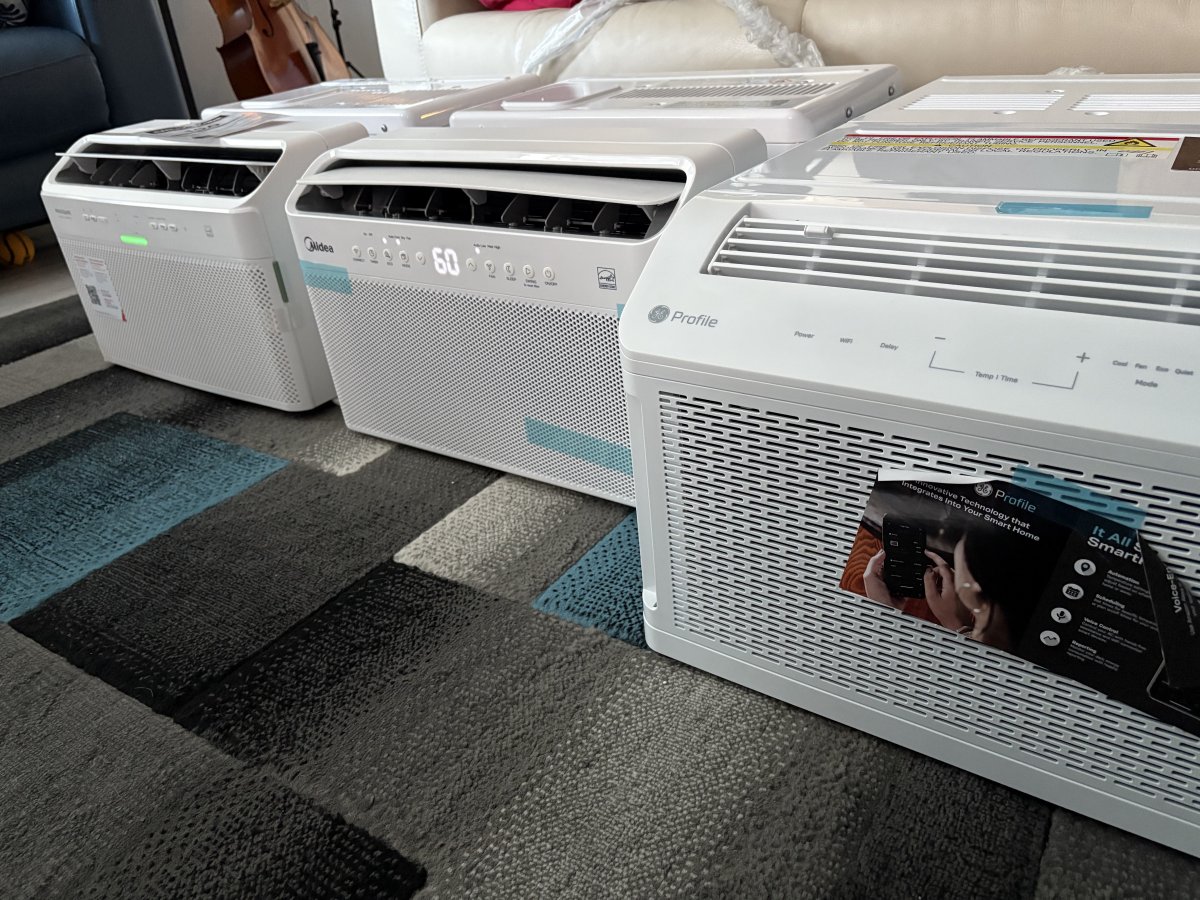

Window air conditioners have not always been famous for elegance. For decades, they were loud metal lunchboxes hanging out of windows like they were trying to escape rent. Then came the U-shaped air conditioner, a smarter design that lets the window close into the middle of the unit. The result is better noise control, improved insulation, a more secure fit, andblessedlya window view that does not look like it was attacked by a toaster.
The best U-shaped air conditioners are especially useful for bedrooms, apartments, home offices, nurseries, and living rooms where comfort matters but central air is either unavailable, too expensive, or about as realistic as installing a swimming pool in the hallway. These units are still window ACs, but they feel more refined: quieter compressors, inverter motors, Wi-Fi controls, energy-saving modes, and more stable installation systems.
This guide explains how U-shaped window air conditioners work, which models are worth considering, what room size they fit, and how to choose one without accidentally buying a machine that cools the room beautifully while blocking your window, rattling your teeth, or turning your electric bill into a horror novella.
What Is a U-Shaped Air Conditioner?
A U-shaped air conditioner is a window AC with a cutout or saddle-style structure that allows the window sash to close between the indoor and outdoor sections of the unit. In many designs, the noisy compressor sits outside, while the controls, fan, and air outlet remain inside. This layout helps reduce indoor noise because the closed window acts like a sound barrier.
Traditional window ACs usually sit in the open window space and rely on side panels to fill the gaps. Those panels are often thin, flimsy, and about as insulating as a polite suggestion. U-shaped and saddle-style units do a better job because more of the window can close around the appliance. That improves sealing, reduces drafts, helps keep outdoor noise outside, and can preserve more natural light.
The category includes two closely related styles. A true U-shaped model, such as the Midea U, has a center channel where the window closes down through the body of the unit. A saddle or over-the-sill model, such as the GE Profile ClearView or Soleus Air Saddle, straddles the window sill with part of the unit inside and part outside. Both designs aim for the same goal: quieter, safer, more efficient window cooling.
Quick Picks: Best U-Shaped Air Conditioners
- Best overall: Midea U-Shaped Smart Inverter Window Air Conditioner
- Best window view: GE Profile ClearView Smart Window Air Conditioner
- Best for cooling and heating: Soleus Air Saddle Air Conditioner with Wi-Fi and Heat
- Best high-efficiency newcomer: Zafro Auro U-Shaped Window Air Conditioner
- Best budget-style option: Garvee U-Shaped Window Air Conditioner
- Best value alternative: R.W.FLAME U-Shaped Window Air Conditioner
1. Midea U-Shaped Smart Inverter Window Air Conditioner
Best Overall for Quiet Cooling
The Midea U-Shaped Smart Inverter Window Air Conditioner is the model that made many shoppers realize window ACs did not have to sound like a small tractor reversing into a toolbox. It is available in common cooling capacities such as 8,000, 10,000, and 12,000 BTU, making it suitable for bedrooms, offices, and larger living spaces depending on the size selected.
Its biggest strength is quiet operation. Midea advertises low indoor noise levels, helped by the U-shaped structure that places much of the compressor noise outside the closed window. The inverter compressor is another major advantage. Instead of constantly switching fully on and off, it can ramp output up or down, which helps maintain steadier temperature and better energy efficiency.
The smart features are also useful rather than decorative. App control, scheduling, voice assistant compatibility, and energy monitoring make it easy to cool a room before bedtime or reduce runtime while no one is home. For people who enjoy telling appliances what to do, this is a small but satisfying power trip.
Best for: bedrooms, home offices, apartments, light sleepers, and anyone who wants a proven U-shaped window AC with strong efficiency and smart controls.
Watch out for: installation takes patience, and shoppers should verify recall status before buying used or older inventory. Certain Midea U and U+ units sold in previous years were recalled over drainage and mold concerns. For publication or purchase, always confirm model numbers, manufacture dates, and current remedy status with the manufacturer or retailer.
2. GE Profile ClearView Smart Window Air Conditioner
Best for Keeping Your Window View
The GE Profile ClearView is one of the most attractive over-the-sill window air conditioners because it sits lower than a traditional unit and preserves more of the window. If you care about daylight, street views, plants on the sill, or simply not feeling like your apartment window has been conquered by machinery, this model deserves serious attention.
GE offers ClearView units in capacities such as 8,300 BTU and 10,300 BTU, with room coverage commonly listed around 350 to 450 square feet depending on the model. The design wraps over the sill, leaving the center of the window more open. It also uses inverter technology, which helps reduce energy waste and keeps cooling more consistent.
Independent reviewers have praised the ClearView for its design, cooling strength, and quiet operation. The model is especially appealing for modern apartments and bedrooms where aesthetics matter almost as much as cooling power. It is not invisible, but compared with a standard box-style window unit, it is much easier to live with.
Best for: design-conscious buyers, apartments with good sill clearance, medium rooms, and anyone who wants cooling without sacrificing the entire window.
Watch out for: the unit is heavier than some competitors and requires enough vertical clearance below the window. It may not work well where radiators, deep trim, security bars, or furniture block the lower wall area.
3. Soleus Air Saddle Air Conditioner with Wi-Fi and Heat
Best for Cooling Plus Supplemental Heat
The Soleus Air Saddle design is ideal for shoppers who like the over-the-sill concept and want a model that can do more than summer duty. Certain Soleus Air Saddle units include both cooling and heating, making them useful during shoulder seasons when the weather cannot decide whether it is June, October, or emotionally unstable.
The 12,000 BTU class model with Wi-Fi is designed for larger rooms and includes smart app control. Its saddle shape sits low over the sill, helping reduce fall risk and keeping the window more usable than a traditional window AC. Another advantage is compatibility with thicker walls or sills on some versions, which can matter in older homes.
This model is not the smallest or cheapest option, but it makes sense for people who want one window appliance that can handle hot afternoons and chilly mornings. In apartments, sunrooms, converted garages, and home offices, that flexibility can be valuable.
Best for: larger rooms, thick sills, supplemental heat, and users who want Wi-Fi control in a saddle-style AC.
Watch out for: always confirm your window dimensions before purchase. Saddle-style units are convenient only when the sill depth, wall thickness, and window width match the installation requirements.
4. Zafro Auro U-Shaped Window Air Conditioner
Best High-Efficiency Newcomer If It Fits
The Zafro Auro is a newer U-shaped or saddle-inspired window air conditioner that focuses on safer installation, strong efficiency, and a design that blocks less of the window. Review testing has highlighted its high CEER rating, smart home compatibility, and ability to cool mid-sized rooms quickly.
The Auro is especially interesting because some versions include heating, which gives it more year-round value. Its design balances the weight across the sill rather than hanging most of the appliance outside. That can feel more secure during installation and daily use.
However, the Auro is not a universal fit. It requires a suitable window depth, and some reviewers found that it may need manual draining during humid weather. That does not make it a bad product, but it does mean it is best for people who carefully measure first and do not mind occasional maintenance.
Best for: efficiency-focused buyers, newer apartments, suitable shallow sills, and shoppers who want a fresh alternative to the big-name models.
Watch out for: confirm sill depth carefully. A great AC that does not fit your window is not an AC; it is a 60-pound conversation piece.
5. Garvee U-Shaped Window Air Conditioner
Best Budget-Style U-Shaped Option
Garvee’s U-shaped window air conditioner appears in the value category, often with 8,000 BTU cooling capacity and coverage in the small-to-medium room range. It generally offers features shoppers now expect from modern window ACs: remote control, reusable filter, multiple modes, and quieter operation than many basic window units.
The Garvee model is worth considering if you want the U-shaped format but do not want to spend premium-brand money. It can be a practical choice for guest rooms, rental spaces, workshops, and smaller bedrooms where the goal is simple: cool the room without installing a roaring metal cube.
Best for: budget buyers, small-to-medium rooms, and secondary spaces where advanced app ecosystems are less important.
Watch out for: value brands may have less long-term testing history, fewer independent reviews, and more variation in support quality. Before buying, check warranty terms, return policy, installation instructions, and verified customer feedback.
6. R.W.FLAME U-Shaped Window Air Conditioner
Best Value Alternative for Medium Rooms
The R.W.FLAME U-shaped window air conditioner is another value-focused option, with models around 10,000 BTU designed for medium rooms. It typically includes cooling, fan, and dehumidifying functions, along with multiple fan speeds and energy-saving modes.
This model appeals to shoppers who want more cooling power than an 8,000 BTU unit but still prefer the U-shaped format. It can be a good fit for living rooms, larger bedrooms, and small open-plan spaces where a compact unit may struggle.
Best for: medium rooms, value shoppers, and people who want a U-shaped design without paying top-tier prices.
Watch out for: compare noise ratings, window requirements, warranty support, and real customer photos before purchasing. Lesser-known brands can be perfectly useful, but the homework matters.
How to Choose the Best U-Shaped Air Conditioner
Match BTU Capacity to Room Size
Cooling capacity is measured in BTU, and bigger is not always better. An undersized air conditioner will run constantly and still leave you sweating in front of it like it owes you money. An oversized unit may cool too quickly without removing enough humidity, leaving the room cold, clammy, and weirdly cave-like.
As a general guide, 6,000 to 8,000 BTU is suitable for many bedrooms and small offices. A 10,000 BTU unit works well for medium rooms around 400 to 450 square feet. A 12,000 BTU unit may be appropriate for larger rooms, open spaces, or hot, sunny areas. Increase capacity if the room has high ceilings, strong afternoon sun, poor insulation, or multiple occupants. Reduce expectations if the room leaks air like a screen door on a submarine.
Check Window Compatibility
Before falling in love with any U-shaped air conditioner, measure your window. Measure the width, height, sill depth, wall thickness, interior clearance, and outdoor clearance. Then compare those numbers to the manufacturer’s installation requirements.
This matters more with U-shaped and saddle-style units than with basic window ACs. Some models need a minimum opening height. Others need enough space below the window for the interior portion to hang down. Some cannot straddle deep sills or unusually thick walls. If you live in an older home with chunky trim, radiators, storm windows, or security bars, measure twice and buy once.
Prioritize Inverter Technology
Inverter air conditioners are usually more comfortable and efficient than traditional fixed-speed units. Instead of blasting cold air, shutting off, and repeating the cycle like a very dramatic refrigerator, an inverter compressor adjusts output more smoothly. That can mean less temperature swing, lower noise, and better energy use.
For bedrooms and home offices, inverter technology is worth paying for. It keeps the background sound steadier and reduces the stop-start compressor thump that wakes light sleepers and irritates people trying to take video calls.
Look at CEER and ENERGY STAR Certification
CEER stands for Combined Energy Efficiency Ratio. A higher CEER generally means better efficiency. ENERGY STAR certified room air conditioners meet energy performance standards and can help lower operating costs compared with less efficient models.
Efficiency matters most if you plan to run the unit daily or live somewhere with long, humid summers. A cheaper AC with poor efficiency may cost more over time than a better model with an inverter compressor and higher CEER. The purchase price is only the opening act; the electric bill is the sequel.
Consider Noise Ratings
Noise is one of the biggest reasons to buy a U-shaped air conditioner. Because the compressor sits farther outside and the window closes into the unit, these models can be dramatically quieter indoors than conventional window ACs.
For bedrooms, look for low-decibel operation, sleep mode, and an inverter compressor. Also read reviews that discuss real-world sound quality. A low hum is easier to ignore than a high-pitched whine, clicking relay, or fan rattle that sounds like a cricket learned Morse code.
Do Not Ignore Maintenance
Every window AC needs maintenance. Clean or rinse the filter regularly, inspect the drainage path, keep exterior vents clear, and wipe away dust. In humid climates, pay extra attention to condensate drainage and mold prevention. If you notice musty smells, visible mold, water pooling, or reduced airflow, stop pretending it is “probably fine” and investigate.
For recalled or older units, check manufacturer guidance before continued use. Never buy a used U-shaped air conditioner without verifying model number, manufacture date, recall status, and whether any required repair was completed.
U-Shaped vs Traditional Window AC: Which Is Better?
A traditional window air conditioner is usually cheaper and easier to find. It may also be simpler to install in unusual windows. However, it blocks more of the window, tends to be louder, and often relies on flimsy side panels for sealing.
A U-shaped air conditioner costs more, but the experience is generally better. The room is quieter, the window remains more usable, and the seal can be tighter. For people who only need occasional cooling in a garage, a traditional unit may be enough. For bedrooms, apartments, and home offices, the U-shaped design is often worth the upgrade.
Best Use Cases for U-Shaped Air Conditioners
Bedrooms
Quiet cooling is the killer feature here. A U-shaped AC can keep the room cool without making sleep sound like an airport runway.
Apartments
Renters often need window cooling without permanent changes. Many U-shaped models use brackets and foam sealing kits that make installation more secure while still being removable.
Home Offices
Video calls and loud compressors are natural enemies. A quieter inverter model helps keep your room comfortable without adding mechanical drama to every meeting.
Living Rooms
For medium spaces, a 10,000 or 12,000 BTU U-shaped unit can provide strong cooling while preserving more daylight and reducing TV-volume battles.
Installation Tips for Better Cooling Comfort
Start by reading the manual before lifting the unit. This sounds obvious, but many window AC installations begin with confidence and end with a person holding 70 pounds of appliance while whispering words not found in the manual.
Use two people for heavier units. Install the support bracket exactly as directed. Make sure the unit tilts or drains according to the manufacturer’s instructions. Seal every gap with the included foam, weatherstripping, or insulation. A poor seal lets hot air in, cold air out, bugs in, and your patience out the nearest exit.
After installation, run the unit in cool mode and check for vibration, air leaks, water drainage, and unusual sounds. If the window does not lock securely around the unit, use the provided sash lock or a suitable window lock. Good installation is not just about cooling; it is about safety.
Personal Experience Notes: Living With a U-Shaped Air Conditioner
Using a U-shaped air conditioner changes how a room feels, especially if you are used to old-fashioned window units. The first surprise is the sound. Instead of a loud compressor cycling on and off, a good U-shaped inverter AC creates more of a steady airflow noise. In a bedroom, that difference is huge. You can sleep, read, or watch a movie without subtitles becoming a survival tool.
The second improvement is the window itself. With a traditional AC, the window often feels gone for the season. The room loses light, the side panels look temporary, and the whole setup can feel like a compromise. With a U-shaped or saddle-style unit, more of the glass remains visible. That may sound minor until you live with it every day. Natural light makes a room feel larger, cleaner, and less like a storage closet with climate control.
Energy use also feels easier to manage when the unit has inverter technology and smart scheduling. For example, instead of running the AC at full blast all afternoon, you can schedule it to start before you arrive home. In sleep mode, the unit can maintain comfort without overcooling the room at 3 a.m. That matters because waking up freezing, turning the AC off, waking up hot, turning it back on, and repeating the loop is not sleep hygiene. It is weather-based cardio.
Still, U-shaped air conditioners are not magic. Installation can be more detailed than expected. The bracket system, foam blocks, side seals, anti-tip hardware, and window lock all matter. Skipping steps can cause vibration, air leakage, or poor drainage. The best advice is to treat installation like assembling furniture you actually trust with gravity. Lay out every part, check the manual, measure the window, and do not rush.
Maintenance is another real-world lesson. In humid climates, filters get dirty faster and condensate drainage becomes more important. Clean the filter every few weeks during heavy use. Keep the exterior section clear of leaves, lint, and debris. If the unit develops a musty smell, inspect it quickly. Air conditioners remove moisture from the air, and moisture plus dust can become a tiny indoor swamp if ignored.
The best experience comes from choosing the right size. An 8,000 BTU unit in a small bedroom can feel perfect. The same unit in a sunny open living room may run constantly and still lose the afternoon heat battle. A 12,000 BTU unit in a small room may cool fast but leave humidity behind. Comfort is not just temperature; it is temperature, humidity, airflow, noise, and consistency working together.
Overall, a good U-shaped air conditioner is one of the most worthwhile upgrades for anyone relying on window cooling. It makes the room quieter, keeps more of the window usable, and feels more modern than the old metal box design. Choose carefully, measure honestly, install patiently, and your reward is simple: a cool room that does not sound like it is preparing for takeoff.
Conclusion
The best U-shaped air conditioners combine quiet comfort, efficient cooling, smart controls, and better window usability. For most shoppers, the Midea U remains the best-known choice for quiet inverter cooling, provided the model is current and recall-safe. The GE Profile ClearView is excellent for preserving the window view and fitting modern living spaces. Soleus Air is a strong option for buyers who want saddle-style cooling plus supplemental heat, while Zafro Auro, Garvee, and R.W.FLAME offer interesting alternatives depending on budget, fit, and feature priorities.
The smartest purchase is not simply the most powerful unit. It is the model that fits your window, matches your room size, runs quietly enough for your lifestyle, drains properly, and keeps energy use reasonable. Measure first, verify specifications, check warranty and recall status, and choose an air conditioner that solves your actual comfort problem. Summer is hot enough already; your buying decision should not add extra sweat.