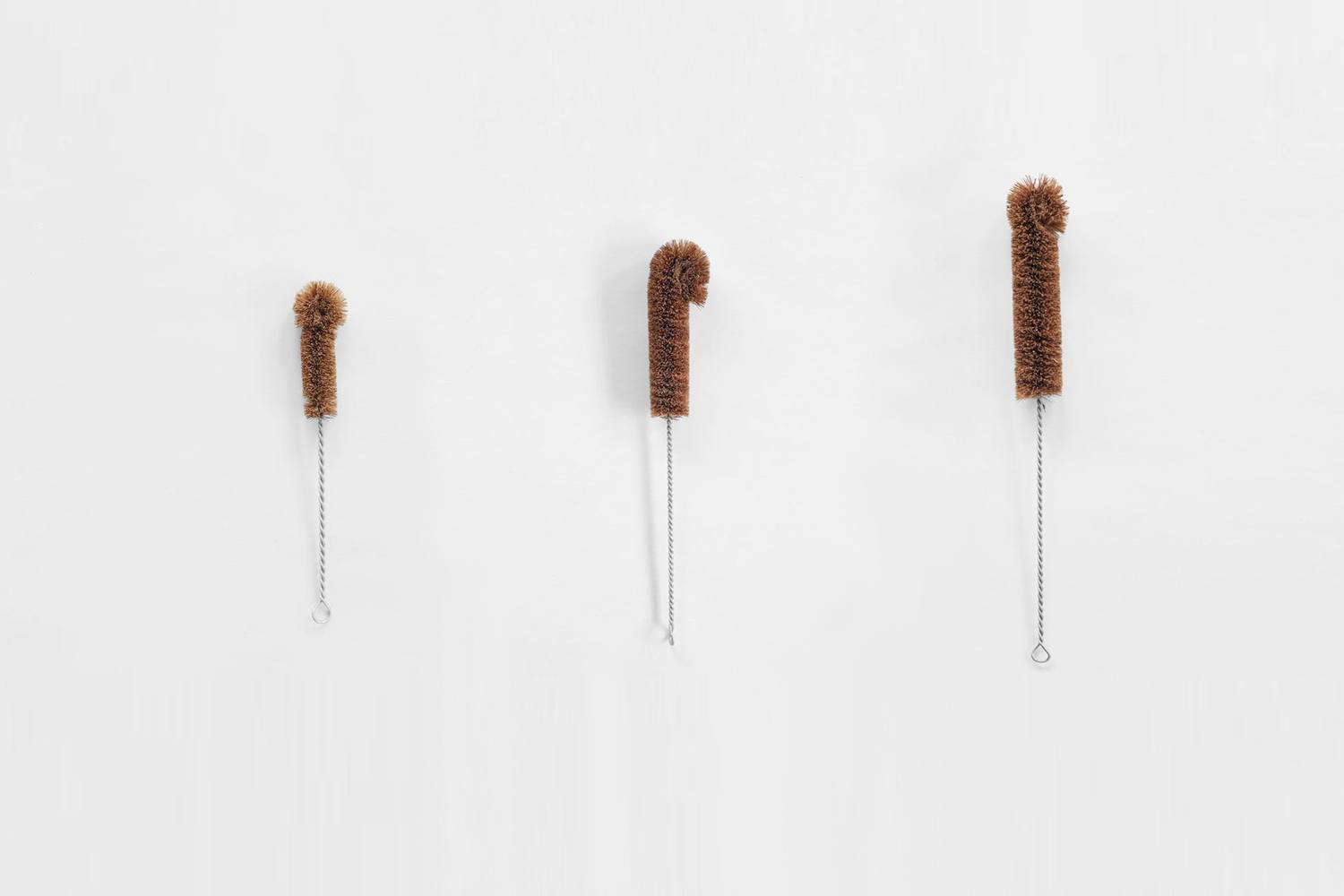

Some kitchen tools arrive with motors, apps, charging cables, and enough instructions to qualify for continuing education credits. The Eco Max Bottle Brush – Small takes the opposite approach. It is a compact cleaning brush made with natural cocons where fingers, dishcloths, and oversized bottle brushes simply cannot go.
That modest design is exactly the point. Small juicer spouts, narrow containers, filters, compact vases, reusable drinkware, and other hard-to-reach spaces can collect residue surprisingly quickly. A sponge may wave politely from the entrance, but it is not getting inside. The Eco Max small bottle brush is designed to go where bulkier cleaning tools cannot, giving users a more targeted way to scrub narrow and irregular spaces.
EcoMax describes the brush as handmade from natural, unbleached coconut fiber and designed without conventional plastic bristles. The manufacturer specifically positions the small version for juicer spouts, filters, small vases, and other difficult-to-clean areas. Retail listings also emphasize its compact shape and natural-fiber construction. e Eco Max Bottle Brush – Small?
The Eco Max Bottle Brush – Small is a compact household cleaning brush built for detail work. Rather than using a thick molded plastic handle and nylon bristles, it uses coconut fiber arranged around a wire core. The result is a narrow, relatively simple tool that can be inserted into openings too small for a standard dish brush.
Various retailers describe EcoMax brushes as ethically handmade in Sri Lanka from natural coconut fiber. Depending on the seller and regional version, published dimensions vary, which is not unusual for a handmade product. Some listings place the small brush at roughly 7 to 8 inches in overall length, while others give measurements around 20 to 21 centimeters. The practical takeaway is more useful than arguing with a ruler: this is the compact member of the EcoMax bottle-brush family, intended primarily for narrow and detailed cleaning jobs. aterial Combination
The brush relies on two main functional components: coconut fiber for scrubbing and wire for structure. Retailers commonly describe the wire as galvanized steel, while the fibers are natural and unbleached. Coconut fiber is firm enough to provide mechanical scrubbing action without behaving exactly like a soft sponge or a flexible nylon brush.
This matters because cleaning narrow containers is largely a problem of contact. Soap can loosen grime, but the cleaning tool still needs to touch the residue. A small brush head can reach around tight openings and into small cavities, while firm fibers help physically disturb dried juice, pulp, beverage film, or ordinary kitchen grime.
Why the Small Size Is the Main Attraction
A regular bottle brush is excellent until the bottle opening is narrower than the brush head. Then it becomes less of a cleaning tool and more of a frustrated battering ram.
The Eco Max Bottle Brush – Small is designed for the opposite situation. Its compact profile makes it suitable for targeted cleaning where a standard brush may be too wide. The manufacturer highlights uses such as juicer spouts and filters, while retailers also mention narrow vessels and difficult corners. ces to Put It to Work
In an everyday kitchen, the small brush can be useful for cleaning:
- Juicer spouts and small removable juicer parts
- Narrow bottle openings that accept the brush comfortably
- Reusable containers with recessed interior areas
- Small vases and decorative vessels
- Filters and strainers with accessible openings
- Small jars and specialty kitchen containers
- Hard-to-reach corners where a dishcloth cannot make proper contact
The exact fit will always depend on the object. “Small” does not mean microscopic, and users should never force a brush into a fragile opening. A cleaning tool works best when it can move freely enough to scrub rather than becoming permanently promoted to “part of the bottle.”
Coconut Fiber Versus Conventional Plastic Bristles
One of the strongest reasons people consider a natural bottle brush is the desire to reduce plastic in routine household products. The U.S. Environmental Protection Agency encourages waste prevention, reuse, and longer product life as part of broader efforts to reduce plastic waste. EPA information also notes the widespread persistence of plastic pollution in natural and built environments. Choosing a plastic-free cleaning tool is only one small household decision, but it can fit into a larger strategy of replacing disposable or short-lived products when practical. ured Scrubbing
Coconut fiber has a naturally coarse texture. In a bottle brush, that texture provides the friction needed to loosen residue from surfaces. Compared with a soft sponge, the fibers can provide more focused mechanical action, particularly in narrow spaces where it is difficult to press a cloth firmly against the surface.
Retailers selling EcoMax bottle brushes commonly emphasize the durability and firmness of the coconut fibers. As with any cleaning tool, however, the best choice depends on the surface being cleaned. Delicate finishes, soft plastics, special coatings, and fragile glass deserve a gentle test before enthusiastic scrubbing begins.
No Conventional Plastic Bristle Head
For shoppers building a plastic-free kitchen, the absence of a conventional molded plastic brush head is an obvious attraction. EcoMax states that its small bottle brush is free from plastic bristles and is made from natural coconut fiber. The company also markets the brush as chemical-free in its material construction. ot mean every environmental question disappears. Products still require materials, manufacturing, transportation, and eventual disposal. Sustainability is rarely a magical green halo floating above the kitchen sink. Still, selecting a simple, durable tool made primarily from natural fiber can be a practical way to reduce dependence on conventional plastic cleaning accessories.
How to Use the Eco Max Bottle Brush – Small Effectively
Step 1: Rinse Away Loose Residue
Begin by rinsing the item with water to remove loose material. This is especially useful after juicing, blending, or storing drinks that leave pulp or sticky residue. Removing the easy stuff first lets the brush focus on the stubborn layer instead of chasing a floating piece of spinach around a bottle.
Step 2: Add Dish Soap and Water
Use an appropriate amount of dish soap with warm water, following the care instructions for the item being cleaned. Public-health guidance consistently treats washing, scrubbing, rinsing, and thorough drying as separate and important parts of cleaning reusable items. CDC guidance for hand-washing feeding equipment, for example, recommends soap, water, a clean dedicated brush, thorough rinsing, and air-drying. sert the Brush Without Forcing It
Guide the brush into the opening and use short back-and-forth or rotating motions. Let the fibers do the work. Excessive pressure is rarely necessary and may be unsuitable for fragile glass or delicate surfaces.
For curved or irregular vessels, some retailers note that the wire-based structure can offer useful flexibility. Any bending should be gentle and gradual rather than an attempt to turn the brush into modern sculpture. nse Thoroughly
Rinse the cleaned item until soap and loosened residue are removed. Also rinse the brush itself thoroughly so that food particles do not remain trapped among the fibers.
Step 5: Let the Brush Dry
Drying is easy to underestimate. A cleaning brush that remains constantly wet is being asked to live its entire life in a swamp. After rinsing, shake off excess water and place or hang the brush where air can circulate around it. CDC guidance for reusable cleaning brushes similarly emphasizes rinsing and air-drying after use. Max Small Bottle Brush Antibacterial?
EcoMax and several retailers describe coconut fiber as having naturally antibacterial properties and say the material is resistant to becoming smelly or moldy under normal use. Those statements should be understood as manufacturer and seller claims rather than as a substitute for ordinary cleaning practices. The brush still needs to be rinsed, kept free of food residue, and allowed to dry between uses. rush should be treated as self-cleaning simply because of its material. The glamorous life of a kitchen brush still involves soap, rinsing, and drying.
Where This Brush Works Best
The greatest strength of the Eco Max Bottle Brush – Small is specialization. It is not necessarily the one brush to clean every stockpot, gallon jug, tumbler, baby bottle, vase, and drinking straw ever manufactured. Instead, it fills the gap between a standard bottle brush and tiny specialty brushes.
Juicer Components
Juicers often contain small channels and spouts where fruit or vegetable residue can dry into an impressively determined paste. The small EcoMax brush is specifically marketed for juicer spouts and filters, making this one of its most natural applications.
Small Vases
Decorative vases can be deceptively difficult to clean. The outside may sparkle while the inside quietly develops a mysterious ring near the bottom. A compact brush can provide more direct contact than shaking soapy water and hoping for a miracle.
Narrow Kitchen Accessories
Reusable containers, small jars, specialty drinkware, and appliances often include oddly shaped areas that collect residue. A small brush can become the “detail tool” of a cleaning kit, used after the larger brush has finished the easy work.
What the Eco Max Bottle Brush – Small Is Not Designed to Do
Knowing a product’s limits is part of using it well.
A small brush may not reach the bottom of an especially tall bottle. A compact head may also take longer to clean a wide jar or large carafe than a full-size bottle brush. Extremely narrow straws may require a dedicated straw brush, while large cookware is better handled by a dish brush or scrubber with more surface area.
This is why brush size matters. Contemporary bottle-brush buying guides commonly advise matching the brush head, bristle style, and handle length to the vessel being cleaned. The best cleaning brush is not automatically the biggest or smallest one; it is the one that can physically reach the surface that needs scrubbing. aintenance Tips
Rinse Immediately After Messy Jobs
Cleaning dried smoothie pulp from a brush is not a rewarding sequel to cleaning dried smoothie pulp from a juicer. Rinsing promptly after use helps prevent residue from settling deep into the fibers.
Allow Full Air Circulation
Store the brush in an open, ventilated location rather than sealing it wet inside a drawer or container. Thorough drying is a sensible practice for reusable cleaning tools and helps keep them ready for the next job.
Inspect the Brush Regularly
Natural fibers and wire will eventually show wear. Replace the brush when the fibers become excessively worn, the structure is damaged, or the brush can no longer clean effectively. A sustainable product is still a tool, not an heirloom that must be passed down through twelve generations.
Follow Surface-Specific Care Instructions
Before using any firm brush on delicate glassware, coatings, or specialty equipment, check the item’s cleaning instructions. Test gently when uncertain.
End-of-Life Considerations
EcoMax markets the bottle brush as a plastic-free option whose natural-fiber component can return to the waste stream more simply than a conventional plastic-bristled brush. Some retailers describe composting the coconut-fiber portion and recycling the remaining wire where local facilities accept it. Local composting and recycling rules vary, so users should separate materials when practical and follow local requirements rather than assuming every municipal system handles the product identically. ealistic approach is better than treating “biodegradable” as a magic word. The goal is to understand what the product is made from, keep it in service while it remains useful, and dispose of each component responsibly at the end of its working life.
Who Should Consider Buying the Eco Max Bottle Brush – Small?
This brush is especially appealing to people who regularly clean narrow kitchen parts and want to reduce the number of conventional plastic cleaning tools in their homes. It may be a good fit for:
- Juicer owners dealing with narrow spouts and filters
- People using reusable bottles, jars, and specialty containers
- Households gradually building a lower-plastic cleaning routine
- Users who prefer simple tools made from natural fibers
- Anyone tired of trying to clean narrow spaces with a folded dishcloth and unreasonable optimism
People who primarily clean tall bottles or wide containers may prefer a medium or large brush instead, while straw users may still need a dedicated straw-cleaning tool.
How It Fits Into a More Sustainable Kitchen
A more sustainable kitchen usually develops through ordinary replacements rather than one dramatic shopping spree. A reusable bottle replaces some disposable drink containers. A washable cloth replaces some paper towels. A natural-fiber cleaning brush replaces a worn plastic brush when the old one reaches the end of its useful life.
The EPA’s waste-reduction guidance emphasizes reuse, maintenance, repair, and thoughtful replacement as practical ways to prevent waste. That philosophy is useful here: there is little benefit in throwing away a perfectly functional cleaning tool merely to buy something labeled “eco.” The smarter approach is to use what you already own, replace items when needed, and select durable alternatives that suit your actual routine. Bottle Brush – Small fits neatly into that gradual approach. It does one specialized job with a relatively simple material design, and it can complement rather than replace every other cleaning tool in the kitchen.
Practical Experience: What Living With a Small Coconut-Fiber Bottle Brush Is Really Like
The most noticeable thing about using a small bottle brush is that it changes which cleaning jobs feel annoying. Before a narrow brush enters the kitchen, certain items tend to receive the “soak it and hope” treatment. A juicer spout gets rinsed repeatedly. A small vase gets filled with soap and shaken like a homemade maraca. A narrow jar is attacked with the corner of a sponge that clearly has no intention of cooperating.
A compact brush makes those jobs more direct. Instead of trying to persuade water to remove residue by moral argument, you can physically reach the surface and scrub it.
The First Few Uses: Learning the Right Pressure
Natural coconut fiber feels different from a soft foam sponge. The fibers have more texture and provide noticeable friction against a surface. The temptation at first may be to push hard, but moderate pressure is generally more practical. A few controlled strokes often work better than aggressive scrubbing.
The small size also encourages precision. With a large bottle brush, the movement tends to be broad: push, twist, pull. With a compact detail brush, cleaning becomes more targeted. You can work around a small opening, focus on a ring of residue, and change the angle of the brush to reach a specific area.
Juicer Cleanup Is Where the Design Makes Immediate Sense
Consider the aftermath of making fresh celery, carrot, or green juice. The main container may be easy to rinse, but the smaller passages are where pulp likes to establish permanent residency. A compact brush can reach into accessible spouts and openings before the residue dries.
The best routine is immediate cleanup. Rinse the part, add a little soapy water, scrub the reachable interior surfaces, rinse again, and allow everything to dry. Waiting until tomorrow transforms a quick cleaning job into an archaeological excavation.
Small Vases Become Less Mysterious
A narrow-neck vase is another good example. The upper section may look clean while residue remains lower down. When the brush fits the opening and reaches the affected area, the cleaning experience becomes much more controlled.
However, this is also where judgment matters. Not every vase has the same shape, depth, or strength. A very tall vase may exceed the brush’s reach, and fragile glass should always be handled gently. The small EcoMax brush is a detail tool, not a universal wand of domestic power.
Drying the Brush Becomes Part of the Routine
After several uses, one habit matters more than expected: giving the brush a proper place to dry. Rinsing it and immediately dropping it into a crowded sink caddy defeats the purpose of careful maintenance. A location with good airflow is better.
This small behavior also makes the kitchen feel more organized. The brush is rinsed, shaken free of excess water, and left ready for the next use rather than disappearing beneath a wet sponge and three unidentified bottle caps.
The Biggest Benefit Is Surprisingly Simple
The real advantage is not that the Eco Max Bottle Brush – Small revolutionizes dishwashing. It does not need to. Its value comes from solving a specific class of irritating cleaning problems with a straightforward tool.
When the brush is the right size for the opening, the experience is efficient and satisfying. When it is too short, too wide, or too small for the vessel, another tool will be better. That honesty is part of choosing sustainable products wisely: a product should earn its place by being genuinely useful, not merely by having an earthy-looking label.
For a household that frequently cleans juicer components, narrow containers, small vases, filters, or detailed kitchen accessories, the Eco Max small bottle brush can become the quiet specialist in the cleaning drawer. It may not receive applause. Kitchen brushes rarely do. But the next time a stubborn ring of residue disappears from a place your sponge could never reach, a respectful nod seems appropriate.
Final Verdict: Small Tool, Sensible Purpose
The Eco Max Bottle Brush – Small is best understood as a compact, plastic-free detail brush rather than an all-purpose solution for every piece of drinkware in the house. Its natural coconut-fiber bristles, wire construction, and narrow profile make it particularly suitable for small openings and awkward spaces.
Its appeal is strongest when three priorities overlap: you need a genuinely small cleaning brush, you prefer natural-fiber household tools, and you are trying to reduce reliance on conventional plastic accessories. Used with ordinary soap-and-water cleaning practices, rinsed properly, and allowed to dry between jobs, it can be a practical addition to a low-waste kitchen toolkit.
No single bottle brush will save the planet, organize the pantry, and make everyone remember to rinse the smoothie cup immediately. But a well-chosen tool can make one recurring household job easier while reducing unnecessary plastic. For something small enough to disappear into a kitchen drawer, that is a respectable amount of work.
Note: Because EcoMax brushes are handmade and retailer listings can vary by market, dimensions, packaging, availability, and specific care instructions should be confirmed with the current seller before purchase.