40 Best New Pics From “Cats Of Brutalism” For Anyone Who Appreciates Cats And Architecture

If you have ever looked at a massive concrete building and thought, “This is impressive, but it could use a 60-foot cat lounging on the roof,” congratulations: you have found your people. “Cats of Brutalism” is the wonderfully strange corner of the internet where feline attitude meets raw concrete, and somehow the result feels less like a joke and more like a surprisingly thoughtful love letter to architecture.
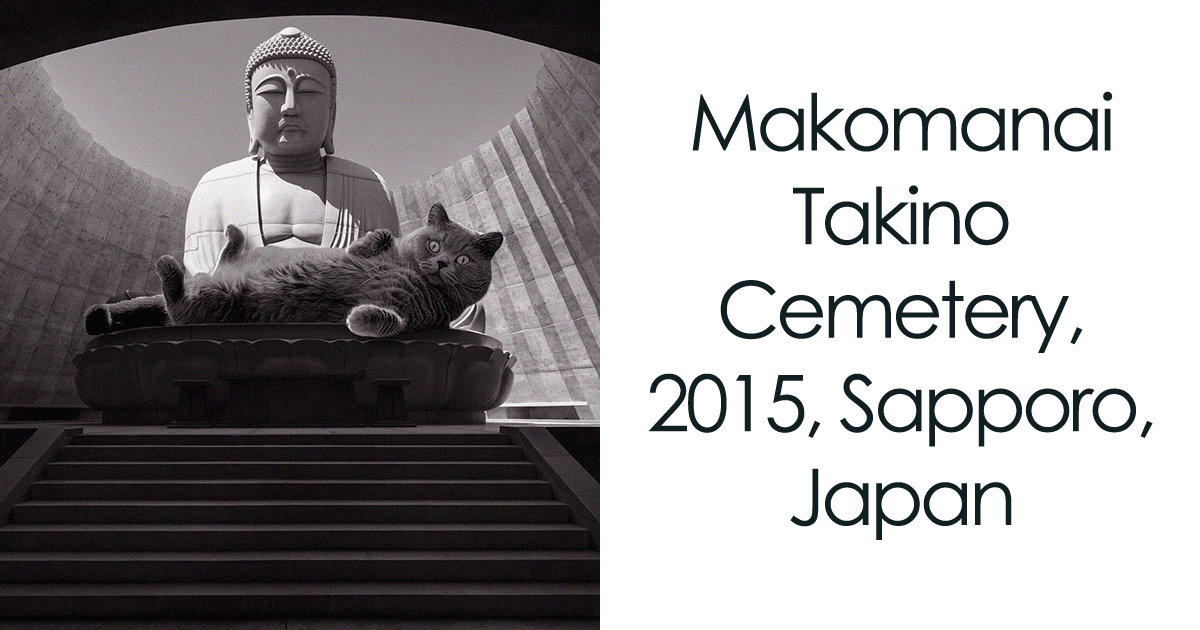
The idea is simple enough to explain in one sentence: giant cats are digitally placed into brutalist buildings and urban landscapes. But the magic is bigger than that. These images make serious architecture feel playful, make misunderstood buildings feel approachable, and make cats look exactly as powerful as they already believe they are. In other words, the internet did what the internet does best: it put cats on something and accidentally made an art-history conversation more interesting.
What Is “Cats Of Brutalism”?
“Cats of Brutalism” is a creative visual project that combines photomontage, architecture appreciation, internet humor, and a generous amount of whiskered chaos. The concept places oversized cats into brutalist environments: perched on concrete ledges, tucked between geometric towers, prowling around civic buildings, or casually dominating entire city blocks like furry urban planners with opinions.
The project began as a social media experiment by architecture students and quickly became a niche favorite among two very passionate groups: people who love cats and people who can explain the difference between brutalism, modernism, and “that one building everyone in town calls ugly.” The account’s charm lies in the fact that it does not mock brutalist architecture. Instead, it softens it, reframes it, and invites viewers to look again.
That is the secret sauce. Brutalist buildings are often dismissed as cold, heavy, institutional, or simply “too much concrete before coffee.” Add a cat, however, and the mood changes. A wall becomes a scratching post. A tower becomes a cat tree. A courthouse becomes a throne. Suddenly, an architectural style known for seriousness becomes oddly cozy.
Why Cats And Brutalist Architecture Work So Well Together
On paper, cats and brutalism sound like a design meeting that got out of hand. Cats are soft, flexible, expressive, and completely uninterested in your deadlines. Brutalist architecture is bold, heavy, raw, and built as if it has never once asked for permission. Yet visually, the contrast is perfect.
Soft Fur Meets Raw Concrete
Brutalist architecture is famous for exposed materials, especially raw concrete, muscular shapes, repetitive patterns, and a strong sense of structure. Cats bring the opposite texture: fur, movement, warmth, and unpredictability. When a fluffy tabby is stretched across a rigid concrete balcony, the image becomes a tiny design lesson in contrast. The concrete looks more monumental; the cat looks more ridiculous and majestic. Everybody wins, except possibly the imaginary pigeons.
Scale Becomes The Joke
Good visual humor often depends on scale. A normal cat sleeping in a window is cute. A giant cat sleeping across a municipal building is comedy with architectural credentials. The best “Cats of Brutalism” pictures make viewers pause for a second because the cat is not merely pasted into the scene. It appears to belong there, as though the building was designed by a committee that included one very persuasive Maine Coon.
Cats Already Behave Like Buildings Are Theirs
Anyone who has lived with a cat knows the truth: cats do not occupy space; they claim it. They treat sofas, shelves, laptops, and human bodies as personal infrastructure. That attitude pairs beautifully with brutalist structures, which often appear immovable, monumental, and unapologetic. A cat on a brutalist building does not look out of place. It looks like management has arrived.
A Quick Guide To Brutalism, Without The Concrete Headache
Before we admire the furry giants, it helps to understand the architectural playground they are stomping through. Brutalism is a mid-20th-century architectural style associated with raw materials, bold massing, exposed structure, and forms that often look sculptural rather than decorative. The name is commonly linked to the French phrase béton brut, meaning raw concrete, not to the English word “brutal,” even though some buildings do look like they could win an argument with a mountain.
Brutalist architecture became especially prominent after World War II, when governments, universities, cultural institutions, and housing authorities needed buildings that felt modern, durable, functional, and socially ambitious. Concrete was flexible, strong, and expressive. Architects could use it to create deep shadows, dramatic cantilevers, thick walls, modular blocks, and facades that showed the marks of construction instead of hiding them under decoration.
That honesty is part of brutalism’s appeal. A brutalist building does not usually pretend to be delicate. It shows its bones. It says, “Yes, I am concrete. No, I will not be adding shutters.” Some people find that refreshing. Others find it intimidating. “Cats of Brutalism” works because it walks straight into that debate with a cat the size of a commuter train and says, “What if this serious building also had beans?”
What Makes The 40 Best New Pics So Addictive?
The appeal of a “40 best new pics” collection is not only the number. It is the rhythm. Each image gives viewers a new pairing: a different city, a different building, a different breed or pose, a different visual joke. Some cats sprawl like exhausted gods. Others crouch in the shadows like secret security guards. Some appear to inspect the facade with the professional disappointment of a senior architect reviewing a bad renovation.
1. The Buildings Are Real Enough To Matter
Part of the fun comes from recognizing that many featured buildings are not generic sci-fi backdrops. They are real works of architecture from different cities and decades. The project has included well-known and lesser-known examples, from cultural centers and university buildings to government offices, libraries, stadiums, apartment towers, and civic complexes. That gives the images a strange educational value. You arrive for the cats, but you leave knowing that brutalism has a global footprint.
2. The Cats Feel Like Characters
The best edits do not treat cats as stickers. They treat them as characters interacting with architecture. A cat curled against a concrete wall can make a building look protective. A cat standing on a roofline can turn the whole structure into a pedestal. A cat peering through a gap can make a serious building feel like a playground. The animals are not decoration; they are the emotional translators.
3. The Images Make “Difficult” Architecture Friendly
Brutalist architecture can be hard for casual viewers to love. It often rejects ornament, softness, bright color, and the familiar cues people associate with beauty. But add a cat and the viewer’s defenses drop. Suddenly, the building is not an intimidating object. It is a habitat. It has scale, texture, shadow, and personality. The image invites curiosity instead of judgment.
4. The Humor Has A Smart Purpose
Not every meme has a mission. Some memes are born, sparkle briefly, and vanish into the digital snack drawer. “Cats of Brutalism” feels different because the humor points toward preservation. Many brutalist buildings are aging, threatened, disliked, or misunderstood. By turning them into shareable images, the project helps a wider public notice their forms, histories, and cultural value. It is architecture advocacy disguised as a cat meme, which is possibly the most internet-approved disguise available.
Specific Examples That Show The Concept At Its Best
One reason the gallery format works so well is that brutalism is not a single look. It can be blocky, sculptural, civic, futuristic, bunker-like, or surprisingly elegant. When cats enter the scene, each building’s personality becomes easier to read.
A cat placed near a building like Dallas City Hall emphasizes the structure’s dramatic slant and public presence. The building already looks like it is leaning forward into civic responsibility; add a cat and it becomes a giant concrete lap. A cat paired with a federal building in Washington, D.C., can turn bureaucratic mass into something oddly theatrical. A cat near the Embarcadero Center in San Francisco plays with vertical rhythm and urban density, as if the animal has decided the city skyline is merely a deluxe climbing frame.
International examples bring even more variety. A cat around Habitat 67 makes modular housing feel like stacked cat condos. A feline lounging near the São Paulo Museum of Art can echo the drama of open space and structural suspension. A cat near the National Congress of Brasília adds playful life to architecture already known for strong symbolic geometry. These combinations work because the cat does not erase the building’s identity. It exaggerates it.
The funniest images often have a quiet logic. A cat sitting on a roof looks natural because cats love high places. A cat curled against concrete makes sense because cats love warm surfaces. A cat wedged into a dramatic void works because cats love boxes, and brutalism is basically the advanced architectural degree of boxes.
Why The Internet Loves Cat Architecture
Cats have ruled online culture for decades because they are expressive without trying, elegant without caring, and chaotic without apology. Architecture content, meanwhile, can sometimes feel intimidating to people who do not know the vocabulary. Put the two together and you get a bridge. A person who might scroll past a preservation essay may stop for a giant gray cat draped across a concrete arts center. Once they stop, they may notice the building too.
That is the genius of the project. It lowers the entry barrier without dumbing down the subject. You do not need an architecture degree to laugh at a huge cat paw hanging over a balcony. But after laughing, you may wonder where the building is, who designed it, when it was built, and why people argue about saving it. That tiny spark of curiosity is valuable.
In SEO terms, the concept also has unusually strong audience overlap. Keywords like “Cats of Brutalism,” “brutalist architecture,” “cat art,” “architecture photography,” “funny cat pictures,” “concrete buildings,” and “internet art” all point to different search intentions. Some readers want entertainment. Some want design inspiration. Some want cultural commentary. The best article about the topic should serve all three without feeling like a concrete textbook wearing cat ears.
How To Look At The 40 Pics Like An Architecture Fan
If you are browsing a collection of “Cats of Brutalism” images, do not rush. The joke appears instantly, but the details reward a slower look. Start with the cat’s pose. Is it sitting, stretching, climbing, hiding, or judging the city council? Then look at the building. Notice the shape, the shadows, the repetition of windows, the thickness of walls, and the way the structure meets the ground.
Next, compare textures. Brutalist buildings often have surfaces that show construction marks, aggregate, board-formed patterns, or heavy masonry. Cats interrupt that hardness with softness. This contrast is the visual engine of the project. Without the architecture, the cat is just a cat. Without the cat, the building may be overlooked. Together, they become a story.
Finally, think about mood. Some images feel funny. Others feel strangely poetic. A cat looking tiny against a monumental building can make the structure seem enormous. A giant cat wrapping around the same building can make the city feel miniature. That shifting sense of scale is part of why the images remain memorable after the initial laugh.
The Preservation Message Behind The Whiskers
Brutalist buildings have often been targets for demolition or insensitive renovation. Their concrete surfaces age visibly, their maintenance can be difficult, and public opinion can be divided. Some people see them as icons of modern architecture. Others see them as gloomy leftovers from a time when architects apparently had a group discount on gray.
Yet many brutalist buildings carry historical, social, and artistic significance. They represent postwar ambition, civic identity, experimentation with materials, and a belief that public architecture could be bold. Even when a building is controversial, it may still be worth understanding before anyone calls in the wrecking ball.
“Cats of Brutalism” does not solve preservation debates, but it changes the tone. Instead of lecturing viewers, it charms them. It encourages people to look closely at buildings they might otherwise ignore. That matters because preservation often begins with attention. People rarely fight for places they have never noticed.
Experience: What It Feels Like To Fall Into The “Cats Of Brutalism” Rabbit Hole
The first time I spent a serious chunk of time looking through “Cats of Brutalism,” I expected a quick laugh and maybe three minutes of scrolling. That was adorable optimism. Within a few images, I had become the kind of person who squints at concrete stairwells and thinks, “Yes, but what breed would improve this?” This is how the project gets you. It starts as a joke and quietly rearranges the way you look at buildings.
What surprised me most was how the cats made the architecture easier to feel. Brutalist buildings can appear remote in photographs, especially when they are shot from a distance under gray skies. They sometimes seem less like places people use and more like objects placed on Earth by a committee of very serious rectangles. But once a cat is added, the building becomes touchable. You imagine paws on ledges, tails around columns, whiskers brushing concrete corners. The structure suddenly has warmth, even if the material itself looks chilly enough to make soup nervous.
There is also a strange joy in the fake realism of the images. Your brain knows the cat is not actually the size of a building. Your heart, however, is fully prepared to accept a future in which city planning includes designated nap roofs. The best edits create a believable relationship between animal and architecture. The cat follows the light. It rests in the right shadow. It sits where a cat would sit if cats had access to municipal infrastructure and no respect for zoning laws.
Looking through a gallery of 40 images also changes the experience from “funny picture” to “visual tour.” You start noticing patterns across countries and decades. Some buildings are civic and ceremonial. Some are residential. Some look like they belong in a science fiction film where the soundtrack is mostly synthesizers and footsteps. The cats act as tour guides, making each stop feel less formal. Instead of studying brutalism from a distance, you are invited to wander through it with a furry creature who may or may not knock a model off the table.
The project also made me think about how humor can be a serious tool. A preservation campaign can sound heavy, especially when it involves aging concrete, maintenance costs, and public opinion. But a giant cat can sneak the same conversation into people’s feeds. It says, “Look at this building again.” That is a small request with a big effect. Once you look again, you may notice balance, shadow, ambition, rhythm, and craft. You may still not love every brutalist building, and that is fine. Architecture is not soup; not everyone has to order the same bowl. But you may at least understand why others care.
By the end of the rabbit hole, I found myself appreciating both sides more. The cats became funnier because the buildings were so intense. The buildings became more interesting because the cats made them approachable. That is the rare internet combination that leaves you slightly happier and slightly smarter, which is more than can be said for many things we scroll through while avoiding chores.
Final Thoughts: Concrete, Cats, And The Joy Of Looking Again
“40 Best New Pics From ‘Cats of Brutalism’ For Anyone Who Appreciates Cats And Architecture” is more than a collection of amusing digital edits. It is a reminder that art can change how we see the built environment. A giant cat on a concrete building is funny, yes, but it is also disarming. It makes architecture less distant. It turns preservation into a conversation instead of a lecture. It gives brutalism, one of the most debated architectural styles of the modern era, a soft landing pad.
For cat lovers, the images deliver the majestic nonsense they came for. For architecture fans, they offer a playful way to revisit buildings that deserve a second look. For everyone else, they prove that the internet still has pockets of creativity where humor, design, and cultural curiosity can share the same windowsill.
And honestly, if a giant cat can make us appreciate raw concrete, perhaps there is hope for humanity after all.
SEO Tags