
Brewing has always lived at the crossroads of art and obsession. One brewer swears by a tiny temperature adjustment, another argues with a mash schedule like it owes rent, and everyone has a story about the batch that “looked fine” until it absolutely did not. That is where automated brewing steps in. Not as a soulless robot marching in to steal the brewer’s paddle, but as a smart system that handles the repetitive, timing-sensitive, accuracy-hungry parts of the job so humans can focus on flavor, recipe design, and the thousand little decisions that make beer worth drinking.
In plain English, automated brewing uses software, sensors, valves, pumps, controllers, and data dashboards to run or support the beer-making process. It can be as simple as automated temperature control in a homebrew rig or as sophisticated as a commercial brewhouse where recipe steps, fermentation curves, cleaning cycles, and reporting are managed through integrated control systems. The goal is not to make brewing lazy. The goal is to make brewing repeatable, scalable, safer, and less dependent on crossed fingers.
What Is Automated Brewing, Really?
Automated brewing is the use of digital controls and connected equipment to monitor and manage brewing tasks with minimal manual intervention. In a modern setup, a brewer can program mash rests, regulate flow rates, automate hop or ingredient timing, control fermentation temperatures, trigger clean-in-place cycles, and log production data without hovering over every vessel like an anxious parent at a school play.
The backbone of many systems is a combination of sensors and control logic. Temperature probes track heat. Flow meters watch liquids move through the system. Level sensors tell operators how full a tank is. Valves and pumps respond to commands. A human-machine interface, often shown on a touchscreen or computer, lets the brewer view the process, adjust parameters, start sequences, and review historical trends. In larger breweries, these controls may be tied to recipe management, scheduling, quality records, maintenance tools, and analytics dashboards.
That sounds very industrial, and it is. But it is also surprisingly practical. Brewing is full of repeated actions that benefit from consistency. Heat this water to the same setpoint every time. Hold this fermentation profile inside a narrow range. Run this cleaning cycle long enough, hot enough, and safely enough. Record exactly what happened so the next batch is not built on vibes and guesswork alone.
How Automated Brewing Works from Grain to Glass
1. Milling, water prep, and mash control
Automation often starts before the mash tun even warms up. In well-designed systems, brewers can automate strike-water heating, monitor water temperature, and control mash steps with precision. Step mashes become easier because the system can hold or ramp temperatures at the right pace instead of relying on manual checks and hopeful timing. That matters because the mash is not just a hot cereal bath. It is where enzymes convert starch into fermentable sugars, and small swings can influence body, attenuation, and flavor.
For breweries that care about efficiency, automation also helps reduce inconsistency in lautering. Flow control and monitoring can make it easier to maintain steady runoff, reduce the chances of a stuck mash, and improve extract recovery. That means more predictable wort collection and fewer moments where the brewer stares into a grain bed as if intense eye contact might solve the problem.
2. Kettle control and timed additions
Once wort reaches the kettle, automation can manage boil time, heat input, and ingredient additions. Some systems guide operators with prompts. More advanced systems can trigger additions or at least precisely time them, reducing the chance of a late bittering charge or a forgotten fining addition. In commercial brewing, where one small timing mistake can echo through a very expensive batch, automated timing is not a luxury. It is a sanity-preservation device.
Recipe-driven control also helps when breweries make many different brands. A flexible automated brewhouse can store parameters for multiple recipes, switch between them more easily, and reduce the amount of tribal knowledge that lives only in one veteran brewer’s notebook or brain.
3. Fermentation and conditioning
Fermentation is where automated brewing really earns its paycheck. Yeast may be microscopic, but it has the emotional range of a diva. It likes the right temperature, the right timing, and a stable environment. Automated fermentation control uses sensors and control loops to monitor tank temperature and respond by opening or closing glycol valves, holding a setpoint, or allowing a programmed rise when a recipe calls for it.
This precision matters because fermentation is one of the most important drivers of quality and throughput. If the beer ferments too warm, too cold, too fast, or too unevenly, the final product can drift from target flavor. Good automation helps breweries repeat successful fermentation profiles and, with analytics, sometimes even discover that a tank can hit target quality faster than expected. In other words, the system does not just help you make the same beer again. It may help you make the same beer better.
4. Cleaning and sanitation
Brewers love talking about hops, but the real romance of professional brewing is cleaning. Automated brewing systems often include clean-in-place, or CIP, functions that circulate water, caustic, acid, or sanitizer through vessels and lines using programmed cycles. These cycles can standardize time, temperature, flow, and sequence so cleaning is not skipped, shortened, or improvised by someone who is tired and already thinking about lunch.
That matters for both quality and safety. Poor cleaning can lead to contamination, off-flavors, and biofilm trouble. Overaggressive or sloppy cleaning can create chemical hazards, wasted water, and damaged equipment. Smart automation helps keep CIP consistent while still allowing verification and human oversight.
5. Packaging, reporting, and maintenance
The automation story does not stop when the beer is done fermenting. Packaging lines, tank transfers, level measurement, and traceability can all benefit from integrated controls. Automated data capture also makes reporting more useful. Instead of scribbled notes on wet paper or “I think it was about 20 minutes,” breweries can review actual process values, compare batches, and troubleshoot problems with something better than memory.
Even maintenance gets smarter. Digital systems can support preventive maintenance, trend equipment behavior, and flag issues before they turn into downtime. For a growing brewery, that is huge. Nothing crushes a production schedule faster than a pump deciding to reinvent itself as a paperweight.
Why Breweries Invest in Automated Brewing
Consistency without killing creativity
The biggest advantage of automated brewing is consistency. A brewery can still experiment, innovate, and create weirdly wonderful seasonal releases, but once a recipe is dialed in, automation helps reproduce it with fewer variations. That is a major win for quality-minded breweries because customers expect their favorite pale ale to taste like itself every time, not like a seasonal collaboration between mango peel and regret.
Scalability for growing operations
Manual brewing can work beautifully at small scale, but growth changes the math. As production increases, repeatable control becomes more valuable. Automation helps breweries run more recipes, manage more tanks, and coordinate production without multiplying chaos. Real-world brewery case studies show that automation can support faster material handling, improved throughput, and easier expansion when operations become more complex.
Better use of labor
Automated brewing does not eliminate people. It changes how they spend their time. Instead of babysitting temperatures, opening and closing valves by hand, or manually recording every step, brewers can focus on quality checks, recipe refinement, sensory work, packaging performance, and process improvement. In a labor market where skilled brewery workers are valuable and often stretched thin, that is a very practical benefit.
Improved safety and compliance
Breweries are food facilities, and they operate around heat, pressure, chemicals, water, and moving equipment. Automation can support safer operations by standardizing processes, reducing rushed manual work, and helping facilities document what they did and when they did it. That becomes especially useful in the context of food safety plans, preventive controls, sanitation procedures, and recordkeeping expectations.
Sustainability and cost control
Beer is delicious, but it is not magically gentle on utilities. Brewing uses significant water and energy, and wastewater management can become a major cost center. Automated brewing can help reduce waste by tightening process control, shortening cycle times, improving yield, and optimizing CIP. When paired with analytics, it can reveal where heat, water, time, and product loss are quietly leaking away. Breweries trying to lower utility bills or improve environmental performance often find that automation is not just a tech upgrade. It is a business tool wearing a shiny interface.
Common Tools Behind Automated Brewing
- PLCs and control logic: These run programmed sequences and process responses.
- HMIs and dashboards: These let operators monitor and adjust the system.
- Temperature, pressure, flow, and level sensors: These provide the data that keeps the process honest.
- Automated valves and pumps: These move product, utilities, and cleaning solutions where they need to go.
- Recipe management software: This helps standardize process steps across batches.
- Analytics and historical reporting: These turn data into process improvements.
- Preventive maintenance and connected monitoring tools: These support reliability and reduce surprise failures.
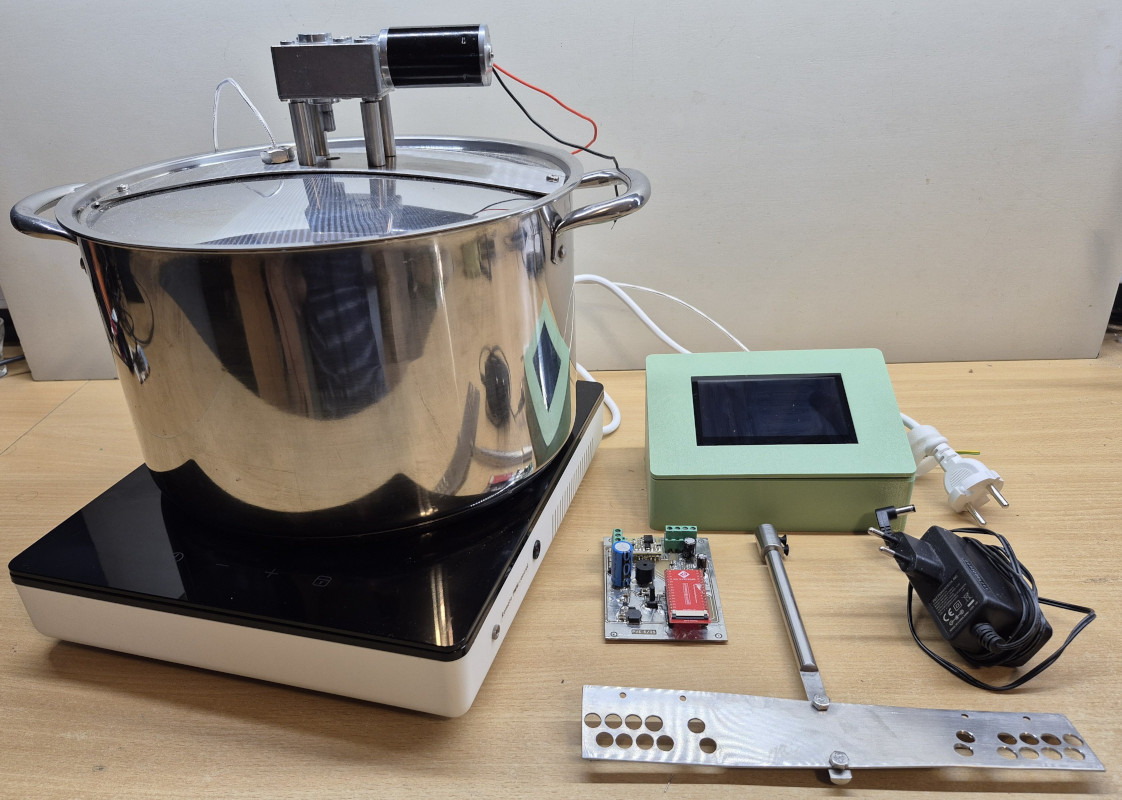
At the homebrew level, automation may look smaller but follows the same logic. Electric all-in-one systems can automate heating, recirculation, mash steps, boil control, and sometimes cleaning prompts or remote monitoring. For homebrewers, that means less fiddling and more brewing. For beginners, it lowers the barrier to entry. For experienced hobbyists, it offers better control without requiring a garage full of stainless steel and a suspiciously large extension cord collection.
The Limits of Automated Brewing
Here is the part where the sales brochure usually gets very quiet: automation is not magic. A bad recipe does not become good because a touchscreen says “Running.” Dirty equipment does not become sanitary because the CIP button has nice graphics. A poorly designed process will simply fail more consistently. That is not progress. That is efficient disappointment.
Automated brewing still depends on sound brewing science, good SOPs, calibration, maintenance, training, and verification. Sensors drift. Valves stick. Data can be misread. Operators can trust the screen too much and stop asking whether the system is telling the truth. The best breweries do not hand their judgment over to software. They use automation as a disciplined assistant, not as a substitute for experience.
There is also the cost question. Advanced automation requires capital, planning, and integration. Small breweries need to decide what level of automation delivers real value. Sometimes the best move is full brewhouse control. Sometimes it is targeted investment in fermentation, CIP, utilities, or data reporting. The smartest automation strategy is rarely “automate everything immediately.” It is “automate what hurts, wastes, risks, or limits growth the most.”
Examples of Automated Brewing in Action
Commercial examples show how flexible automation can be. Mother Earth Brewing used process automation to handle a wide range of recipes while supporting energy recovery and a creative CIP approach that let vessels double as washing systems. Deschutes Brewery used advanced automation to standardize process control and improve malt delivery efficiency, supporting larger-scale production without losing focus on beer quality. Those examples are helpful because they show automation doing what it does best: reducing friction in the background while letting the brewery keep its identity in the foreground.
Even on the hobby side, automated systems show the same pattern. Countertop and electric systems can manage mashing, sparging, boiling, hop timing, cooling, and remote monitoring. They do not replace brewing knowledge, but they make it easier to reproduce a process and easier to brew in tight spaces with greater temperature control. That is especially appealing for homebrewers who want better repeatability without turning brew day into a full-contact engineering project.
The Human Side of Automated Brewing
The funniest myth about automated brewing is that it somehow removes the brewer from brewing. In reality, it often makes the brewer more important. Once the repetitive work is better controlled, the brewer’s judgment becomes even more valuable. Someone still needs to build recipes, interpret data, taste beer critically, decide whether the process is really performing, and know when to override a system because real life does not always follow a flowchart.
Great automated brewing is not about replacing craft. It is about protecting craft from avoidable inconsistency. It gives brewers cleaner data, more stable execution, and fewer opportunities for tiny manual errors to become expensive liquid lessons. The artistry stays. The chaos gets demoted.
Experiences Related to Automated Brewing
Ask people who have brewed on manual systems and then moved to automated brewing, and the first thing they often mention is not speed. It is calm. Brew day feels less like juggling hot metal and handwritten notes and more like directing a process that finally listens back. Instead of checking the clock every three minutes and wondering whether the mash drifted a degree or two, the brewer can watch the process unfold with more confidence. That psychological shift is a bigger deal than it sounds. Brewing gets less frantic, which usually means fewer mistakes.
Another common experience is that automation changes what brewers pay attention to. On a manual day, it is easy to spend so much energy on timing and temperature that sensory observation gets pushed aside. On an automated system, brewers often report having more mental space for what actually matters: how the mash smells, whether wort clarity looks right, how the fermentation is behaving compared with previous batches, and whether the finished beer is landing where the recipe intended. The machine handles more of the routine precision, and the human gets to think more like a brewer again.
There is also a learning curve, and nobody should pretend otherwise. The first experience with automated brewing can be mildly humbling. A brewer who can build a recipe blindfolded may still have to learn alarms, setpoints, user permissions, valve logic, and what exactly the system means when it decides to throw a warning at 6:12 in the morning. Early on, some users trust the system too little and keep checking everything manually. Others trust it too much and forget that sensors, calibration, and plumbing still live in the real world. After a while, most good operators settle into a healthier rhythm: trust, but verify.
Homebrewers often describe automated brewing as the difference between camping and staying in a well-run cabin. Both can be fun. Both still involve beer. But one includes less scrambling and more control over the experience. Electric automated systems are especially popular with brewers who want precise temperature control, indoor-friendly brewing, and fewer propane-fueled theatrics. For apartment or garage brewers, that convenience can be the difference between brewing regularly and brewing only when the stars, weather, and free weekend all align.
For commercial brewers, the experience is usually tied to consistency and scale. Automation can feel liberating when a brewery starts making more brands, more batches, and more packaging runs than a manual workflow can comfortably support. The system becomes a memory bank for recipes and process steps. It also becomes a referee. When a batch goes sideways, the data can reveal whether the issue came from temperature drift, timing, flow variation, cleaning, or raw material behavior. That kind of visibility is hard to give up once a brewery has lived with it.
Still, the most honest experience shared by brewers is this: automated brewing does not make brewing less personal. It simply moves the brewer’s hands away from repetitive controls and closer to higher-level decisions. The brewer still owns the beer. The brewer still owns the taste, the standards, the fixes, and the pride when a batch lands exactly right. Automation just removes some of the avoidable drama. And in brewing, where enough drama already lives inside yeast, that is a gift.
Conclusion
Automated brewing is not a gimmick and it is not the enemy of craft. It is a practical evolution of brewing operations, built around better control, stronger consistency, smarter use of labor, cleaner records, and more efficient use of water, energy, and time. Whether the setup is a compact homebrew system or a fully integrated commercial brewhouse, the value is the same: do the repeatable work more reliably so the brewer can focus on quality.
The breweries that benefit most from automation are not the ones chasing flashy tech for its own sake. They are the ones using automation to solve real production problems, support food safety, improve sustainability, and protect the flavor profile that customers expect. In the end, automated brewing does not make beer less human. It gives the human side of brewing a better set of tools.