
Floors collect the evidence of daily life: breakfast crumbs, muddy prints, pet hair, mystery stickiness, and at least one dust bunny that seems to have developed a personality. Cleaning them well is not about attacking every surface with the strongest bottle under the sink. It is about matching the method to the material.
The safest formula is simple: remove loose grit first, use only as much moisture as the floor can tolerate, choose a compatible cleaner, and dry or rinse when required. That protects finishes, prevents residue, and keeps a routine chore from becoming an expensive flooring lesson.
Start Here: Four Rules for Almost Every Floor
Identify the Material and Finish
Hardwood, engineered wood, laminate, luxury vinyl plank, and wood-look porcelain can appear surprisingly similar. Check purchase records, leftover boxes, installer paperwork, or the manufacturer’s website. Finish matters, too: sealed wood can tolerate careful damp cleaning, while unfinished or damaged wood needs far less moisture.
Dry-Clean Before Adding Liquid
Sand and grit become tiny abrasives beneath a wet mop. Sweep, dust-mop, or vacuum first, especially along edges and under furniture. On hard flooring, use a bare-floor attachment and switch off the rotating beater bar unless the manufacturer allows it.
Use the Mildest Effective Cleaner
Start with a manufacturer-approved, pH-appropriate product. More soap usually creates more film, not more cleanliness. Do not improvise with vinegar, bleach, ammonia, wax, oil soap, or steam until you know the floor can tolerate it. Test unfamiliar products in a hidden area.
Keep Tools Clean
A dirty mop simply redistributes yesterday’s grime with impressive confidence. Use clean microfiber pads, change cloudy rinse water, and wash reusable pads without fabric softener. Work from the farthest corner toward the exit so you do not need an awkward sock-footed escape across a wet floor.
General care guidance:
How to Clean Hardwood and Engineered Wood Floors
Wood’s main enemies are grit, standing water, harsh chemicals, and enthusiastic over-mopping. Begin with a microfiber dust mop, soft broom, or bare-floor vacuum attachment. For deeper cleaning, lightly mist an approved hardwood cleaner onto a microfiber pad instead of pouring liquid onto the boards.
The mop should be damp, not dripping. Wipe spills promptly and dry visibly wet areas. Avoid soaking seams, where moisture can cause swelling, cupping, staining, or finish damage. Skip vinegar unless the manufacturer explicitly approves it; acidic solutions can dull some finishes. Steam mops are also risky because heat and moisture may enter seams or worn finish.
For sticky spots, apply a small amount of approved cleaner to a soft cloth and work gently. Felt pads under furniture, walk-off mats, and a shoes-off habit reduce scratching and the need for aggressive cleaning later.
Wood-floor guidance:
How to Clean Ceramic and Porcelain Tile
Ceramic and porcelain are durable, but grout is usually more vulnerable than the tile. Vacuum or sweep first, then damp-mop with warm water and a mild neutral cleaner compatible with both surfaces. Follow the label’s dilution rate; excess detergent can leave a sticky haze that attracts fresh dirt.
Rinse when directed and dry with clean microfiber to reduce streaks and water spots. For textured tile, use a soft nylon brush. Avoid steel wool, metal brushes, and harsh abrasive powders that may scratch glazed surfaces.
Cleaning Grout Safely
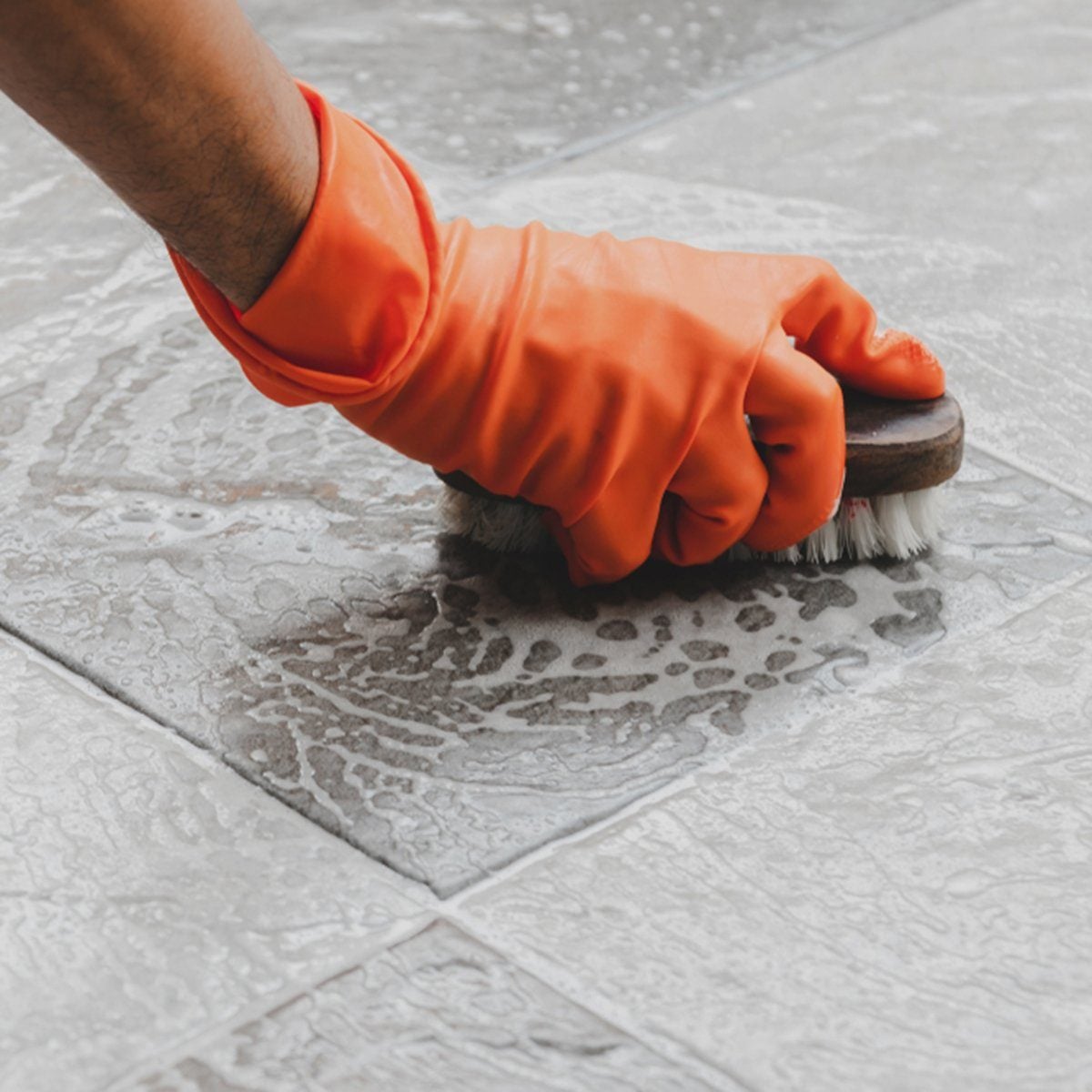
Start with a neutral tile-and-grout cleaner and a nylon grout brush. Allow the recommended dwell time, scrub gently, rinse, and dry. Strong acids can damage cement-based grout and some glazed tile, while repeated harsh bleaching may discolor or weaken grout. Grout that remains dark may be permanently stained, unsealed, cracked, or ready for repair rather than another chemical showdown.
Tile and grout guidance:
How to Clean Carpet and Area Rugs
Carpet rewards consistency. Vacuum slowly, making overlapping passes through high-traffic lanes. Adjust the height to the pile and use attachments along baseboards, stairs, and furniture edges. Homes with pets, children, allergies, or outdoor-shoe traffic usually need more frequent vacuuming than quiet rooms.
Blot SpillsNever Scrub Them
Lift solids with a spoon or dull scraper, then blot liquid with a clean white cloth from the outside toward the center. Scrubbing can spread the stain, distort the pile, and fray fibers. Apply a carpet-safe spot product sparingly after checking the care label and warranty, then blot again and remove as much moisture as possible.
Periodic extraction cleaning removes embedded soil, but the carpet must dry thoroughly. Over-wetting can cause odor, backing problems, or microbial growth. Wool, antique, jute, sisal, viscose, handmade, or color-unstable rugs are safer in the hands of a qualified rug cleaner.
Carpet guidance:
How to Clean Laminate Floors
Laminate has a wear layer over a wood-based core, so the surface may resist spills while the seams remain moisture-sensitive. Sweep or vacuum with the hard-floor setting, then use a microfiber mop lightly dampened with laminate-approved cleaner. Spray the pad or a small section rather than flooding the room.
Do not wet-mop, wax, polish, or use abrasive scrubbers. Wipe spills quickly, especially near plank edges. Steam is generally a poor choice because heat and moisture can enter joints and contribute to swelling or bubbling. A dull appearance is often residue, not a request for furniture polish.
Laminate guidance:
How to Clean Vinyl, Luxury Vinyl Plank, and Linoleum
Vinyl and luxury vinyl are relatively forgiving. Remove grit, then damp-mop with a cleaner approved for resilient flooring. A small amount of neutral cleaner is usually enough. Clean spills promptly and avoid abrasive pads, solvent-based polish, paste wax, and coating-style “mop-and-shine” products unless the manufacturer recommends them.
Linoleum is often confused with vinyl, but it is a different material and can be sensitive to excessive alkalinity and prolonged moisture. Use a linoleum-safe cleaner, a well-wrung mop, and the product’s specified maintenance system. On either surface, use protective pads under furniture and check whether rubber-backed mats could discolor the finish.
Resilient-floor guidance:
How to Clean Natural Stone Floors
Marble, limestone, travertine, slate, and granite are not interchangeable, but one conservative rule serves them all: use a pH-neutral cleaner made for natural stone. Remove abrasive particles, wash with a clean mop, rinse if required, and dry the surface to reduce streaks and mineral marks.
Never use vinegar, lemon juice, or acidic bathroom cleaner on marble, limestone, or travertine. Acid can etch the surface and create dull spots that ordinary cleaning cannot remove. Sealing improves stain resistance but does not make stone stain-proof, so spills still need prompt attention.
For a deep oil or dye stain, identify both the stone and the stain before attempting a poultice. Valuable stone may justify professional assessment because incorrect chemistry can set the stain or alter the finish.
Natural-stone guidance:
How to Clean Concrete, Bamboo, Cork, and Rubber
Sealed Concrete
Sweep or vacuum, then damp-mop with a neutral cleaner. Decorative coatings and sealers can be damaged by harsh degreasers or abrasive tools, so treat coated concrete more like a finished indoor floor than a driveway.
Bamboo and Cork
Most finished bamboo is maintained like hardwood: frequent dry cleaning, minimal moisture, and an approved cleaner. Cork is also moisture-sensitive, especially at seams or worn finish. Use a barely damp mop, wipe spills immediately, and avoid flooding or steam.
Rubber Flooring
Vacuum or sweep, then use a neutral cleaner recommended for rubber. Solvents, strong alkalines, and some oils can discolor or soften the material. Rinse away product residue where directed because a slippery film defeats the practical purpose of rubber flooring.
A Realistic Floor-Cleaning Schedule
- Immediately: Remove spills, pet accidents, grit, and foods that may stain or enter seams.
- Several times a week: Dry-clean entryways, kitchens, pet zones, and other busy areas.
- Weekly or as needed: Damp-clean compatible hard floors and vacuum carpet thoroughly.
- Monthly: Reach beneath furniture, clean edges, wash mats, and inspect grout, seams, and finishes.
- Periodically: Schedule carpet extraction, grout or stone resealing, or wood recoating according to traffic and manufacturer guidance.
The best schedule follows actual soil, not guilt. A quiet no-shoes household and a family with three dogs should not receive the same cleaning calendar.
Maintenance-frequency context:
Seven Floor-Cleaning Mistakes to Avoid
- Mopping before sweeping: Grit becomes scratchy mud.
- Using too much cleaner: Residue causes dullness, stickiness, and faster resoiling.
- Treating vinegar as universal: It may harm wood finishes, grout, and natural stone.
- Letting water sit: Seams, edges, cracks, and porous materials invite moisture damage.
- Scrubbing carpet stains: Blotting is safer and limits spreading.
- Using steam everywhere: It may suit approved tile but is risky on wood, laminate, cork, damaged seams, and some glued floors.
- Ignoring the warranty: A clever homemade formula can become expensive if it voids coverage.
Experience-Based Lessons That Make Floor Cleaning Easier
The most useful lessons do not come from dramatic before-and-after videos. They come from noticing which small routines prevent the mess from becoming dramatic.
The Entryway Controls the Workload
Imagine a rainy week in a home with pale oak floors. Fine grit travels far beyond the door and is ground into the finish by socks, chairs, and foot traffic. Stronger wood cleaner is not the best fix. A coarse outdoor mat, a washable indoor mat, frequent vacuuming near the entrance, and a convenient shoe station prevent far more damage. Prevention is less glamorous than a powered scrubber, but much kinder to flooring.
Streaks Usually Mean Residue
A common kitchen mistake is adding extra detergent because the tile looks especially dirty. The first pass smells impressively clean; after drying, the floor looks cloudy and shows every footprint. Cleaning again with the correct dilutionor plain rinse water when the product permitsoften works better than adding another chemical. Clean pads, measured detergent, and frequent water changes are boring in the reliable way good systems often are.
Fast Spill Response Beats Heroic Stain Removal
When red juice hits carpet, the instinct is to rub hard before it “sets.” That can push color deeper and roughen the fibers. A calmer sequence works better: lift solids, blot from the edge inward, apply a compatible treatment, and continue with clean cloth sections. The same principle protects wood and laminate, where fast wiping keeps liquid away from seams. A small kit containing white cloths, a dull scraper, gloves, and approved spot cleaner is more useful than a cabinet full of random sprays.
Consistency Protects Expensive Surfaces
Hardwood and natural stone look sturdy, yet their appearance depends on finishes, sealers, and chemistry. Repeated acidic cleaning on marble may create dull etch marks, while frequent wet mopping can stress wood seams. The change can be gradual, which is why the cleaner gets blamed months later. Better maintenance means removing grit often, spot-cleaning promptly, damp-cleaning only when necessary, and using professional restoration when the surfacenot the dirtis the problem.
A Clean Floor May Still Look Worn
Scratches, faded finish, etched stone, permanently stained grout, and compressed carpet pile are condition issues rather than ordinary soil. More scrubbing may make them worse. When cleaning stops changing the appearance, inspect the material in good light. Wood may need recoating, grout may need recoloring or replacement, carpet may need extraction, and stone may require honing or polishing. Knowing the difference between dirt and wear saves effort and prevents a floor from being punished for aging.
Conclusion: Clean the Floor You Have
Good floor care depends more on restraint than secret formulas. Remove grit, respond to spills, control moisture, keep tools clean, and match the product to the material and finish. Hardwood wants a light touch, tile needs grout-conscious care, carpet responds to patient vacuuming and blotting, laminate dislikes flooding, vinyl favors mild maintenance, and natural stone demands neutral chemistry.
When uncertain, check the manufacturer’s care guide before trying a viral hack. Your floor does not care how many views the trick received. It cares whether the cleaner dissolves its finish.
SEO Metadata