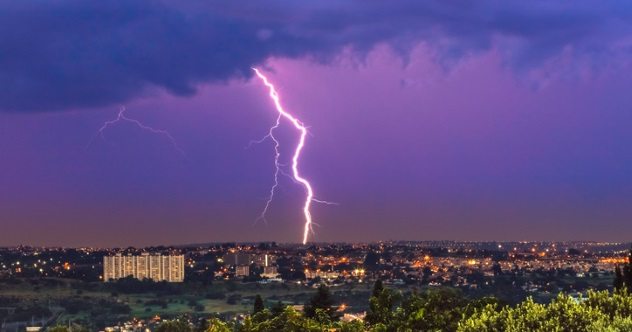

Weather control sounds like something a movie villain would announce from a glass tower while dramatic lightning flashes behind them. In real life, it is much less theatricaland a lot more regulated, debated, measured, and occasionally misunderstood. The most common real-world version is cloud seeding, a weather modification technique that introduces tiny particles into suitable clouds to encourage rain or snow formation. It does not create clouds from nothing, summon hurricanes, or give anyone a magic weather remote. If the atmosphere is a kitchen, cloud seeding is more like adding yeast to dough that already existsnot ordering a pizza from thin air.
Cloud seeding and weather modification have been used for water supply, snowpack enhancement, hail suppression, fog dispersal, scientific research, and even controversial military experiments. The technology has been around since the 1940s, yet it remains a topic where science, policy, drought anxiety, and internet rumors often bump elbows at the same crowded table.
This article explores 10 examples of cloud seeding and weather control, using real programs and historical cases to explain what weather modification can do, what it cannot do, and why the sky is still not accepting customer service calls.
What Is Cloud Seeding?
Cloud seeding is a form of weather modification designed to enhance precipitation from clouds that already contain moisture. In cold-cloud seeding, materials such as silver iodide or dry ice may be used because they help supercooled water droplets freeze into ice crystals. Those crystals can grow, become heavy, and eventually fall as snow or rain. In warm-cloud seeding, salt-like particles may be used to encourage droplets to merge into larger raindrops.
The important phrase is “clouds that already contain moisture.” Cloud seeding cannot manufacture a storm out of blue sky. It cannot turn a desert afternoon into a rainforest on command. It needs the right clouds, temperatures, winds, terrain, and timing. That is why many programs focus on winter mountain storms, where moist air rises over ranges and forms snow-producing clouds.
10 Examples Of Cloud Seeding And Weather Control
1. Idaho Power’s Cloud Seeding Program
One of the best-known modern cloud seeding examples in the United States is the Idaho Power cloud seeding program. Idaho Power uses both aircraft and remote-controlled ground generators to target winter storms over mountain basins, including the Payette, Boise, Wood River, and upper Snake River regions.
The purpose is practical: more snowpack can mean more water later for reservoirs, irrigation, hydropower, and river systems. In the West, snow is not just pretty scenery; it is a giant frozen savings account. When spring arrives, that “account” melts into streams and reservoirs. Cloud seeding tries to add a modest deposit when the right storm passes through.
Idaho is also important because it has been connected with major scientific research, including the SNOWIE project, which helped improve how scientists observe seeded snowfall using radar and aircraft measurements.
2. SNOWIE: The Idaho Experiment That Made Cloud Seeding Easier To Measure
The Seeded and Natural Orographic Wintertime Clouds: The Idaho Experiment, better known as SNOWIE, was a major research project focused on winter cloud seeding in Idaho’s mountains. Scientists studied how silver iodide released into suitable clouds could influence snowfall patterns.
Why does this matter? For decades, one of the biggest challenges in cloud seeding was proving what actually happened. If snow falls after seeding, was it caused by the seedingor was the cloud going to snow anyway? The atmosphere does not come with a “before and after” button, which is rude but unsurprising.
SNOWIE used advanced radar, aircraft observations, and modeling to detect seeding signatures in clouds. It became a key example of how modern weather modification research has moved beyond guesswork and into measurable atmospheric science. The lesson: cloud seeding is not just about flying into clouds; it is also about proving what those clouds did next.
3. Utah’s Long-Running Cloud Seeding Program
Utah has one of the most active cloud seeding efforts in the United States. The state has used winter cloud seeding for decades to support water supply, especially in a region where drought, snowpack, agriculture, cities, and the Great Salt Lake all compete for attention like siblings in the back seat.
Utah’s program has traditionally relied on ground-based generators placed in strategic mountain areas. These generators release seeding material when storms meet certain conditions. More recently, Utah has explored aircraft and drone-based cloud seeding technology, reflecting a broader trend toward more precise and flexible weather modification tools.
This example shows how cloud seeding is often used not as an emergency button, but as a long-term water management strategy. It is not meant to fix drought overnight. Instead, it aims to slightly increase precipitation over many suitable storms, season after season.
4. Wyoming Weather Modification Pilot Program
The Wyoming Weather Modification Pilot Program is another important example because it included a serious evaluation component. Wyoming studied winter orographic cloud seeding in mountain ranges where snowpack feeds important water systems.
Orographic cloud seeding targets clouds that form when moist air is forced upward over mountains. As air rises, it cools, and clouds may develop. If those clouds contain supercooled liquid water, they may be candidates for seeding.
The Wyoming program is often discussed because it tried to answer the hard question: “Does this actually add measurable water?” In weather modification, confidence matters. Water managers do not want atmospheric wishful thinking with a budget line. Wyoming’s work helped shape the modern conversation about cloud seeding effectiveness, costs, and uncertainty.
5. North Dakota Cloud Modification Project
The North Dakota Cloud Modification Project is different from many mountain snowpack programs. It focuses on warm-season convective clouds, with goals that include rain enhancement and hail damage reduction in parts of western North Dakota.
Hail suppression is one of the more interesting branches of weather modification. The basic idea is to introduce more ice-forming particles into a storm so that hail growth may be spread among many smaller stones instead of fewer large damaging ones. In theory, smaller hail means less damage to crops, vehicles, roofs, and the emotional stability of anyone who just bought a new windshield.
North Dakota’s program has also been notable for its aviation and meteorology training connections. It shows that cloud seeding is not only about water supply; in agricultural regions, reducing hail damage can be just as valuable as squeezing out extra rainfall.
6. Colorado Weather Modification Program
Colorado’s weather modification program is tied closely to water supply in the Rocky Mountains. The state administers permits and monitors cloud seeding activities, with winter snowpack enhancement as a major focus.
This is especially important because Colorado is a headwaters state. Snow that falls in Colorado can eventually feed major river systems used far beyond the state’s borders. That makes cloud seeding a local action with regional water implications.
Colorado also highlights the policy side of weather control. Weather modification is not simply a matter of “someone has a plane; someone has a cloud; let’s party.” Projects typically involve permits, reporting, operating criteria, suspension rules, and public oversight. In other words, the sky may be wild, but the paperwork is very domesticated.
7. Nevada And The Desert Research Institute
The Desert Research Institute, commonly called DRI, has been involved in weather modification research since the early 1960s. Its work has included winter cloud seeding in Nevada and other mountainous areas of the western United States.
DRI’s programs often focus on enhancing snowfall from existing winter storms. That matters in a dry region where mountain snowpack supports water supply for communities, ecosystems, and recreation. Lake Tahoe, the Sierra Nevada, the Ruby Mountains, and other western ranges have all been part of the broader cloud seeding conversation.
Nevada’s example also shows how cloud seeding programs can expand or shrink depending on drought conditions, public funding, and water agency priorities. When water is scarce, cloud seeding suddenly looks less like a science experiment and more like a tool worth revisiting.
8. Santa Ana River Watershed Cloud Seeding Pilot Program
Southern California has tested cloud seeding through the Santa Ana River Watershed Project Authority. The program was designed to evaluate whether cloud seeding could help increase precipitation in a region where water supply is always a serious topic and lawn sprinklers are basically a moral debate.
The Santa Ana River watershed effort used ground-based seeding equipment to target suitable storm systems. Like other responsible programs, it included operating limits and suspension criteria. These rules matter because cloud seeding is not intended to intensify dangerous storms or increase flood risk.
This example is useful because it shows cloud seeding in a heavily populated region. In rural mountain watersheds, seeding may draw less public attention. In Southern California, every weather-related decision comes with a crowd, a camera, and at least one person asking whether this explains their weird commute.
9. Project Stormfury: Trying To Weaken Hurricanes
Project Stormfury was a U.S. hurricane modification research program that ran from the 1960s into the early 1980s. Scientists explored whether seeding hurricanes with silver iodide could disrupt their inner structure and reduce their intensity.
The idea was bold. Unfortunately, hurricanes are not polite laboratory specimens. Later understanding showed that hurricanes already contain large amounts of natural ice and do not offer the kind of controllable supercooled water environment that the theory required. Project Stormfury ultimately became less a success story and more a powerful lesson in atmospheric complexity.
This example belongs on any list of weather control attempts because it shows the difference between modifying small or moderate cloud processes and trying to steer or weaken one of the most powerful storm systems on Earth. Cloud seeding may nudge certain clouds under certain conditions. A hurricane is the atmosphere’s version of a freight train carrying a freight train.
10. Operation Popeye: The Controversial Military Use Of Cloud Seeding
Operation Popeye was a classified U.S. military cloud seeding effort during the Vietnam War era. Its goal was reportedly to extend monsoon conditions over parts of Southeast Asia in order to disrupt transportation routes. It remains one of the most controversial examples of weather modification because it moved cloud seeding from water management into military strategy.
The ethical problems were obvious once the program became public. Weather does not stop at a fence, a checkpoint, or a political border. Using environmental modification as a tool of conflict raises serious questions about civilian harm, accountability, and international law.
Operation Popeye helped shape global concern about hostile environmental modification. Today, discussions of cloud seeding often make a clear distinction between regulated civilian programs for water supply and the unacceptable use of weather modification as a weapon.
What Cloud Seeding Can Actually Do
Cloud seeding can sometimes enhance precipitation when atmospheric conditions are favorable. It may increase snowfall in mountain storms, support water supply planning, reduce hail damage in some programs, and help researchers better understand cloud physics. Its greatest promise is usually modest improvement repeated over time, not instant weather transformation.
Think of it as a percentage game. A single seeded storm may not change the world. But if a winter program can slightly improve precipitation over many storms, the seasonal total may become useful. That is why water agencies often evaluate cloud seeding across years rather than judging it by one dramatic afternoon.
What Cloud Seeding Cannot Do
Cloud seeding cannot create clouds from empty sky. It cannot end a drought by Tuesday. It cannot steer hurricanes, create giant storms, or control the climate. It also cannot guarantee rain for a wedding, which is disappointing but probably healthier for the wedding planning industry.
Modern weather modification depends on existing clouds, suitable temperatures, wind direction, moisture, and topography. If those conditions are missing, seeding is like throwing fertilizer onto a sidewalk and expecting tomatoes.
Safety, Environment, And Public Trust
Most cloud seeding programs use very small amounts of seeding material, commonly silver iodide for cold-cloud operations. Current research generally suggests that silver iodide used at typical operational levels has not been shown to create major environmental or health concerns. However, experts also note that broader expansion should continue to be monitored carefully.
Public trust is just as important as atmospheric science. When cloud seeding happens near floods, droughts, fires, or strange-looking skies, rumors can spread faster than a weather app notification. Clear reporting, public permits, independent evaluation, and honest communication help separate real weather modification from myths about total weather control.
Experience Notes: What These 10 Examples Teach Us About Weather Control
Looking across these examples, the biggest real-world lesson is that weather control is less about domination and more about negotiation. The atmosphere is not a vending machine where agencies insert silver iodide and receive snowpack. It is a moving, turbulent, three-dimensional system with more variables than a group project where nobody reads the instructions.
The Idaho and SNOWIE examples show that measurement matters. For years, cloud seeding lived in an awkward space between promising theory and hard-to-prove results. Snow fell, but skeptics could reasonably ask whether it would have fallen anyway. Modern radar, aircraft sampling, and numerical modeling have made it easier to observe seeding signatures and study cause and effect. That does not make every project automatically successful, but it improves the conversation.
Utah, Colorado, Wyoming, and Nevada show that cloud seeding often works best as part of long-term water planning. These states are not using it as a superhero cape for drought. They use it as one tool among reservoirs, conservation, forecasting, groundwater management, and watershed planning. The most realistic expectation is incremental gain, not miracle rain.
North Dakota and Texas-style rain enhancement programs show another practical side: agriculture. Farmers do not need sci-fi weather control; they need fewer crop losses, better soil moisture, and less destructive hail. Even small improvements can matter when a farm’s annual income depends on what falls from the skyand what size it is when it lands.
The Santa Ana River watershed example teaches that location changes public perception. In a crowded region, even a carefully managed pilot program can become controversial because people naturally connect unusual weather with visible technology. That is why communication must be as precise as the meteorology. If agencies do not explain what cloud seeding can and cannot do, the internet will happily fill the silence with dramatic nonsense wearing sunglasses.
Project Stormfury and Operation Popeye are the cautionary chapters. Stormfury showed that large-scale storm systems are far beyond simple control. Operation Popeye showed that even if weather modification is technically possible in limited ways, ethics and transparency matter. The sky is shared. Any attempt to alter weather must consider people downstream, downwind, and outside the room where decisions are made.
From a reader’s perspective, the smartest way to understand cloud seeding is to avoid both extremes. It is not fake. It is also not a weather-control superpower. It is a limited atmospheric technology with real applications, real uncertainties, and real reasons for oversight. The science is fascinating precisely because it sits between ambition and humility. Humans can sometimes nudge clouds. But the clouds still get a vote.
Conclusion
The story of cloud seeding and weather control is not a simple tale of humans conquering the sky. It is a more interesting story: scientists and water managers trying to work with atmospheric processes that already exist. From Idaho’s snowpack programs to North Dakota’s hail suppression, from Utah’s drought planning to Project Stormfury’s hurricane lessons, these examples show both the potential and the limits of weather modification.
Cloud seeding can be useful when the conditions are right, especially for winter snowpack enhancement and local precipitation management. But it is not a magic switch, and it should never be confused with total climate control. The best programs are transparent, carefully evaluated, and honest about uncertainty. After all, when humans start negotiating with clouds, a little humility is not just refreshingit is required equipment.