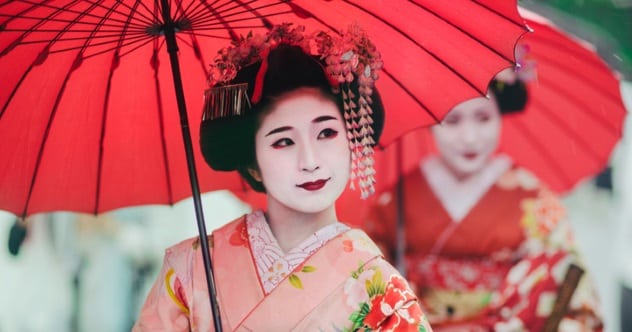

Say the word geisha, and many people picture a silent woman in white makeup gliding through old Kyoto like a beautifully dressed mystery with excellent posture. Movies, novels, souvenir posters, and decades of exotic storytelling have created a familiar image. Unfortunately, that image often has about as much historical accuracy as a ninja ordering sushi with a samurai sword.
Japanese geisha are professional entertainers trained in traditional music, dance, hospitality, conversation, and performance. Their culture developed over centuries, changed with Japanese society, survived war and economic disruption, and continues today in a small number of communities. Yet the profession is still frequently confused with prostitution, costume tourism, or a romanticized fantasy of submissive femininity.
Understanding geisha culture requires replacing the stereotypes with something far more interesting: real people doing demanding artistic work inside a complex professional system. Western photography and entertainment helped turn geisha into simplified symbols of Japan, while sensationalized stories often ignored the skill, discipline, and individuality behind the image.
1. Geisha Are Artists, Not Prostitutes
The biggest misconception should be addressed first. Geisha are not defined as sex workers. Their professional role is to entertain guests through traditional arts, conversation, games, music, dance, and refined hospitality.
The confusion partly developed because geisha historically worked in entertainment districts where licensed courtesans also operated. However, the occupations were different. Courtesans such as oiran belonged to a licensed prostitution system, while geisha were hired as performers. Their presence in some of the same neighborhoods did not make their jobs interchangeable, just as a pianist performing in a hotel is not automatically employed in every other business inside the building.
Later Western accounts frequently blended geisha, courtesans, bar hostesses, and women who called themselves “geisha girls” when dealing with foreign soldiers after World War II. Popular fiction added another layer of confusion by emphasizing romance, sexuality, and secrecy over the profession’s artistic foundations.
This distinction does not mean the history was always comfortable or free from exploitation. Young women in earlier eras could face debt, restricted choices, and difficult working conditions. A truthful account should neither sexualize the profession nor turn its history into a flawless fairy tale. The essential point is that artistic entertainmentnot the sale of sexual servicesdefines geisha work.
2. The Word “Geisha” Is Basically a Job Description
The Japanese characters in geisha refer to art and person. The term can therefore be understood as “person of art” or “arts practitioner.” That meaning is far less mysterious than the image exported by movies, but it is much more useful.
A professional geisha may study traditional dance, singing, the three-stringed shamisen, percussion, tea practices, flower arrangement, regional performance styles, and formal etiquette. Not every performer specializes equally in every discipline. Some become particularly respected dancers, while others are known for instrumental music, singing, comic timing, or their ability to guide a banquet without making the evening feel guided at all.
Geisha are not merely people wearing historically inspired clothing. The clothing supports the profession, but the art creates it. Putting on a kimono no more makes someone a geisha than putting on a chef’s hat gives them the ability to rescue a collapsed soufflé.
Official Japanese cultural and tourism organizations describe geisha, geiko, and geigi as trained entertainers who spend years developing skills in music, dance, conversation, and hospitality. Their occupation is rooted in performance, not appearance alone.
3. Some of the Earliest Geisha Were Men
Here is a historical detail that tends to surprise even enthusiastic Japan travelers: the early entertainers associated with the geisha profession included men.
Male entertainers known as hōkan or taikomochi performed at banquets with conversation, music, storytelling, jokes, and comic routines. They occupied a role sometimes compared with that of jesters or highly skilled party hosts. Female performers entered this professional space during the eighteenth century and became increasingly popular. Eventually, women greatly outnumbered the men, and the word geisha came to be associated primarily with female artists.
This history complicates the idea that geisha culture was invented simply to display an idealized form of femininity. Its development was also connected to professional banquet entertainment, humor, musical performance, and the ability to manage the social rhythm of a gathering.
A geisha’s greatest achievement was never supposed to be standing quietly and looking decorative. The job required knowing when to perform, when to speak, when to encourage a guest, and when to rescue a conversation that had wandered into the social equivalent of a muddy ditch.
4. A Maiko Is Not Simply Another Name for a Geisha
Images of maiko are often labeled as geisha in Western media, but the terms describe different professional stages.
In Kyoto, a fully trained geisha is commonly called a geiko. A maiko is an apprentice who is still completing intensive artistic and professional training. Other regions use different vocabulary, including geisha and geigi, so terminology can vary according to location.
Maiko are usually easier to recognize because their appearance is intentionally elaborate. They may wear long-sleeved kimono, dangling hair ornaments, distinctive hairstyles, high wooden footwear, and a long obi sash. Fully qualified geiko generally present a more restrained style. Their kimono, hair, accessories, and makeup emphasize mature elegance rather than apprentice color and ornamentation.
That difference reflects seniority. The apprentice’s visual style announces that she is learning, while the geiko’s understated appearance suggests that her artistry no longer requires quite so many exclamation points.
Becoming a geiko is not an automatic birthday promotion. The transition follows years of instruction, practical experience, professional evaluation, and increasing responsibility within the community.
5. Their Training Is Closer to a Performing-Arts Education
The photogenic result can make geisha training appear effortless. It is not. Behind a polished dance or graceful musical performance are repeated lessons, corrections, rehearsals, and years of physical discipline.
An apprentice must learn artistic material while also mastering professional customs. She studies how to enter a room, sit correctly, pour drinks, speak appropriately to different guests, introduce performances, participate in traditional party games, and respond when an evening does not follow the script. Since live guests have an inconvenient habit of behaving like live guests, adaptability matters.
Training does not end once a maiko becomes a geiko. Professional artists continue taking lessons and rehearsing throughout their careers. Seasonal dances and large public performances demand coordinated preparation, while smaller private engagements require an extensive repertoire that can suit different occasions.
Kyoto’s annual dance programs, including the famous Miyako Odori, demonstrate the theatrical and musical education undertaken by geiko and maiko. These productions are not casual tourist pageants. They are carefully staged performances built upon local schools of dance, music, costume, and seasonal storytelling.
6. The White Makeup Is Not Their Everyday Face
White makeup is one of the world’s most recognizable symbols of geisha culture, but it is neither worn identically by everyone nor required for every moment of a geisha’s life.
Makeup, hairstyles, collars, hair ornaments, obi styles, and kimono communicate information about age, rank, season, district, and occasion. A new maiko may wear her makeup differently from a senior apprentice. A mature geiko may use traditional white makeup for formal engagements or stage performances but appear without it in other settings.
Historically, pale face makeup also worked effectively in dim interiors illuminated by candles. Its visual impact later became closely associated with theatrical beauty and traditional entertainment. Modern wigs have made formal hairstyles more practical for many geiko, while maiko may still use their own hair for specialized styles during apprenticeship.
The kimono is equally meaningful. Colors and decorative motifs may reflect the season, while the formality of the garment must match the event. Dressing is therefore not simply a beauty routine. It is part costume design, part professional code, part moving art exhibition, and part engineering challenge involving a truly heroic quantity of fabric.
Museum collections preserve historical images of geisha and female entertainers, helping show how their appearance has been represented and transformed across different artistic periods.
7. Conversation Is One of Their Most Demanding Arts
People often focus on dance and music because those skills are easy to photograph. Yet conversation and social awareness are central parts of geisha entertainment.
A skilled geisha pays attention to the entire room. Who is nervous? Who is dominating the conversation? Which guest needs encouragement? Is it time for music, a drinking game, a story, or a tactful change of subject before someone begins explaining office accounting procedures in exhausting detail?
This is not merely flirting. It is professional hosting based on timing, observation, memory, humor, and emotional intelligence. The geisha must remain engaging without making herself the only focus. She helps guests participate in the evening and creates the impression that the atmosphere is unfolding naturally.
Traditional banquet games may appear playful and spontaneous, but they have a practical purpose. They reduce formality, encourage interaction, and allow guests of different personalities to share an experience. Music and dance can then shift the tone again, producing an evening with carefully managed changes of pace.
Japanese government descriptions of geiko and maiko emphasize their work in music, dance, conversation, and banquet entertainment. The famous elegance is real, but much of it comes from invisible preparation and the ability to make difficult social work look easy.
8. Geisha Can Be Independent Career Professionals
The stereotype of the powerless geisha waiting for a wealthy man to control her life ignores the professional independence many geisha have exercised, particularly in modern times.
Historically, working arrangements varied by era and district. An okiya, or geisha house, could finance clothing, lessons, accommodation, and introductions while managing an apprentice’s development. This system could create obligations and debt, especially in earlier periods. It could also provide the training, reputation, and network required to enter an expensive profession.
Once established, geisha could become financially knowledgeable professionals who managed schedules, client relationships, artistic commitments, clothing expenses, and business reputations. Senior women often held authority within geisha houses and entertainment districts. Some became mentors or proprietors responsible for training the next generation.
Modern recruitment is voluntary, and women may enter from different parts of Japan. They are not purchased from families or legally trapped in the profession. They may leave, change careers, or choose how long to continue performing.
Personal accounts and historical studies also reveal wide differences in individual experience. Some women remembered hardship and poverty; others emphasized artistry, independence, community, or professional pride. There is no single geisha story capable of representing every district and century.
9. Money Alone Does Not Automatically Open Every Door
Traditional geisha entertainment has often operated through relationships of trust. Some exclusive teahouses follow an introduction system commonly summarized as “no first-time customers.” A new guest may need a recommendation from an existing patron because the teahouse coordinates performers, food, rooms, and expenses based on established relationships.
Traditionally, clients were not always expected to settle every charge in cash before leaving. The teahouse managed the evening and billed trusted customers later. That arrangement made reputation essential. A suitcase full of money might prove that someone had a suitcase full of money, but it did not prove that they understood the customs or would behave respectfully.
Today, travelers have more legitimate ways to experience geisha culture. Hotels, cultural organizations, tour operators, theaters, museums, and selected restaurants can arrange public performances or structured meetings. These experiences make the art more accessible without pretending that visitors have suddenly become lifelong insiders after purchasing a dinner package.
The balance between exclusivity and accessibility remains delicate. Opening events to new audiences can support performers and preserve traditional arts, but reducing geisha culture to a tourist photo opportunity strips away the very context visitors came to see.
10. Geisha Culture Is Living, Not Frozen in the Edo Period
Geisha do not travel to work through a magical doorway from the eighteenth century. They live in modern Japan. They use phones, travel, manage contemporary schedules, communicate with international guests, and navigate social media attention while maintaining traditional professional practices.
The number of working geisha has declined greatly from its historical peak. Modern entertainment options, changing business customs, the cost of training, and new career opportunities have all affected recruitment. At the same time, public performances, museums, cultural programs, and younger entrants continue to renew the tradition.
Some geisha speak foreign languages. Some participate in interviews or educational events. Digital fan communities follow debuts and career milestones. Yet increased visibility also creates problems. Visitors in Kyoto have followed performers, blocked their path, touched their clothing, entered private property, or taken photographs without permission.
Kyoto’s official visitor guidance now explicitly tells tourists not to stop, follow, touch, or photograph geiko and maiko without authorization. That rule should not be controversial. A maiko walking quickly to an appointment is a working person, not a public mascot who has spawned on the street for everyone’s camera roll.
Respecting geisha culture therefore means accepting both sides of its identity: it is an important historical tradition, and it belongs to living people with schedules, boundaries, ambitions, and the right to reach work without being chased down an alley.
What Experiencing Geisha Culture Is Really Like
The First Surprise Is Often the Atmosphere
Many visitors expect a geisha performance to feel grand, distant, and extremely formal. A traditional banquet can certainly include ceremony and exquisite presentation, but the mood may become much warmer and more playful than expected.
After guests settle in, the evening may move between conversation, food, music, dance, and simple party games. A graceful performance can be followed by laughter when someone loses a rhythmic hand game. That contrast is important. Geisha entertainment is not intended to turn guests into silent museum visitors. It creates a shared social experience.
The performer’s attention is often more memorable than the visual spectacle. She may remember a guest’s earlier comment, adjust the conversation for someone who feels shy, or explain a cultural detail without transforming the evening into a lecture. The effect feels personal because observation is part of the craft.
A Dance Looks Different When You Understand the Details
Watching a Kyoto-style dance without context can be beautiful but puzzling. The movements may seem unusually small compared with Western stage dance. Hands, sleeves, fans, posture, and changes in direction carry narrative meaning. A few controlled steps may suggest travel, weather, longing, or the passage of a season.
Once viewers understand that the kimono limits and shapes movement, the performance becomes more impressive. The dancer is not trying to leap across the room like a Broadway star who has just received excellent news. She is creating expression through precision, restraint, and timing.
Public seasonal productions are among the easiest ways to appreciate this artistry. Kyoto’s spring dance programs combine large casts, elaborate costumes, live music, and scenery inspired by seasonal landscapes. Museums such as the Gion Kagai Art Museum also provide historical context before visitors attend a performance.
A Shamisen Performance Is More Powerful in Person
The shamisen can sound sharp, rhythmic, delicate, or surprisingly dramatic. Recordings capture the notes, but a small room reveals the physical effort: the movement of the performer’s hand, the strike of the plectrum, and the coordination between singer and instrumentalist.
Traditional songs may not follow the melodic patterns an American listener expects. Instead of waiting for a giant chorus, it helps to listen for changes in rhythm, vocal texture, and the relationship between sound and gesture. The performance rewards attention rather than demanding it with fireworks.
Responsible Visitors Leave the Camera Down
One of the most authentic geisha-related experiences in Kyoto may be seeing a maiko or geiko briefly walking through Gion. The respectful response is also the least cinematic: give her space and continue walking.
Do not block the path, grab a sleeve, follow her, or push a phone toward her face. She is probably traveling between professional appointments. An unexpected street sighting does not create an obligation to pose.
Travelers who want photographs should book an authorized performance or cultural experience where photography rules are clearly explained. This produces better pictures, supports legitimate businesses, and dramatically reduces the chance of becoming the person everyone complains about after dinner.
The Lasting Impression Is Usually the Work
After encountering geisha culture through a performance, museum, or professionally arranged evening, many visitors leave thinking less about mystery and more about labor. The kimono requires skilled dressing. The dance reflects years of repetition. The easy conversation depends on concentration. The apparently spontaneous evening rests on an organized network of teachers, musicians, dressers, teahouses, geisha houses, and performers.
That realization does not make geisha culture less enchanting. It makes the enchantment more honest. The artistry is impressive precisely because real people produce itnot because geisha belong to a secret, fictional world beyond ordinary human effort.
Conclusion: Look Beyond the Painted Stereotype
Japanese geisha are not living dolls, submissive fantasies, or interchangeable symbols of old Japan. They are trained performers whose profession combines music, dance, clothing, etiquette, humor, memory, conversation, and hospitality.
Their history includes artistic achievement as well as difficult social realities. Their present includes tradition as well as modern business decisions. Maiko are apprentices, geiko are qualified professionals, and the most recognizable clothing represents only one part of a much larger working culture.
The next time an image of a white-painted performer appears in a movie, advertisement, or travel post, look beyond the makeup. Behind it may be years of lessons, a carefully selected seasonal kimono, an evening planned around several guests, and an artist trying to preserve a demanding tradition while someone nearby struggles heroically with a smartphone zoom.